


Tanzania Safari Health and Travel Insurance Guide
SEO title: Tanzania Safari Health and Travel Insurance Guide
Plan around your priorities02
Understand real logistics03
Compare options clearly04
Travel with confidence
A Tanzania safari reaches places where the wilderness is exceptional precisely because medical facilities, major airports and specialist hospitals may be far away. A strong insurance plan is therefore not an administrative extra. It is part of responsible safari preparation.
There is also an important new entry requirement. From 1 October 2026, foreign visitors entering mainland Tanzania are required to obtain the official inbound travel insurance provided by the National Insurance Corporation of Tanzania, subject to the published exemptions and policy terms. Zanzibar has its own designated inbound insurance system through the Zanzibar Insurance Corporation.
This compulsory inbound cover should not be confused with a comprehensive personal travel policy. The official entry policy provides defined benefits, but it may not match the full cost of your holiday, your home-country medical expectations, specialist equipment, cancellation risks or every activity in your itinerary.
For most safari travellers, the safest structure is:
1
Obtain the mandatory inbound policy required for your first point of entry.
2
Keep comprehensive personal travel insurance tailored to the complete itinerary.
3
Confirm medical evacuation and repatriation cover for remote areas.
4
Declare pre-existing conditions and every planned activity.
5
Carry policy details and emergency contacts in both digital and printed form.
This guide explains what those layers mean, what to ask an insurer and how to prepare your health information before travelling.
Tanzania Safari Insurance at a Glance
| Protection | Why it matters | What to verify |
|---|---|---|
| Mandatory inbound insurance | Required for eligible foreign visitors entering Tanzania | Correct provider for first point of entry, valid dates and certificate |
| Overseas medical treatment | Private or specialist care may require payment or proof of cover | Limit, deductible, direct payment and covered facilities |
| Medical evacuation | Serious illness or injury may require transfer from a remote park | Remote-area collection, nearest suitable facility and authorisation process |
| Repatriation | A patient may need transport home or to another country | Medical escort, air ambulance and insurer decision criteria |
| Cancellation | Safari deposits and seasonal bookings can be non-refundable | Covered reasons, purchase deadline and trip-cost limit |
| Trip interruption | Illness or emergency may end the journey early | Unused arrangements, new flights and companion costs |
| Delays and missed connections | International and bush-flight schedules can be disrupted | Minimum delay period and reasonable additional expenses |
| Baggage and equipment | Luggage, cameras and electronics can be costly | Single-item limit, unattended-property rules and depreciation |
| Adventure activities | Walking, ballooning, diving, trekking and high altitude may be excluded | Every activity and maximum altitude stated in writing |
The 2026 Mandatory Inbound Insurance Requirement
The mainland Tanzania requirement began on 1 October 2026 under the Inbound Travel Insurance Regulations for Foreign Visitors. The official public notice states that the National Insurance Corporation, or NIC, is the designated provider for eligible foreign visitors entering through mainland Tanzania. Zanzibar's designated provider is the Zanzibar Insurance Corporation, or ZIC.
The published mainland policy information currently describes:
- A premium equivalent to USD 44 per person
- Cover for up to 92 days
- Multiple entry within the dates shown on the certificate
- Emergency medical benefits
- Emergency evacuation or repatriation benefits
- Specified baggage protection
- A digital or printed certificate for entry verification
The official NIC inbound insurance portal and its current frequently asked questions should be checked before purchase because eligibility, exemptions, benefits and procedures are controlled by the policy and regulations, not by a safari article.
Which Policy Do You Buy?
The first point of entry determines the designated purchase route.
| First arrival in Tanzania | Designated inbound provider | Practical example |
|---|---|---|
| Kilimanjaro, Dar es Salaam or another mainland entry point | NIC | International flight arrives at JRO before a Northern Circuit safari |
| Zanzibar | ZIC | International flight arrives at ZNZ before the beach stay or mainland safari |
The official ZIC clarification published on 7 October 2026 confirms that the applicable policy is determined by the first point of entry. Travellers beginning in Zanzibar use the official Zanzibar inbound portal , while travellers beginning on the mainland use NIC. The certificate and dates must cover the planned stay.
Who May Be Exempt?
The NIC guidance lists exemptions, including qualifying residents of East African Community and Southern African Development Community partner states. Exemption wording can be technical and may depend on residence rather than passport alone.
Do not assume that you are exempt. Check the official portal or contact the designated insurer before travel and keep any supporting proof.
Buy Before Arrival
The policy may be available at entry points, but purchasing before departure reduces delays and gives time to correct a name, passport number or date error. Save the certificate offline and print a copy.
Names should match the passport exactly. Confirm:
- Passport number
- Nationality and residence information
- Arrival and departure dates
- Entry point
- Policy certificate number
- Emergency and claims contacts
Why Mandatory Inbound Cover Is Not Enough by Itself
Mandatory insurance satisfies an entry rule and provides the benefits stated in that policy. Comprehensive personal insurance protects the wider financial risk of the journey.
The two policies may differ in:
- Medical and evacuation limits
- Pre-existing-condition treatment
- Cancellation and trip-cost protection
- High-value camera and electronics cover
- Adventure-activity exclusions
- Maximum trekking altitude
- Choice of hospital or country of treatment
- Companion and family expenses
- Missed connections and travel delay
- Excess, deductible and reimbursement process
A policy can be valid for entry while still being inadequate for a USD 10,000 safari, an expensive photographic kit or a Kilimanjaro climb.
Think of mandatory inbound insurance as one layer. Your own comprehensive policy should be tested against the entire itinerary and the amount of money at risk.
What Comprehensive Safari Insurance Should Cover
Emergency Medical Treatment
Confirm that the policy covers illness and injury in Tanzania, including outpatient care, hospital admission, diagnostic tests, medicines and specialist treatment.
Ask whether the insurer:
- Pays the hospital directly or expects you to pay and claim later
- Requires contact before non-urgent treatment
- Has a 24-hour medical assistance centre
- Can provide a payment guarantee to a hospital
- Covers treatment in Tanzania and, when medically necessary, another country
- Applies a deductible to each incident or the entire claim
Some facilities require payment or proof of insurance before treatment. Carry a payment card for reasonable immediate expenses even when insured.
Medical Evacuation
Medical evacuation is essential because safari areas can be far from advanced care. However, the word evacuation can describe several different movements.
Your policy should explain whether it covers:
1
Transport from the incident location or lodge to a local clinic or airstrip.
2
Air or road transfer to an appropriate hospital in Arusha, Moshi, Dar es Salaam or Zanzibar.
3
Transfer to another country when adequate treatment is not locally available.
4
Medical repatriation to your home country when approved.
5
A medical escort, stretcher, oxygen or air ambulance when required.
An evacuation service that moves a traveller from the bush to the nearest suitable hospital is valuable, but it is not automatically the same as international medical repatriation. Ask who decides where you are taken and who pays for each stage.
The CDC's travel-insurance guidance recommends checking whether evacuation cover includes direct hospital payment, a 24-hour physician-supported assistance centre and transport to an appropriate facility.
Repatriation
Repatriation can mean returning an ill or injured traveller home, transporting remains after death or arranging a medically supervised commercial flight. Read the exact definition.
Check whether the policy covers:
- The patient
- A medical escort
- One travelling companion
- Dependent children
- Accommodation while waiting for approval
- A new flight after the original ticket is missed
- Repatriation of remains
Cancellation Before Departure
Safari operators, lodges and domestic airlines commit services after a deposit is paid. Cancellation charges normally increase as the start date approaches.
Buy cancellation cover soon after making the first non-refundable payment. Policies may exclude events that were already known when the policy was purchased.
Confirm that the trip-cost limit is high enough to cover:
- Safari deposit and balance
- International flights
- Domestic flights
- Zanzibar accommodation
- Kilimanjaro trek
- Optional activities paid in advance
- Non-refundable visa or booking expenses where eligible
Common covered reasons can include unexpected illness, injury or certain family emergencies, but every policy defines them differently. "I changed my mind" is not usually covered unless a specific cancel-for-any-reason option was purchased and its conditions were met.
Trip Interruption and Curtailment
If a traveller becomes ill during the safari, the financial loss may include unused lodges, changed flights, a companion's accommodation and transport to a hospital.
Ask whether the policy covers the unused part of the trip and the cost of returning home. Check how it treats a travelling companion who is not personally ill but must remain with the patient.
Delays, Missed Connections and Abandonment
International flights, weather and operational changes can affect arrivals. Bush flights may also be delayed by weather, aircraft routing or airstrip conditions.
Useful protection may include:
- Additional hotel and meal costs after a qualifying delay
- A new domestic connection
- Transfer to the safari by road when reasonable
- Missed departure costs
- Delayed baggage essentials
- Trip abandonment after a defined delay
Read the minimum delay period and documentation requirements. A short inconvenience may not qualify.
Ask our team to plan the correct airport and flight pattern for JRO, DAR, ZNZ and Arusha before booking non-refundable connections.
Baggage, Cameras and Electronics
A general baggage limit may look generous while the single-item limit is far below the value of a camera body or telephoto lens.
Photographers should check:
- Single-item and total equipment limits
- Whether professional or semi-professional equipment is excluded
- Requirements for receipts and serial numbers
- Unattended-vehicle exclusions
- Coverage while equipment is in aircraft custody
- Water, dust and accidental-damage exclusions
- Depreciation or replacement-value settlement
Specialist equipment insurance may be more suitable than relying on a general travel policy. Our photographic Tanzania safari can be tailored around equipment, vehicle space and charging requirements.
Activities That Must Be Declared
"Safari" is not one insurance category. A game drive, mountain trek and scuba dive can be treated very differently by an insurer.
List every planned activity and obtain written confirmation that it is covered.
| Activity | Insurance question to ask |
|---|---|
| 4x4 game drives | Are remote national parks and private reserves covered? |
| Bush flights | Are scheduled light-aircraft sectors and missed connections covered? |
| Walking safari | Is guided walking in wildlife areas included or classed as hazardous? |
| Balloon safari | Is hot-air ballooning covered, and under what operator conditions? |
| Chimpanzee trekking | Are forest trekking, steep trails and remote boat transfers covered? |
| Zanzibar swimming and snorkelling | Are marine activities and boat excursions included? |
| Scuba diving | What certification, depth and supervision conditions apply? |
| Kilimanjaro | Is trekking without technical climbing covered to at least 6,000 metres? |
| Mount Meru | Is high-altitude trekking and emergency descent covered? |
| Cycling or horse riding | Are guided adventure activities included? |
An insurer's call-centre reassurance is useful only if it is recorded. Ask for confirmation by email or through the policy schedule.
Kilimanjaro Requires Specific Insurance
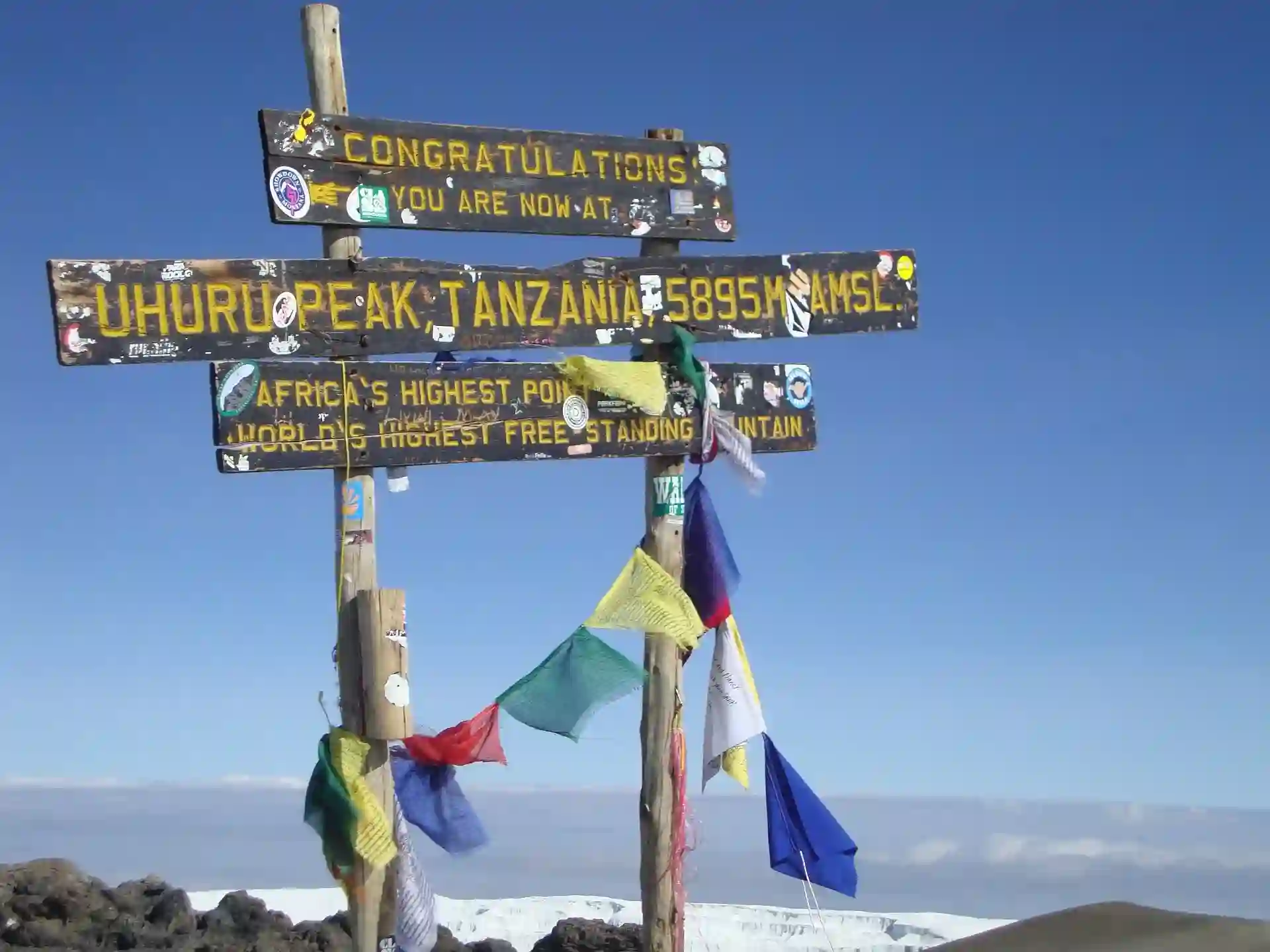
Uhuru Peak is 5,895 metres. A policy that covers hiking may still exclude trekking above 3,000, 4,000 or 5,000 metres.
For a Kilimanjaro climb, require written confirmation of:
- Trekking cover to at least 6,000 metres
- Acute Mountain Sickness and other altitude illness
- Emergency oxygen and initial treatment when eligible
- Assisted descent and ground evacuation
- Helicopter evacuation where operationally available and medically justified
- Hospital treatment
- Medical repatriation
- Trip interruption if the climb ends early
- Search and rescue terms
Helicopter evacuation is never guaranteed simply because it appears in a policy. Weather, darkness, landing conditions, aircraft availability and medical judgement affect whether it can operate. Descent by foot, stretcher or vehicle may be the safest or only option.
Read our Kilimanjaro acclimatization and altitude-sickness guide and explore Kilimanjaro routes before choosing cover.
Health Preparation Before a Tanzania Safari
Insurance responds after a covered problem occurs. Health preparation reduces the chance of the problem occurring.
Arrange a travel-health appointment ideally four to eight weeks before departure, or as soon as possible for a late booking. Recommendations depend on age, medical history, vaccination record, pregnancy, itinerary, trip duration and previous travel.
Vaccinations
Review routine vaccinations and Tanzania-specific recommendations with a qualified clinician. The CDC Tanzania traveller page provides current public-health guidance, but personal recommendations require a medical professional.
Yellow-fever entry requirements depend on where you travel from and, in some cases, the length and location of transit. A certificate may be required when arriving from a country with yellow-fever transmission risk. Do not receive a vaccine solely because a general blog says every visitor needs it; check the current rule for the actual flight path.
Malaria
Malaria transmission occurs in many parts of Tanzania, particularly at lower elevations. CDC guidance recommends prescription prevention for travellers visiting specified risk areas below 1,800 metres.
Discuss the correct medicine with a clinician because options differ in timing, side effects, interactions and suitability. Prevention also includes:
- Effective insect repellent
- Long sleeves and trousers in the evening
- Closed accommodation or intact mosquito nets
- Air conditioning or screened rooms where available
- Completing the medicine for the prescribed period after travel
Fever during or after travel requires prompt medical attention and a clear statement that you have recently been in a malaria-risk area.
Prescription Medication
Carry enough medicine for the trip plus a reasonable delay reserve. Keep essential medication in hand luggage, not only in checked baggage.
Bring:
- Original labelled packaging
- A copy of the prescription
- Generic medication names
- A clinician's letter for controlled medicines, injections or unusual quantities
- Temperature-control arrangements if required
- Spare glasses, contact lenses or medical supplies
Confirm that the medicine is legal to carry through Tanzania and any transit country.
Pre-Existing Conditions
Declare conditions honestly to the insurer. A condition may include recent symptoms, investigations, medication changes or a previous diagnosis even when stable.
Ask whether the policy:
- Covers the condition automatically
- Requires medical screening
- Adds a premium
- Excludes related claims
- Requires a stability period
- Covers cancellation if the condition worsens
Non-disclosure can invalidate a claim that would otherwise appear unrelated.
Common Safari Health Risks
Heat, Sun and Dehydration
Game drives can involve long periods in dry heat, while mornings in the Ngorongoro highlands may be cold. Drink regularly, use sun protection and wear layers.
Dust and Respiratory Irritation
Dry-season roads can be dusty. Travellers with asthma or respiratory conditions should bring prescribed medication and explain triggers to the guide.
Food, Water and Gastrointestinal Illness
Use safe drinking water, wash or sanitise hands and follow professional dietary advice. Tell the operator about food allergies well before arrival.
Tell us about allergies through the trip-planning form so written dietary communication can begin before accommodation is confirmed.
Insects and Bites
Mosquito prevention remains important. Tsetse flies occur in some wildlife areas and can bite through thin fabric. Neutral, medium-weight clothing and repellent can improve comfort.
Motion Sickness and Rough Roads
Safari roads can be uneven, and small aircraft may experience turbulence. Discuss medication with a clinician before travel rather than trying an unfamiliar product during the trip.
Allergic Reactions
Travellers at risk of severe allergy should carry prescribed emergency medication and a written action plan. Do not assume a remote lodge can replace an auto-injector immediately.
Wildlife and Camp Safety
Follow guide and lodge instructions. Do not leave a vehicle or walk around an unfenced camp without permission or an escort where required. Insurance does not remove the duty to follow safety rules.
Travellers Who Need Extra Planning
Families
Confirm that every child is listed on both the mandatory certificate and personal policy. Check paediatric treatment, family accommodation after a medical delay and the cost of an adult remaining with a hospitalised child.
Our family safari planning guide helps align drive lengths, private vehicles and accommodation with children's ages.
Travellers Over 60
Age limits, medical screening and pre-existing-condition rules vary widely. Do not choose a policy only by price. Review evacuation, cancellation and companion cover carefully.
See our senior safari guide for comfort and pacing considerations.
Pregnancy
Airline limits, insurer exclusions, malaria considerations and access to obstetric care require individual medical advice. Confirm gestational limits for every flight and policy in writing.
Travellers With Disabilities or Reduced Mobility
Insurance should reflect equipment value, assistance needs and the practical method of evacuation. Explain mobility requirements during itinerary planning so vehicles and lodges can be assessed before booking.
Read the Exclusions, Not Only the Benefits
Common exclusions or limitations may involve:
- Undeclared pre-existing conditions
- Alcohol or non-prescribed drugs
- Activities not listed on the policy
- Trekking above the insured altitude
- Travel against official government advice
- Unattended valuables
- Motorbike use without the required licence or helmet
- Claims without timely notification
- Events known before the policy was purchased
- Pregnancy after a defined stage
- Mental-health conditions under limited wording
- Pandemics or epidemics under specific policy terms
- Natural events unless the selected benefit applies
The policy certificate is only a summary. Read the full wording and ask the insurer to clarify ambiguous language before you pay the safari balance.
Emergency Response: What to Do
1. Tell the Guide or Lodge Immediately
The local team can identify the nearest practical clinic, contact operations and organise safe transport. In a life-threatening situation, immediate care takes priority.
2. Contact the Insurer's Assistance Centre
Use the 24-hour medical number, not only the general claims email. The insurer may need to authorise a hospital, evacuation or transfer.
3. Keep Records
Save:
- Medical reports
- Prescriptions
- Test results
- Itemised invoices
- Payment receipts
- Police report for theft where required
- Airline baggage report
- Written delay confirmation
- Communication with the insurer
4. Do Not Arrange Major Evacuation Independently Unless Necessary
An insurer may refuse reimbursement for an unauthorised air ambulance or hospital transfer. When possible, let the assistance centre coordinate. If immediate action is required to protect life, document why prior approval was impossible.
5. Inform the Tour Operator
Tanzania Inside Safari can help with itinerary changes, local communication, transport and coordination. We do not make the insurer's coverage decision, but accurate operational information can support the response.
Documents to Carry
Keep one printed set in your hand luggage and offline digital copies on your phone. A trusted person at home should also have access.
Your travel-health folder should include:
- Passport identification page
- Mandatory inbound insurance certificate
- Comprehensive policy certificate and wording
- Emergency assistance and claims numbers
- Booking invoice and itinerary
- Flight details
- List of medications and generic names
- Allergy and medical-condition summary
- Blood group if known
- Clinician's letter where relevant
- Emergency contact at home
- Tanzania Inside Safari contact details
Questions to Ask an Insurer
1
Does the policy cover every destination in Tanzania and Zanzibar?
2
Are private game drives and remote national parks covered?
3
Is medical evacuation from the bush included?
4
Who chooses the hospital and destination of evacuation?
5
Does the insurer pay providers directly?
6
Is international repatriation included?
7
Are pre-existing conditions covered after disclosure?
8
Is cancellation cover equal to the total prepaid trip cost?
9
Are domestic bush flights and missed connections included?
10
Are walking, ballooning, boating, diving or trekking covered?
11
What is the maximum trekking altitude?
12
What are the camera and single-item limits?
13
Which events require prior authorisation?
14
What evidence is needed for a claim?
15
Does official travel advice affect validity?
How Tanzania Inside Safari Supports Your Planning
Before the trip, we can provide the information your insurer needs:
- Final itinerary and travel dates
- National parks and regions visited
- Accommodation schedule
- Domestic flight sectors
- Planned walking, boating, ballooning or trekking activities
- Kilimanjaro route and summit altitude where applicable
- Total invoiced land cost
- Emergency contact details
During the journey, our local team can communicate with guides, lodges, transport providers and emergency services. We can help adjust the itinerary when illness, delay or evacuation affects the plan.
Insurance decisions remain with the insurer. Travellers are responsible for buying suitable cover, disclosing medical information and following the policy's notification process.
Explore our Tanzania safari experiences and read our terms and conditions before confirming a trip.
Plan a Protected Tanzania Journey
Tell us your travel dates, ages, destinations, planned activities and whether the journey includes Zanzibar or Kilimanjaro. We will design the itinerary and provide the operational details needed to arrange appropriate insurance.
Complete our trip-planning form for a personalised proposal.
The right insurance does more than satisfy an entry rule. It protects the people, time and investment behind your Tanzania journey.
Start planning with Tanzania Inside Safari
Suggested Image Alt Text
- Traveller reviewing Tanzania safari insurance documents before departure
- Tanzania Inside Safari guide assisting guests beside a Land Cruiser
- Light aircraft at a remote Serengeti airstrip during a medical-preparation briefing
Planning note: park conditions, flight schedules, lodge operations, road access and wildlife movement can change. Confirm the final details that apply to your travel dates before booking.