


Tanzania Safari Accommodation Explained: Lodges, Tented Camps and Mobile Camps
Compare Tanzania safari lodges, permanent tented camps and mobile camps by comfort, location, wildlife access, facilities, atmosphere and cost.
Plan around your priorities02
Understand real logistics03
Compare options clearly04
Travel with confidence
Choosing where to sleep on safari is not simply a question of comfort level. Your accommodation affects how quickly you can reach wildlife, how early your day begins, which activities are available and how much time you spend driving instead of exploring.
Tanzania offers everything from substantial lodges with pools and spas to intimate canvas camps that move seasonally with the Great Migration. A property described as a "tented camp" may have a full-size bed, private bathroom, hot water, electricity and fine dining. A building described as a "lodge" may be simple and practical or among the most luxurious properties in East Africa.
The name alone does not tell you enough. Location, room design, service, meal plan, vehicle arrangements and seasonal access matter more than the label.
Tanzania Safari Accommodation at a Glance
| Type | Main advantage | Main trade-off | Best suited to |
|---|---|---|---|
| Safari lodge | Strong facilities and reliable infrastructure | Can feel larger or less immersed | Families, first-time visitors and comfort-focused travellers |
| Permanent tented camp | Wilderness atmosphere with substantial comfort | Canvas carries more sound and temperature change | Couples, photographers and travellers seeking immersion |
| Mobile or seasonal camp | Excellent wildlife positioning at selected times | Fewer permanent facilities and seasonal operation | Migration-focused and adventurous travellers |
| Private villa or house | Privacy, personal service and flexible shared space | Higher total price unless divided by a group | Families, friends and multi-generational groups |
| Simple camp or budget lodge | Lower cost and practical access | Fewer amenities and less personalised service | Value-focused travellers who prioritise wildlife time |
First, Understand the Terminology
Safari accommodation descriptions are not perfectly standardised. Two properties using the same category may offer very different experiences.
Lodge
A safari lodge normally uses permanent construction. Rooms may be in one main building, separate cottages, stone suites or detached bungalows. Shared facilities often include a restaurant, bar, lounge, reception, gardens and a swimming pool.
Permanent Tented Camp
A permanent tented camp remains in one location and uses canvas as a central part of the guest-room structure. Many have raised decks, solid floors, proper beds, en suite bathrooms, electricity and substantial common areas.
Mobile Camp
A mobile camp is designed to relocate. In the Serengeti, many move between seasonal sites to improve access to the Great Migration. They are assembled for months at a time rather than moved every night.
Seasonal Camp
A seasonal camp operates only during selected months. It may move between sites or simply close when weather, roads or wildlife patterns make the location less suitable.
Fly Camp
A fly camp is usually a lighter and more temporary setup used for walking or remote wilderness experiences. Facilities are normally simpler than at a migration camp. Do not assume that every mobile camp is a basic fly camp.
Safari Lodges
Lodges offer the most recognisable hotel-style experience in the bush. The strongest properties combine reliable infrastructure with a setting that still feels connected to the landscape.
What You May Find at a Lodge
- Solid walls and a permanent roof
- En suite bathroom with conventional plumbing
- Reliable hot water
- Continuous or scheduled electricity
- Restaurant, lounge and bar
- Swimming pool at many properties
- Wi-Fi in rooms or common areas
- Spa or wellness facilities at higher-end lodges
- Family rooms, interconnecting units or private villas
- Larger staff and guest capacity
Facilities vary. Remote electricity may still come from solar systems or generators, water pressure may change and internet can be slower than at a city hotel.
Advantages of a Lodge
- Predictable room layout and infrastructure
- Strong choice for families and multi-generational groups
- More indoor space during rain or cool weather
- Easier access to pools, lounges and wellness facilities
- Greater chance of step-free routes or accessible room options
- Useful for travellers who want the bush experience with familiar comforts
Trade-Offs of a Lodge
- Larger properties can feel less intimate
- Some are outside a park or farther from key wildlife areas
- Solid walls reduce the sounds and immediacy of sleeping under canvas
- Popular lodges may receive groups and feel busy in peak season
- A long access road can reduce useful game-viewing time
The right lodge can be an excellent base. The wrong lodge can create unnecessary hours in the vehicle even if its rooms look impressive online.
Permanent Tented Camps
Permanent tented camps offer one of the most distinctive safari experiences in Tanzania. You sleep beneath canvas while enjoying many features associated with a lodge.
What a Permanent Tented Suite Can Include
- King or twin beds with linen and mosquito netting where needed
- Wooden, stone or composite floor
- Private veranda or viewing deck
- En suite flush toilet
- Indoor or outdoor shower
- Hot water
- Basin, mirrors and toiletries
- Lighting and charging points
- Wardrobe or luggage area
- Seating and writing desk
- Wi-Fi at some camps
- Pool, lounge and dining area in the main camp
The word "tent" refers to the canvas structure, not to sleeping on the ground.
Advantages of a Permanent Tented Camp
- Strong sense of connection to the bush
- Often smaller and more personal than a lodge
- Wildlife sounds remain part of the experience
- Attractive for couples, honeymooners and photographers
- Can combine excellent locations with high comfort
- Service is often intimate because guest numbers are limited
Trade-Offs of a Permanent Tented Camp
- Canvas does not block sound like a solid wall
- Rooms can feel cooler at night and warmer during the day
- Paths may be uneven or unlit
- Wildlife may move through unfenced grounds
- Some guests need time to adjust to nighttime sounds
- Electricity and Wi-Fi may operate only in certain areas or hours
If you are a light sleeper, request a tent away from the dining area, generator, staff path or other guest rooms where possible. Earplugs can be helpful, but the sound of the bush is also part of what many travellers love.
Mobile and Seasonal Camps
Mobile camps are designed around position. Their main purpose is often to place guests closer to seasonal wildlife rather than expecting wildlife to remain near a permanent building.
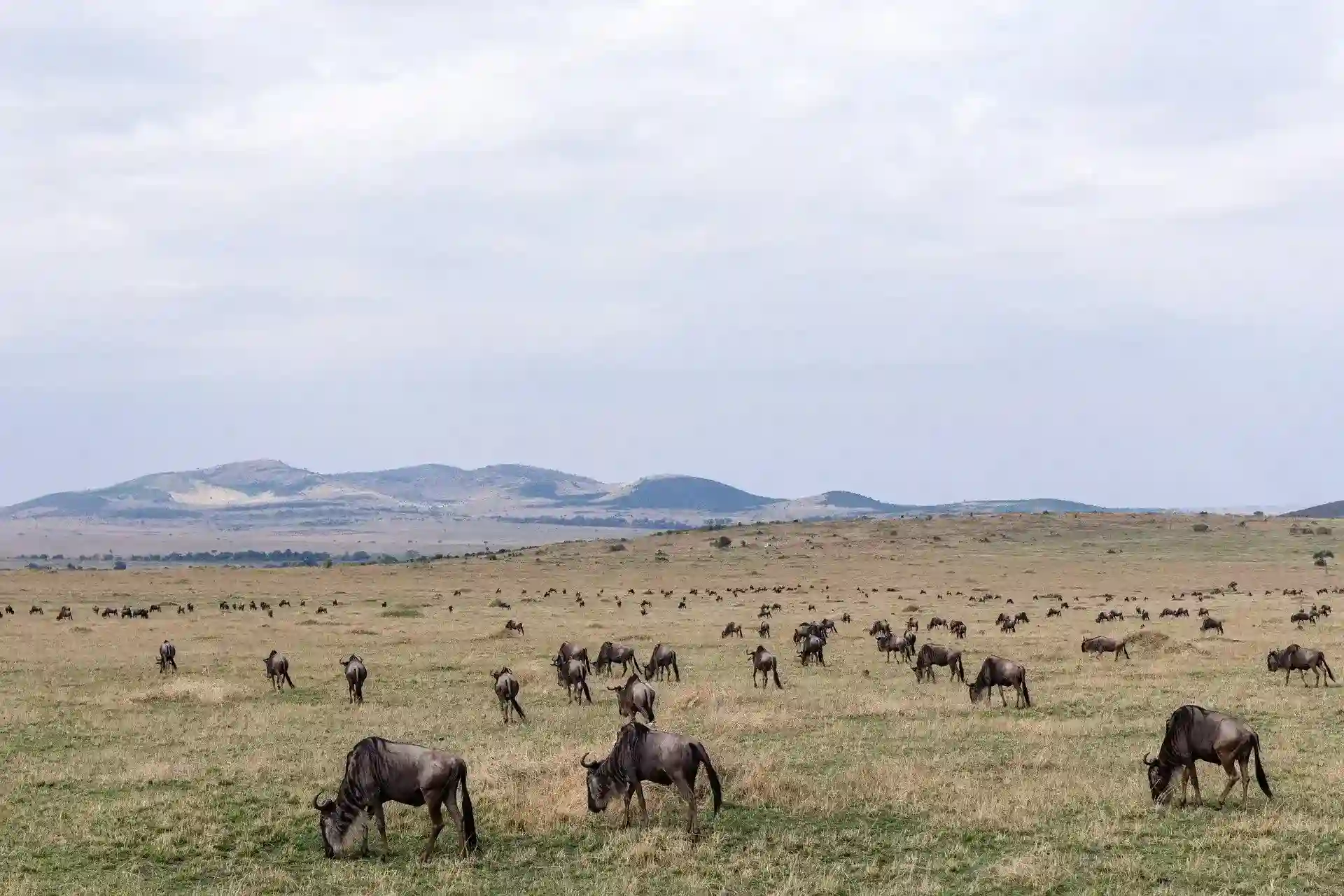
In the Serengeti, a migration camp might operate in the south during the calving months and move north for the river-crossing season. The movement is planned and logistical. Guests arrive at a fully assembled camp with staff, beds, dining and bathroom arrangements.
What Comfort Looks Like in a Mobile Camp
Depending on the camp, you may have:
- Full-size bed and quality linen
- En suite toilet
- Bucket, gravity-fed or plumbed shower
- Solar lighting and charging
- Bedside furniture and luggage stands
- Private seating area
- Lounge, bar and dining tent
- Prepared meals and attentive service
- Hot water provided on request or at set times
High-end mobile camps can be extremely comfortable. The difference is usually infrastructure and permanence, not care or service.
Advantages of a Mobile Camp
- Strategic seasonal location
- Shorter access to migration areas at the right time
- Strong wilderness atmosphere
- Smaller guest numbers
- Lower-impact structures designed to be removed
- Exceptional choice for dedicated wildlife trips
Trade-Offs of a Mobile Camp
- Limited or no swimming pool
- Less consistent Wi-Fi and phone coverage
- Solar or scheduled power
- Simpler water systems
- Narrower accommodation choice for large families
- Seasonal closing dates and relocation periods
- Access can depend on road and airstrip conditions
The critical question is not whether the camp is mobile. It is where the camp will be during your exact dates.
Mobile Camp Does Not Mean It Follows the Herds Daily
The Great Migration moves continuously, influenced by rain, grazing and water. A mobile camp cannot predict the exact position of every herd or move each morning.
Most migration camps relocate between a small number of strategic seasonal sites. From each base, guides search a wider area. A well-positioned camp improves access, but it cannot guarantee a river crossing, calving event or predator hunt.
Ask:
- Which site will operate during my dates?
- When does the camp relocate?
- What are the likely wildlife strengths of that area?
- How far are the usual game-drive zones?
- Is the camp inside the national park, a conservation area or another land category?
Private Villas, Houses and Exclusive-Use Camps
Private villas and safari houses are designed for one party. They often include several bedrooms, a private living area, dedicated staff and sometimes a private guide and vehicle.
Best For
- Families with young children
- Multi-generational groups
- Friends travelling together
- Travellers seeking complete privacy
- Guests with different meal or schedule preferences
- Celebrations and longer stays
The nightly total can be high, but value improves when several rooms are filled. Confirm exactly what is private. The house may be exclusive while game drives, dining or the pool remain shared unless stated otherwise.
Simple Lodges, Public Campsites and Value Camps
Not every good safari requires luxury accommodation. A clean, well-run property in the right location can produce a better wildlife experience than a more expensive property far from the park.
Value accommodation may offer:
- Smaller or simpler rooms
- Shared public areas
- Limited menus
- Scheduled electricity or hot water
- Fewer staff per guest
- No pool or spa
- Practical rather than designer furnishings
Public or basic camping is a separate experience and may involve shared facilities, ground tents and more direct exposure to weather. It should never be confused with a luxury tented camp.
Location Matters More Than the Label
A beautiful room cannot recover hours lost to daily transfers. Before comparing pools, bathtubs or decor, compare the map.
Inside a National Park
Potential advantages:
- Earlier access to wildlife areas
- Less time at entry gates
- Strong bush atmosphere
- Ability to begin game viewing soon after departure
Potential trade-offs:
- Park or concession fees may increase cost
- Fewer outside activities
- Fixed operating rules
- Remote supply and service limitations
Outside a Park or Near a Gate
Potential advantages:
- More price and accommodation variety
- Access to cultural visits or community activities
- Greater possibility of night drives or walks in authorised surrounding areas
- Easier road connections on transfer days
Potential trade-offs:
- Gate registration and queues
- Daily driving before wildlife viewing begins
- Departure deadlines to leave the park
- Location quality varies greatly
In a Private Concession or Conservancy
Depending on the area, this may allow activities restricted elsewhere, such as authorised night drives, walking or off-road viewing. Rules vary, so confirm the exact activities rather than assuming that "private" includes everything.
What Is Usually Included?
Safari accommodation is commonly sold on a full-board basis, but inclusions differ by property and rate.
Your confirmed rate may include:
- Accommodation
- Breakfast, lunch and dinner
- Tea, coffee and drinking water
- Selected soft drinks or alcoholic drinks
- Laundry
- Scheduled camp activities
- Airstrip transfers
- Wi-Fi where available
It may exclude:
- Premium drinks
- Private vehicle supplements
- Spa treatments
- Special dining
- Park, concession or conservation fees
- Community levies
- Gratuities
- Personal purchases
Never rely on the word "all-inclusive" without reading the confirmed inclusions.
Bathrooms, Hot Water and Toilets
Bathrooms vary more than bedrooms.
Possible arrangements include:
- Conventional en suite bathroom
- Indoor shower with continuous hot water
- Outdoor shower attached to the room
- Gravity-fed or bucket shower prepared by staff
- Flush toilet
- Eco-flush or low-water toilet
- Shared bathroom at basic campsites
A bucket shower is not a cold bucket poured over you. Warm water is placed in an elevated container and released through a shower head. It reduces water use and can be comfortable when prepared properly.
If bathroom privacy, water pressure, bath access or step-free showers matter, ask before booking.
Electricity, Charging and Wi-Fi
Remote camps operate differently from city hotels. Many use solar power with batteries and a generator backup.
Before travelling, confirm:
- Whether power is available 24 hours or on a schedule
- Whether charging is possible in the room or only in the lounge
- Which plug adaptor is needed
- Whether hairdryers or high-power appliances are permitted
- Whether medical devices can be supported
- Where spare camera batteries can be charged
- Whether Wi-Fi reaches rooms or only common areas
Wi-Fi speed depends on location, weather, network demand and the property's system. Treat connectivity as useful when available, not guaranteed office infrastructure.
Tanzania Inside Safari vehicles also have charging outlets, but guests should still begin each day with charged devices and carry a suitable power bank within airline rules.
Meals and Dietary Requirements
Remote kitchens can produce excellent food, but advance communication is essential.
Accommodation may serve:
- Buffet meals
- Set menus
- A la carte meals
- Picnic breakfasts and lunches
- Communal dining
- Private dining by request
- Bush meals where permitted
Vegetarian and vegan meals are widely possible with notice. Gluten-free, nut-free and allergy-sensitive preparation requires more detail because remote kitchens have limited storage and may not provide a completely separate preparation environment.
Tell us:
- The exact ingredient or allergen
- Whether it is a preference, intolerance or severe allergy
- Cross-contact requirements
- Emergency medication carried
- Foods that are safe and familiar
We communicate requirements to every property, but travellers with life-threatening allergies should carry their prescribed emergency plan and medication.
Laundry and What to Pack
Many camps provide laundry, sometimes included and sometimes charged per item. Service may depend on weather, water supply and length of stay.
Some properties do not wash underwear for cultural reasons but may provide detergent for handwashing. Dry cleaning is uncommon in remote camps.
Pack lightweight, quick-drying clothing and ask whether same-day or next-day service is realistic. A one-night stay may be too short for laundry to dry and return.
Pools, Spas and Midday Time
A pool can be valuable when your itinerary includes split game drives, families or several nights in one property. It matters less when you leave before breakfast and return near dinner.
Before paying more for facilities, ask whether your schedule gives you time to use them.
Spas, gyms, wine cellars, photographic hides and private decks can enrich a stay, but their value depends on your priorities. A migration-focused traveller may prefer location. A honeymoon couple may value privacy and unhurried lodge time.
Wildlife Around Camp
Many safari camps are unfenced. Animals may pass between rooms, cross paths or approach water near the property.
Common safety procedures include:
- Staff briefing on arrival
- No walking alone after dark
- Escort between the room and main area
- Torch or radio arrangements
- Keeping food out of the room
- Remaining inside when dangerous wildlife is nearby
- Never approaching or feeding animals
Canvas is not a barrier to wildlife. The safety system depends on responsible behaviour and trained staff.
Night sounds can include lions, hyenas, hippos, elephants, insects and wind against the canvas. Tell staff if you feel uncertain. Do not leave the room to investigate.
Family Accommodation
Families should look beyond the phrase "family-friendly."
Ask about:
- Minimum age policies
- Family tents or interconnecting rooms
- Distance between children's and parents' rooms
- Whether the property is fenced
- Pool supervision and barriers
- Children's meals
- Babysitting availability
- Private vehicle requirements
- Walking and night-drive age restrictions
- Extra-bed size and room capacity
- Medical access and evacuation planning
For families of seven or more, Tanzania Inside Safari normally uses two vehicles to maintain space and comfort. Accommodation should be matched to the same group needs.
Honeymoon Accommodation
For couples, the best property may offer:
- Private deck and open views
- Small number of rooms
- Quiet tent position
- Outdoor shower or bath
- Private dining
- Romantic room setup
- Pool or spa time
- Flexible game-drive arrangements
Privacy depends on layout, not only price. Ask how close the rooms are, whether decks face common paths and whether activities are shared.
Accessibility and Mobility
Remote safari properties can involve steps, gravel, uneven ground, raised tent platforms and long paths. A room described as accessible may still have challenges between the room, restaurant and vehicle.
Request specific information about:
- Number and height of steps
- Path surface and gradient
- Bathroom doorway and shower access
- Distance to common areas
- Vehicle boarding height
- Availability of staff assistance
- Power for mobility or medical devices
- Emergency procedures
Do not accept a general promise of "easy access." The property should confirm the relevant room and route in practical detail.
Accommodation for Photographers
Photographers should prioritise location and logistics.
Useful features include:
- Quick access to wildlife zones
- Early breakfast or packed meals
- Reliable charging
- Secure equipment storage
- Desk or surface for organising cameras
- Strong Wi-Fi or backup options only if file transfer is essential
- Flexible private vehicle arrangements
- Laundry during longer stays
- Photographic hide where available
A beautiful pool does not compensate for a two-hour drive to the wildlife area you want to photograph.
How Accommodation Changes the Safari Price
Accommodation affects cost through more than the room rate.
Price can reflect:
- Location inside a park or concession
- Park, conservation and concession fees
- Season and demand
- Transport and resupply difficulty
- Room size and facilities
- Food and beverage inclusions
- Staff-to-guest ratio
- Private vehicle or activity inclusions
- Airstrip transfers
- Exclusivity and number of rooms
A mobile camp in the correct seasonal position may cost more than a larger permanent lodge. A remote luxury camp may also require flights that change the total itinerary price.
Why the Cheapest Room Can Cost You Time
A lower room rate outside a park can sometimes add:
- Longer morning transfers
- Gate registration time
- Earlier departure from wildlife areas
- More fuel and vehicle hours
- Less flexibility at sunrise and sunset
This does not mean outside accommodation is always a poor choice. It can be excellent for a short transfer, cultural activity or budget balance. The decision must be evaluated within the whole route.
When to Book
High-quality accommodation in migration areas, family categories and small camps can sell out well in advance, particularly from July to October and during the December holiday period.
Book earlier when you need:
- Specific family room configuration
- Migration camp in a particular seasonal site
- Private villa or exclusive-use house
- Accessible room
- Honeymoon suite
- Several rooms at the same small property
- Peak-season dates with limited flexibility
Availability can affect the entire route. Replacing one sold-out camp may change transfer times, flights and the order of parks.
Should You Stay One, Two or Three Nights?
One-night stays create movement. They can be useful on a transit route but leave little time to settle into the property.
Two nights normally provide one complete day in the area. Three nights allow a more relaxed rhythm, better response to weather and more opportunity to use the camp facilities.
Consider longer stays when:
- The park is large
- Access required a flight
- You want walking, boating or other activities
- The property is a major part of the experience
- You are travelling with children
- You prefer fewer packing and transfer days
Why Mixing Accommodation Styles Often Works Best
A strong itinerary does not need the same category every night.
You might combine:
- A comfortable Arusha lodge after an international flight
- A permanent tented camp in Tarangire
- A mobile camp near the seasonal migration
- A lodge on or near the Ngorongoro highlands
- A beach resort in Zanzibar
This creates contrast and allows the budget to be spent where location or facilities matter most.
The best upgrade is often not the most expensive room. It may be the property that shortens a transfer, gives a family more space or places a photographer closer to the wildlife.
Accommodation Comparison Checklist
Before approving a property, compare:
1
Exact map location
2
Driving time to the main wildlife area
3
Permanent, seasonal or mobile operation
4
Room type and actual bedding
5
Private or shared bathroom
6
Hot-water system
7
Electricity and charging hours
8
Wi-Fi location and realistic reliability
9
Meal plan and drink inclusions
10
Dietary and allergy capability
11
Laundry policy
12
Pool, spa and other facilities
13
Fencing and escort procedures
14
Child and activity age limits
15
Accessibility details
16
Private or shared safari vehicle
17
Included activities and airstrip transfers
18
Cancellation and replacement terms
Common Accommodation Mistakes
Choosing from Photos Alone
Wide-angle room images do not explain location, noise, access or daily driving time.
Assuming Every Tented Camp Is Basic
Many tented suites provide more space and service than conventional lodges.
Assuming Every Mobile Camp Is in the Right Place
The camp must be compared with your dates and wildlife objective.
Paying for Facilities You Will Not Use
A pool or spa has limited value on an itinerary built around full-day game drives and one-night stays.
Ignoring Room Configuration
Family rooms, triples and interconnecting units are limited. Verify the actual beds, privacy and distances.
Treating Wi-Fi as Guaranteed
Remote internet can fail. Plan important work and communication accordingly.
Moving Every Night
Too many one-night stays reduce rest and create repeated packing, checkout and transfer time.
Our Accommodation Planning Approach
At Tanzania Inside Safari, we choose accommodation as part of the route, not as a separate list of attractive hotels. We consider your travel dates, wildlife priorities, group size, comfort expectations, dietary needs, mobility, budget and preferred pace.
We can plan mid-range, luxury and premium journeys, but we do not assume that a higher room category is automatically the better choice. Location, honest inclusions and the experience outside the room remain central.
Tell us whether you prefer solid walls or canvas, a pool or deeper wilderness, private dining or social camp life, full-day drives or lodge time. We will build a combination that supports the complete journey.
Explore Tanzania safari itineraries
Plan your Tanzania safari accommodation
Planning note: park conditions, flight schedules, lodge operations, road access and wildlife movement can change. Confirm the final details that apply to your travel dates before booking.