


Green-Season Safaris in Tanzania: Rain, Wildlife, Prices and Photography
Plan a green-season safari in Tanzania with honest guidance on rain, wildlife, prices, photography, road conditions, camp closures and the best parks from November to May.
Plan around your priorities02
Understand real logistics03
Compare options clearly04
Travel with confidence
Tanzania's green season transforms the safari landscape. Dust settles, grasslands brighten, wildflowers appear and storm clouds build over plains that looked completely different only weeks earlier. Migratory birds add colour and sound, herbivores give birth and many safari areas receive fewer visitors than during the dry-season peak.
The phrase "green season" is attractive, but it can also be misleading if it is treated as one predictable block of weather. November is not the same as April. The northern Serengeti is not the same as Nyerere. A short tropical shower is not the same as several days of long-rain weather. Camp opening dates, roads, wildlife distribution and prices all change across the season.
A well-planned green-season safari can offer outstanding wildlife, dramatic photography and strong value. A poorly designed one can lose time to unsuitable roads, closed camps or unrealistic expectations. This guide explains both sides so you can decide whether the season matches your priorities.
Green Season at a Glance
| Factor | Green-season advantage | Important trade-off |
|---|---|---|
| Landscapes | Fresh grass, wildflowers, clear air and dramatic skies | Tall vegetation can make some animals harder to see |
| Wildlife | Calving, young animals, predator activity and rich birdlife | Wildlife may disperse because water is widely available |
| Crowds | Many areas receive fewer visitors | Ndutu and calving hotspots can still become busy |
| Prices | Some camps offer lower rates or seasonal offers | Park fees, flights and private vehicle costs may not fall |
| Photography | Saturated colour, reflections, cloud detail and little dust | Rain protection, slower roads and difficult light are possible |
| Logistics | Better availability in many northern properties | Some remote camps close and certain tracks become inaccessible |
| Comfort | Cooler periods and cleaner air after rain | Humidity, insects and muddy conditions can increase |
The green season is best understood as a set of different windows. For some travellers, November or early December is ideal. Photographers and migration enthusiasts may prefer January or February. Guests seeking very low visitor density may consider April or May, but only with a route designed for long-rain conditions.
When Is Tanzania's Green Season?
In safari planning, the green season is commonly described as November to May. That broad definition includes several distinct phases.
Northern Tanzania and parts of the coast generally have a bimodal rainfall pattern:
- Short rains, locally called Vuli, usually develop from roughly October or November into December.
- January and February can bring a warmer, comparatively drier interval, although showers remain possible.
- Long rains, known as Masika, generally build from March and continue through May.
Southern and central regions can follow a more continuous wet-season pattern, and local conditions vary with elevation and geography. Every year is different. Rainfall may begin early, arrive late, pause unexpectedly or exceed the seasonal average.
For an evergreen article, fixed promises such as "it only rains for one hour each afternoon" are not responsible. Short, intense showers are common in parts of the season, but longer wet spells do occur. Tanzania Inside Safari checks current forecasts, recent road reports and camp operations before confirming a route.
Month-by-Month Green-Season Planning
| Month | Typical character | Strongest reasons to travel | Main planning caution |
|---|---|---|---|
| November | Short rains refresh dry landscapes | Fewer visitors, migratory birds, reduced dust and fresh photography | Rain onset and intensity vary significantly by year |
| Early December | Green plains and changing migration distribution | Good value before festive demand, birding and attractive light | Herd location depends on rainfall; some areas remain dry |
| Late December | Festive travel period | Green scenery, family travel and migration movement south | Rates and availability can resemble high season |
| January | Warm, green and often productive in the north | Southern Serengeti herds, birding, babies and photography | Ndutu demand increases; afternoon storms remain possible |
| February | Core calving period in many years | Newborn wildebeest, predators and strong wildlife activity | Popular calving zones can be busy and premium-priced |
| March | Transition towards the long rains | Fewer visitors later in the month, moody skies and migration movement | Road reliability becomes less predictable |
| April | Often the wettest period in northern Tanzania | Very low visitor numbers, vivid landscapes and dramatic photography | Camp closures, muddy tracks and flight disruption are possible |
| May | Long rains ease at different times | Green scenery, low dust and improving access later in the month | Early May can remain very wet; reopening dates vary |
This table is a planning framework, not a forecast. Exact recommendations must be made for the travel year, parks and accommodation under consideration.
What Is the Rain Really Like?
Many green-season marketing descriptions focus only on brief afternoon showers. That can be accurate on some days, especially during the short rains, but the full picture is more varied.
You may experience:
- A clear morning followed by a fast-moving afternoon storm
- Rain during the night and bright conditions by sunrise
- Several dry days in succession
- Localised storms visible in the distance but not over your vehicle
- Heavy rain that temporarily floods or softens a track
- Persistent cloud and rain during the long-rain peak
- Bright sun immediately after a downpour
Rain often falls unevenly. One side of a park may receive a storm while another remains dry. Your guide may change the day's route after receiving road or weather information.
Short Rains Versus Long Rains
The short rains usually refresh the landscape without shutting down the northern safari circuit. Roads can become muddy, but many itineraries continue normally with a capable 4x4 and flexible timing.
The long rains require more careful planning. April and early May can bring sustained wet conditions. Some mobile or remote camps close because resupply, airstrip access and road operations become difficult. Other lodges remain open and provide excellent value, but the itinerary must use reliable locations and realistic transfer times.
Rain Does Not Mean Rain All Day
It is possible to enjoy long periods of good game viewing between showers. It is equally possible to encounter a wet day. A green-season traveller should welcome changing conditions rather than expecting every day to follow the same pattern.
The most resilient itinerary includes enough nights, avoids unnecessary transfers and keeps accommodation choices flexible.
Why the Landscape Changes So Dramatically
Rain triggers rapid growth across grasslands, woodlands and crater slopes. Seasonal rivers flow, pans fill and water becomes available beyond the permanent dry-season sources.
This creates:
- Bright new grass on plains that were dusty or golden
- Wildflowers in suitable habitats
- Fresh leaves on acacias and other woodland species
- Reflections in temporary pools
- Cleaner air and clearer distant views after rain
- Larger, more dramatic cloud formations
- Strong colour contrast between animals and vegetation
The visual transformation is one of the season's greatest attractions. It also changes game viewing. Animals no longer need to concentrate around the few permanent water sources, so they may spread across a wider area. A knowledgeable guide becomes especially important.
Wildlife During the Green Season
The green season does not make wildlife disappear. It changes where animals are found and how they behave.
Newborn Animals and Calving
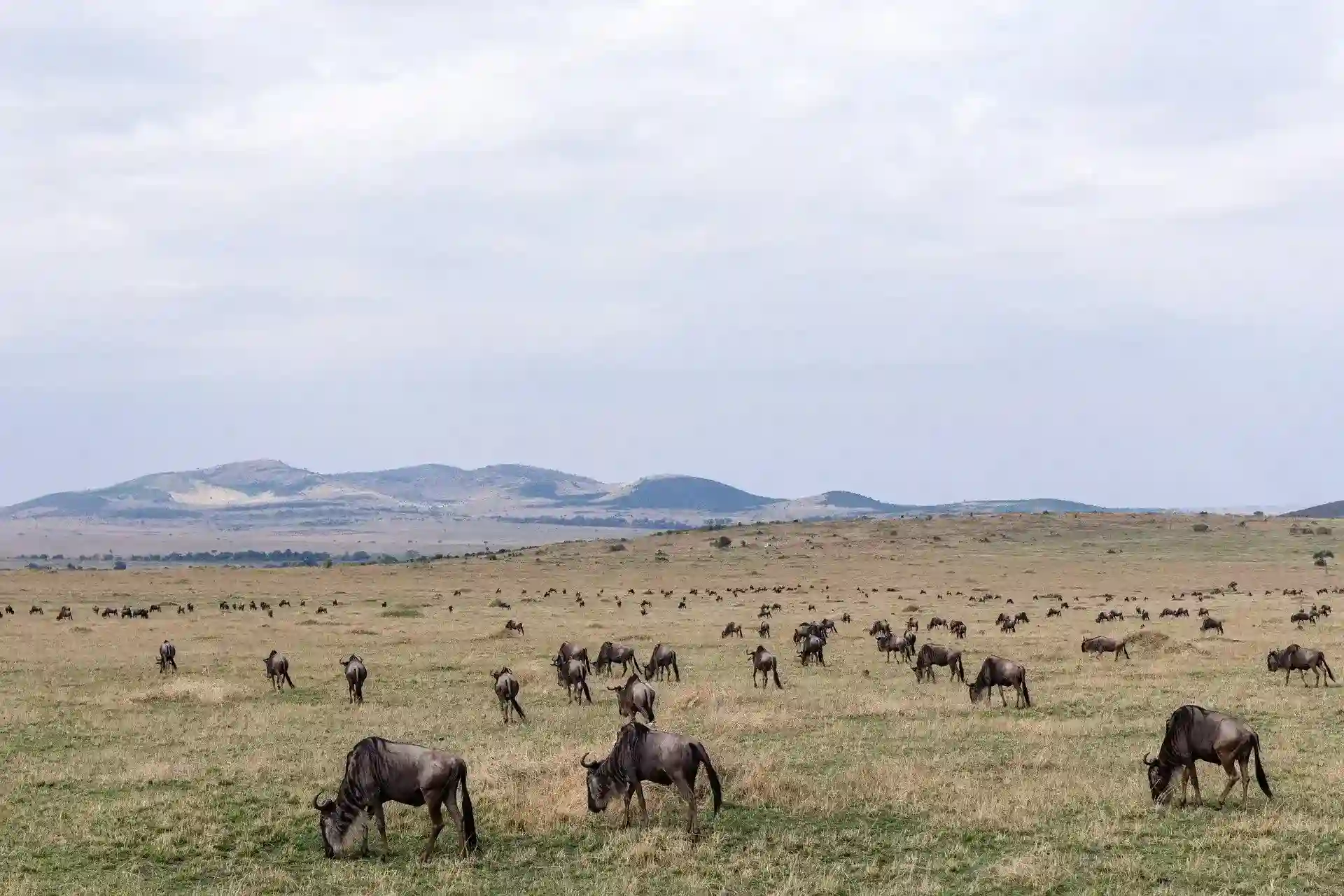
The southern Serengeti and Ndutu area are famous for wildebeest calving, generally centred on January and February, although timing depends on rainfall and herd movement. Large numbers of pregnant females gather on nutritious short-grass plains, and many calves are born over a relatively compressed period.
New life creates intense natural interactions. Calves must stand and move quickly, mothers protect their young and predators take advantage of vulnerability. These scenes can be moving, difficult and unforgettable.
No itinerary can guarantee a birth, hunt or specific predator encounter. Even at the height of the season, wildlife events unfold on their own terms.
Travellers focused on calving can explore Tanzania Inside Safari's 10-day calving-season safari . The route can be adapted to the latest herd reports and your preferred accommodation level.
Predator Activity
Lions, cheetahs, leopards, hyenas and other predators remain active throughout the year. During calving, food opportunities increase, but that does not mean every game drive produces a hunt. Patient observation is more productive than chasing radio reports from one sighting to another.
Green vegetation can hide predators more effectively. Guides look for tracks, alarm calls, vultures, herd behaviour and preferred resting locations. The search may require more time, which makes longer stays valuable.
Migratory Birds
Green-season birding can be exceptional. Migratory species join Tanzania's resident birds, many species display breeding plumage and insects become more abundant after rain.
Bird activity adds depth to every park, even when large mammals are dispersed. Raptors, storks, bee-eaters, rollers, weavers, waterbirds and many smaller species can transform a quiet drive into a highly productive one.
Bird photography also benefits from fresh backgrounds, softer light and active feeding behaviour.
Elephants, Buffalo and Other Resident Wildlife
Resident animals remain in the ecosystem, but their dry-season concentrations may change. Tarangire's enormous dry-season gatherings disperse as water becomes available beyond the river. Ruaha and Nyerere also change as seasonal water returns.
This is not necessarily a disadvantage. Smaller groups in green habitat can create beautiful sightings, but travellers expecting the biggest dry-season aggregations may prefer another time of year.
The Great Migration in the Green Season
The Great Migration is a continuous movement rather than one scheduled event. Rainfall and grass conditions influence where the herds gather and when they move.
In a typical seasonal pattern:
- Short rains encourage herds to move towards the southern Serengeti and Ngorongoro Conservation Area.
- Many wildebeest gather on the short-grass plains from approximately December into March.
- Calving is usually concentrated in the first part of the year.
- As the plains dry and long rains develop, herds begin moving west and north in separate columns.
- May and June can bring movement towards the western corridor and Grumeti region.
These movements are never exact. Herds can split, double back or remain in one area longer than expected. A fixed camp in the wrong region can create long driving days. Mobile-camp placement and current local reports matter.
Calving areas can be busy despite the wider green season having fewer tourists. If solitude matters more than being beside the main herds, consider resident wildlife in central or northern Serengeti, Tarangire, the Ngorongoro Highlands or another park.
Serengeti in the Green Season
The Serengeti is large enough to provide very different experiences within the same month.
Southern Plains and Ndutu
This is the headline region from approximately December to March. Short grass, open horizons, herds and predators make it compelling for wildlife enthusiasts and photographers.
The trade-offs are demand and localised vehicle concentrations. Good camps can sell early for January and February. A private vehicle, several nights and an experienced guide provide more flexibility to move beyond the busiest sightings.
Central Serengeti
Central Serengeti supports resident wildlife throughout the year. The green season brings fresh landscapes, seasonal water and lower visitor numbers outside the busiest holiday periods. Tall grass can make some sightings harder, but the extensive road network and permanent wildlife make the region resilient.
Northern Serengeti
When migration crowds move south, northern Serengeti can become exceptionally quiet. Resident lions, leopards, elephants, giraffes and plains game remain. Some seasonal camps close, so accommodation choice is narrower, but permanent properties can provide a very private experience.
Western Corridor
Later in the green season, migration movement may begin towards the west. Road and camp conditions must be checked carefully. The region can reward travellers who are comfortable with uncertainty and do not require the herds to be in one guaranteed location.
Ngorongoro Crater and Highlands
Ngorongoro Crater retains water and resident wildlife, making it one of the more dependable green-season destinations. The crater floor, surrounding slopes and highlands become intensely green, and visitor numbers may be lower in April and May.
Wet roads require a suitable 4x4 and experienced driver-guide. Staying near the crater rim can support an early descent and reduce travel time. Because the crater is compact, popular sightings may still attract several vehicles even during quieter months.
The highlands can be cool, misty and wet. Warm layers and a waterproof jacket are useful even when lower areas feel warm.
Tarangire National Park
Tarangire is best known for large dry-season wildlife concentrations around the river. During the green season, animals disperse into a wider ecosystem, so the viewing pattern changes.
Green-season strengths include:
- Beautiful baobab and woodland landscapes
- Wildflowers and seasonal wetlands
- Excellent birding
- Lower dust
- Fewer vehicles
- Young animals and active smaller species
April and early May can create difficult tracks, particularly in waterlogged areas. Some camps close or reduce operations. A green-season Tarangire itinerary should allow the guide to choose reliable routes rather than insisting on a specific distant sector.
Lake Manyara and Arusha National Park
Lake Manyara's forest, lake edge and escarpment can look particularly vibrant after rain. Birding may be excellent, and cleared air can improve landscape views. Water levels and road access vary, so the experience changes from year to year.
Arusha National Park is a useful green-season addition because it lies close to Arusha and provides forest, lakes, Mount Meru scenery and permitted activities such as guided walking in designated areas. It can work well on an arrival day or as a flexible alternative when a longer road transfer is unattractive.
Neither park should be included only to increase the destination count. Each adds value when it fits the season, route and traveller's interests.
Southern Tanzania in the Rains
The term green season applies differently in southern Tanzania. Nyerere and Ruaha can be spectacular as vegetation returns, birds arrive and seasonal water systems revive. They can also become operationally difficult during the wettest period.
Nyerere National Park
Short-rain and early green-season travel can bring refreshed landscapes, good birding and restored river levels. Boat safaris may benefit when water conditions are suitable.
From around mid-March into May, many camps close because roads, airstrips and resupply become unreliable. Exact closure dates differ. A trip should never be designed from an online room rate without confirming that the camp, flight and activity programme will operate.
Read our Nyerere National Park guide for the park's character and activity options.
Ruaha National Park
Ruaha becomes greener and less dusty, with dramatic skies and strong birding. Wildlife spreads as water becomes more widely available, so sightings can require greater patience. Some properties suspend operations during the long rains.
Green-season Ruaha suits repeat safari travellers, birders and photographers who value atmosphere and solitude. It is less suitable for a first-time visitor who expects constant dry-season wildlife concentrations.
Western Tanzania and Forest Destinations
Katavi, Mahale, Gombe and Rubondo have specialised access and seasonal patterns. Rain can affect flights, tracks, boat transfers and trekking conditions. Forests become lush, butterflies and birds can be abundant, and photography can be striking, but trails may be slippery and chimpanzees may range differently as food sources change.
These destinations require current operational confirmation. A remote safari should include sufficient nights and connection protection. The lowest room rate has little value if the travel schedule is too fragile.
Are Green-Season Safaris Cheaper?
They can be, but not every cost falls.
Accommodation is the area most likely to offer lower seasonal rates. Some camps reduce prices, waive or reduce single supplements, extend stay offers or provide better value at a higher room category. Availability may also improve outside calving and festive peaks.
However, the following costs may remain similar:
- National park and conservation fees
- Private safari vehicle and guide costs
- Fuel
- Domestic flights and airport taxes
- Visa, insurance and international flight costs
- Special activities and permits
January and February around Ndutu may be priced as a premium wildlife season. Christmas and New Year are also high-demand dates. "Green season" does not automatically mean "low season" at every property.
Compare Total Itinerary Value
A lower nightly lodge rate can be offset by an inefficient route, unnecessary flights or long transfers. Conversely, a green-season offer at a well-located camp may allow you to stay an extra night and create a better safari for the same overall budget.
When comparing quotes, check:
- Exact room category and meal plan
- Park, concession and camping fees
- Private or shared vehicle arrangements
- Domestic flights and baggage allowances
- Airport and road transfers
- Seasonal supplements
- Camp closure or weather-change policies
- What happens if a flight or road becomes unusable
The best value is an itinerary that still works in the expected conditions, not simply the lowest headline price.
Green-Season Photography
For many photographers, the green season is visually richer than the dry season. The landscape contributes to the image rather than becoming a neutral background.
Photographic Advantages
- Clean air and reduced dust after rain
- Saturated greens and fresh foliage
- Dramatic storm clouds
- Reflections in temporary water
- Soft, diffused light under cloud
- Rainbows and shafts of sunlight
- Migratory birds and breeding plumage
- Newborn animals and family behaviour
- Fewer vehicles in many areas
Strong images are not guaranteed by good weather. A guide who understands light, positioning and animal behaviour remains essential. Tanzania Inside Safari's 11-day photographic safari can be adapted for green-season subjects and locations.
Photographic Challenges
Green-season conditions can also create:
- Tall grass obscuring small animals
- Flat light during heavy cloud
- Bright highlights and deep shadows after storms
- Rain on lenses and viewfinders
- Mud and water near vehicle floors
- Condensation when equipment moves between different temperatures
- Limited charging at remote camps during cloudy periods
Protecting Camera Equipment
Pack equipment so it can be covered quickly. Useful items include:
- Rain covers for camera and long lenses
- Dry bags or waterproof liners
- Microfibre cloths stored in sealed bags
- Silica gel packets
- A lens hood
- Spare batteries and memory cards
- A beanbag with a waterproof outer surface
- A simple shower cap for fast camera protection
- Neutral cloths for wiping mud before opening a camera bag
Do not change lenses while rain or wind is entering the vehicle. Keep one body with a telephoto lens and another with a wider lens if your equipment and baggage allowance permit.
Camera Settings in Changing Light
Light can change rapidly as clouds move. Auto ISO with a sensible maximum can help maintain the shutter speed needed for wildlife. Check exposure compensation frequently, particularly with dark animals against bright grass or bright sky behind a subject.
After rain, watch for reflections, backlight and water droplets rather than focusing only on close portraits. The green season is ideal for environmental images that show animals within their habitat.
Roads, Vehicles and Daily Flexibility
A capable 4x4 is essential in wet conditions. Tyre condition, recovery equipment, driver judgement and vehicle maintenance matter as much as the vehicle model.
Tanzania Inside Safari's customised Land Cruisers include pop-up roofs, charging facilities, a fridge, binoculars and first-aid equipment. Our in-house logistics and workshop support help us prepare vehicles for the route and season.
Even a strong vehicle has limits. Responsible guides do not enter flooded crossings, waterlogged pans or tracks where recovery would damage the environment. A plan may change to protect guests, crew, wildlife and the vehicle.
Allow more time between destinations. Mud, road inspections and weather can slow progress. Avoid scheduling a long park transfer immediately before an international flight.
Flights and Camp Closures
Domestic flights can reduce road time, but green-season air operations require careful coordination. Heavy rain may affect an unpaved airstrip, visibility or the ability of a camp vehicle to reach the strip.
Before booking, confirm:
- Whether the camp operates on your exact dates
- Which airstrip serves it
- Whether scheduled flights operate every day
- Baggage weight and bag-type restrictions
- The alternative if a flight cannot land
- Whether the final night protects your international departure
Seasonal camps may close for maintenance during April and May. Permanent lodges do not all remain open either. Published itineraries must be checked against current operations before a deposit is paid.
What to Pack for a Green-Season Safari
Pack for sun and rain on the same day.
Useful items include:
- Lightweight waterproof jacket with a hood
- Breathable neutral-coloured clothing
- Warm layer for cool mornings and the Ngorongoro Highlands
- Quick-drying trousers and shirts
- Closed walking shoes or light boots
- Spare socks
- Sandals for camp, where appropriate
- Wide-brimmed hat
- High-SPF sunscreen
- Insect repellent
- Small dry bag or waterproof daypack liner
- Resealable bags for documents and electronics
- Binoculars
- Personal medication in hand luggage
Avoid relying on daily laundry during sustained rain. Drying can take longer, and some lodges may restrict laundry services for delicate garments or underclothing.
Keep travel documents, medication, one change of clothes and essential camera equipment in your carry-on bag. Domestic flight baggage limits may be lower than international allowances.
Mosquitoes, Insects and Health Preparation
Rain and standing water can increase insect activity. Tanzania is a malaria-risk destination throughout the year, and travellers should discuss suitable prevention with a qualified travel-health professional before departure.
Practical measures include using repellent, wearing long sleeves and trousers in the evening, sleeping under provided mosquito nets and keeping tent or room doors closed. Tell your operator about medical requirements and allergies during planning.
Who Will Love a Green-Season Safari?
This season is especially suitable for:
- Photographers who enjoy landscapes, clouds and environmental images
- Birdwatchers
- Repeat safari travellers
- Honeymooners seeking atmosphere and quieter camps
- Families who can travel outside school-holiday peaks
- Travellers interested in calving and young animals
- Guests who value colour, change and unpredictability
- Budget-conscious travellers seeking stronger lodge value
Couples can also read our guide to green-season honeymoon safaris .
Who May Prefer the Dry Season?
The dry season may be a better fit if you:
- Want the most predictable road access
- Strongly prefer concentrated wildlife around water
- Dislike mud, rain or humidity
- Have only a few safari days and no flexibility
- Need a camp that closes during the rains
- Want dry-season walking conditions in a specific park
- Hope to focus on Mara River crossings
- Require a complex remote itinerary with fragile connections
Choosing the dry season is not a failure to find value. The right season is the one that supports your priorities.
Common Green-Season Planning Mistakes
Avoid these errors:
- Treating November to May as one identical weather period
- Assuming all rain comes only in short afternoon showers
- Choosing a camp without confirming its opening dates
- Expecting every cost to be discounted
- Forgetting that Christmas and calving periods can be expensive
- Building a route with too many one-night stops
- Scheduling tight international connections after a remote flight
- Packing only for warm weather
- Ignoring domestic-flight baggage limits
- Expecting dry-season wildlife concentrations
- Promising migration locations or animal births
- Asking a guide to damage wet tracks or leave permitted roads
Questions to Ask Before Booking
1
What is the normal rainfall pattern for my exact month and route?
2
Which camps will definitely operate on my dates?
3
Are the quoted rates seasonal, and which costs remain unchanged?
4
Is the vehicle private to my party?
5
How will the itinerary change if a road becomes inaccessible?
6
Are domestic flights operating on the planned days?
7
Which migration region is most realistic for the travel dates?
8
How many nights are planned in each wildlife area?
9
Does the final night protect the international flight?
10
What camera and luggage protection should I bring?
11
Which activities may be limited by rain or water levels?
12
What travel insurance coverage is recommended for disruption?
Three Green-Season Itinerary Ideas
November Northern Safari: 7-8 Days
| Stage | Suggested time | Green-season value |
|---|---|---|
| Arusha | 1 night | Arrival recovery and weather briefing |
| Tarangire | 2 nights | Fresh landscapes, birding and fewer vehicles |
| Central Serengeti | 3 nights | Resident wildlife and improving green scenery |
| Ngorongoro | 1-2 nights | Reliable resident wildlife and dramatic highlands |
This structure avoids relying entirely on the migration's exact location.
January-February Calving Safari: 9-10 Days
| Stage | Suggested time | Green-season value |
|---|---|---|
| Arusha | 1 night | Recovery and guide briefing |
| Tarangire or Lake Manyara | 2 nights | Habitat variety and birding |
| Ndutu and southern plains | 4 nights | Herds, calving potential and predator activity |
| Ngorongoro Crater | 2 nights | Contrasting resident wildlife and landscapes |
This is a high-interest wildlife period, so early booking is important despite the green-season label.
Mid-May to Mid-June Transition Safari: 8-10 Days
| Stage | Suggested time | Green-season value |
|---|---|---|
| Arusha | 1 night | Confirm current road and camp conditions |
| Tarangire | 2 nights | Green scenery with access improving |
| Central or western Serengeti | 3-4 nights | Migration movement, dramatic skies and lower dust |
| Ngorongoro | 2 nights | Wildflowers, green crater slopes and resident wildlife |
This transition can offer a strong balance of scenery, fewer visitors and improving logistics, but annual rainfall still matters.
How Tanzania Inside Safari Plans Green-Season Trips
Green-season success depends on adaptability. We do not copy a dry-season route and merely change the travel date.
Our planning approach includes:
- Reviewing current rainfall and road reports
- Confirming camp and airstrip operations
- Matching the Serengeti region to recent herd movement
- Using private 4x4 vehicles and experienced local guides
- Allowing realistic transfer times
- Selecting well-located accommodation
- Building protection around domestic and international flights
- Preparing vehicles for wet conditions
- Designing photography-aware schedules
- Explaining which costs are genuinely reduced
- Keeping wildlife expectations honest
- Adjusting the route when safety or access requires it
We cannot guarantee sunshine, a particular migration location, an animal birth or an empty sighting. We can create a resilient itinerary that uses the season's strengths and prepares properly for its uncertainty.
Plan Your Green-Season Tanzania Safari
Tell us your travel dates, preferred parks, budget, accommodation style, wildlife interests and comfort with rain. We will explain the likely conditions, confirm which camps are operating and recommend the route with the strongest balance of wildlife, access, value and photography.
Explore our Tanzania wildlife safaris or send your preferences through the trip-planning form .
Plan your green-season Tanzania safari
Planning note: park conditions, flight schedules, lodge operations, road access and wildlife movement can change. Confirm the final details that apply to your travel dates before booking.