


How to Plan a Photographic Safari in Tanzania
Plan a Tanzania photographic safari around the right season, parks, vehicle, guide, pace, lenses, power, storage and ethical wildlife photography.
Plan around your priorities02
Understand real logistics03
Compare options clearly04
Travel with confidence
A photographic safari is shaped differently from an ordinary wildlife itinerary. It may visit the same parks and use the same roads, but the daily rhythm, vehicle occupancy, guide briefing and time spent at each sighting should serve photography rather than a checklist of animals.
Photographers often leave before sunrise, wait patiently for behaviour, stay with one subject after other vehicles depart and return in the late afternoon when the light becomes warmer. They need clear shooting positions, space for equipment, reliable charging, careful dust management and a guide who understands light, backgrounds and animal movement.
The best photographic safari is not necessarily the itinerary with the most destinations or the longest equipment list. It is the one that provides time, flexibility and access to the right habitats for the images the traveller wants to create.
Photographic Safari Planning at a Glance
| Planning decision | Ordinary safari approach | Photography-led approach | Why it matters |
|---|---|---|---|
| Vehicle occupancy | Fill available passenger seats | Limit guests for clear shooting positions | Reduces blocked views and equipment conflicts |
| Daily pace | Move between many sightings | Stay for behaviour and changing light | Strong images often require patience |
| Itinerary | Add more parks and lodges | Spend longer in fewer productive areas | Less transfer time and more field time |
| Guide briefing | General wildlife interests | Shot list, light, angles and subjects | Helps the guide position proactively |
| Equipment | One camera and general zoom | Planned bodies, lenses, support and backups | Protects against dust and failure |
| Accommodation | Comfort and price first | Location, early access and charging | Saves driving time and protects batteries |
Start With the Images You Want to Make
Do not begin by choosing a camera or lodge. Begin with the photographic story.
Possible priorities include:
- Big cats and predator behaviour
- Elephants in landscape
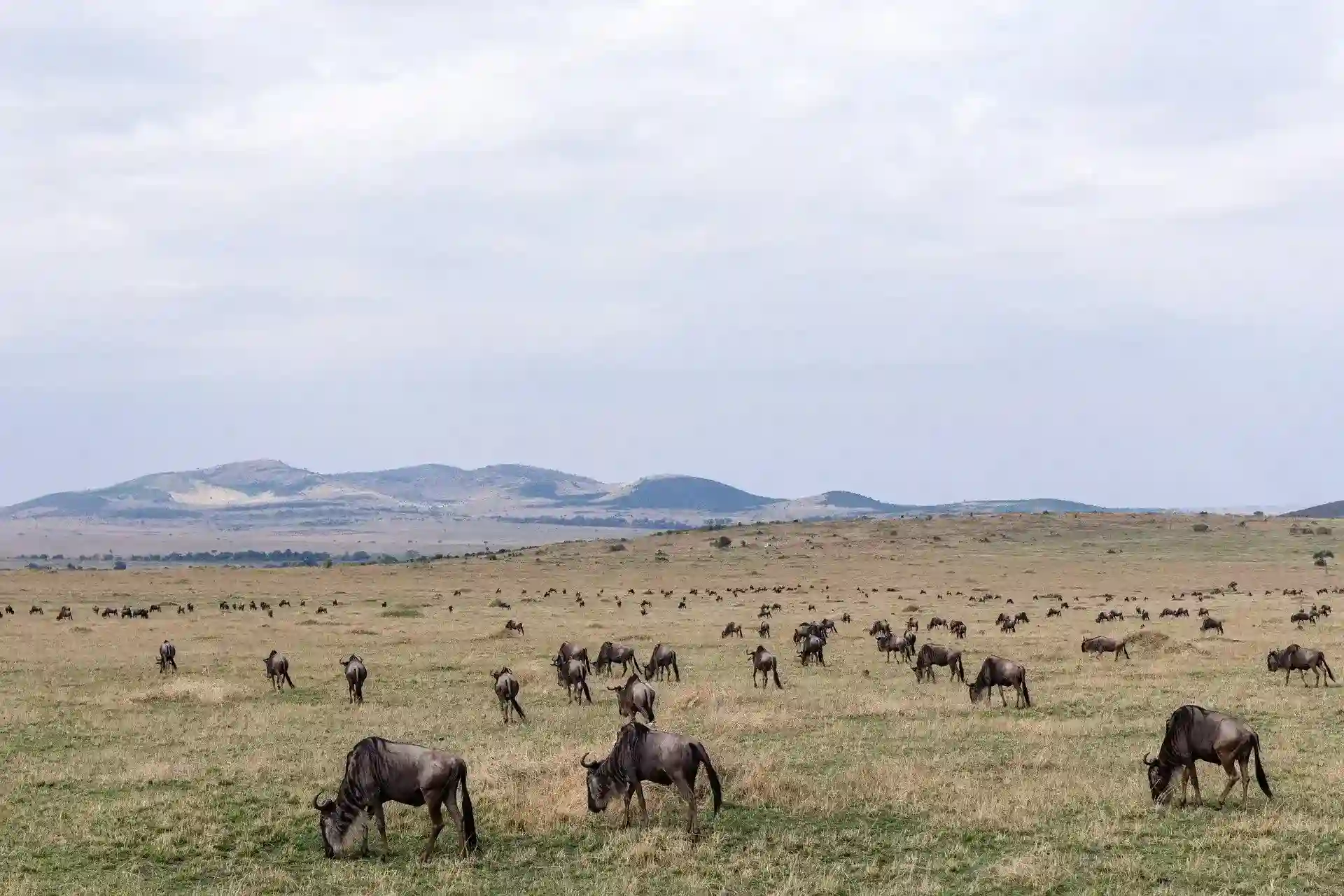
- Great Migration herds
- Wildebeest calving and maternal behaviour
- Mara or Grumeti River movement
- Birds in flight
- Animal portraits
- Environmental wildlife images
- Night skies and camp atmosphere
- People, culture and conservation stories
- Video, documentary or commercial production
A traveller interested in elephants, baobabs and warm dust may prioritise Tarangire in the dry season. A photographer seeking calves, cheetahs and storm light may choose Ndutu between January and March. Someone wanting river drama needs northern Serengeti during the usual July to October window and enough days to absorb the uncertainty.
Write a short creative brief before requesting a quotation. It should describe desired subjects, visual style, experience level, equipment, tolerance for long waits and whether photography is the main purpose of the journey.
What Makes a Safari Genuinely Photography-Led?
An ordinary safari can produce excellent photographs. A dedicated photographic safari increases control over the factors that can be planned.
It normally includes:
- A private vehicle or a small group of compatible photographers
- A clear shooting position for each photographer
- A guide briefed on photography priorities
- Flexible starts, meals and return times where park rules allow
- Multiple nights in productive areas
- Patience at sightings
- Charging and data-backup planning
- Luggage arrangements for camera equipment
- Ethical standards that protect wildlife
It does not guarantee rare animals, hunts, river crossings or perfect light. The operator can design opportunity, not direct nature.
Choosing the Best Tanzania Parks for Photography
Each park offers a different visual language. Combining complementary habitats usually creates a stronger portfolio than chasing only the Big Five.
Serengeti National Park
Serengeti is Tanzania's most versatile wildlife-photography destination. Open plains, kopjes, river valleys and woodland support wide landscapes, large herds and predator behaviour.
Different regions matter by season:
- Southern plains and Ndutu: calving, short grass, cheetahs and storm skies
- Central Serengeti: resident cats, kopjes and year-round wildlife
- Western Corridor: woodland, Grumeti landscapes and seasonal movement
- Northern Serengeti: Mara River, valleys and dry-season herds
- Eastern Serengeti: open space and predator country when access and conditions align
Simply booking “the Serengeti” is not enough. The camp and number of nights must match the intended subject.
Tarangire National Park
Tarangire is known for elephants, baobabs, seasonal wildlife concentrations and varied landscape. Dry-season dust and golden grass can produce classic images, while the green season offers colour, migratory birds and dramatic clouds.
The park works especially well for:
- Elephant behaviour and family groups
- Wildlife beneath baobabs
- Environmental portraits
- Bird photography
- Silhouettes and dust in backlight
Ngorongoro Crater
Ngorongoro offers dense wildlife within a dramatic landscape. Early descent improves light and may reduce initial vehicle pressure. The crater floor can produce lions, hyenas, ungulates, flamingos and broad environmental compositions.
Photography is constrained by designated roads, traffic patterns and crater opening hours. A skilled guide anticipates where animals may cross rather than surrounding them.
Lake Manyara National Park
Manyara adds groundwater forest, escarpment, lake edge, primates and birdlife. It is useful for a more varied visual portfolio and can break the journey between Arusha, Tarangire and Ngorongoro.
Water level, vegetation and road access change over time, so expectations should be based on current local conditions.
Arusha National Park
Arusha is strong for giraffes, monkeys, forest, Mount Meru landscapes and waterbirds. It is useful on an arrival or departure day and provides a different habitat from the open plains.
Nyerere National Park
Nyerere offers river systems, woodland and a quieter southern-circuit atmosphere. Boat safaris create lower viewpoints for hippos, crocodiles and birds, while open vehicles can provide a different shooting experience from northern road safaris.
Ruaha National Park
Ruaha rewards photographers who value wilderness, baobab country, elephants, predators and lower vehicle density. It is more remote and usually works best with enough nights to justify the travel.
Gombe and Mahale
Chimpanzee photography requires different preparation. Forest light is low and contrast can be difficult. Walking, humidity, subject distance and trekking rules affect lens choice and equipment weight. Flash is not appropriate, and travellers must follow guide instructions around primates.
Choosing the Best Season for Your Photographic Style
There is no single best month for all photography.
| Season | Visual character | Strong subjects | Main challenge |
|---|---|---|---|
| January-March | Green plains and storm light | Calves, predators, birds | Rain, mud and dispersed herds |
| April-May | Lush and quiet | Moving herds, landscapes, dramatic skies | Heavier rain and some camp closures |
| June-July | Drying landscapes | Elephants, western migration, clear views | Cool mornings and transition uncertainty |
| August-October | Golden dry season | Mara herds, river season, waterhole activity | Crowds, dust and high demand |
| November-December | Fresh green growth | Birds, returning herds, storms | Unpredictable short rains |
Green season
Green season is excellent for saturated landscapes, clouds, breeding birds and lower visitor density. Light can be soft after rain, and dust is reduced. Photographers must protect equipment from moisture and accept flexible road conditions.
Dry season
Dry-season vegetation opens sightlines and concentrates wildlife near water. Dawn can be crisp, dust adds atmosphere and golden grass creates a classic palette. Popular sites may attract more vehicles, and midday light can be harsh.
Migration events
Calving season offers repeated behaviour across the day. River crossing season offers the possibility of intense action but may involve long waits. Neither event is guaranteed, and the itinerary should remain rewarding without the headline scene.
The Safari Vehicle Matters as Much as the Camera
Tanzania Inside Safari uses customised Toyota Land Cruiser 4x4 vehicles with pop-up roofs, ergonomic seats, charging outlets, a fridge, binoculars and first-aid equipment. A pop-up roof provides flexible viewing, but vehicle occupancy determines whether photographers can use it effectively.
Recommended occupancy
For a dedicated photography trip, aim for one photographer per window position or roof-side position. Two photographers often have excellent flexibility in a standard private Land Cruiser. Three or four can work when the vehicle layout and equipment are planned. Filling every passenger seat is rarely ideal for serious photography.
Ask:
- How many photographers will share the vehicle?
- Will each person have access to both sides?
- Can seats or headrests be adjusted where permitted?
- Are beanbags or stable camera rests available?
- Is there protected space for long lenses?
- Can batteries be charged while driving?
- Does the vehicle have a fridge for water and food?
- Is the roof opening suitable for seated as well as standing photography?
Closed pop-up versus open-sided vehicles
Closed-sided Land Cruisers with pop-up roofs are practical for road transfers between northern parks and protect guests from weather and dust when closed. Open-sided camp vehicles can provide lower shooting angles and easier side access but are usually based at a lodge or camp and may not be used for every inter-park transfer.
The best option depends on the route. Confirm whether game drives use the operator's vehicle or a camp vehicle, whether it is private and how many photographers it carries.
Why the Guide Is Central to Good Photography
The guide does more than locate wildlife. They interpret behaviour, anticipate movement, assess safe positioning and manage the vehicle without disturbing the subject.
A photography-aware guide should understand requests such as:
- Place the sun behind or beside the subject
- Leave space for the animal to move into the frame
- Avoid stopping directly behind another vehicle
- Position for a clean background
- Move ahead of a walking animal without blocking it
- Wait after an animal lies down because behaviour may continue
- Create a lower angle when road position makes it possible
- Turn off the engine for stability when safe and appropriate
Before the first game drive, explain camera type, lens range, experience level, preferred subjects and whether you want technical advice. A guide who is excellent for general wildlife interpretation may not be a photography instructor. If tuition or a specialist photographic leader is required, request it explicitly before booking.
Light Should Shape the Daily Schedule
Morning and late afternoon normally provide softer light, longer shadows and more comfortable wildlife activity. Midday can still be productive for behaviour, birds, backlit dust, high-key images or animals at water.
A photography-led day may include:
- Departure before or at first permitted light
- Breakfast carried in the vehicle or taken later
- A long morning session
- Midday rest, backup and battery charging
- Return for late-afternoon light
- Careful planning around gate or park hours
Full-day drives are useful when the seasonal focus is far from camp, but they can leave the photographer in harsh light and without a rest. The route should balance access with the strongest photographic hours.
How Long Should a Photographic Safari Be?
Photography benefits from repetition. Weather changes, animals move and a location that seemed quiet one day may become exceptional the next.
| Photography goal | Suggested nights in focus area | Overall trip length | Planning reason |
|---|---|---|---|
| General northern portfolio | 2-3 per major park | 8-10 days | Balances variety and field time |
| Big cats in Serengeti | 4-5 Serengeti nights | 9-11 days | Allows patient behaviour work |
| Calving season | 4 southern nights | 9-11 days | Covers weather and herd movement |
| Mara River season | 4 northern nights | 9-12 days | Crossing timing is uncertain |
| Birds and habitats | 2-3 per ecosystem | 10-14 days | More locations and slower observation |
| Southern circuit | 4-5 per remote park | 10-14 days | Justifies flights and remoteness |
Avoid changing accommodation every night. Each move consumes golden-hour time, requires repacking and introduces dust risk to equipment.
Camera Bodies and Backup Strategy
Two camera bodies are ideal for a serious photographer, especially in dusty environments. They reduce lens changes and provide backup if one body fails.
A practical two-body setup might be:
- One body with a telephoto zoom
- One body with a mid-range or wide zoom
Travellers with one body can still make excellent images. Choose a flexible zoom, minimise unnecessary lens changes and bring cleaning equipment.
Before travelling:
- Update firmware well in advance, not the night before departure
- Set date and time correctly
- Test every body, lens, card and charger
- Save preferred custom settings
- Pack a printed or offline camera manual
- Confirm insurance covers the declared equipment value
- Record serial numbers and photograph the equipment
Choosing Lenses
The right lens depends on sensor size, subject and style. No single focal length is mandatory.
Telephoto zoom
A lens covering approximately 100-400mm, 100-500mm or similar is versatile for mammals and larger birds. On a crop-sensor body, the field of view becomes narrower, which helps with distant subjects but can be restrictive when elephants approach the vehicle.
Mid-range zoom
A 24-70mm or 24-120mm range is useful for animals in landscape, camp scenes, people and close subjects.
Wide-angle lens
Wide lenses capture skies, baobabs, vehicle context and the scale of herds. They are also useful in lodges and cultural settings when used respectfully.
Long prime lens
A 400mm, 500mm or 600mm prime can provide speed and image quality for specialists but adds weight, cost and transport complexity. It needs suitable support and may be too restrictive at close range.
Macro lens
Macro photography can reveal insects, plants and textures, but never leave the vehicle where prohibited or handle wildlife for an image.
Support: Beanbag, Monopod or Tripod?
A beanbag is one of the most useful supports in a safari vehicle. It stabilises a long lens on a window frame, roof edge or purpose-built rest and is faster to reposition than a tripod.
Travel with an empty bag and fill it locally only after agreeing on suitable material, or confirm that the operator provides one. Avoid filling a bag with food products that create import or pest concerns.
A monopod can help in open vehicles or from a fixed seat, but space must be checked. Tripods are rarely practical during standard game drives because of vibration, confined space and the need to reposition quickly. They are useful for landscapes, camp photography and night skies where safe locations allow.
Shutter Speed and Exposure in the Field
Camera settings should reflect the subject rather than a fixed safari recipe.
For moving wildlife
Use a shutter speed fast enough to stop the intended motion, continuous autofocus and an appropriate burst rate. Faster action, long focal lengths and vehicle vibration require more speed.
For stationary portraits
A slower shutter may be possible when the engine is off and the camera is supported. Watch the animal's eyes, ears and tail; small movement can still soften a frame.
For birds in flight
Use continuous autofocus, a high shutter speed, enough depth of field for wing position and a background-aware exposure. Begin tracking before pressing the shutter.
For intentional blur
Panning at a slower shutter speed can communicate movement. It requires practice, repeated frames and a guide who can keep the vehicle stable and parallel to the subject when conditions allow.
Auto ISO with a chosen minimum shutter speed can be useful as light changes quickly. Check highlights on pale birds, sky and sunlit fur rather than relying only on the rear-screen preview.
Dust, Rain and Heat Protection
Safari dust reaches buttons, zoom mechanisms, bags and sensors. Rain can begin quickly in green season.
Carry:
- A weather-resistant camera bag
- Rain covers or simple protective sleeves
- Blower, soft brush and clean lens cloths
- Spare body and rear lens caps
- Sealable pouches for small electronics
- Silica gel packs
- A light cloth to cover equipment in the vehicle
Keep bags closed when not in use. Change lenses inside the vehicle with the engine off, windows closed where possible and the camera mount facing downward. Do not perform aggressive sensor cleaning in a dusty camp unless properly equipped.
Avoid leaving cameras in direct sun or a sealed hot vehicle. Allow equipment to acclimatise gradually when moving between an air-conditioned room and humid outdoor conditions to reduce condensation.
Batteries, Charging and Power
Tanzania Inside Safari vehicles include charging outlets, but photographers should still build redundancy into the plan.
Bring:
- Multiple camera batteries
- Original or reliable chargers
- Plug adaptors suitable for the accommodation
- Clearly labelled charging cables
- A compact power bank for small devices
- A multi-port charger if compatible with the property's electrical limits
Remote camps may switch power off overnight or limit high-consumption devices. Confirm when and where charging is available. Charge whenever power is on rather than waiting until bedtime.
Spare lithium batteries must normally travel in cabin baggage with terminals protected, subject to airline rules. Check every international and domestic carrier before departure.
Memory Cards and Data Backup
Do not allow one card, drive or laptop to become the only copy of the safari.
A strong workflow is:
1
Photograph on reliable, tested cards
2
Copy files to a primary drive or laptop each day
3
Create a second copy on another physical drive
4
Keep the two backups in different bags
5
Do not format the original cards until both copies are verified
Cloud upload is not a dependable primary strategy in remote camps. Internet can be slow or unavailable, and RAW files are large.
Bring more card capacity than the calculated minimum. High burst rates, video and long trips consume storage quickly. Use a consistent folder and filename system so daily backups remain easy to verify.
Light-Aircraft Baggage and Camera Equipment
Flights to safari airstrips can save time, but small aircraft have strict weight and bag-shape limits that vary by airline and route. Soft-sided luggage is often required, and a heavy long-lens case may not fit even when total weight appears acceptable.
Before confirming a fly-in itinerary, provide:
- Camera bag dimensions
- Combined equipment weight
- Number of cabin items
- Longest lens and case dimensions
- Tripod or monopod size
- Battery details
Ask whether an extra seat, freight arrangement or additional baggage allowance is available and paid in advance. Never assume that an international airline cabin allowance applies to a domestic bush flight.
Smartphones and Beginner Photography
A photographic safari does not require professional equipment. Modern phones work well for landscapes, close animals, video and camp storytelling.
Improve phone results by:
- Cleaning the lens frequently
- Avoiding excessive digital zoom
- Using the main optical lens when possible
- Locking focus and exposure
- Reducing exposure for bright skies
- Recording short, stable video clips
- Using burst mode for movement
- Keeping the phone shaded from heat
- Backing up files when practical
Binoculars remain valuable. Watching behaviour without a screen often helps the photographer anticipate the next image.
Photographing People and Culture Respectfully
Always ask before photographing guides, staff or community members. Permission to visit a village does not automatically grant permission to photograph every person.
Discuss:
- Whether photography is welcome
- Whether any areas or ceremonies are private
- How images may be used
- Whether commercial publication changes the permission required
- How children will be protected
Avoid directing people into stereotypes or treating daily life as a prop. A respectful cultural story requires conversation, time and informed consent.
Drones, Commercial Filming and Permits
Do not bring or operate a drone on the assumption that it can be used in a national park. Drone and commercial filming permissions are restricted and require advance approval through the relevant authorities.
Personal still photography and ordinary holiday video are different from commercial production. Inform Tanzania Inside Safari well before travel if the material is intended for advertising, broadcast, a documentary, a monetised production or another professional use. The operator can identify which current permits, fees and lead times may apply.
Never fly a drone near wildlife, protected areas, airports or communities without explicit legal authorisation.
Ethical Wildlife Photography
The photograph must never be more important than the animal.
Responsible practice includes:
- Keeping the legal and guide-recommended distance
- Not blocking an animal's path
- Never pressuring herds toward a river crossing
- Not surrounding a predator, den, nest, mother or newborn
- Remaining quiet at sensitive sightings
- Avoiding flash around wildlife unless explicitly permitted and appropriate
- Staying on authorised roads and in the vehicle where required
- Following ranger and guide instructions
- Leaving crowded sightings when pressure becomes excessive
- Not using food, calls or playback to manipulate animals
A skilled guide may refuse a requested position when it risks disturbing wildlife, breaking park rules or endangering guests. That decision protects both the subject and the future of safari photography.
Common Photographic Safari Planning Mistakes
Avoid:
- Packing too many destinations into too few days
- Sharing a full vehicle with non-photographers who want a different pace
- Choosing accommodation without considering location
- Assuming a general guide is also a technical photography instructor
- Carrying one body, one card and one battery with no backup
- Ignoring domestic-flight baggage limits
- Depending on cloud backup in remote areas
- Changing lenses repeatedly in dust
- Chasing only famous animals and missing behaviour
- Using the harsh midday hours only because the itinerary is rushed
- Treating a river crossing or hunt as guaranteed
- Asking the guide to disturb animals for a clearer frame
Questions to Ask a Safari Operator
1
Is the vehicle private?
2
How many photographers will share each row and roof position?
3
What camera supports are available?
4
Does the guide understand photography positioning and light?
5
Can meals and game-drive times be adjusted within park rules?
6
How many nights are spent in each photographic focus area?
7
Which vehicle is used at fly-in camps?
8
What power is available in the vehicle and accommodation?
9
What are the exact domestic-flight baggage limits?
10
Can extra camera baggage be arranged in advance?
11
Are specialist guide or tuition services available if required?
12
What current rules apply to commercial filming or drones?
13
What backup plan applies if a vehicle has a mechanical issue?
14
How does the guide manage crowded or sensitive sightings?
A Strong Eleven-Day Photography Structure
An eleven-day northern itinerary can balance major habitats without changing lodges every night:
| Stage | Suggested time | Main photographic value | Planning note |
|---|---|---|---|
| Arusha arrival | 1 night | Equipment check and recovery | Confirm luggage and vehicle setup |
| Tarangire | 2 nights | Elephants, baobabs and birds | Use morning and late light |
| Central or seasonal Serengeti | 4 nights | Big cats, herds and behaviour | Match region to travel month |
| Ngorongoro | 2 nights | Crater wildlife and landscapes | Descend early where possible |
| Return and departure | 1-2 nights | Backup, rest or local subjects | Protect international connection |
Explore the 11-Day Photographic Tanzania Safari as a starting point. The sequence, seasonal Serengeti region, accommodation level and flight plan can be tailored.
How Tanzania Inside Safari Plans Photography Trips
We design the itinerary around the photographer's subjects, season, equipment and preferred pace.
Our planning approach includes:
- Private 4x4 safari vehicles
- Reduced vehicle occupancy for shooting space
- Professional local guides briefed on photographic priorities
- Longer stays in fewer productive areas
- Seasonal Serengeti positioning
- Early and late game-drive planning
- Vehicle charging and equipment-space discussion
- Domestic-flight baggage coordination
- Family, beginner and professional adjustments
- Honest expectations about wildlife behaviour
- Ethical positioning and park-rule compliance
We do not promise a particular animal, hunt, birth or crossing. We create the strongest realistic conditions for patient, respectful photography.
Plan Your Tanzania Photographic Safari
Tell us your travel dates, skill level, camera system, heaviest equipment, preferred subjects, group size and whether you want tuition or simply a photography-aware private guide. We will recommend the strongest season, parks, vehicle plan and number of nights.
Explore our Tanzania wildlife safaris or send your brief through the trip-planning form .
Plan your Tanzania photographic safari
Planning note: park conditions, flight schedules, lodge operations, road access and wildlife movement can change. Confirm the final details that apply to your travel dates before booking.