


Northern, Southern or Western Tanzania: Which Safari Circuit Should You Choose?
Compare northern, southern and western Tanzania safari circuits by wildlife, scenery, activities, crowds, access, cost and ideal trip length.
Plan around your priorities02
Understand real logistics03
Compare options clearly04
Travel with confidence
Tanzania does not offer one single safari experience. The famous plains and crater landscapes of the north feel very different from the rivers and woodlands of the south, while western Tanzania combines remote wilderness with chimpanzee trekking and the shores of Lake Tanganyika.
For most first-time visitors, the northern circuit is the strongest introduction because it combines the Serengeti, Ngorongoro and Tarangire in one practical route. The southern circuit is ideal for travellers who value space, fewer vehicles, boat safaris and walking. The western circuit suits adventurous travellers who are prepared to invest more time in logistics for rare primate and wilderness experiences.
The right choice depends on your interests, travel dates, available days, budget and appetite for remoteness.
Tanzania's Safari Circuits at a Glance
| Circuit | Signature destinations | Best known for | Typical character |
|---|---|---|---|
| Northern | Serengeti, Ngorongoro, Tarangire, Lake Manyara, Arusha | Great Migration, Big Five, crater and classic savannah | Iconic, accessible and varied |
| Southern | Nyerere, Ruaha, Mikumi, Udzungwa | Rivers, wild dogs, big cats, walking and boat safaris | Spacious, adventurous and quieter |
| Western | Katavi, Mahale, Gombe | Chimpanzees, Lake Tanganyika and remote wildlife | Expedition-style and deeply immersive |
These circuit names are tourism planning terms, not perfect geographical or administrative categories. For example, some official park classifications place Nyerere and Mikumi in Tanzania's eastern zone, but safari itineraries commonly group them within the southern circuit.
Quick Decision Guide
- Choose the north for your first Tanzania safari, the Great Migration, Ngorongoro Crater or the widest range of lodges.
- Choose the south for fewer vehicles, river systems, boat safaris, walking and a stronger wilderness atmosphere.
- Choose the west for chimpanzee trekking, Lake Tanganyika, Katavi and a journey that feels like a true expedition.
- Combine circuits only when your trip is long enough and domestic flights create a sensible route.
The Northern Tanzania Safari Circuit
The northern circuit is Tanzania's most established safari region. Most journeys begin in Arusha or Moshi, with Kilimanjaro International Airport and Arusha Airport providing convenient access.
The circuit works well by road because the main destinations form a natural progression. Travellers can move from Tarangire or Lake Manyara into the Ngorongoro highlands and onward to the Serengeti, then drive or fly back.
Main Northern Destinations
#### Serengeti National Park
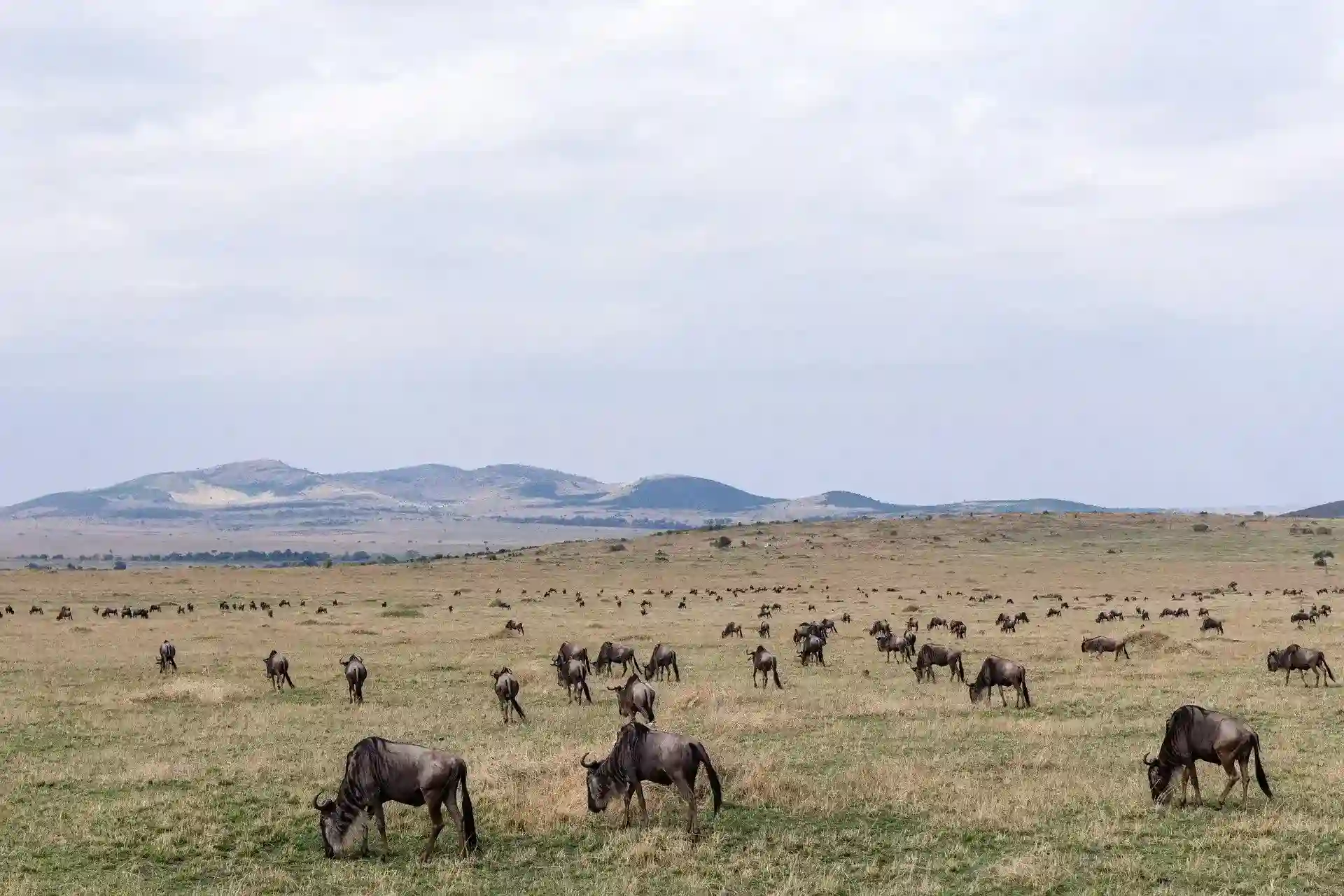
The Serengeti is the centre of the northern circuit. Its plains, kopjes, rivers and woodlands support abundant resident wildlife and the annual Great Migration.
Different regions matter at different times. The southern plains and Ndutu area are important during calving season. The western corridor becomes relevant as the herds move north. Northern Serengeti provides Mara River crossing opportunities, while central Serengeti supports reliable year-round game viewing.
#### Ngorongoro Crater and Highlands
Ngorongoro Crater offers an unusually concentrated wildlife experience inside a vast volcanic caldera. It is one of the most reliable areas for seeing a wide variety of large mammals in a single day, although sightings are never guaranteed.
The surrounding highlands add forest, views, Maasai communities and a dramatic change from the open plains.
#### Tarangire National Park
Tarangire is known for baobabs, elephants and strong dry-season wildlife gatherings around the Tarangire River. It is rewarding throughout the year, but July through October is especially powerful as the surrounding landscape dries.
The park deserves more than a rushed stop. Two nights allow early and late game drives and access to quieter areas beyond the main entrance routes.
#### Lake Manyara National Park
Lake Manyara combines groundwater forest, escarpment scenery, woodland, floodplain and birdlife. It is compact and often included between Arusha, Tarangire and Ngorongoro.
The park can be paired with cultural activities in Mto wa Mbu or a slower afternoon around the Rift Valley.
#### Arusha National Park
Arusha National Park is useful for arrival-day or short-stay travellers. Mount Meru, forest, lakes and open areas create varied scenery close to Arusha. Canoeing and guided walking may be available when arranged under park rules.
#### Lake Natron
Lake Natron sits beyond the standard northern loop and requires extra travel time. Its volcanic landscapes, flamingos, Maasai communities and access to Oldoinyo Lengai create a more adventurous extension.
What Makes the North Special?
- The Serengeti and Great Migration
- Ngorongoro Crater
- Excellent chances to see large predators
- A practical road network linking several major parks
- Accommodation from comfortable Classic camps to high-end lodges
- Easy combinations with Kilimanjaro and Zanzibar
- Year-round safari possibilities
Northern Circuit Trade-Offs
The north is popular for good reason, but popularity brings consequences. Central Serengeti, Ngorongoro Crater and northern Serengeti can attract many vehicles in peak season. Park and conservation costs are significant, and famous migration camps can be expensive.
A poorly designed itinerary may also involve frequent lodge changes and long transfers. The solution is not to avoid the north, but to choose the right season, camp locations and pace.
Best Time for the North
The northern circuit operates year-round.
- January-March: calving and predator activity in Ndutu and southern Serengeti
- April-May: green season, lower rates and fewer vehicles
- June: clear air, green landscapes and migration movement west or north
- July-October: dry-season wildlife, Tarangire and northern Serengeti
- November-December: short rains, birding and the return movement south
Ideal Trip Length
Allow seven to nine calendar days for a balanced first-time northern safari, including arrival and departure. Ten to twelve days supports photography, family pacing, two Serengeti regions or cultural additions.
Who Should Choose the North?
- First-time safari travellers
- Families wanting varied wildlife and accommodation choices
- Travellers focused on the Great Migration
- Honeymooners combining safari with Zanzibar
- Photographers seeking open landscapes and predator activity
- Visitors combining safari with Kilimanjaro
The Southern Tanzania Safari Circuit
The southern circuit feels more spacious and less travelled. Its principal wildlife areas include Nyerere National Park and Ruaha National Park, with Mikumi and Udzungwa creating useful road-based combinations.
Dar es Salaam and Zanzibar are common gateways. Flights can connect directly with bush airstrips, while road journeys work for selected routes when enough time is available.
Main Southern Destinations
#### Nyerere National Park
Nyerere is shaped by the Rufiji River, channels, lakes, floodplains and broad woodland. Wildlife includes elephants, buffalo, hippos, crocodiles, lions, leopards, wild dogs, antelope and rich birdlife.
Its great advantage is variety. Travellers can combine traditional game drives with boat safaris and, in suitable areas, guided walking. Watching hippos and crocodiles from river level creates a completely different perspective from a vehicle-only itinerary.
#### Ruaha National Park
Ruaha is one of Tanzania's great predator and elephant landscapes. Baobab-studded country, rocky hills, miombo woodland and the Great Ruaha River create a powerful wilderness atmosphere.
The park is known for large lion prides, elephants, buffalo, wild dogs and antelope such as greater kudu, sable and roan. Its scale rewards travellers who stay several nights rather than attempting a quick visit.
#### Mikumi National Park
Mikumi is more accessible from Dar es Salaam and can work for shorter safaris. The Mkata floodplain supports elephant, buffalo, zebra, wildebeest, giraffe, lions and birdlife.
It can also act as a link within a longer road itinerary involving Nyerere, Udzungwa and Ruaha.
#### Udzungwa Mountains National Park
Udzungwa is not a classic vehicle-based wildlife park. It is a forest and hiking destination known for waterfalls, endemic species, primates and mountain scenery.
Adding Udzungwa changes the rhythm of a southern journey by replacing a day in the vehicle with active exploration on foot.
What Makes the South Special?
- Far fewer safari vehicles than the busiest northern areas
- Boat safaris in Nyerere
- Guided walking in suitable destinations
- Strong wild-dog opportunities
- Ruaha's lions, elephants, baobabs and special antelope
- A genuine feeling of scale and wilderness
- Easy safari extensions from Zanzibar or Dar es Salaam by air
Southern Circuit Trade-Offs
The parks are far apart. A route that looks simple on a map can involve long road journeys, and flights may be necessary to use time well. Accommodation choice is smaller than in the north, especially outside the main season.
Wildlife can also require more patience. Lower vehicle density means fewer guides sharing information, and wooded habitats can make animals harder to locate. For many travellers, this is part of the appeal: sightings feel discovered rather than delivered.
Best Time for the South
June through October is generally the strongest period. Roads are more dependable, vegetation thins and wildlife concentrates around rivers and water sources.
November can remain rewarding as the landscape begins to green. During the long rains, access becomes more difficult and some camps close, so current lodge and flight operations must shape the itinerary.
Ideal Trip Length
Allow three or four nights for one major southern park. A Nyerere and Ruaha fly-in combination works best with roughly seven to ten safari days. Road-based combinations involving Mikumi or Udzungwa require additional time.
Who Should Choose the South?
- Travellers who dislike crowded sightings
- Repeat safari visitors
- Couples and honeymooners seeking privacy
- Visitors interested in boat safaris and walking
- Wildlife travellers focused on wild dogs or Ruaha's special species
- Zanzibar guests wanting a contrasting safari extension
The Western Tanzania Safari Circuit
Western Tanzania is the most remote of the three major safari regions. Katavi offers classic big-game wilderness, while Mahale and Gombe provide chimpanzee trekking beside Lake Tanganyika.
This is not normally a quick road circuit. Scheduled or charter flights, Kigoma connections and boat transfers are central to the experience. The journey requires more planning, but the reward is a part of Tanzania that relatively few travellers see.
Main Western Destinations
#### Katavi National Park
Katavi is known for broad floodplains, seasonal rivers, buffalo, elephants, lions, hippos and crocodiles. As the dry season deepens, wildlife gathers around shrinking water sources and the park becomes increasingly dramatic.
Low visitor numbers are one of Katavi's defining qualities. A sighting may be shared with no other vehicles, but the remote location raises the logistical cost.
#### Mahale Mountains National Park
Mahale combines forested mountains, sandy beaches and the clear water of Lake Tanganyika. Its signature experience is guided trekking to habituated chimpanzee communities.
The park is not only about primates. Lake activities, kayaking, swimming where permitted, forest walks and quiet afternoons create a rare balance between adventure and restoration.
Reaching Mahale may involve flights to a local airstrip or travel through Kigoma followed by a boat journey.
#### Gombe National Park
Gombe is closely associated with the chimpanzee research begun by Jane Goodall. Guided treks follow habituated communities through steep forest and valleys beside Lake Tanganyika.
The park is compact but physically demanding. Travel normally involves a flight to Kigoma and a boat transfer. Two trekking opportunities are better than one because chimpanzee location and trail difficulty vary each day.
What Makes the West Special?
- Chimpanzee trekking in Mahale and Gombe
- Lake Tanganyika scenery and boat travel
- Katavi's dry-season wildlife concentrations
- Very low visitor numbers
- A journey that feels exploratory rather than conventional
- Strong opportunities for slow, immersive travel
Western Circuit Trade-Offs
The west requires the greatest logistical commitment. Flights may operate only on certain days, baggage allowances can be restrictive and weather may affect boat transfers or air schedules.
The trip also costs more per active safari day because transport and remote accommodation are significant. Chimpanzee trekking involves steep, humid terrain, and sightings can require physical effort.
These are not reasons to avoid the west. They are reasons to plan it honestly.
Best Time for the West
June through October generally provides easier access and strong combinations of Katavi wildlife and chimpanzee trekking. Katavi becomes especially dramatic as the dry season advances.
Mahale and Gombe can be visited outside these months, but trail conditions, lodge operations, boat transfers and flight schedules should be checked before confirming the trip.
Ideal Trip Length
Allow five to seven days for a focused Gombe or Mahale journey including gateway travel. A deeper Mahale experience can require seven to nine days. Katavi and Mahale together normally deserve at least eight to twelve days, depending on flights.
Who Should Choose the West?
- Chimpanzee and primate enthusiasts
- Experienced safari travellers seeking something new
- Adventurous couples and photographers
- Travellers comfortable with small aircraft and boat transfers
- People who value remoteness more than a long species checklist
- Guests with enough time to absorb possible schedule changes
Northern vs Southern vs Western Tanzania
| Question | Northern | Southern | Western |
|---|---|---|---|
| Best first safari? | Yes | Possible, especially Nyerere | Usually better as a specialist trip |
| Main strength | Iconic variety and migration | Wilderness and activity variety | Primates and remoteness |
| Typical access | Road circuit plus optional flights | Fly-in or longer road combinations | Flights and boat transfers |
| Visitor levels | Highest in famous areas | Low | Very low |
| Best general season | Year-round | June-October | June-October |
| Ideal duration | 7-10 days | 7-10 days | 7-12 days |
| Strongest activities | Game drives and ballooning | Game drives, boats and walking | Chimp trekking, hiking and lake activities |
| Budget tendency | Wide range | Mid-range to premium | Premium due to logistics |
| Easy Zanzibar combination | Yes | Excellent from Zanzibar or Dar | Possible but needs more travel time |
Which Circuit Has the Best Wildlife?
There is no single winner because the habitats and experiences differ.
The north offers the easiest combination of wildlife density, open landscapes and famous destinations. It is the strongest choice for a traveller who wants the broad classic safari experience.
The south offers excellent predators, elephants, wild dogs and special antelope across enormous wilderness areas. Sightings may require more searching, but the low number of vehicles creates intimacy.
The west adds chimpanzees and remote ecosystems that the other circuits cannot replace. Katavi can produce exceptional big-game concentrations, but access and season matter greatly.
Which Circuit Is Best for the Great Migration?
Choose the northern circuit. The migration moves through the greater Serengeti ecosystem, with calving in the south, movement through central and western areas, and river-crossing opportunities in northern Serengeti.
Camp location must match the month. Simply including “Serengeti” in an itinerary does not guarantee that you will be close to the main herds.
Which Circuit Is Best for Big Cats?
The Serengeti and Ngorongoro in the north offer excellent lion, cheetah, leopard and hyena opportunities. Ruaha in the south is outstanding for lions and supports leopard, cheetah, wild dog and hyena.
The right answer depends on whether you prefer open-plains visibility and a famous predator ecosystem or a quieter, more patient wilderness search.
Which Circuit Is Best for Families?
The north is usually easiest for families because it offers more accommodation choice, established road routes, family rooms and flexible trip lengths. A private vehicle lets the family control meal stops, game-drive hours and rest time.
Nyerere can work well for older children because boating adds variety, but age restrictions may apply to walks and certain activities. Western Tanzania is better suited to active older children or teenagers who can manage trekking, flights and boat transfers.
Which Circuit Is Best for Honeymoons?
All three can work beautifully.
- North: iconic landscapes, luxurious camps and easy Zanzibar flights
- South: privacy, river sunsets, walking and quiet lodges
- West: intimate chimpanzee trekking and remote Lake Tanganyika beaches
For a first visit, north plus Zanzibar is the simplest. For privacy, Nyerere or Ruaha can be stronger. For a rare, adventurous honeymoon, Mahale is difficult to match.
Which Circuit Is Best for Photography?
The north is strong for open-country wildlife, migration, cheetahs and varied scenery. The south is excellent for uncluttered sightings, wild dogs, elephants and atmospheric river or baobab landscapes. The west is specialised: chimpanzees in forest light, lake scenery and remote floodplains.
Photographers should prioritise private vehicle space, camp location and several nights in one area over collecting destinations.
Which Circuit Is Best for a Short Safari?
From Arusha, choose Tarangire, Ngorongoro or Arusha National Park in the north. From Dar es Salaam or Zanzibar, Mikumi or a fly-in Nyerere safari can work well.
Western Tanzania is not ideal for a very short trip because the travel effort is too large relative to the time in the park.
Comparing Cost and Value
The north has the widest price range. Competition and accommodation choice create options from comfortable Classic trips to highly exclusive camps. However, conservation charges and premium migration locations keep headline prices substantial.
The south can offer strong value for wilderness and privacy, but domestic flights and small camps may make a private trip more expensive than expected.
The west is generally the most expensive circuit per day because of flights, boats, limited accommodation and specialist activities. Its value lies in rarity and depth, not the longest species list for the lowest price.
When comparing quotes, check:
- Exact camps and their locations
- Private or shared vehicle arrangements
- Domestic flights and baggage rules
- Boat transfers
- Park and activity fees
- Chimpanzee permits where relevant
- Meal plans and drinks
- Arrival, departure and buffer nights
Can You Combine the Circuits?
Yes, but only when time and flights support the plan.
North and South
Allow roughly twelve to sixteen days. A northern safari can connect through Arusha, Dar es Salaam or Zanzibar to Nyerere or Ruaha. Choose one southern park rather than compressing several.
North and West
Allow fourteen to eighteen days. The route may connect through Dar es Salaam or Kigoma, depending on flight operations. A northern safari followed by Mahale or Gombe creates a powerful contrast between savannah and rainforest.
South and West
This is a specialist journey. Flight schedules may require transit nights, and the route should be built around operating days rather than a perfect line on the map.
All Three Circuits
Three circuits can be combined, but the journey should normally last at least three weeks. Even then, selecting fewer parks and staying longer in each will produce a better experience than constant movement.
Sample Itineraries
Eight-Day Northern Circuit
- Arrival in Arusha
- Two nights Tarangire
- Three nights Serengeti
- One or two nights Ngorongoro
- Fly or drive to Arusha
Best for a first Tanzania safari.
Eight-Day Southern Fly-In Safari
- Arrive in Dar es Salaam or Zanzibar
- Three nights Nyerere
- Three or four nights Ruaha
- Fly onward or return to Dar es Salaam
Best for wilderness, boating, walking and low vehicle density.
Nine-Day Mahale Journey
- Arrival in Dar es Salaam
- Fly to Kigoma
- Boat or flight connection to Mahale
- Several chimpanzee trekking days
- Lake activities and return travel
Best for primates, active travel and remote scenery.
Fourteen-Day North and Zanzibar
- Seven or eight days northern circuit
- Fly from Serengeti to Zanzibar
- Five or six nights in Zanzibar
Best for a first safari-and-beach holiday.
Sixteen-Day North and West
- Seven or eight days northern circuit
- Transit and flight connections
- Six or seven days around Gombe or Mahale
- Departure buffer
Best for travellers combining classic wildlife with chimpanzees.
Common Circuit-Planning Mistakes
Choosing by Park Names Alone
The destination list does not reveal driving time, camp position or activity variety. Ask how each day will feel.
Trying to Include Every Region
Domestic flights save time, but airport transfers and operating schedules still consume days. More circuits can mean less real safari.
Treating Remote Travel as a Minor Transfer
Mahale, Gombe and Katavi require careful planning. A missed connection can affect more than one day.
Ignoring Seasonality
The north is flexible year-round, while southern and western logistics are more seasonal. Camp closures and road conditions matter.
Underestimating Physical Demands
Chimpanzee trekking can involve steep, humid forest. Walking safaris and mountain hikes also require realistic fitness and age considerations.
Selecting Accommodation Before the Route
A famous lodge in the wrong location can create unnecessary travel. Design the wildlife route first, then select the best available camp for each section.
Questions to Ask Before Choosing a Circuit
1
Is this my first safari or a return journey?
2
Is the Great Migration essential to me?
3
Do I prefer wildlife density or a stronger sense of wilderness?
4
Do I want activities beyond game drives?
5
Am I comfortable with small aircraft and boat transfers?
6
How many total days do I have in Tanzania?
7
What is my realistic budget after domestic flights?
8
Am I travelling with young children or travellers with mobility concerns?
9
Do I want to combine safari with Kilimanjaro or Zanzibar?
10
Is remoteness exciting to me, or would it create stress?
Our Recommendation
Choose the northern circuit if this is your first Tanzania safari, if the Great Migration is a priority or if you want the easiest combination of famous landscapes, wildlife density and accommodation choice.
Choose the southern circuit if you have already experienced a classic safari, prefer fewer vehicles or want boat safaris, walking and a deeper wilderness atmosphere.
Choose the western circuit if chimpanzees, Lake Tanganyika and remote exploration matter more to you than convenience.
If you have enough time, combining two circuits can create an extraordinary journey. The contrast should be purposeful: Serengeti and Mahale, Ngorongoro and Nyerere, or Ruaha and Zanzibar. We would rather design two regions properly than rush through three.
At Tanzania Inside Safari, we plan across northern, southern and western Tanzania. We match the circuit to your dates, travel style, group, budget and wildlife priorities, then build the transport around the experience instead of forcing the experience around the transport.
Explore Tanzania safari itineraries
Ask us which Tanzania circuit suits you
Planning note: park conditions, flight schedules, lodge operations, road access and wildlife movement can change. Confirm the final details that apply to your travel dates before booking.