


Serengeti vs Ngorongoro vs Tarangire: Which Parks Should You Visit?
Compare Serengeti, Ngorongoro and Tarangire by wildlife, scenery, season, crowds, travel time and the number of safari days you need.
Plan around your priorities02
Understand real logistics03
Compare options clearly04
Travel with confidence
Serengeti, Ngorongoro and Tarangire are often placed in the same northern Tanzania safari itinerary, but they are not interchangeable versions of the same experience.
The Serengeti offers scale, predator-rich ecosystems and the changing story of the Great Migration. Ngorongoro provides a concentrated wildlife experience inside an extraordinary volcanic caldera. Tarangire is defined by elephants, baobabs, birdlife and the Tarangire River, particularly during the dry season.
If time allows, the strongest first safari often combines all three. If your schedule or budget requires a choice, the right destination depends on the wildlife, landscapes and pace that matter most to you.
Serengeti, Ngorongoro and Tarangire at a Glance
| Feature | Serengeti | Ngorongoro | Tarangire |
|---|---|---|---|
| Signature experience | Vast plains, predators and the Great Migration ecosystem | Wildlife concentrated within a dramatic volcanic caldera | Elephants, baobabs and dry-season gatherings along the river |
| Landscape | Plains, kopjes, woodland, rivers and seasonal wetlands | Crater floor, forested rim, highlands and open plains | River valley, baobab country, woodland and swamps |
| Time needed | At least two nights; longer for migration-focused travel | One crater descent plus an overnight nearby | One full day; two nights for deeper exploration |
| Best wildlife strength | Big cats, plains game and large-scale animal movement | Dense variety in a compact area and a chance of black rhino | Elephants, birdlife and dry-season concentrations |
| Crowd pattern | Busy around famous sightings and migration zones, but spread across a vast park | Can feel busy because vehicles use a limited road network | Busy in the northern river area; quieter with more time to explore south |
| Best for | First safaris, photographers, migration interests and longer stays | Travellers wanting dramatic scenery and a high-density safari day | Elephant lovers, birders, families and travellers seeking contrast |
| Feature | Serengeti | Ngorongoro | Tarangire |
|---|---|---|---|
| Main planning challenge | Large distances and choosing the correct region for the season | Limited crater time, early starts and accommodation location | Seasonal wildlife dispersal and underestimating how much the park deserves |
First, a Geographic Clarification
Serengeti and Tarangire are national parks managed by Tanzania National Parks. Ngorongoro Crater is not a national park. It lies within the much larger Ngorongoro Conservation Area, a multiple-use protected landscape where wildlife, pastoral communities, archaeology and tourism coexist.
Travellers often use the word "Ngorongoro" to mean only the crater, but the conservation area also includes highlands, volcanic landscapes, Olduvai Gorge, Ndutu and remote areas extending towards the Serengeti ecosystem.
This distinction matters because a typical itinerary may include one crater descent while spending additional time elsewhere in the Ngorongoro Conservation Area.
Serengeti National Park: Scale, Predators and Migration
The Serengeti is the destination most travellers imagine when they picture an East African safari: open grasslands, rocky kopjes, lines of wildebeest and zebras, and predators watching the plains.
Its greatest strength is scale. You are not entering one uniform landscape. Central Serengeti, the southern plains, western corridor and northern river country each have different habitats, seasonal patterns and travel logistics.
What Makes the Serengeti Special?
- One of Africa's most important predator and prey ecosystems
- Strong opportunities to observe lions, cheetahs, leopards and hyenas
- Open plains and kopjes that create classic safari landscapes
- The seasonal movement of wildebeest, zebras and gazelles
- A large choice of camps, from classic tented properties to premium lodges
- Opportunities for balloon safaris in selected areas
- Space for multi-day exploration rather than a single game drive
The Serengeti rewards patience. One quick overnight may provide memorable sightings, but it does not reveal the park's scale or allow much flexibility when wildlife is dispersed.
Understanding the Great Migration
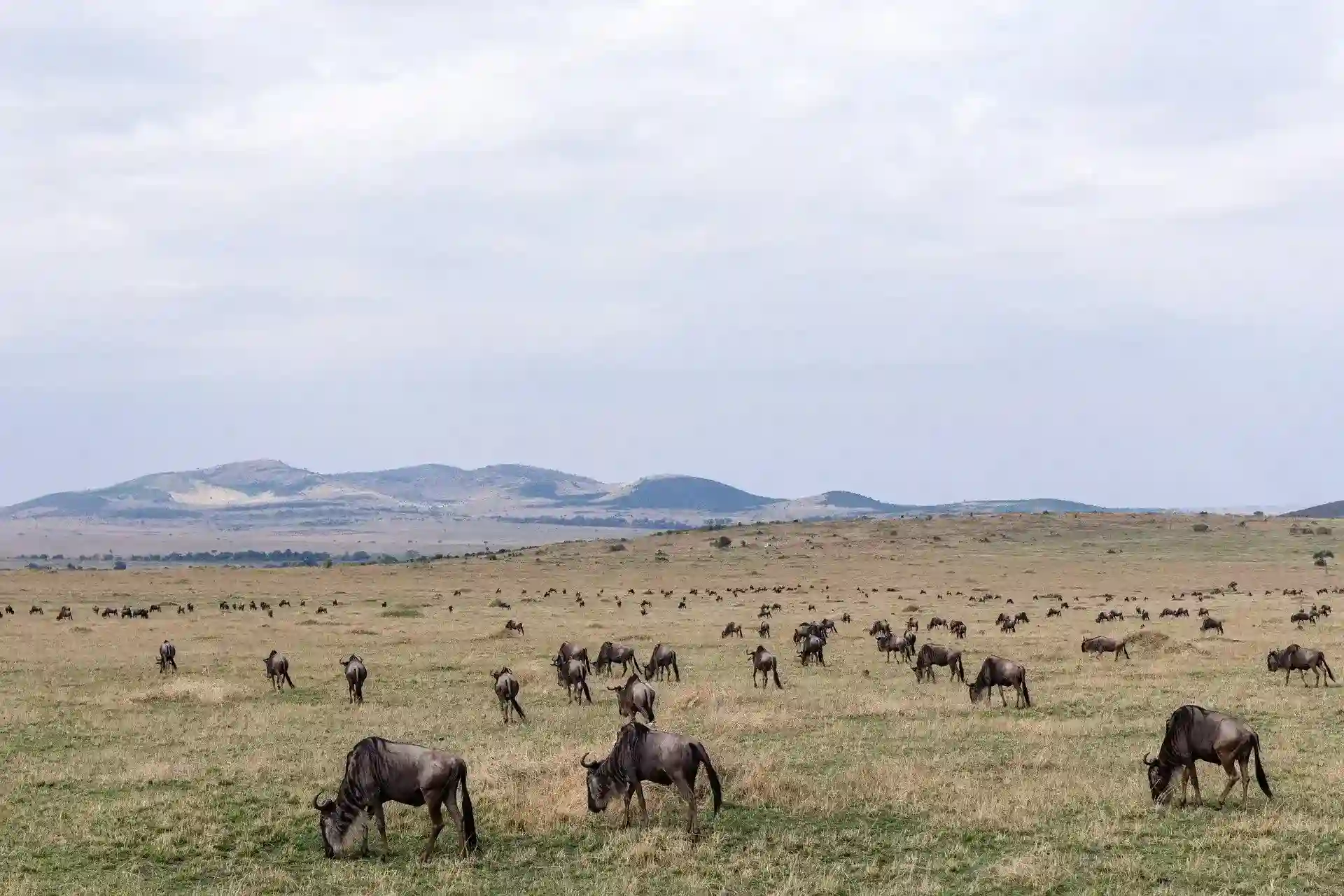
The Great Migration is a continuous movement through the wider Serengeti-Mara ecosystem. It is influenced by rain, grazing and water, not a fixed appointment.
A practical seasonal outline is:
- Southern Serengeti and Ndutu: commonly associated with the calving period from approximately late December through March
- Central and western areas: movement usually progresses through the long-rains and early dry-season months
- Western corridor: river crossings may occur around May to July
- Northern Serengeti: Mara River activity is commonly associated with approximately July to October
- Return south: herds generally move through eastern or central areas as seasonal conditions change
These are planning patterns, not guarantees. Rain may shift the herds, river crossings cannot be scheduled, and no responsible operator should promise that a crossing will happen during a particular game drive.
Even when the largest herds are elsewhere, the Serengeti remains a major year-round wildlife destination. Resident predators and plains game make areas such as Central Serengeti valuable outside the headline migration months.
How Much Time Does the Serengeti Need?
For a road safari, we generally recommend at least two nights in the Serengeti, and preferably three or more when time allows. A migration-focused itinerary may need separate stays in central and seasonal areas.
The number of nights should reflect distance. Northern Serengeti is not a short extension from Central Serengeti. Moving between regions can require substantial driving, so changing camps too frequently may reduce meaningful wildlife time.
Travellers with only two or three total safari days may consider a fly-in Serengeti itinerary. Attempting to drive from Arusha, explore the park and return within a very short schedule can turn the experience into a race.
Who Should Prioritise the Serengeti?
Choose the Serengeti if:
- This is your first safari and you want the classic open-plains experience
- Big cats and predator behaviour are major priorities
- You are interested in the Great Migration
- You want several days of game viewing rather than one concentrated visit
- Photography is a central purpose of the trip
- You are comfortable investing more time and budget to reach the right region
Ngorongoro Crater: A Concentrated Wildlife Experience
Ngorongoro Crater is the world's largest intact, unfilled volcanic caldera. From the forested rim, the land drops into a broad basin containing grassland, woodland, wetlands, freshwater and seasonal soda-lake habitat.
The crater's enclosed geography creates a safari experience unlike the Serengeti. Instead of exploring a vast ecosystem over several days, travellers descend to a relatively compact floor where many species can be seen during one game drive.
What Makes Ngorongoro Special?
- Dramatic views from the crater rim
- High wildlife density in a compact area
- Strong opportunities to see lions, buffaloes, zebras, wildebeest, hippos and hyenas
- One of northern Tanzania's important areas for black rhino sightings
- A powerful combination of geology, wildlife and human history
- Easy inclusion between the Serengeti, Karatu and other northern destinations
Black rhinos are present, but a sighting should never be guaranteed. They may be distant, hidden or outside the practical viewing area on a particular day.
What a Crater Day Is Really Like
Most crater visits begin early. Your guide descends from the rim through an authorised route and follows the established road network on the crater floor.
The compact area can create excellent viewing, but it also concentrates vehicles. Popular sightings may become busy, especially during peak travel periods. Travellers who expect complete isolation may find the crater more structured than the Serengeti.
Time on the crater floor is regulated, so the day has a clearer beginning and end than an unrestricted full-day drive in a larger park. A good guide plans the descent carefully, avoids unnecessary backtracking and interprets the ecosystem rather than treating the day as an animal checklist.
Where Should You Stay for Ngorongoro?
Accommodation location changes both the price and the rhythm of the visit.
On or Near the Crater Rim
Rim properties can offer exceptional views and faster access to a descent road. They are often among the more expensive choices, and the best rooms may book early.
In Karatu or the Highlands
Karatu and nearby highland properties offer a broader range of styles and prices. They can also work well between Tarangire, Lake Manyara and Ngorongoro. The trade-off is additional driving before and after the crater visit.
The best choice depends on budget, preferred atmosphere, the next day's route and how important an early descent is to your party.
Who Should Prioritise Ngorongoro?
Choose Ngorongoro if:
- You have limited time and want a concentrated wildlife day
- Dramatic geological scenery matters to you
- You want the possibility of seeing black rhino
- You are combining Tarangire with the Serengeti by road
- You prefer a shorter, more structured game-viewing experience
- Your itinerary includes cultural, archaeological or highland interests
Tarangire National Park: Elephants, Baobabs and Birdlife
Tarangire is sometimes treated as a one-day introduction before the Serengeti. That underestimates it.
The park's identity comes from the Tarangire River, ancient baobabs, seasonal swamps, woodland and one of northern Tanzania's most recognisable elephant landscapes. During the dry season, the river becomes especially important as wildlife gathers around remaining water.
What Makes Tarangire Special?
- Large elephant herds and close observation of elephant family behaviour
- Monumental baobab trees and distinctive landscapes
- Excellent birding, including raptors, hornbills, lovebirds and large ground birds
- Dry-season concentrations of plains game and predators
- A convenient position within reach of Arusha and the Ngorongoro Highlands
- Strong contrast with the open plains of the Serengeti and crater floor of Ngorongoro
- Quieter areas for travellers with enough time to explore beyond the busiest northern roads
Tarangire often surprises travellers who arrive expecting it to be the least important stop.
Tarangire in the Dry and Green Seasons
Tarangire is particularly famous from approximately June through October, when dry conditions draw animals towards the river and permanent water sources. Elephant viewing can be exceptional, while zebras, wildebeest and other herbivores may gather in large numbers.
During wetter months, wildlife spreads into the wider ecosystem. This does not make the park empty. The landscape becomes green, birdlife can be outstanding, and the experience may feel quieter. However, animal concentrations are usually less predictable than at the height of the dry season.
Seasonal conditions vary from year to year, so itineraries should respond to actual rainfall rather than relying only on calendar labels.
How Much Time Does Tarangire Need?
One full day can provide an excellent introduction, particularly in a five- to seven-day northern circuit.
Two nights allow more than a quick circuit near the main entrance. Travellers can explore different habitats, reach quieter areas and observe elephants without feeling pressured to move on. A longer stay is especially valuable for birders, photographers and repeat safari travellers.
Who Should Prioritise Tarangire?
Choose Tarangire if:
- Elephants are among your highest wildlife priorities
- You enjoy birding and varied habitats
- Baobabs and distinctive landscapes appeal to you
- You want a strong safari experience without travelling immediately to the Serengeti
- You are travelling with children and prefer a manageable first park from Arusha
- You have enough time to explore beyond the busiest northern section
Wildlife Comparison: What Are You Most Likely to Remember?
Big Cats
The Serengeti is the strongest choice for travellers who want several days focused on lion, cheetah, leopard and hyena behaviour. Ngorongoro is particularly well known for lions and hyenas in a compact setting. Tarangire has predators, but sightings can be more seasonal and dispersed.
Elephants
Tarangire is the standout choice. The park provides opportunities to watch herds interact among baobabs and along the river. Elephants also occur in the Serengeti and Ngorongoro Conservation Area, but they do not define those experiences in the same way.
Black Rhino
Ngorongoro Crater provides one of the better opportunities in the northern circuit, but sightings are never assured. Rhinos also exist in the Serengeti ecosystem, where their protected ranges and vast habitat make tourist sightings much less predictable.
Wildebeest and Zebras
The Serengeti ecosystem offers the largest-scale experience, especially when an itinerary matches the broad migration pattern. Ngorongoro also supports resident wildebeest and zebras on the crater floor. Tarangire receives seasonal concentrations, particularly during drier periods.
Birdlife
All three destinations reward birders. Tarangire is especially strong because of its river, swamps, woodland and dry-country species. Serengeti offers open-country birds, raptors and seasonal diversity across multiple habitats. Ngorongoro combines highland, forest, grassland and wetland species within a compact route.
Landscape and Photography Comparison
Serengeti Photography
The Serengeti offers the greatest range of photographic possibilities: predators on kopjes, open horizons, large herds, dust, storms and changing light. The main requirement is time. A rushed stay limits the ability to wait for behaviour or reposition.
Ngorongoro Photography
The crater provides dramatic wide views from the rim and wildlife against a distinctive basin landscape. On the floor, vehicle density and the fixed road network can restrict positioning at popular sightings. Long lenses are useful when rhinos or other animals remain distant.
Tarangire Photography
Tarangire combines elephants with baobabs, riverbeds, woodland and dry-season dust. It can be exceptionally atmospheric. A longer stay helps photographers move beyond the entrance area and work with morning or late-afternoon light.
Which Destination Feels Most Crowded?
Crowding depends on season, location, time of day and the quality of itinerary planning.
Ngorongoro Crater can feel busy because many vehicles descend into a limited area and use the same road network. The Serengeti is much larger, but vehicles still gather around exceptional sightings and migration events. Tarangire's northern river area can be busy during peak months, while more distant sections may feel quieter.
A private safari cannot remove other vehicles from a public protected area. It can, however, give your guide more freedom to leave an overcrowded sighting, search alternative areas and adjust the pace around your interests.
Which Is Best for Families?
Tarangire is often an excellent first safari day for families arriving in Arusha. The transfer is manageable, elephants engage children and the scenery changes quickly.
Ngorongoro offers variety within one structured day, but the early start, cold rim conditions and several hours on the crater floor should be planned around children's ages and routines.
The Serengeti can become the highlight for families, provided enough nights are included. The main challenge is distance. A fly-in or fly-out sector can reduce a long return journey, while carefully chosen camps prevent unnecessary packing and moving.
The best family itinerary is not the one with the most destinations. It is the one that balances wildlife with rest, food, bathroom stops and realistic driving times.
How Many Days Do You Have?
| Available safari time | Best approach | What to avoid | Recommended emphasis |
|---|---|---|---|
| 1 day | Tarangire from Arusha, or Ngorongoro with the correct starting point | Trying to reach the Serengeti by road and return | One well-planned destination |
| 2 days | Tarangire plus Ngorongoro, or a fly-in Serengeti plan | Driving all three destinations | Compact wildlife variety |
| 3 days | Tarangire and Ngorongoro, or a focused fly-in Serengeti | A rushed road circuit covering all three | Choose depth over a checklist |
| 4 days | All three are possible by road, but the pace is fast | Too many lodge changes and distant Serengeti regions | Prioritise one Serengeti area |
| 5 to 7 days | Combine Tarangire, Serengeti and Ngorongoro properly | One-night stops everywhere | Give the Serengeti at least two nights |
| 8 days or more | Add depth, seasonal regions and cultural or walking experiences | Adding parks only to fill the schedule | Slow the journey and explore different habitats |
If You Can Visit Only One
Choose the Serengeti for the Most Complete Classic Safari
If time, budget and logistics allow only one major destination, the Serengeti offers the broadest multi-day wildlife experience. It is particularly suitable for big-cat interests, migration planning and photography.
Choose Ngorongoro for Maximum Variety in One Day
If you have very limited time and can start near the conservation area, the crater delivers a remarkable concentration of wildlife and scenery within one game drive.
Choose Tarangire for Elephants, Baobabs and Convenient Access
If you are based in Arusha, prefer less travel or want an elephant-focused day, Tarangire provides a strong experience without the commitment required to reach the Serengeti by road.
If You Can Visit Two
Serengeti and Ngorongoro
This is the strongest combination for classic plains, predators, migration potential and crater scenery. It requires enough time to avoid compressing the Serengeti into a brief overnight.
Tarangire and Ngorongoro
This pairing works well for a short road safari from Arusha. It creates clear landscape contrast and good wildlife variety without the long drive to the Serengeti.
Tarangire and Serengeti
This combination suits travellers who prioritise elephants, baobabs, big cats and open plains. It may work especially well with a flight into or out of the Serengeti. Most first-time travellers with sufficient days would still benefit from including Ngorongoro between them.
Why All Three Work So Well Together
The three destinations form a natural story:
1
Tarangire introduces riverine habitat, elephants, baobabs and woodland.
2
Ngorongoro adds volcanic highlands, a concentrated crater ecosystem and human history.
3
Serengeti expands the scale into open plains, predator territories and seasonal migration.
The order can be reversed, and flights can replace one long sector. What matters is allowing enough time in each place and choosing accommodation that supports the route rather than forcing unnecessary backtracking.
Common Planning Mistakes
Treating Every Park as a One-Night Stop
One night often produces only an afternoon arrival and morning departure. This is especially limiting in the Serengeti.
Choosing the Serengeti Region by Name Alone
A camp may be inside the Serengeti yet far from the seasonal wildlife area you hope to explore. Region and timing matter more than the word "Serengeti" in the property name.
Expecting a Guaranteed River Crossing
Crossings are natural events. Guides can position travellers in promising areas, but nobody controls when herds approach or cross a river.
Assuming Ngorongoro Requires Several Crater Days
For most first-time itineraries, one well-planned crater descent is sufficient. Additional nights may be valuable for highland walks, culture, archaeology, relaxation or onward logistics rather than repeating the same circuit.
Removing Tarangire to Add Another Short Serengeti Stop
This can reduce variety, particularly in the dry season. The decision should reflect the number of usable Serengeti game-drive hours, not simply the number of nights listed.
Ignoring Transfer Time
A map can make northern destinations appear close. Road conditions, park gates, game viewing, stops and lodge locations determine the real journey.
Questions to Ask Before Booking
1
Which Serengeti region will we visit, and why is it suitable for our dates?
2
How many full or partial game drives are included in each destination?
3
Are transfer days also realistic game-viewing days?
4
Will we stay on the Ngorongoro rim, in the highlands or in Karatu?
5
What time is the crater descent planned?
6
Is one day enough in Tarangire for our wildlife interests?
7
Would two Tarangire nights create a quieter and more complete experience?
8
Are we changing accommodation too often?
9
Would a Serengeti flight protect more wildlife-viewing time?
10
Does the itinerary depend on a wildlife event that cannot be guaranteed?
11
Are all park, conservation and crater fees included?
12
Is the safari vehicle private throughout the road journey?
The Tanzania Inside Safari Approach
We design private safaris around seasons, travel time and individual interests, not around how many destination names can fit into a brochure.
For a first visit of five to seven days, we often recommend combining Tarangire, Serengeti and Ngorongoro with enough time in the Serengeti to make the journey worthwhile. A shorter trip may focus on Tarangire and Ngorongoro, while a fly-in plan can make the Serengeti practical for travellers arriving from Zanzibar or working with limited time.
Our local guides consider current wildlife movement, road conditions, camp location, the ages of children, photography priorities and the preferred pace of your party. When migration is important, we explain what is seasonally likely without presenting a natural event as guaranteed.
Explore Relevant Tanzania Itineraries
Explore our 7-day Serengeti, Ngorongoro and Tarangire safari
View our 5-day northern Tanzania safari
Discover our 11-day photographic safari
See our 2-day Tarangire and Ngorongoro safari
Plan the Right Park Combination
Tell us your dates, number of travellers, available safari days, wildlife priorities, preferred accommodation style and whether you are arriving through Arusha, Kilimanjaro or Zanzibar. We will recommend the right combination and explain exactly how much time you will have in each destination.
Start planning your Tanzania safari
Do not choose parks by fame alone. Choose the combination that gives you meaningful time, contrasting ecosystems and a journey that feels complete rather than rushed.
Planning note: park conditions, flight schedules, lodge operations, road access and wildlife movement can change. Confirm the final details that apply to your travel dates before booking.