


Mid-Range vs Luxury Tanzania Safari: What Does the Extra Cost Provide?
Compare mid-range and luxury Tanzania safaris, including accommodation, locations, guiding, vehicles, flights, dining, privacy and the upgrades worth paying for.
Plan around your priorities02
Understand real logistics03
Compare options clearly04
Travel with confidence
Two Tanzania safari quotations can include the same parks and number of nights yet differ by thousands of dollars. The higher price does not buy more wildlife, and a luxury label does not automatically mean a better safari. What it can buy is a stronger location, a smaller camp, more privacy, refined accommodation, easier transfers, greater flexibility and a higher level of personal service.
A well-planned mid-range safari can still include an excellent private vehicle, a knowledgeable guide, comfortable en-suite accommodation and rewarding wildlife viewing. For many travellers, it represents the best balance of experience and price. Luxury becomes valuable when its specific advantages match the way you want to travel.
This guide explains where the price difference comes from, which upgrades change the experience and how to decide where your own budget will have the greatest impact.
Mid-Range and Luxury Safaris at a Glance
| Feature | Mid-range safari | Luxury safari | What to verify |
|---|---|---|---|
| Accommodation | Comfortable lodge or tented camp with en-suite facilities | Smaller or more exclusive property with refined rooms and service | Exact property, room category and location |
| Wildlife viewing | Access to the same national parks and wildlife | Same wildlife, sometimes with a stronger base location or private concession access | Distance from key game-viewing areas |
| Vehicle | Often a private closed Land Cruiser on a road safari | May be private or scheduled and shared on a fly-in safari | Never assume luxury means private |
| Guide | Professional driver-guide | Professional guide, sometimes a senior or specialist guide | Training, experience and private-use terms |
| Transfers | More road travel | More opportunities to fly between distant areas | Flight schedule, baggage limit and transfers |
| Feature | Mid-range safari | Luxury safari | What to verify |
|---|---|---|---|
| Dining | Good full-board meals, often buffet or set menu | More personalised menus, premium drinks and private dining options | Included beverages and special experiences |
| Privacy | Larger properties and more shared facilities | Fewer rooms, private decks, villas or exclusive-use areas | Camp size and private-service inclusions |
| Flexibility | Strong when the vehicle and guide are private | Highest when vehicle, guide and accommodation are exclusive | Who controls departure and return times |
First, Understand That the Labels Are Not Standardised
There is no universal Tanzanian grading system that defines every property as mid-range, luxury or ultra-luxury. Operators and accommodation companies may use the same label differently.
One mid-range camp may offer spacious permanent tents, excellent food and a swimming pool. Another may be simpler but occupy a superb wildlife location. A luxury property may have exceptional rooms and service while using scheduled game drives shared with other guests. A less expensive lodge paired with your own private vehicle may give you more control over the day.
For this reason, compare named services rather than category labels. Ask for:
- The exact lodge or camp
- The room or tent category
- The property's location
- Whether the vehicle is private or shared
- Whether activities are private or scheduled
- Which meals, drinks, laundry and transfers are included
- Which experiences cost extra
The best quotation is the one that explains these details clearly.
The Wildlife Is Not More Luxurious
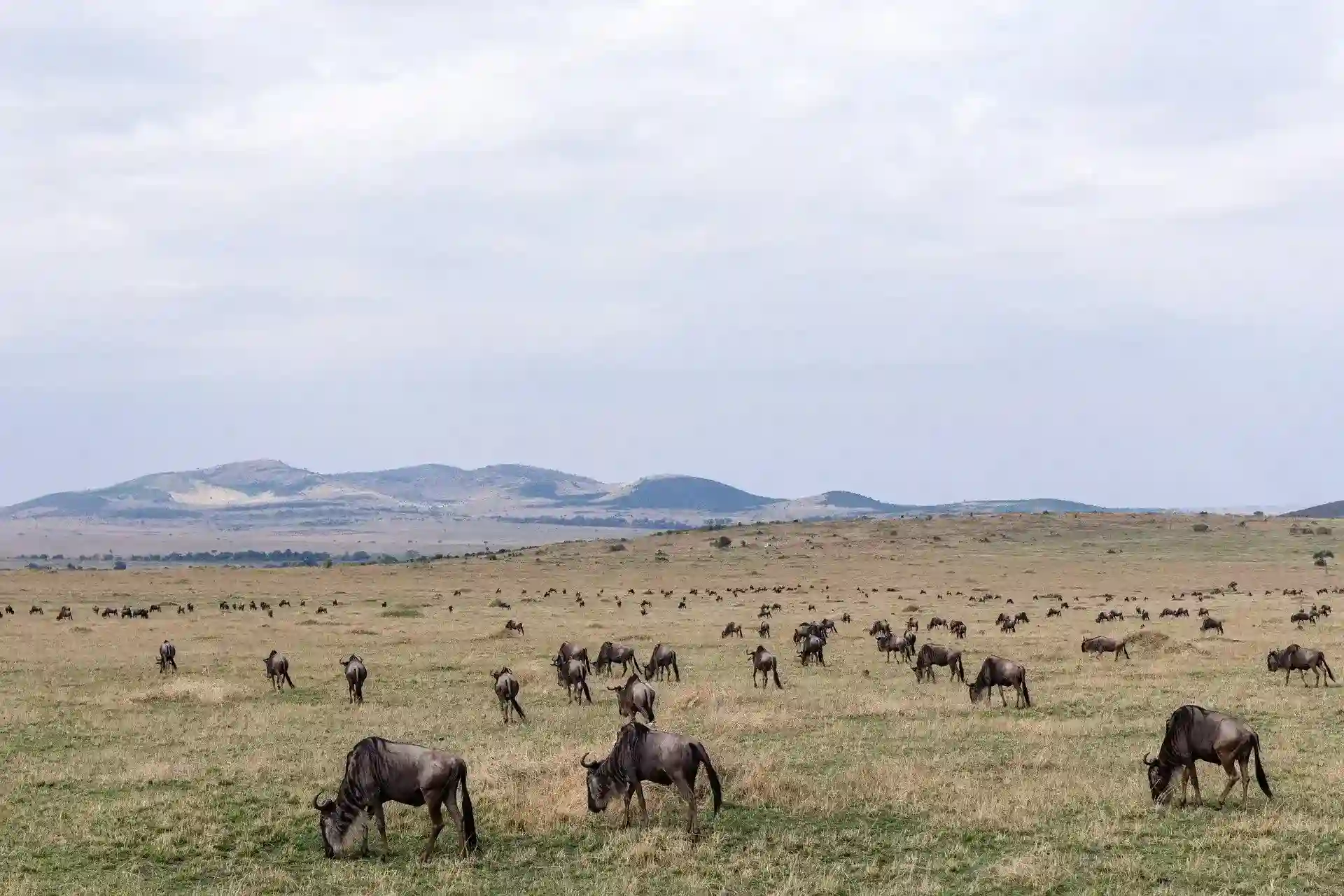
Guests staying in mid-range and luxury accommodation enter the same national parks, travel on many of the same roads and may watch the same lions, elephants or migration herds.
Paying more cannot guarantee:
- A river crossing
- A predator hunt
- The Big Five in one day
- A clear view without another vehicle nearby
- Perfect weather
- A particular migration location months in advance
Wild animals make their own decisions. A strong guide, suitable season, sensible route and enough time in each area usually influence the wildlife experience more than expensive furnishings.
Luxury can still improve how easily you reach wildlife. A camp in a productive part of the Serengeti may reduce the morning drive to the search area. A property in a private concession may offer activities or a sense of seclusion that is unavailable in some national-park locations. The value lies in access, position and flexibility, not in ownership of the wildlife.
Where the Extra Cost Usually Goes
A Tanzania safari price is normally built from several layers:
1
Accommodation and its meal plan
2
National-park, conservation, concession and activity fees
3
Safari vehicle and professional guide
4
Domestic flights and ground transfers
5
Season, rooming and group size
6
Included drinks, laundry, private services and special activities
Government fees apply according to the places visited and services used, not according to whether the traveller calls the safari mid-range or luxury. A luxury lodge does not make Serengeti entry cheaper, and a mid-range guest does not pay a different crater service fee for the same vehicle movement.
The largest variable is often accommodation. The next major differences may be flights, private-use services and group size. On a private road safari, the cost of the vehicle and guide is shared between the travellers in that vehicle, which is why the price per person normally falls as a private party grows.
1. Accommodation: The Most Visible Difference
What mid-range usually provides
A good mid-range lodge or tented camp should provide:
- A proper bed with mosquito protection where needed
- A private en-suite bathroom
- Hot water
- Full-board meals during the safari
- Housekeeping
- Charging arrangements
- A restaurant, dining tent or shared lounge
- Professional hospitality and a secure operating system
The style can range from a permanent lodge with many rooms to a smaller seasonal tented camp. "Tented" does not necessarily mean basic. Many mid-range safari tents have solid floors, comfortable furniture, flush toilets and private verandas.
What luxury may add
Luxury properties may provide:
- Larger rooms or tented suites
- Higher-quality design, furniture and linens
- Expansive private decks and stronger views
- Indoor and outdoor showers or private plunge pools
- Air conditioning where power systems allow it
- Fewer guest rooms and more staff per guest
- Butler, host or dedicated service
- Premium toiletries, minibars and selected beverages
- Spa treatments or wellness facilities
- Private dining, bush breakfasts or sundowners
- Complimentary or limited laundry
These features can make rest between game drives more enjoyable, especially on a honeymoon, anniversary or longer itinerary. They do not automatically improve wildlife guiding, so the complete operating arrangement still matters.
2. Location: Often the Most Valuable Upgrade
Location can be more important than the size of the bathtub.
A strategically placed camp may allow you to leave early, return later and spend less time driving between the accommodation and the main game-viewing area. This is particularly important in the Serengeti, where distances between regions are considerable.
Ask:
- Is the property inside the national park, in a conservation area, in a private concession or outside the protected area?
- How long is the drive from the camp to the area we are likely to explore?
- Does staying outside the gate restrict early or late wildlife-viewing time?
- Is the camp seasonal, and is its location suitable for our travel dates?
- Which activities are available from that location?
An expensive camp in the wrong region for your priorities can be poor value. A well-positioned mid-range camp can outperform it from a practical wildlife perspective.
3. Privacy and Camp Size
Luxury camps are often smaller, with perhaps a limited number of suites or tents. This can create quieter meals, more attentive service and a stronger sense of being in the wilderness.
At the highest level, families or groups may reserve a private house or exclusive-use section with their own host, chef, vehicle and guide. The price is paying for control and personal space rather than only for a more elaborate bedroom.
Mid-range properties may have more rooms and shared public spaces. This can feel sociable and relaxed, and some travellers enjoy meeting other guests around dinner or the campfire.
Neither atmosphere is automatically better. Consider whether you prefer:
- A lively lodge with a pool and several common areas
- A small tented camp with close contact with the bush
- A private family unit
- An exclusive house for your own group
- A romantic camp with few children
- A property designed to welcome families
4. Vehicle Use and Guiding
This is one of the most misunderstood parts of the comparison.
On a private road safari, Tanzania Inside Safari normally assigns a private Land Cruiser and professional driver-guide to your booking. Choosing luxury accommodation does not necessarily change the vehicle because reliable wildlife viewing, safe operation and suitable seating are required at every level.
Fly-in luxury camps often operate game drives in open vehicles based at the property. Unless a private vehicle is specifically included, these drives may be scheduled and shared with other guests. Shared drives can be enjoyable, but the group decides how long to remain at a sighting and when to return to camp.
A private vehicle and guide provide:
- Control over departure times within park rules
- More freedom to follow your wildlife interests
- Easier pacing for families or older travellers
- Better positioning and patience for photography
- Flexibility for comfort stops and meal timing
- Privacy for your own group
Before paying for a luxury safari, ask whether private use is included, optional or unavailable.
Does luxury guarantee a better guide?
No. Excellent guides work across different safari levels. A strong operator should not assign a less capable guide because the guest selected mid-range accommodation.
Luxury may make it easier to secure a senior specialist, private walking guide, photographer or guide fluent in a less commonly requested language. If guiding is your priority, ask for the expertise you need instead of assuming it comes automatically with the room rate.
5. Road Safari or Fly-In Safari
Domestic flights can transform a safari when the route includes distant regions or when guests want to reduce long road transfers.
Road safari advantages
- Continuous private guide and vehicle
- Landscapes and local life visible between parks
- Easier handling of larger luggage
- Strong value for families and small groups
- Flexibility to stop along the route
- A simpler operating structure
Fly-in safari advantages
- Less time on long inter-park transfers
- Easier access to remote camps
- Useful for combining northern and southern or western regions
- More time at the destination on carefully selected schedules
- A dramatic aerial perspective of the landscape
Flying is not always a pure upgrade. Light-aircraft schedules may involve several stops, strict baggage limits and shared transfers between the airstrip and camp. Weather or operational changes can affect timing.
A well-designed luxury itinerary may combine road and air travel: drive through Tarangire, Ngorongoro and the Serengeti, then fly back to Arusha or onward to Zanzibar. This avoids repeating a long return journey while retaining a private guide through the main safari.
Explore our 7-Day Luxury Tanzania Safari
6. Dining, Drinks and Personal Service
Mid-range safari meals are normally generous and practical. Breakfast may be served at the lodge or packed for an early departure. Lunch may be a picnic in the park, and dinner may be a buffet or set menu.
Luxury dining may include:
- More menu choice and refined presentation
- Higher staff-to-guest attention
- Private dining arrangements
- Bush breakfasts or special sundowners
- Selected house wines, spirits and soft drinks
- Better accommodation for individual meal times
- A dedicated chef in an exclusive-use property
Always check the meal plan. "All-inclusive" does not have an identical meaning everywhere. Premium wines, champagne, imported spirits, private bush meals and some activities may still cost extra.
For dietary restrictions or serious allergies, communication and kitchen procedures matter more than category. Provide detailed requirements before booking and ask how each property will manage them.
7. Activities Beyond Standard Game Drives
Luxury camps and private concessions may include or offer:
- Guided walking safaris
- Night game drives where permitted
- Bush meals and sundowners
- Cultural visits
- Photographic vehicles or specialist guiding
- Spa treatments
- Private sleep-outs or fly-camping
- Boating in suitable southern-circuit destinations
Some mid-range properties offer many of the same activities at an additional cost. Availability depends on the location, conservation rules, season, age restrictions and weather.
Ask which experiences are included in your quotation and which require advance booking. An impressive activity list has little value if your itinerary does not leave enough time to use it.
8. Service Recovery and Operational Support
Luxury should include careful attention to detail, but every serious safari operator should provide sound operational support regardless of accommodation level.
This includes:
- Confirmed reservations and clear travel documents
- A well-maintained safari vehicle
- A reachable local operations team
- Accurate domestic-flight and transfer planning
- Practical response to illness, delay or vehicle problems
- Honest communication when a supplier changes
The difference at luxury level may be speed, staffing depth, private alternatives and the ability to make complex arrangements quietly. However, paying more is not a replacement for checking the operator's licensing, terms, emergency process and reputation.
9. Season Can Change the Price More Than the Room Style
The same property can cost substantially more during periods of highest demand. Northern Tanzania's peak safari months commonly include July through October, with another popular period from late December into the calving months.
Green and shoulder seasons may offer:
- Lower accommodation rates
- Stay-pay offers
- Fewer vehicles in some areas
- Lush landscapes and dramatic skies
- Strong birdlife
- More availability for private services
The trade-offs can include rain, more difficult road conditions, seasonal camp closures and wildlife distributions that differ from peak-season expectations.
A luxury camp in a value season may cost less than a mid-range option at the busiest time. Always compare quotations for the same dates, route, rooming and inclusions.
10. Group Size Changes the Calculation
Private vehicle and guide costs are shared across the booking. Two travellers carry those costs between them, while four or six travellers divide them more widely.
Accommodation remains priced mainly per person or per room, so large groups still pay more in total. However, the per-person saving on transport can make a better camp or domestic flight more affordable.
For private safaris, Tanzania Inside Safari normally uses one vehicle for up to six guests so everyone has suitable viewing space. Groups of seven or more are usually divided between two vehicles. This protects comfort, photography and guide interaction.
Families should also compare:
- Child rates and age bands
- Family-room layouts
- Triple-room availability
- Private vehicle requirements
- Minimum ages for walks or other activities
- The cost of a private house versus several separate rooms
What Does Not Automatically Improve When You Pay More?
| Assumption | Reality | Better question | Priority |
|---|---|---|---|
| More wildlife | Sightings remain unpredictable | Is the route right for the season? | High |
| Private game drives | Many luxury fly-in camps use shared vehicles | Is private use included in writing? | High |
| Better guide | Strong guides work at every level | What training and specialist skills does the guide have? | High |
| Better itinerary | Expensive camps can still be arranged poorly | How much usable wildlife-viewing time do we have? | High |
| Every drink included | Premium products may be excluded | Which beverages are covered? | Medium |
| Every activity included | Permits and specialist activities may cost extra | What is included, optional or restricted? | Medium |
| Assumption | Reality | Better question | Priority |
|---|---|---|---|
| Complete seclusion | Popular parks and sightings remain shared | What is private at the camp and on safari? | Medium |
The Upgrades Usually Worth Paying For
1. The right location
A strong location can save hours of driving and improve access at the best times of day.
2. A private vehicle
For photographers, families and travellers with specific interests, control of the game drive can matter more than an elaborate suite.
3. More time in fewer places
An extra night in the Serengeti may create more value than upgrading every room while rushing through the route.
4. A flight that removes an unnecessary transfer
Flying out of the Serengeti can protect time and energy at the end of a road safari.
5. The right room configuration
Families may benefit greatly from an interconnecting unit or private house. Couples may value a secluded honeymoon suite.
6. Specialist guiding
Dedicated photographic, birding, walking or language expertise can shape every hour of the trip.
7. A meaningful special stay
Upgrading one or two nights for a birthday, honeymoon or final Serengeti experience can feel more valuable than paying the premium throughout.
Where You Can Save Without Weakening the Safari
Travel outside the highest-demand dates
If wildlife goals and school or work schedules allow, shoulder and green-season travel can unlock better properties at lower rates.
Mix accommodation levels
Use a comfortable mid-range lodge on transfer-heavy nights and invest in a stronger location where you will spend two or three nights.
Drive in and fly out
This hybrid keeps the private road journey while avoiding the repeated return transfer.
Focus the route
Fewer destinations reduce fuel, time and one-night stays. The result can feel calmer and more rewarding.
Travel with your own small group
Sharing a private vehicle between four or six relatives or friends can reduce the transport cost per person without joining strangers.
Protect the guide and vehicle standard
Choose simpler accommodation before reducing the quality of the guide, vehicle maintenance or itinerary design.
A Hybrid Safari Is Often the Best Answer
The choice does not have to be entirely mid-range or entirely luxury.
A hybrid itinerary might include:
- A comfortable lodge near Arusha on arrival
- A strong mid-range tented camp in Tarangire
- A luxury lodge near the Ngorongoro Crater for the view and service
- A well-positioned Serengeti camp for several nights
- A flight from the Serengeti to Arusha or Zanzibar
This approach directs money toward the moments where it changes the experience. It also allows travellers to discover that safari luxury is sometimes about silence, location and time rather than decoration.
Ask us to design a mixed-level Tanzania safari
Which Safari Level Is Right for You?
Choose mid-range if you value
- Comfortable private facilities without elaborate extras
- A private guide and vehicle at a sensible total cost
- Wildlife time over room time
- Social lodge spaces
- A longer safari within a fixed budget
- Practical, clean and well-run accommodation
Choose luxury if you value
- Small camps and highly personalised service
- Exceptional rooms and private outdoor space
- Premium locations or private concessions
- Easy access by light aircraft
- Fine dining, selected drinks and special meals
- Butler, host, spa or laundry services
- Privacy for a honeymoon, family or celebration
Choose a hybrid if you value
- Strong overall value
- One or two memorable upgrades
- Spending more in the Serengeti than on transit nights
- A combination of road travel and flights
- Comfort without paying premium rates every night
Questions to Ask Before Comparing Quotes
1
Are both quotations based on the same dates and number of travellers?
2
Are the exact properties and room categories named?
3
Where is each property located relative to the day's game-viewing area?
4
Is the vehicle private throughout the safari?
5
Are camp-based activities private or shared?
6
Are domestic flights included, and what baggage limit applies?
7
Which park, concession, crater and activity fees are included?
8
Which meals, drinks, laundry and transfers are included?
9
Are taxes and seasonal supplements included?
10
Does the itinerary provide enough time in each park?
11
What is the operator's plan if the vehicle or a confirmed lodge becomes unavailable?
12
Which upgrade would the planner prioritise if the budget increased?
13
Which element could be reduced with the least effect on the wildlife experience?
14
Are any wildlife experiences being presented as guaranteed?
15
What payment, cancellation and amendment terms apply?
Sample Budget-Priority Decisions
| Traveller | Best place to invest | Reason | Possible saving |
|---|---|---|---|
| First safari | Route, guide and enough nights | Builds the core wildlife experience | Choose comfortable mid-range rooms |
| Honeymoon couple | Special camp and private service | Creates privacy and celebration value | Mix luxury with selected mid-range nights |
| Family with children | Private vehicle and family unit | Protects pace, space and flexibility | Avoid unnecessary one-night upgrades |
| Photographer | Private vehicle and strong guide | Controls positioning and sighting time | Use simpler rooms in the right location |
| Older traveller | Location, flight and room access | Reduces fatigue and difficult transfers | Shorten the route rather than compress it |
| Friends travelling together | Private house or shared vehicle cost | Uses group economics effectively | Travel in shoulder season |
How Tanzania Inside Safari Designs Both Levels
Tanzania Inside Safari is a locally owned family company based in northern Tanzania. We plan private journeys around the traveller's priorities rather than treating mid-range and luxury as fixed templates.
Our approach includes:
- Understanding your dates, budget, group and interests before selecting properties
- Explaining where an upgrade changes the experience and where it does not
- Designing realistic routes around seasonal wildlife areas and driving time
- Using professional guides and purpose-prepared Land Cruisers
- Personally evaluating the lodges and camps we recommend
- Combining road and air travel when it improves the route
- Confirming inclusions, exclusions and room categories in writing
- Never guaranteeing the behaviour or location of wild animals
Our mid-range safaris are designed to remain comfortable, private and wildlife-focused. Our luxury journeys add carefully selected properties, premium locations, flights and personal services where they create genuine value.
You can also combine both standards. We would rather build the right journey for you than attach an expensive label to every night.
View our 10-Day Luxury Tanzania Safari
Plan the Right Safari for Your Budget
Tell us your travel dates, number of guests, preferred comfort level and the experiences that matter most. If you already have a target budget, share it openly. Our local team can show you what is realistic and where each additional dollar will make the greatest difference.
Plan your Tanzania safari with our local team
Prefer to speak with us directly? Contact Tanzania Inside Safari and tell us what you want the journey to feel like.
The best safari is not the most expensive one. It is the one whose route, guide, accommodation and pace are right for you.
Planning note: park conditions, flight schedules, lodge operations, road access and wildlife movement can change. Confirm the final details that apply to your travel dates before booking.