


Calving Season vs River Crossing Season: Which Migration Safari Is Better?
Compare Serengeti calving season and Mara River crossing safaris by wildlife, timing, scenery, crowds, weather, cost and photography.
Plan around your priorities02
Understand real logistics03
Compare options clearly04
Travel with confidence
Calving season and river crossing season reveal two very different chapters of the Great Migration. On the southern plains, the story is new life, vast grazing herds and predators responding to thousands of vulnerable calves. In northern Serengeti, the story is movement, tension, waiting and the possibility of herds entering the Mara River.
Neither season is universally better. Calving is often stronger for continuous wildlife behaviour, green landscapes and family-friendly variety. River crossing season is stronger for travellers whose defining dream is the iconic sight of wildebeest entering a major river and who can accept uncertainty, crowds and higher peak-season demand.
The best choice depends on what you want to observe, how patient you are, your travel month, budget, tolerance for rain or dust and the amount of time you can spend in the correct part of the Serengeti.
The Short Answer
| Choose calving season if... | Choose river crossing season if... | Calving advantage | Crossing advantage |
|---|---|---|---|
| You value animal behaviour throughout the day | A river crossing is your main safari dream | Frequent varied observations | Potential for an iconic spectacle |
| You prefer green scenery and dramatic skies | You prefer dry-season conditions | Rich colour and soft landscapes | Open vegetation and clear viewing |
| You travel with children | You enjoy patience and anticipation | More changing subjects | Intense build-up at the river |
| You want somewhat lower seasonal pressure | You accept peak demand and early booking | Often better value outside holidays | Classic high-season experience |
| You want births, calves and predators | You want large moving herds | Life-cycle storytelling | Scale, movement and river drama |
When and Where Does Each Season Happen?
Calving season
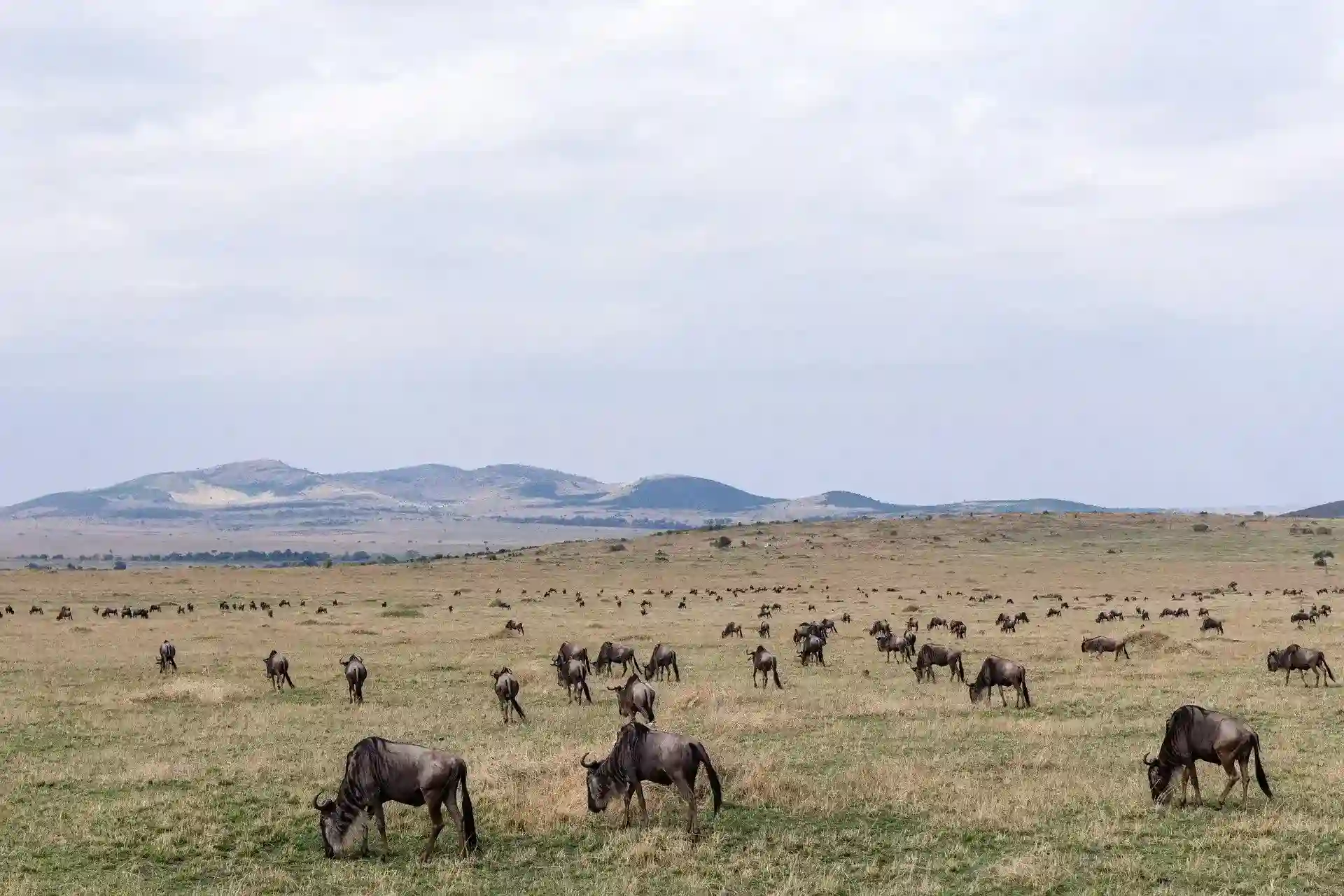
The strongest calving period is normally from late January through February into early March. The main setting is the short-grass plains around Ndutu, the southern Serengeti, Kusini and adjoining parts of the Ngorongoro Conservation Area.
Herds often begin gathering in December and January. February is usually the peak month for births, while March can still offer calves and predator activity as groups begin to spread or move.
River crossing season
Mara River activity is normally associated with northern Serengeti from July through October. The precise arrival and departure vary with rainfall. July may be transitional, August and September often have major herd concentrations in the north, and October can bring late or return crossings as groups turn south.
The Grumeti River in western Serengeti is a separate stage, usually associated with May to July. It can provide dramatic moments, but its geography and crossing pattern differ from the Mara River. This comparison focuses mainly on southern calving and northern Mara River season.
Why Neither Event Can Be Guaranteed
The Great Migration follows rain, grass and water rather than fixed dates. The herds are not one compact body. They split into many groups, and different groups may move at different speeds or even in opposite directions.
During calving season, a traveller can be among large herds and many calves without seeing an actual birth. Predation is natural but cannot be scheduled.
During river season, wildebeest may approach the bank and retreat, wait beyond the normal game-drive period, cross at another point or remain grazing away from the river. A group can cross in both directions within the same week.
The responsible promise is a well-positioned itinerary, sufficient time and expert guiding. No operator controls the rain or the animals.
Calving Season: What the Safari Feels Like
Calving season is broad and behaviour-rich. The herds are often distributed across open plains where visibility is excellent. Newborns stand, learn to follow their mothers, nurse and begin interacting with other calves. Mothers search for their young in moving groups, and the combined sound of wildebeest can fill the landscape.
Predators and scavengers respond to this concentration. Lion, cheetah, spotted hyena, jackal and vultures are part of the story, but the season is not continuous hunting. Long periods may involve grazing, resting, nursing and social behaviour.
The southern plains are usually green, with afternoon storms, wildflowers and migratory birds. Photography can change quickly from soft morning light to towering cloud formations.
Strong reasons to choose calving
- Wildlife behaviour is spread across the day
- There are many subjects besides one specific event
- Open terrain helps guests observe interactions
- Green landscapes produce colourful photography
- Big-cat activity can be excellent
- Families can move between sightings instead of waiting at one riverbank
- Ndutu combines migration with strong resident wildlife
The trade-offs
- Rain and muddy roads are possible
- Some seasonal camps close later in March
- An actual birth is never guaranteed
- Predator action may be confronting for some guests
- Herd positions can spread across Ndutu, southern Serengeti and Kusini
River Crossing Season: What the Safari Feels Like
River crossing season is defined by anticipation. Guides use field information, herd movement and experience to choose among different crossing areas. A gathering can build slowly as animals approach the bank, hesitate and shift position.
If a crossing begins, the scene can change within seconds. Wildebeest and zebra descend steep banks, enter the current and emerge on the other side. Crocodiles may be present, animals can turn back and the herd may continue for minutes or much longer.
Yet many northern game drives never include a crossing. The herds may be grazing on the Lamai plains, moving between valleys or resting far from the water. Northern Serengeti remains a strong wildlife destination, with resident lion, leopard, elephant, giraffe and other species supporting the safari when the river is quiet.
Strong reasons to choose river season
- The possible crossing is one of Africa's iconic wildlife scenes
- Dry-season vegetation can make wildlife easier to see
- Herd scale and movement can be extraordinary
- Northern Serengeti is scenic and wildlife-rich
- The season combines well with a fly-in safari
- Warm, dry days suit many travellers
The trade-offs
- A crossing cannot be scheduled or guaranteed
- Waiting can occupy a large part of the day
- July to September is a high-demand period
- Accommodation and flights often cost more and sell early
- Popular crossing points can become crowded
- Dust and cold early mornings are common
Head-to-Head Comparison
| Factor | Calving season | River crossing season | Better fit |
|---|---|---|---|
| Typical months | Late January-March | July-October | Depends on travel dates |
| Main region | Ndutu and southern plains | Northern Serengeti and Mara River | Depends on desired event |
| Core story | Birth, calves and predators | Herd movement and river tension | Behaviour vs spectacle |
| Factor | Calving season | River crossing season | Better fit |
|---|---|---|---|
| Event predictability | Calves likely in season; births uncertain | Herds likely in north; crossings uncertain | Calving for continuity |
| Scenery | Green, lush and stormy | Dry, golden and open | Personal preference |
| Crowds | Moderate, busiest in February | High around popular river points | Calving for space |
| Weather | Showers and possible mud | Mostly dry, dusty and cool mornings | Crossing for dryness |
| Photography | Behaviour, colour and soft light | Action, scale and dramatic crossings | Depends on style |
| Family appeal | Varied and flexible | Waiting may challenge young children | Calving for most families |
| Advance booking | Important in February | Essential in peak months | Calving may offer flexibility |
Which Season Offers More Reliable Wildlife Viewing?
Both seasons provide excellent wildlife, but reliability should be defined carefully.
Calving season usually offers more continuous migration-related behaviour. Even without witnessing a birth or hunt, travellers may see newborns, mothers, grazing herds, predator patrols and scavengers across a broad landscape.
River season may offer a more explosive single event, but the specific crossing is less predictable. A guest can spend three excellent days among large herds and northern predators without seeing animals enter the river.
If the priority is varied migration behaviour every day, calving often has the advantage. If the priority is the possibility of one extraordinary high-intensity event, choose the river season and allow enough time.
Predator Activity
Predators are present in both regions throughout the year.
During calving season
The concentration of newborns creates opportunities for cheetah, lion, hyena and jackal. Open plains can make chases and interactions easier to observe. Cheetah photography is particularly associated with the wider southern and eastern plains, although sightings remain unpredictable.
During river crossing season
Crocodiles create the best-known danger in the river. Lion, leopard and hyena also use the wider northern landscape. Not every crossing involves a crocodile attack, and not every game drive near the river includes predators hunting wildebeest.
Travellers who are emotionally uncomfortable with death or injury should discuss this before choosing either season. Wildlife guides can explain natural behaviour, but they cannot remove every distressing scene.
Landscape and Weather
Green southern plains
Calving season follows the short rains and overlaps with the approach to the long rains. The landscape is often green, skies can be dramatic and dust is limited. Rain commonly arrives in showers rather than falling continuously all day, but heavy local storms can affect roads and plans.
Daytime conditions are generally warm. Waterproof layers and protection for cameras are important.
Dry northern Serengeti
River season falls largely within the dry season. Grass becomes golden, water sources gain importance and roads are usually firmer. Early mornings can be cold in an open vehicle, while afternoons may be warm and dusty.
Dry conditions do not mean completely predictable weather. Local rain in the wider Mara ecosystem is one of the factors that can pull herds back and forth.
Crowds and the Feeling of the Safari
Crowding is influenced by exact location, month, time of day, guide decisions and accommodation density.
Calving season attracts many visitors in February, especially around major predator sightings, but the open southern ecosystem allows vehicles to spread across a large area. Ndutu's road and land-use rules differ across boundaries, and guides must follow the regulations that apply in each zone.
Northern river season concentrates attention at recognised crossing points. When a large herd approaches, many vehicles may gather. A professional guide should position responsibly, avoid blocking animals and obey ranger instructions rather than forcing a closer view.
Travellers who strongly dislike vehicle gatherings may prefer calving season, a quieter transitional month or a broader northern safari that does not treat the river as the only objective.
Cost and Accommodation Availability
Exact prices depend on property level, route, flights, group size and booking year. The seasonal pattern is more useful than a single headline price.
River crossing months overlap with Tanzania's main dry-season demand. Northern seasonal camps, local flights and premium lodges can sell out early. Longer travel distances and fly-in arrangements may also increase cost.
Calving season can provide better value outside Christmas, New Year and the strongest February dates. However, well-positioned Ndutu camps are limited and still require early booking.
The cheapest lodge is not good value if it is several hours from the herds. Compare the total itinerary, including:
- Number of nights in the correct migration region
- Road transfer or internal flight costs
- Private or shared game-drive arrangements
- Park and conservation fees
- Seasonal camp location
- The quality and experience of the guide
- Time lost commuting from a poorly located property
Which Season Is Better for Photography?
Both can be exceptional, but they reward different styles.
Calving photography
Choose calving for:
- Behavioural sequences
- Mothers and calves
- Cheetah and lion on open plains
- Green environmental portraits
- Storm light and dramatic skies
- Low-angle subjects in short grass
A long lens is valuable for behaviour, while a mid-range zoom captures herds and landscapes. Protect equipment from rain and fine dust.
River crossing photography
Choose the north for:
- Herd scale at the riverbank
- Action and movement
- Dust, water and compressed compositions
- Wide scenes showing the river landscape
- Dry-season golden light
Crossing photography is technically demanding. Action may start suddenly, animals overlap and vehicle position cannot always be changed. A private vehicle provides more control but never entitles the group to block wildlife or other vehicles.
The photography verdict
Calving is often better for a complete portfolio because subjects and behaviour vary throughout the stay. River season offers the possibility of a singular dramatic sequence. Serious photographers may eventually want to experience both.
Which Season Is Better for Families?
For many families, calving season is the easier choice. Children can see calves, predators, birds and large herds without spending every day waiting at one crossing point. The open landscape makes it easier to explain animal behaviour.
River season can still be excellent for older children and teenagers who understand the uncertainty and enjoy patient observation. A private vehicle is strongly recommended so the family can leave the river, take breaks and adjust game-drive length.
Parents should consider:
- The child's response to predation or injured animals
- Ability to sit quietly for extended periods
- Motion sickness and long transfer days
- Camp minimum-age rules
- Family-room configuration
- Swimming-pool and midday-rest options
- Whether flying into northern Serengeti reduces fatigue
Our 8-Day Luxury Family Mara Crossing Safari reduces road time with a northern flight and can be tailored to the children's ages.
Which Season Is Better for First-Time Safari Travellers?
Calving is often the stronger first migration safari because the experience does not depend as heavily on one short-lived event. It can combine naturally with Tarangire, Ngorongoro Crater and central Serengeti, producing a varied northern-circuit journey.
River season is suitable for a first safari when the traveller understands that a crossing is a possibility, not the entire measure of success. Northern Serengeti's resident wildlife and landscapes must be valued alongside the river.
For either season, avoid making the migration the only purpose of the holiday. Tanzania's parks offer elephants, giraffes, big cats, birds, scenery, local culture and many smaller stories that remain rewarding even when the herds move unexpectedly.
Which Season Is Better for a Honeymoon?
The choice depends on atmosphere.
Calving season offers lush scenery, dramatic skies and the symbolism of new life. Green-season properties may feel quieter, and some offer attractive rates. Rain can add romance to a tented-camp evening but may interrupt a planned outdoor meal.
River season offers classic dry-season sunsets, remote northern camps and the excitement of tracking the herds. It is also busier and often more expensive. Couples seeking privacy should prioritise a small camp, private vehicle and enough nights to avoid rushing.
Either season combines well with Zanzibar, where several beach nights create a slower ending after early game drives.
How Many Nights Do You Need?
Calving-focused safari
Plan at least three nights in Ndutu or the southern Serengeti. Four nights provide more flexibility for photography, weather and movement across the wider plains.
River-crossing safari
Plan at least three nights in northern Serengeti; four is stronger when a crossing is the principal goal. One or two nights expose the trip to too much timing risk.
Full safari length
An eight- to ten-day Tanzania journey normally creates a better balance than a compressed trip. It allows arrival recovery, other parks or central Serengeti and several nights in the seasonal migration area.
| Safari priority | Minimum seasonal stay | Stronger stay | Suggested overall length |
|---|---|---|---|
| Calving and predators | 3 nights | 4 nights | 8-10 days |
| Mara River possibility | 3 nights | 4 nights | 8-10 days |
| Photography | 4 nights | 5 nights | 9-12 days |
| Family migration safari | 3 nights | 3-4 nights | 8-10 days |
| Migration plus Zanzibar | 3 nights | 4 nights | 12-14 days |
Sample Calving Season Itinerary Structure
An effective calving route might include:
1
Arrival and overnight in Arusha
2
Tarangire National Park
3
Ngorongoro Highlands or Crater
4
Three or four nights in Ndutu and the southern Serengeti
5
Central Serengeti for resident wildlife
6
Flight or road return to Arusha
The exact order should reduce backtracking and reflect accommodation availability. Explore Tanzania Inside Safari's 10-Day Calving Season Safari or a shorter 4-Day Ndutu Calving Safari .
Sample River Crossing Itinerary Structure
A strong northern route might include:
1
Arrival and overnight in Arusha
2
Flight to northern Serengeti or a road circuit through other parks
3
Three or four nights around Kogatende or Lamai
4
Central Serengeti for dependable resident wildlife
5
Ngorongoro Crater
6
Return to Arusha or continue to Zanzibar
Flying into the north protects game-viewing time. A road approach provides a deeper sense of landscape but requires more days. See our 8-Day Mara River Crossing Safari .
Can You Combine Both Seasons in One Trip?
Calving and Mara River crossing seasons happen in different parts of the annual cycle, so they cannot normally be experienced during one short holiday. A traveller would need two journeys in different seasons.
The closest alternative is to combine two migration stages in a transitional period:
- May or June: central movement plus Western Corridor and possible Grumeti activity
- July: Western Corridor plus northern Serengeti
- October: northern Serengeti plus the southward movement through Lobo or central areas
These trips offer variety but should not be marketed as calving plus Mara crossing.
Emotional and Ethical Considerations
Both seasons show survival directly. A calf may be separated from its mother. A predator may hunt. A river crossing may involve injury, drowning or crocodiles. Some travellers find these experiences profound; others find them distressing.
Tell the guide if children or adults would prefer to leave an intense sighting. There is no requirement to watch every event.
Responsible viewing means:
- Never pushing animals toward a crossing
- Not surrounding a mother, newborn or predator
- Keeping designated distances where rules apply
- Following ranger and guide instructions
- Avoiding loud reactions that alter behaviour
- Accepting a less dramatic view when the closer position is harmful
- Never asking a guide to leave authorised roads or areas
The welfare of wildlife matters more than a photograph.
A Simple Decision Guide
| Your priority | Better starting choice | Why | Important expectation |
|---|---|---|---|
| Newborn animals | Calving | Peak concentration of calves | Birth is not guaranteed |
| Big-cat behaviour | Calving | Open plains and vulnerable young | Hunts remain unpredictable |
| Iconic action image | River crossing | Potential for water action | May require days of waiting |
| Green landscapes | Calving | Wet-season colour | Showers and mud possible |
| Dry weather | River crossing | Main dry-season timing | Dust and cold mornings |
| Fewer peak crowds | Calving | Herds spread over wider plains | February is still popular |
| Young children | Calving | More varied daily subjects | Prepare them for predation |
| Patient repeat traveller | River crossing | Anticipation and tracking | The river may stay quiet |
| Better seasonal value | Calving | Often below dry-season peak | Festive and February dates vary |
| First migration safari | Calving | Broader continuous behaviour | Choose the correct southern base |
Questions to Ask Before Booking
1
Is the lodge in the correct region for my exact dates?
2
How many nights are spent in the seasonal migration area?
3
Is the game-drive vehicle private or shared?
4
How long is the transfer from the camp to the likely herds?
5
Is the itinerary built around migration behaviour or one promised event?
6
What resident wildlife can we see if the herds move early or late?
7
Would a light-aircraft flight save meaningful time?
8
What weather and road conditions should we expect?
9
How crowded are the likely viewing areas?
10
What is the guide's approach to ethical positioning?
11
Which costs change between the two seasons?
12
What cancellation terms apply to seasonal camps and flights?
Our Recommendation
Choose calving season if this is your first migration safari, if you travel with younger children, if you value behaviour and photography across the whole day or if green scenery is part of the dream.
Choose river crossing season if the Mara River is a long-held priority, if you can stay at least three or four nights in northern Serengeti, if you are comfortable waiting and if you accept peak-season pricing and visitor pressure.
For wildlife enthusiasts who can make two journeys, experience both. They are not alternative versions of the same safari; they are different chapters in the life of the Serengeti ecosystem.
How Tanzania Inside Safari Plans Migration Trips
We begin with your dates and the experience you care about, then build the route around the correct part of the ecosystem.
Our approach includes:
- Honest explanation of probability rather than wildlife guarantees
- Enough nights in the seasonal focus area
- Private 4x4 game drives with a professional local guide
- Camp selection based on location as well as comfort
- Recent field information during the safari
- Resident wildlife alternatives when the herds shift
- Road, fly-in or combined routing based on time and budget
- Family, honeymoon and photography adjustments
- Responsible wildlife viewing and park-rule compliance
Choose Your Great Migration Safari
Tell us your available month, group size, budget range, preferred accommodation level and the wildlife behaviour you most want to experience. Our local team will recommend calving season, river season or another stage of the migration that fits you better.
Explore our Tanzania wildlife safaris or share your priorities through the trip-planning form .
Plan your Great Migration safari with Tanzania Inside Safari
If you are still deciding between Ndutu and northern Serengeti, contact our Tanzania safari specialists .
Planning note: park conditions, flight schedules, lodge operations, road access and wildlife movement can change. Confirm the final details that apply to your travel dates before booking.