


How Far in Advance Should You Book a Tanzania Safari?
Learn when to book a Tanzania safari for migration season, calving, family travel, luxury camps, domestic flights and last-minute departures.
Plan around your priorities02
Understand real logistics03
Compare options clearly04
Travel with confidence
For most Tanzania safaris, six to twelve months is a useful planning window. Travellers targeting the July to October migration season, Christmas and New Year, specific small camps or family rooms should often begin nine to twelve months ahead. Quieter-season trips can frequently be organised three to six months before travel, and a flexible last-minute safari may still be possible.
These are planning ranges, not booking deadlines. Availability depends on your exact dates, group size, rooming, preferred camps, route, domestic flights and willingness to consider alternatives.
Early planning does not guarantee wildlife behaviour. It gives you a wider choice of well-positioned accommodation and enough time to build a route around the season instead of fitting your safari around whatever rooms remain.
Tanzania Safari Booking Timeline at a Glance
| Travel period or priority | Recommended planning window | Why early booking helps | If booking later |
|---|---|---|---|
| July to August peak season | 9 to 12 months, sometimes earlier | Northern Serengeti camps, family rooms and flights fill quickly | Be flexible on dates, camp and route |
| September to October | 7 to 10 months | Strong dry-season demand continues | Consider nearby regions or mixed camp levels |
| Christmas and New Year | 9 to 12 months | Holiday flights and safari properties are heavily requested | Shift dates away from festive nights if possible |
| January to March calving period | 6 to 9 months | Ndutu and southern-area camps have limited seasonal inventory | Use alternative bases and keep dates flexible |
| June, November or early December | 4 to 6 months | Good properties still book ahead, but choice is broader | A tailored route may remain possible |
| April to May green season | 1 to 4 months | This is usually the most flexible period | Check seasonal closures and road conditions |
| Travel period or priority | Recommended planning window | Why early booking helps | If booking later |
|---|---|---|---|
| Large group or fixed family dates | 9 to 15 months | Several matching rooms and vehicles are harder to secure | Split properties or adjust the order of the route |
| Specific luxury camp or private house | 12 months or more | Very small inventory can disappear first | Ask for a comparable property, not a random substitute |
The Short Answer by Travel Style
- First-time private safari: start six to nine months ahead.
- July or August migration safari: aim for nine to twelve months ahead.
- Christmas or New Year safari: plan nine to twelve months ahead.
- Ndutu calving safari: allow six to nine months.
- Family travelling in school holidays: start nine to twelve months ahead.
- Honeymoon with named luxury camps: begin twelve months ahead if dates are fixed.
- Green-season safari: three months may be enough, although earlier gives more choice.
- Last-minute flexible safari: ask immediately; a good route may still be possible.
The best time to enquire is when you know your likely travel month, approximate group size and realistic budget. You do not need to have every detail decided before speaking with a local operator.
Why Tanzania Safaris Fill Earlier Than Ordinary Holidays
A safari depends on several limited resources being available on the same dates:
- The right camp in the right wildlife region
- The correct room types for your group
- A suitable private vehicle
- A professional guide
- Domestic-flight seats
- Airport, airstrip and lodge transfers
- Specialist activities or guides
Small safari camps may have only a limited number of tents. A family may need two interconnecting rooms or one family suite rather than any two rooms. A migration itinerary may require a camp in northern Serengeti for particular dates, not simply any property carrying the word Serengeti.
The challenge is not that Tanzania runs out of beds. It is that the right combination of location, standard, room type and route can disappear.
Book for the Location, Not Only the Lodge Name
The Serengeti is a vast ecosystem. A room in central Serengeti is not operationally equivalent to a room in the far north during the typical river-crossing period. Long distances affect game-drive time, comfort and the logic of the route.
When planning early, your operator can select accommodation around:
- The wildlife region most suitable for your dates
- Driving time between destinations
- Access to airstrips
- Park and conservation-area boundaries
- Activities permitted in that location
- Your preferred comfort level
If the first-choice property is unavailable, a knowledgeable planner should recommend a comparable alternative in a sensible location. The replacement should not merely have similar room photographs.
Booking a Great Migration Safari
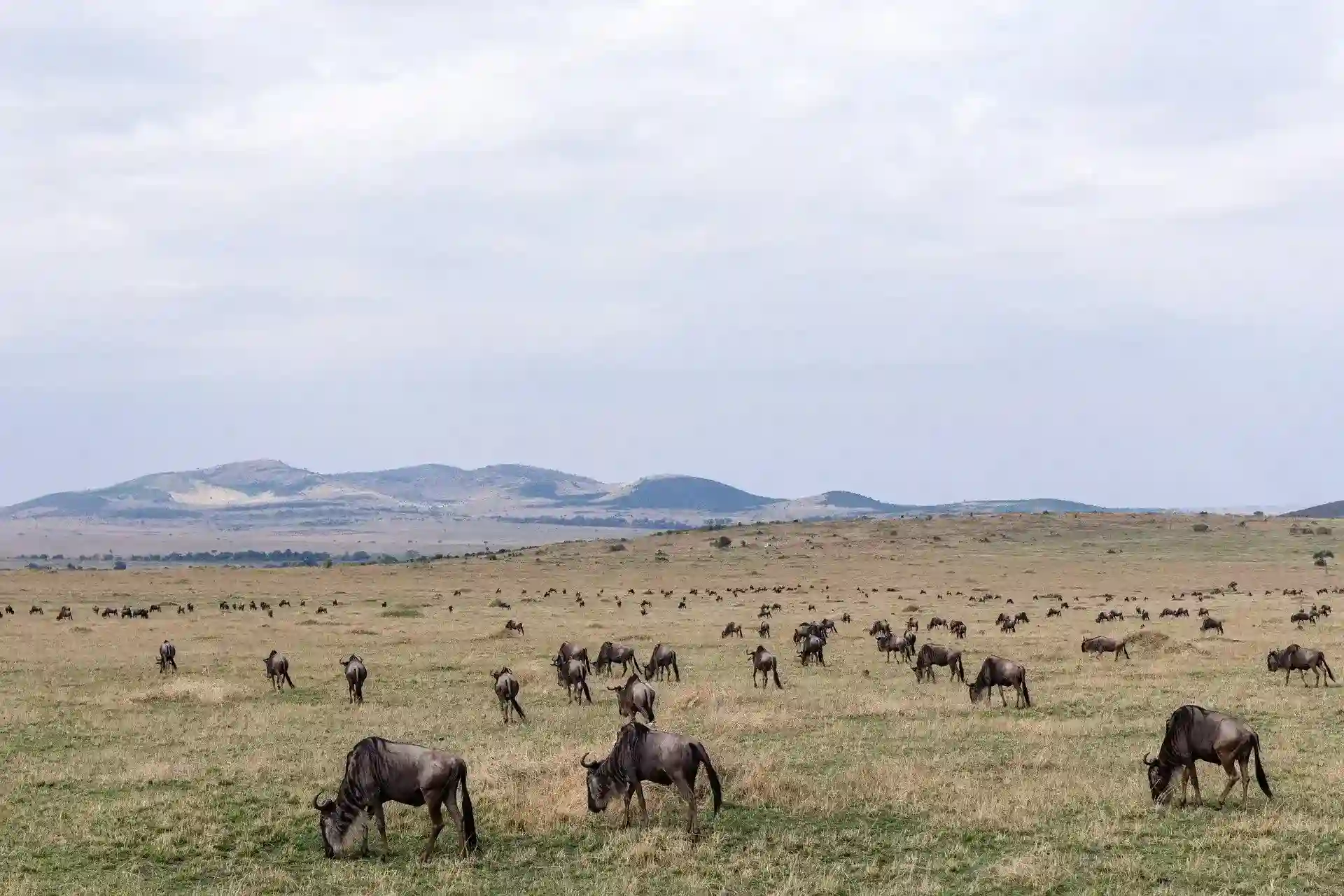
The Great Migration moves throughout the year. Rainfall, grazing and water influence the herds, so calendar descriptions are approximate.
July to October: northern Serengeti and river-crossing interest
Travellers hoping to be in northern Serengeti during the broad river-crossing season should normally plan nine to twelve months in advance. Small camps near useful wildlife areas, domestic flights and family units can fill early.
Booking early improves your chance of staying in an appropriate region. It cannot guarantee a river crossing. Herds may wait beside a river for hours or days, cross away from the vehicle or move differently from previous years.
Explore our 8-Day Mara River Crossing Family Safari
January to March: Ndutu and calving-season interest
For the calving period, six to nine months is a sensible target. February is especially popular, and seasonal camps around Ndutu have limited room inventory.
The broader experience includes newborn wildebeest, large herds, predator activity, green landscapes and birdlife. Exact calving and herd locations remain natural events rather than scheduled performances.
Explore our 9-Day Calving Season Family Safari
July and August: Tanzania's Most Competitive Safari Months
July and August combine dry-season wildlife viewing with international school holidays. This creates demand across:
- Northern Serengeti camps
- Central Serengeti accommodation
- Ngorongoro-area lodges
- Family rooms and triple rooms
- Private safari vehicles
- Experienced guides
- Domestic flights
- Zanzibar beach resorts
If your dates cannot move, early confirmation is important. Waiting for a last-minute discount can result in a fragmented itinerary with unnecessary one-night stops or long transfers.
For July and August travel, we recommend starting the conversation about a year ahead whenever possible. This is especially important for families, photographers and groups requiring several rooms.
Christmas, New Year and Festive-Season Travel
Late December and early January are highly requested for both safari and Zanzibar. International flights, domestic flights and beach hotels can be under pressure at the same time.
Begin nine to twelve months ahead if:
- You want to travel over Christmas or New Year
- You need family rooms
- You are combining safari with Zanzibar
- You want a specific luxury camp or resort
- Your international flights are tied to fixed leave dates
Festive supplements and minimum-stay requirements may apply at some properties. Ask for these costs before confirming the itinerary.
Booking a Family Safari
Families should often book earlier than couples because room configuration matters.
A property may have many standard rooms but only one or two family units. Some camps restrict the ages accepted, while some activities have minimum-age rules. Families may also need:
- Interconnecting rooms or tents close together
- A private vehicle
- Child-friendly meal arrangements
- A pool or suitable rest space
- Reduced daily driving hours
- Additional luggage space
- Specific bed layouts
For school-holiday travel, aim for nine to twelve months. For a family of six or more, or a multi-generational group, begin up to twelve to fifteen months ahead if the dates are fixed.
Tanzania Inside Safari normally uses one private vehicle for up to six guests. Groups of seven or more are usually divided between two vehicles to protect space, viewing and comfort.
Booking for a Large Group
The larger the group, the earlier planning should begin. Finding ten rooms at one property is different from finding one room for a couple.
Start twelve to eighteen months ahead for:
- Corporate or incentive groups
- Charity groups
- Extended families
- Photography clubs
- Wedding or celebration groups
- Groups requiring more than one vehicle
An early enquiry also gives the organiser time to collect passport details, rooming preferences, dietary needs and deposits without rushing everyone.
For a large group, confirm who is authorised to make decisions. Repeated changes after rooms are held can cause options to expire.
Booking a Honeymoon or Anniversary Safari
Couples with flexible accommodation choices may not need a full year. However, honeymoon suites, private plunge-pool rooms and small romantic camps can be limited.
Begin nine to twelve months ahead when:
- The wedding date fixes the travel period
- You want named camps rather than equivalent alternatives
- You are combining safari and Zanzibar
- You want a private house, special dinner or balloon safari
- The trip falls in July, August or the festive season
Tell the operator about the celebration during planning. Some arrangements must be requested before arrival, and the room category may matter more than the general lodge category.
Booking Luxury and Ultra-Luxury Accommodation
Luxury does not mean unlimited availability. Many premium camps are deliberately small, which is part of their appeal.
Book twelve months or more ahead if you require:
- A specific small camp
- A private safari house
- A family villa
- A named suite
- A dedicated private vehicle at a fly-in camp
- A specialist guide
- Several rooms at the same luxury property
At this level, the exact inclusions should be checked carefully. Private game drives, premium drinks, laundry, spa treatments and special activities are not identical at every property.
When to Book a Safari and Zanzibar Combination
A combined trip involves two booking environments: safari logistics on the mainland and resort or hotel inventory on Zanzibar.
For popular beach periods, room categories with sea views, family accommodation and all-inclusive resorts may fill early. Domestic flights also need to connect sensibly with the safari and international journey.
Recommended planning windows are:
- Nine to twelve months for July, August and festive-season combinations
- Six to nine months for a honeymoon with specific properties
- Four to six months for flexible shoulder-season travel
- One to four months for a flexible green-season combination
The sequence matters. A well-planned journey may drive through the northern circuit and then fly from Serengeti to Zanzibar, avoiding a long return by road.
Explore our 14-Day Luxury Family Safari and Zanzibar Escape
Domestic Flights and Baggage Planning
Domestic flights can save valuable time, particularly when leaving the Serengeti or connecting distant safari regions.
Seats on useful peak-season departures may become limited. Early booking also helps coordinate:
- Safari camp availability
- Airstrip transfers
- International connections
- Zanzibar arrival times
- Luggage requirements
Light aircraft normally have stricter baggage limits than international airlines and often require soft-sided bags. The operator should confirm the applicable allowance for your specific flight.
If you expect excess luggage, camera equipment, mobility equipment or children's supplies, discuss this before ticketing. Solutions may include advance excess-baggage purchase, luggage storage or a different routing.
Should You Book International Flights First?
Do not commit to expensive, non-refundable international flights while your safari dates are only an idea.
A safer sequence is:
1
Share your preferred travel window with the safari operator.
2
Receive a realistic route and price.
3
Ask the operator to check accommodation and domestic-flight availability.
4
Confirm the final start and end points in writing.
5
Book international flights that fit the confirmed programme.
6
Pay the safari deposit within the agreed hold period.
If an unusually good international fare requires quick action, speak with the operator before purchase. Confirm which arrival airport, arrival time and departure airport work with the itinerary.
Kilimanjaro International Airport is usually the most convenient gateway for northern Tanzania safaris. Zanzibar may be the better departure point when the holiday ends at the beach.
What Is a Provisional Hold?
A provisional hold is a temporary reservation request, not a fully confirmed safari.
Properties may hold rooms for a short period while the traveller reviews the proposal and pays the required deposit. The length of the hold varies, and a supplier may release the space if confirmation does not arrive by the deadline.
Ask the operator:
- Which rooms are on hold?
- When does each hold expire?
- Is the domestic flight held or only quoted?
- Which payment confirms the services?
- What happens if one supplier releases space?
A quotation alone does not always reserve rooms. Written confirmation and payment terms determine when the booking becomes secure.
Why a Deposit Is Required
Safari operators must commit funds to accommodation, flights and other suppliers. A deposit allows the company to convert requested services into confirmed reservations.
Tanzania Inside Safari's standard published terms normally require a 30% deposit to confirm the booking. Some domestic flights, Zanzibar services or special supplier arrangements may require a larger advance or full prepayment. Bookings made close to departure may require immediate full payment.
Before paying, review:
- The confirmed itinerary
- Named accommodation and room categories
- Inclusions and exclusions
- Deposit and balance schedule
- Amendment and cancellation terms
- Currency and payment charges
- The legal company and payment beneficiary
Read Tanzania Inside Safari's booking terms
Buy Travel Insurance When You Confirm
Travel insurance should not be left until the final week. Cancellation protection may depend on when the policy is purchased, and safari suppliers can have non-refundable terms.
The policy should be suitable for your journey and may need to cover:
- Trip cancellation and interruption
- Medical treatment
- Emergency evacuation
- Missed connections and travel delay
- Domestic flights
- Safari activities
- Pre-existing conditions where applicable
- Lost or delayed luggage
Read the policy conditions rather than assuming a credit card or basic travel plan provides sufficient protection.
What to Arrange After Booking
Early confirmation does not mean planning stops. Use the remaining months productively.
Six to twelve months before travel
- Confirm the route, accommodation and deposit
- Book international flights
- Purchase travel insurance
- Check passport validity and visa requirements
- Discuss medical and vaccination needs with a qualified professional
Three to six months before travel
- Confirm domestic flights and baggage rules
- Review clothing and equipment
- Reserve optional activities
- Share dietary, allergy and mobility requirements
- Confirm rooming and children's ages
One to three months before travel
- Pay the balance according to the booking terms
- Provide final flight details and passport information
- Review the day-by-day itinerary
- Confirm airport transfers
- Recheck insurance and emergency contacts
Final two weeks
- Pack medication and essential items in hand luggage
- Reconfirm luggage allowances
- Download travel documents
- Share arrival updates with the operator if flights change
- Keep the local contact details accessible
Can You Book a Tanzania Safari at the Last Minute?
Yes. Last-minute safaris can work, particularly when travellers are flexible about dates, accommodation level and route.
The strongest last-minute opportunities are often:
- Green-season travel
- A short northern-circuit safari
- A private trip for one or two rooms
- Mid-week dates
- An itinerary using available alternatives rather than named camps
The challenges may include:
- Limited camp choice
- Less efficient routing
- Higher flight prices or unavailable sectors
- Reduced choice of family rooms
- Immediate payment requirements
- Less time for visas, insurance and medical preparation
A good operator should tell you honestly what can be confirmed. Last-minute planning should not mean vague accommodation, unrealistic transfer times or unsafe shortcuts.
What If Your Preferred Camp Is Already Full?
An unavailable property does not automatically ruin the safari. Ask the planner to protect the function of the itinerary.
The best alternative should match as many of these factors as possible:
- Wildlife region
- Driving distance
- Accommodation standard
- Room configuration
- Activities
- Price range
- Family or accessibility needs
Changing the route by one day may unlock better availability. In other cases, mixing accommodation levels or adding a domestic flight can preserve the experience.
Do not accept a substitute only because it carries a similar luxury label. Location and logistics matter.
Does Booking Early Secure a Lower Price?
Sometimes, but not always.
Early booking may secure current accommodation rates, preferred rooms or a useful offer. However, quotations can still be affected by:
- Changes in government fees or taxes
- Exchange-rate movements
- Supplier rate revisions
- Fuel and flight changes
- A change in dates, group size or rooming
Ask which parts of the quotation are fixed after deposit and which remain subject to adjustment. The main advantage of early booking is usually choice and itinerary quality, not a guaranteed discount.
Common Booking Mistakes
- Waiting for every traveller to decide before checking availability
- Buying international flights before confirming the safari dates
- Assuming any Serengeti camp is suitable for every migration month
- Requesting one quotation without giving a realistic budget
- Treating a quotation as a confirmed reservation
- Ignoring family-room and child-age policies
- Forgetting domestic-flight baggage limits
- Delaying travel insurance
- Choosing a cheaper substitute in the wrong location
- Expecting early booking to guarantee wildlife behaviour
Booking Calendar by Traveller Type
| Traveller | Start planning | Confirm early because | Keep flexible |
|---|---|---|---|
| Couple on first safari | 6 to 9 months | Camp location and route quality | Room style |
| Family in school holidays | 9 to 12 months | Family units and private vehicle | Exact lodge brand |
| Honeymoon | 9 to 12 months | Special suite and beach extension | One-night transit property |
| River-crossing focus | 9 to 12 months | Northern Serengeti inventory | Exact crossing expectation |
| Calving focus | 6 to 9 months | Seasonal Ndutu camps | Exact herd location |
| Photographer | 9 to 12 months | Private vehicle and specialist guide | Decorative room upgrades |
| Large group | 12 to 18 months | Matching rooms and several vehicles | Route order |
| Green-season traveller | 1 to 4 months | Seasonal camp operations | Exact dates and property |
| Last-minute traveller | Immediately | Every day can change availability | Dates, camp and route |
Information to Include in Your First Enquiry
You will receive a more useful proposal if you send:
- Preferred travel dates and flexibility
- Number of adults and children
- Children's ages at the time of travel
- Rooming requirements
- Approximate budget
- Desired comfort level
- Wildlife and cultural interests
- Safari-only or safari-and-Zanzibar preference
- Dietary, allergy or mobility needs
- International flights already booked, if any
- A celebration or specialist interest
If you are uncertain about the route, say so. Route design is part of the operator's job.
How Tanzania Inside Safari Manages Early Bookings
Tanzania Inside Safari is a locally owned family company based in northern Tanzania. We design private journeys around the traveller's dates, interests, group and budget.
Our booking process includes:
- Discussing the season and the purpose of the trip
- Recommending a realistic route
- Checking named camps, room types and flights
- Explaining alternatives before making substitutions
- Supplying a written itinerary and transparent quotation
- Confirming services after the agreed payment is received
- Recording dietary, family and mobility requirements
- Remaining available through our local operations team
We encourage early booking when availability will materially improve the journey. We also welcome last-minute enquiries and will be honest about what remains possible.
Start Planning at the Right Time
If your dates are fixed, your group is large or your safari falls in July, August or the festive season, begin now. If you are flexible and travelling in a quieter month, you may have more time, but an early conversation still helps you understand the route and budget.
Tell us your likely dates, number of travellers and preferred safari style. We will check what is realistic and explain what should be secured first.
Plan your Tanzania safari with our local team
Prefer to speak with us directly? Contact Tanzania Inside Safari and share your travel window.
Book early enough to protect the experience, but only after you understand what you are confirming.
Planning note: park conditions, flight schedules, lodge operations, road access and wildlife movement can change. Confirm the final details that apply to your travel dates before booking.