


How to Avoid Crowds on a Tanzania Safari
Discover how to plan a quieter Tanzania safari through smarter timing, private vehicles, well-located camps and less-visited parks such as Ruaha, Nyerere and Katavi.
Plan around your priorities02
Understand real logistics03
Compare options clearly04
Travel with confidence
Tanzania protects some of Africa's largest and most varied wildlife landscapes. The country also contains several of the continent's most famous safari destinations, including the Serengeti and Ngorongoro Crater. That fame creates a planning challenge: the wildlife experience can feel wonderfully private in one place and crowded in another, sometimes on the same day.
Avoiding crowds is not simply a matter of choosing the least popular month. Vehicle density is shaped by the park, season, migration location, accommodation area, road network, time of day and the decisions made by your guide. A thoughtful itinerary can reduce congestion substantially without removing the wildlife experiences that brought you to Tanzania.
No responsible operator can promise that every sighting will be private. Lions, leopards, cheetahs, rhinos and river crossings naturally attract attention. Weather, wildlife movements and road conditions also change. The realistic goal is to build a journey with more quiet time, more flexibility and fewer moments spent following the same vehicle trail as everyone else.
A Quieter Tanzania Safari at a Glance
| Planning choice | Usually creates more crowds | Usually creates more space |
|---|---|---|
| Travel dates | July-August and festive weeks | Selected shoulder and green-season dates |
| Route design | Famous highlights compressed into a few days | Longer stays in fewer areas |
| Vehicle | Shared departure with a fixed group | Private vehicle and guide |
| Accommodation | Large property far from the day's wildlife area | Smaller, well-positioned camp near the intended game-drive zone |
| Daily rhythm | Departing after breakfast with most guests | Early starts, patient drives and flexible meal plans |
| Wildlife priorities | Chasing only headline sightings | Combining major species with landscapes, birds and behaviour |
| Park choice | Only the busiest northern highlights | Northern parks balanced with quieter sectors or southern and western parks |
The strongest plan usually combines several of these decisions. Travelling in a quieter month helps, but poor camp location can still place you in traffic. Choosing a remote park helps, but a rushed two-night stay may waste valuable time in transfers. A private vehicle helps, but only if the guide understands that you value patience and space more than completing a checklist.
What Does "Crowded" Mean on Safari?
Safari crowds are different from city crowds. You may drive for an hour through open country without seeing another vehicle and then find ten vehicles around one leopard. A park can feel peaceful overall while a particular road, waterhole or migration crossing becomes temporarily congested.
Crowding can appear in several forms:
- Vehicles gathering around a high-profile predator sighting
- Convoys following migration herds towards a river
- Queues at park gates, airstrips or crater descent roads
- Several vehicles arriving at a picnic site at the same time
- Camps and lodges operating at full occupancy
- Guides using the same main roads because the wildlife reports are strongest there
- Short itineraries that place many travellers on identical routes and schedules
Some travellers enjoy the excitement of a major sighting even when other vehicles are present. Others prefer landscapes, silence and unhurried observation. Tell your operator what "quiet" means to you. A photographer may tolerate several vehicles if the guide can secure a respectful angle. A honeymoon couple may prefer fewer sightings with more privacy. A family may care more about avoiding gate delays and long transfer days.
When Are Tanzania's Safari Areas Busiest?
Northern Tanzania receives the greatest visitor concentration because the Serengeti, Ngorongoro, Tarangire and Lake Manyara can be combined efficiently from Arusha. Demand rises during the long dry season, especially July and August, and again around Christmas and New Year.
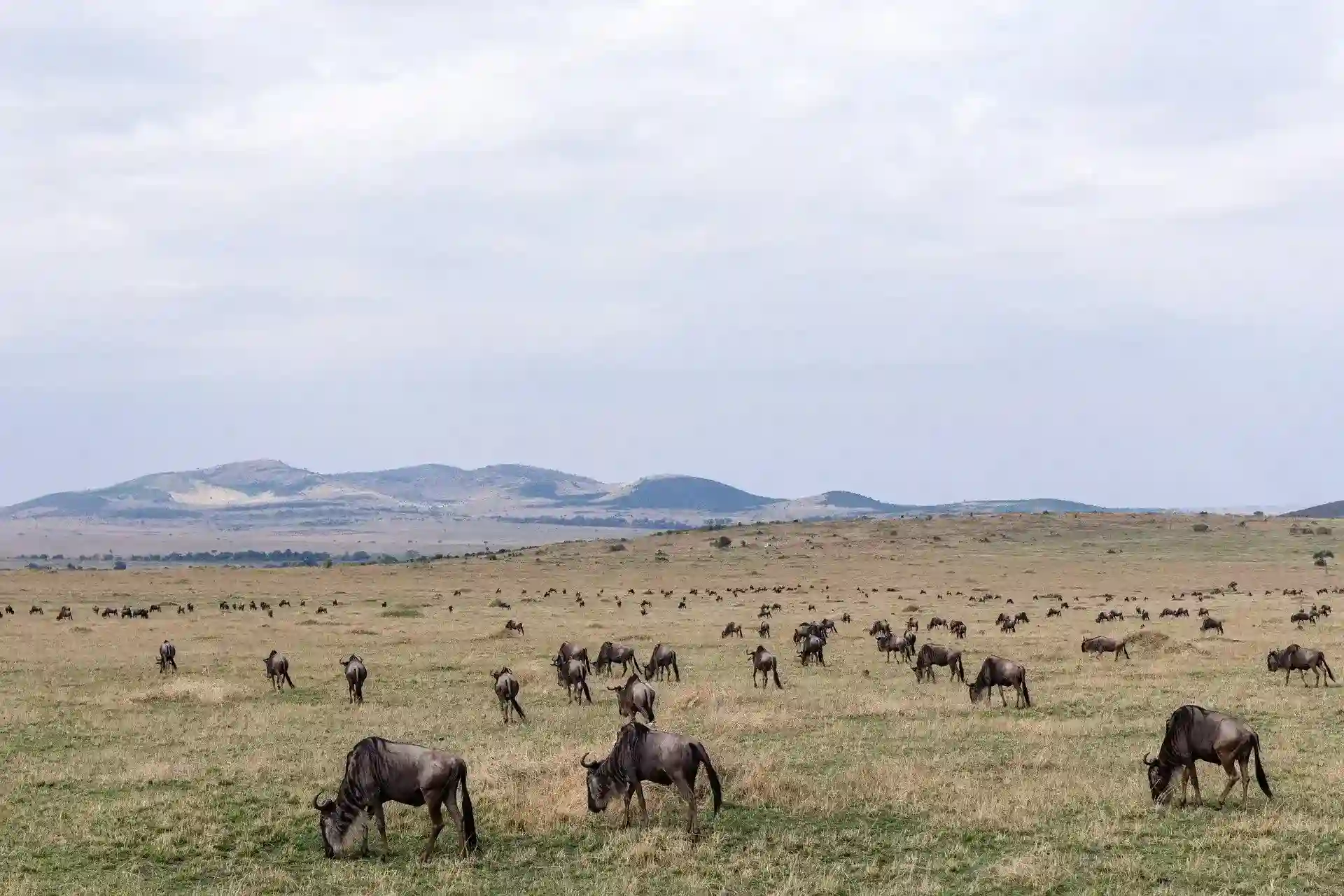
The Great Migration creates additional local peaks. Northern Serengeti attracts visitors during the Mara River season. The southern Serengeti and Ndutu area become busier during calving. Central Serengeti remains popular throughout much of the year because of its resident wildlife and transport connections.
Crowd patterns are not uniform across the whole country. Ruaha, Nyerere, Katavi, Mahale and other remote areas generally receive fewer vehicles than the northern highlights. Even during peak months, their scale and access patterns can create a stronger sense of wilderness.
Tanzania Safari Crowd Calendar
| Period | Typical crowd pattern | Quieter planning opportunity | Important trade-off |
|---|---|---|---|
| January-February | Busy around Ndutu and the southern Serengeti; moderate elsewhere | Northern Serengeti, parts of Tarangire, Ruaha and Nyerere | Rain showers are possible and migration location varies |
| March | Visitor numbers often begin to ease | Northern parks before the long rains intensify | Conditions become less predictable later in the month |
| April-May | Among the quietest months in many northern areas | Green landscapes, birds, dramatic skies and low vehicle density | Heavy rain can affect roads; some remote camps close |
| June | Visitor numbers rise but are often below July-August levels | Early June can balance access, green scenery and space | Dry-season demand builds quickly |
| July-August | Peak season across the northern circuit, especially migration areas | Remote Serengeti sectors, longer stays, private vehicles, Ruaha, Nyerere or Katavi | High demand, higher rates and limited last-minute availability |
| September | Still busy in famous northern areas | Southern and western circuits; peripheral game-drive zones | Dry conditions can concentrate both wildlife and vehicles |
| October | Northern Serengeti may remain active; other areas begin easing | Late-season Tarangire, Ruaha and Nyerere with careful camp selection | Heat increases and short rains may begin late in the month |
| November | Generally quieter, apart from local demand around moving herds | Green-season northern safari and birding | Short rains may affect daily plans but are often intermittent |
| Early December | Often a useful quieter window | Serengeti resident wildlife and green northern parks | Migration distribution depends on rainfall |
| Festive season | Strong demand from Christmas into New Year | Book remote areas early or travel before the festive peak | Premium rates and reduced lodge availability |
These are planning patterns, not guarantees. Rainfall can move the migration, alter road conditions and change where vehicles gather. Your itinerary should be based on your exact dates rather than a generic annual map.
Choose the Right Season, Not Simply the Lowest Season
April and May can be exceptionally quiet, but they are not suitable for every itinerary. Heavy rain may make some tracks difficult, and a number of seasonal camps close. A low-crowd trip that spends hours navigating unsuitable roads is not automatically a better safari.
For many travellers, the best balance is a shoulder-season window. Early June, parts of October, November and early December may provide fewer vehicles than peak season while retaining a broad choice of camps. January to March can also work well if you avoid concentrating the entire trip around the busiest calving locations.
Joseph and the Tanzania Inside Safari team often highlight mid-May to mid-June for travellers who value green scenery, lower dust and fewer visitors. The exact recommendation depends on the year's rains, camp opening dates and the parks included.
How to Experience the Serengeti with Fewer Vehicles
The Serengeti covers an enormous area. Saying that "the Serengeti is crowded" is too simple. Congestion is usually concentrated around famous events, well-known predator territories, airstrips, major lodges and the most accessible road networks.
Match the Serengeti Region to Your Month
The migration moves through different parts of the ecosystem in response to rainfall and grazing. Camps and travellers move with it. The region closest to the largest herds normally attracts the most attention.
A quieter Serengeti plan can include:
- Visiting a migration region at the beginning or end of its usual season rather than its peak
- Combining one migration-focused area with a resident-wildlife area
- Spending enough nights to explore beyond the most-used roads
- Selecting a camp whose guides can reach alternative valleys, kopjes and plains
- Accepting that resident wildlife may offer a better private sighting than a crowded headline event
Central Serengeti
The Seronera area has reliable resident wildlife, an extensive road network and convenient air access. It is also one of the most consistently visited parts of the park. The central region can still be excellent, especially when a guide leaves the obvious circuits and allows time to explore.
Staying two or three nights gives more flexibility than racing through in one night. Your guide can use one day for the productive central valleys and another for less-travelled edges. A rushed itinerary tends to repeat the same roads used by vehicles transferring between camps.
Northern Serengeti
From July into October, river crossings can attract many vehicles. Crossings are unpredictable and may happen at different points along the Mara River. Waiting at the most famous location with a large cluster of vehicles does not guarantee action.
A better approach is to stay several nights, work with an experienced local guide and balance river time with the north's resident wildlife. Travelling in June or after the main herds have moved away can reveal a much quieter northern Serengeti, though the classic river spectacle may not be present.
If a river crossing remains your priority, explore Tanzania Inside Safari's Mara River crossing itinerary with realistic expectations. It is possible to improve timing and positioning, but it is not honest to promise an empty riverbank or a crossing on demand.
Southern Serengeti and Ndutu
The calving period is popular because the short-grass plains can hold large herds, young calves and predators. The busiest sightings are not necessarily representative of the whole ecosystem. A mobile itinerary, longer stay and guide who knows the wider Ndutu and southern-plains network can create more varied days.
January and February are not automatically quiet simply because they fall outside the July-August dry-season peak. If calving is the goal, expect other vehicles near notable predator activity. Consider adding Tarangire, the Ngorongoro Highlands or another contrasting area to prevent every day from following the same migration traffic.
Western Corridor and Eastern Serengeti
The western and eastern sectors can feel very different from central Serengeti. Their usefulness depends on season, camp operations and travel logistics. During the appropriate months they can provide rewarding wildlife, broad landscapes and fewer vehicles than the most famous migration centres.
Remote does not always mean better wildlife density. It means a different balance: more searching, fewer vehicles and a greater sense of discovery. For travellers who enjoy the process of tracking rather than demanding constant sightings, that trade-off can be ideal.
Visit Ngorongoro Crater Strategically
Ngorongoro Crater is compact, visually dramatic and rich in wildlife. Those qualities concentrate vehicles more than in open ecosystems. You cannot make the crater as empty as Ruaha, but good logistics can improve the experience.
Useful strategies include:
- Staying on or close to the crater rim when the budget and availability allow
- Reaching the descent road as early as permitted
- Completing entry formalities efficiently
- Carrying a picnic breakfast or lunch when appropriate
- Allowing the guide to work beyond the first obvious vehicle cluster
- Avoiding an itinerary that arrives from far away and descends late with every other day-tripper
A private vehicle gives your group control over when to pause and when to leave a crowded sighting. It does not give permission to ignore roads, approach wildlife too closely or bypass conservation rules.
Spend More Than One Night in Tarangire
Tarangire is often treated as a quick first or final stop on a northern circuit. That encourages many vehicles to concentrate near the entrance and river during the same middle part of the day.
With two nights, you can start earlier, stay later and explore beyond the entrance zone. During the dry season, wildlife concentrations near water can be outstanding, but they also draw vehicles. A patient guide may choose a quieter loop, wait at a water source or focus on elephant behaviour instead of racing between radio calls.
Tarangire's baobab landscapes, birdlife and seasonal wetlands reward slower observation. It is one of the easiest places to improve a classic northern itinerary simply by adding time.
Use Lake Manyara, Arusha and Mkomazi Thoughtfully
Lake Manyara can be a useful contrast to the open plains, with groundwater forest, escarpment views and birdlife. Its road network and changing lake conditions mean that expectations should be matched to the season. It should not be added only as another box to tick.
Arusha National Park is convenient for an arrival-day or gentle first safari. Its forest, lakes, Mount Meru scenery and walking opportunities provide a different experience from the Serengeti. It can reduce pressure to squeeze a long transfer and major game drive into the first day.
Mkomazi National Park receives far fewer visitors than the most famous northern parks. It offers dry landscapes and a strong sense of space, but it should be chosen for its own character rather than presented as a direct substitute for the Serengeti. Travellers based in Moshi can explore Tanzania Inside Safari's Mkomazi day trip or build it into a longer route.
Consider Southern Tanzania
For travellers who place solitude near the top of their priorities, the southern circuit deserves serious consideration. Ruaha and Nyerere offer large landscapes, lower visitor density and a safari rhythm that often feels less scheduled.
Ruaha National Park
Ruaha is a vast baobab and miombo wilderness shaped by the Great Ruaha River. Dry-season wildlife can concentrate near remaining water, while the park's scale allows guides to move away from other vehicles. Some sightings require more patience than in central Serengeti, but the reward can be extended observation with little traffic.
Ruaha works particularly well for experienced safari travellers, photographers, couples and anyone who values landscape and behaviour as much as a species checklist. Flying from Dar es Salaam or connecting from other southern parks saves time compared with a long road transfer.
Nyerere National Park
Nyerere combines game drives with river-based experiences in areas where permitted and offered. The Rufiji River, channels and lakes change the pace of a safari and distribute visitors across different activities. Boat safaris can add hippos, crocodiles, birds and waterside scenery without spending every hour in a vehicle.
June to October is a strong wildlife period, while May and November may offer an attractive balance of access and fewer guests. Conditions vary between sectors, so camp location matters. Explore the Nyerere National Park guide or Tanzania Inside Safari's six-day Southern Tanzania safari .
What Southern Tanzania Trades
The south is not simply a quieter version of the north. It has different habitats, wildlife distribution, transport costs and activity options. Domestic flights can increase the trip price. Some camps close during heavy rains. Wildlife may be less continuously visible, requiring skilled guiding and patience.
Choose the south because you want its rivers, woodlands, space and unhurried rhythm, not only because you want to avoid other travellers.
Go Further West for Genuine Remoteness
Western Tanzania offers some of the country's strongest wilderness experiences. Katavi's floodplains and seasonal waterways feel remote, while Mahale and Gombe focus on chimpanzee trekking and Lake Tanganyika landscapes.
Katavi can deliver exceptional dry-season wildlife with very few vehicles, but access is more complex and scheduled flights are limited. A short stay rarely justifies the journey. The park is best for travellers willing to invest several nights and accept that remoteness comes with fewer accommodation choices and higher logistical costs. Read Tanzania Inside Safari's Katavi National Park overview .
Mahale combines forest trekking, mountains and the lake. It is not a conventional Big Five safari and should not be compared on that basis. For travellers seeking a rare, slow and deeply immersive experience, western Tanzania can be life-changing.
Choose a Private Vehicle and Guide
A private vehicle is one of the most effective tools for reducing the feeling of crowds. It allows your group to control departure times, meal timing, comfort stops and the length of each sighting.
With a private safari, you can ask your guide to:
- Leave a crowded sighting and return later
- Spend longer with common species showing interesting behaviour
- Prioritise birds, landscapes or photography
- Take a quieter road even if sightings are less predictable
- Start early or arrange a longer game-drive day
- Pause for children or older travellers without group pressure
- Avoid chasing every radio report
Private does not mean isolated from every other vehicle. It means the decisions inside your vehicle belong to your party and guide.
Tanzania Inside Safari operates customised Land Cruiser 4x4 vehicles with pop-up roofs, charging facilities, a fridge, binoculars and first-aid equipment. Our private safaris are planned around your group rather than combining unrelated travellers unless a group departure has been clearly agreed.
Your Guide Matters More Than a Secret Road
There is no permanent list of empty roads. Wildlife moves, rain changes access and a quiet track can become popular after one radio call. A strong guide reads the landscape and makes decisions in real time.
Crowd-aware guiding includes:
- Understanding seasonal wildlife distribution
- Using the road network beyond the most obvious loops
- Positioning without blocking animals or other vehicles
- Waiting for behaviour rather than forcing a closer view
- Communicating with other guides responsibly
- Recognising when congestion is disturbing wildlife
- Explaining the trade-off between a likely sighting and a quieter route
- Leaving enough time to return safely before park or camp restrictions apply
Ask an operator how guides handle a congested sighting. The best answer is not that they always find a private leopard. It is that they assess the animal, road, number of vehicles, guest priorities and available alternatives.
Stay in the Right Location
Two lodges described as "in the Serengeti" may create completely different days. One may be close to the plains you want to explore; another may require a long transfer on a busy road before the game drive truly begins.
Accommodation location affects:
- How early you reach productive wildlife areas
- Whether you travel against or with the main vehicle flow
- How much time is lost at gates or on transfers
- Which roads your guide can explore before needing to return
- Whether you can take breakfast into the field
- Access to walking, boating or other permitted activities
Staying inside a park or conservation area can improve access, but it may cost more through park, concession or camping fees. A property outside a gate may offer excellent value and comfort, but daily entry formalities can reduce flexibility. The right choice depends on your budget, dates and intended game-drive zone.
Do not choose accommodation only from room photographs. Ask what part of the ecosystem it serves and how long the morning drive takes to the wildlife area relevant to your season.
Slow Down the Itinerary
Fast itineraries create predictable traffic. Many visitors depart from the same towns, enter through the same gates and arrive at the same picnic areas at similar times.
A slower itinerary can reduce crowds by:
- Spending two or three nights in important parks
- Removing one destination rather than adding another transfer
- Using an open-jaw route or domestic flight when it saves a full travel day
- Scheduling a full day from a well-positioned camp
- Allowing time to revisit an area at a quieter hour
- Building a rest period so every day does not begin at the same busy breakfast time
Quality is not measured by the number of park names in the itinerary. Three well-planned areas can produce a richer safari than five hurried stops.
Change the Daily Rhythm
Many guests leave after a full lodge breakfast. Departing earlier can place you on the road in cooler conditions, when wildlife is often active and fewer vehicles are moving. A packed breakfast can be arranged by many properties, subject to their service and park rules.
Other useful patterns include:
- Staying out for a full day with a picnic when the route justifies it
- Returning to camp during the hottest period and driving again later
- Visiting a popular site when transfer traffic has moved on
- Watching one location patiently instead of driving continuously
- Taking a different lunch site or timing the stop outside the busiest window
Early starts are not automatically best every day. Families, honeymooners and guests on long safaris may benefit from a slower morning. The advantage of a private itinerary is the ability to vary the rhythm.
Avoid the Checklist Mentality
The fastest way to join a crowd is to insist that every day must produce lions, elephants, leopards, cheetahs and rhinos. Radio calls about a rare species can pull vehicles from across an area.
A quieter safari pays attention to what is already present:
- A herd communicating at a waterhole
- Giraffes moving through evening light
- A martial eagle hunting
- Hyenas interacting near a den
- Tracks, alarm calls and signs interpreted by the guide
- Seasonal flowers, insects and migratory birds
- Landscapes changing before a storm
This does not mean giving up iconic wildlife. It means allowing the ecosystem, rather than a checklist, to shape the day.
Photography and Crowd Avoidance
Photographers often benefit most from a private vehicle and slower pace. A quiet location with an ordinary subject can produce a stronger image than a rare animal surrounded by vehicles.
Tell your guide in advance whether you prefer:
- Backlit subjects at sunrise or sunset
- Animal behaviour rather than close portraits
- Low vehicle occupancy for working space
- Long waits at one location
- Landscapes and environmental portraits
- Birds in flight
- A willingness to leave crowded predators
The aim should never be to pressure the guide into breaking park rules for a photograph. Off-road access, night driving and walking vary by protected area and permit. A responsible itinerary works within the rules and protects the animal's space.
Families, Couples and Private Groups
Crowd avoidance is not only for luxury travellers. Families can benefit from private timing because children may need shorter drives, snack breaks or an early return. Couples may value a quiet picnic or smaller camp more than an elaborate room. Friends travelling together can divide the cost of one private vehicle while retaining flexibility.
Discuss vehicle occupancy honestly. A Land Cruiser may have several seats, but filling every seat reduces viewing space and makes it harder for everyone to move to the best side. For photographers and families, comfort can be more valuable than the lowest per-person rate.
Ethical Crowd Avoidance
Wanting a private sighting never justifies harmful behaviour. Vehicles should not surround an animal, block its path, separate a mother from young, interfere with a hunt or pressure wildlife to move.
Responsible guests can support better behaviour by:
- Accepting distance when the guide recommends it
- Keeping voices low near sensitive animals
- Never asking the guide to chase or corner wildlife
- Avoiding location sharing that could create immediate pressure
- Respecting road, speed and viewing rules
- Leaving a sighting when the animal shows stress
- Giving other vehicles room to depart
- Supporting guides who choose welfare over a photograph
A quieter safari should be better for the wildlife as well as the traveller.
Common Mistakes That Create a Busier Safari
Avoid these planning errors:
- Booking only July or August without considering why you chose those months
- Spending one night in every park
- Selecting camps by price or room design without checking location
- Assuming a famous migration event can be private
- Joining a shared safari when flexible timing is a priority
- Arriving at Ngorongoro Crater after a long morning transfer
- Following every guide-radio report
- Confusing remote geography with guaranteed wildlife density
- Choosing the green season without checking camp closures and road access
- Waiting until the last minute for peak-season accommodation
- Asking for off-road driving where it is not permitted
- Expecting an operator to guarantee an empty sighting
Questions to Ask Before Booking
Ask your safari operator:
1
Which areas are busiest during my exact travel dates?
2
Is the safari vehicle private to my party?
3
What is the maximum number of guests in the vehicle?
4
How close is each camp to the game-drive area we intend to explore?
5
Can we leave early with a packed breakfast?
6
How many nights do you recommend in each park?
7
Which quieter alternative would you suggest if a famous area is congested?
8
Does the itinerary rely on daily gate crossings?
9
Are any camps closed or roads unreliable during the proposed month?
10
Can we combine northern highlights with Ruaha, Nyerere, Katavi or Mahale?
11
How does the guide handle crowded predator sightings?
12
Which activities are legally permitted in each protected area?
13
Are domestic flights useful, and what baggage limits apply?
14
What happens if rain changes migration or road conditions?
Detailed answers reveal whether the itinerary was designed for your priorities or copied from a standard route.
Three Quieter Safari Structures
Quieter Northern Circuit: 8-10 Days
| Stage | Suggested time | Crowd-reduction idea |
|---|---|---|
| Arusha or Arusha National Park | 1 night or 1 full day | Recover before the main circuit instead of rushing into traffic |
| Tarangire | 2 nights | Explore beyond the entrance area and use early or late light |
| Serengeti | 3-4 nights | Match region to season and allow alternative game-drive loops |
| Ngorongoro Highlands and Crater | 2 nights | Position close to the descent and enter early |
| Return or fly onward | 1 night if needed | Protect the international connection and avoid a rushed final day |
This plan still includes famous parks, so it will not be crowd-free in peak season. Its advantage is time and flexibility.
Southern Tanzania: 7-9 Days
| Stage | Suggested time | Crowd-reduction idea |
|---|---|---|
| Dar es Salaam arrival | 1 night | Recover before flying or driving south |
| Nyerere | 3-4 nights | Mix game drives with boat or walking activities where offered |
| Ruaha | 3-4 nights | Stay long enough for patient tracking in a vast landscape |
| Return or Zanzibar | 1 or more nights | Use a flight connection rather than compressing the parks |
This is often the strongest option for travellers who prioritise wilderness, but transport and camp costs may be higher.
Remote Western Journey: 9-12 Days
| Stage | Suggested time | Crowd-reduction idea |
|---|---|---|
| Dar es Salaam or Arusha connection | 1 night | Build protection around limited flight schedules |
| Katavi | 4 nights | Invest enough time to justify the remote access |
| Mahale | 4-5 nights | Combine chimpanzee trekking with lake and forest time |
| Departure buffer | 1 night | Reduce risk from complex regional connections |
This route is for travellers who value remoteness and variety more than a conventional first-safari checklist.
How Tanzania Inside Safari Plans a Quieter Journey
At Tanzania Inside Safari, crowd reduction begins with an honest conversation about priorities. Some guests want migration drama and accept that other vehicles will be present. Others would rather spend an hour alone with elephants than wait in a river-crossing convoy.
Our planning approach can include:
- Private 4x4 vehicles and professional local guides
- Camp selection based on location, not only room category
- Longer stays in fewer wildlife areas
- Early starts and flexible meal planning
- Seasonal Serengeti positioning
- Southern and western circuit alternatives
- Domestic flights where they materially improve the route
- Space-conscious vehicle occupancy
- Ethical viewing and respect for park rules
- Clear explanations of weather, access and wildlife uncertainty
We never promise that a famous park or sighting will be empty. We use local knowledge, realistic timing and flexible itineraries to create more opportunities for quiet, meaningful moments.
Plan Your Quieter Tanzania Safari
Tell us your travel month, trip length, budget, wildlife priorities, preferred accommodation style and how important privacy is to you. We will explain the busiest points, recommend realistic alternatives and design a route that balances iconic wildlife with space to slow down.
Explore our Tanzania wildlife safaris or share your preferences through the trip-planning form .
Plan a quieter Tanzania safari
Planning note: park conditions, flight schedules, lodge operations, road access and wildlife movement can change. Confirm the final details that apply to your travel dates before booking.