


Choosing Tanzania Safari Lodges: Location vs Luxury - What Matters More?
Learn how to choose Tanzania safari lodges by comparing location, wildlife access, drive time, comfort, camp style and value across the Serengeti, Ngorongoro and Tarangire.
Plan around your priorities02
Understand real logistics03
Compare options clearly04
Travel with confidence
A beautiful suite, an infinity pool and polished service can make a Tanzania safari feel exceptional. But the most expensive lodge is not automatically the best lodge for your journey.
On safari, accommodation is part of the route. Its location influences when you reach the wildlife, how long you spend in the vehicle, whether you can enjoy the first and last light of the day, and how easily your itinerary flows from one region to the next. A simpler tented camp in the right place may create a richer wildlife experience than a more elaborate property positioned far from the area you have travelled to explore.
This does not mean luxury is unimportant. Comfort, food, privacy, sleep quality and attentive service matter, especially on a longer journey. The real question is how to balance them with geography.
The best Tanzania safari lodge is not simply the one with the longest amenity list. It is the one that supports the experience you want, in the right place and at the right time of year.
The Short Answer: Choose Location First, Then the Right Level of Comfort
For most wildlife-focused itineraries, location should carry more weight than decorative luxury. Once the location works, choose the comfort level and camp atmosphere that suit your budget and travel style.
An effective decision order is:
1
Identify the wildlife area or activity that matters most.
2
Match the camp or lodge location to the season and daily route.
3
Check how much driving, gate access or airstrip transfer the location creates.
4
Confirm that the accommodation suits every traveller's practical needs.
5
Compare service, room design, food, privacy and special features.
6
Judge the total itinerary rather than choosing each property in isolation.
This approach protects the reason you are travelling while still allowing you to enjoy the comforts that make the journey personal.
What Does "Luxury" Mean on a Tanzania Safari?
Luxury in the bush is not a single standard. One property may offer stone suites, private plunge pools, air conditioning and a spa. Another may use canvas rooms, bucket showers and solar lighting while delivering outstanding guiding, warm service and uninterrupted wilderness.
Safari luxury can include:
- A spacious private room or tent with an en-suite bathroom
- Excellent meals and thoughtful dietary arrangements
- Highly attentive staff and personalised hosting
- A private vehicle or flexible activity schedule
- A small number of guests and a strong sense of privacy
- Laundry service, Wi-Fi, charging facilities or climate control
- A pool, spa, gym or private deck
- Fine views and wildlife around camp
- Easy access to productive game-viewing areas
- The freedom to slow down and feel immersed in the landscape
The last three are often overlooked. A lodge can be visually impressive yet feel disconnected from the safari. A quieter camp with fewer conventional amenities may feel more luxurious because it gives you space, proximity to nature and time.
Before comparing star ratings, decide what luxury means to you. Is it a bathtub overlooking the plains, a private guide, a family unit, a camp far from busy circuits, or waking to wildlife sounds under canvas?
Why Lodge Location Changes the Safari
Accommodation location affects far more than the view from your room. It changes the structure of the day.
More Time Where the Wildlife Is
If your camp is near the habitat you want to explore, you can spend less time commuting and more time observing. This matters during early mornings, late afternoons and photographic sessions when patience often produces better encounters.
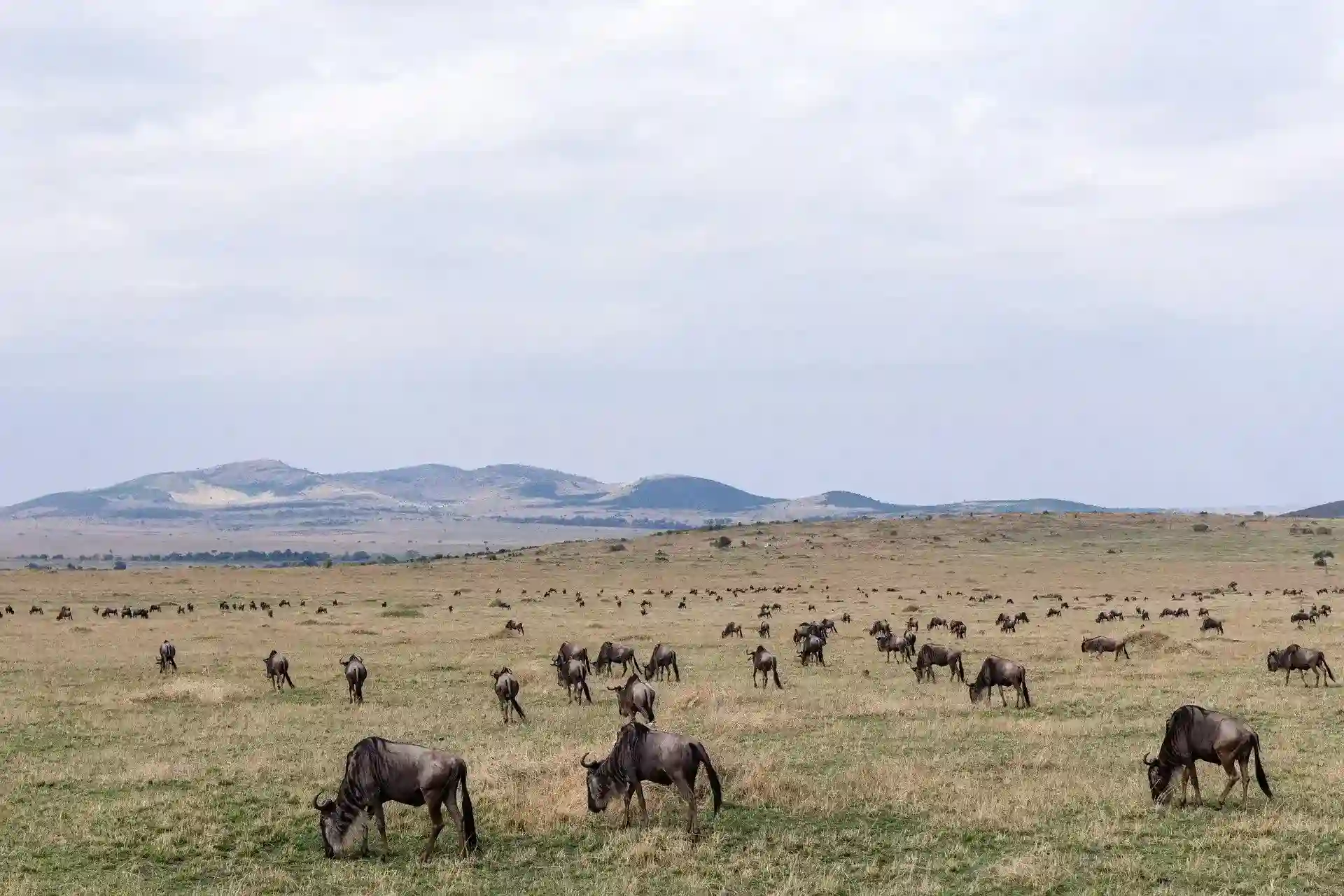
In a large ecosystem such as the Serengeti, the name of the park is not precise enough. Central, northern, southern, eastern and western areas can deliver very different experiences. A lodge may technically be in the Serengeti but still be several hours from the seasonal wildlife event you hope to see.
Better Use of the Day
A well-located camp can make an early departure easier and reduce the pressure to leave an interesting sighting because a long return drive remains. It can also make a midday break realistic. This is valuable for families, honeymooners and travellers who do not want every day to become a marathon.
Less Fatigue
Safari roads are part of the adventure, but long transfers over rough surfaces can be tiring. Saving an hour at the beginning and end of a game-drive day can noticeably improve energy, especially across a week or more.
A Stronger Sense of Place
The experience of hearing lions at night, watching elephants from a veranda or seeing the morning light spread across open plains cannot be measured by room size alone. Location can turn accommodation from somewhere you sleep into part of the safari itself.
Inside the Park or Outside the Gate?
This is one of the most common accommodation questions, but there is no universal answer.
| Consideration | Inside or deep in the wildlife area | Outside or near a gateway town |
|---|---|---|
| Wildlife access | Often closer to game-viewing areas | May require a gate transfer or longer approach |
| Atmosphere | Greater wilderness immersion | More connection to farms, towns and local activities |
| Early and late hours | Can reduce positioning time | Daily timing may depend more heavily on access and distance |
| Price | Park fees and remote logistics can raise costs | Often offers more options and stronger room value |
| Facilities | May prioritise bush experience over extensive amenities | Can offer pools, gardens, larger rooms and resort-style facilities |
| Best for | Wildlife-first travellers, photographers and short stays | Budget balance, cultural access and relaxed pre- or post-safari nights |
Staying inside a protected area can be valuable when it places you close to productive wildlife zones. Yet "outside" does not automatically mean inconvenient. A lodge immediately beside a gate may be practical, while a property farther away can add significant daily driving.
Likewise, an inside-park lodge is not automatically perfectly placed. Large parks contain many ecosystems. Always ask for the realistic driving time from the property to the areas you expect to explore.
How the Decision Changes by Destination
The balance between location and luxury is different in each part of Tanzania. The right question is not "Which is the best lodge?" but "Which location best supports this part of my itinerary?"
Serengeti: Region and Season Come First
The Serengeti is vast. Choosing accommodation simply because it carries a Serengeti address can lead to a mismatch between your camp and your wildlife priorities.
Central Serengeti is known for resident wildlife and is useful through much of the year. It can be a strong choice for first-time visitors, photographers and itineraries that need dependable game viewing rather than a single seasonal event.
Northern Serengeti becomes especially relevant when travellers are interested in the migration's movement toward the Mara River region. Southern Serengeti and the wider Ndutu area are important during the green season and calving period. Western areas have their own seasonal appeal, while eastern and quieter sectors can reward travellers who value space and landscapes.
Mobile and seasonal camps can be powerful because they reposition to follow broad wildlife patterns. Their luxury may feel lighter than that of a permanent lodge, but their location can be their greatest asset. Leading camp operators describe mobility as a way to stay close to seasonal events rather than asking guests to commute across the ecosystem.
Migration timing is never a guaranteed appointment. Rainfall and grazing conditions influence movement, and river crossings cannot be scheduled. A carefully placed camp improves access to the relevant region; it does not control wildlife.
For a balanced first safari, consider splitting Serengeti nights between two regions when the season and trip length justify it. This reduces long out-and-back drives and gives the journey more variety.
Ngorongoro: Rim Access vs Highland Value
Accommodation on or near the Ngorongoro Crater rim is prized for views and proximity to descent roads. A shorter approach can support an early start and reduce transfer time on crater day. For travellers with limited time, photographers or anyone who values the crater as a major trip highlight, this can be worth the premium.
Properties in the Karatu highlands often offer attractive gardens, spacious rooms, strong food and excellent value. They can also work well for cultural activities, coffee experiences, Lake Manyara connections and a slower highland stay. The tradeoff is additional driving to reach the crater access point.
The best choice depends on your schedule:
- Choose the rim or nearby conservation-area accommodation when crater access and atmosphere are the priority.
- Choose Karatu when you want better value, a broader choice of properties, highland relaxation or a base for several nearby experiences.
- Consider one strategically placed night near the crater and another highland stay when the route benefits from both.
A crater-view room can be memorable, but do not pay for the view without checking its orientation, walking distance within the property and the actual access time to the descent route.
Tarangire: Depth Matters in a Large Park
Tarangire is sometimes treated as a quick first or final stop on a northern circuit. That can undersell it. The park's baobabs, elephants, seasonal wildlife concentrations and quieter sectors can justify a deeper stay.
A camp inside or farther into Tarangire can create a more immersive experience and reduce repeated travel from the gate. This becomes especially valuable over two or three nights. Properties outside the park may offer more amenities or a lower price, and they can work well when Tarangire is only a day visit.
If you want to experience Tarangire rather than merely tick it off, prioritise where the camp sits in relation to the areas your guide expects to explore in that season.
Lake Manyara and the Rift Valley: Convenience Can Win
Lake Manyara is more compact than the Serengeti or Tarangire, so staying outside the boundary can be entirely practical. The wider Mto wa Mbu and Karatu areas also create opportunities for village visits, cycling, food experiences and connections toward Ngorongoro.
Here, the lodge's relationship to the whole route may matter more than being inside the park. A well-chosen property can reduce backtracking and enrich the cultural side of the journey.
Ruaha and Nyerere: Camp Setting Shapes the Experience
Southern Tanzania often involves flying between remote areas. In Ruaha and Nyerere, camp location affects airstrip transfers, access to rivers or wildlife concentrations, activity options and the sense of seclusion.
A remote camp may offer fewer conventional facilities but much greater wilderness. A riverside setting may support boating where permitted, while another area is better for vehicle-based game viewing or walking. Ask what activities actually operate from the camp rather than assuming every property offers the same programme.
Because distances are substantial, choosing the right camp can matter more than adding another expensive room feature.
Permanent Lodge, Tented Camp or Mobile Camp?
The building style does not by itself determine quality. Each format creates a different relationship with the landscape.
| Accommodation style | What it usually offers | Best suited to | Important questions |
|---|---|---|---|
| Permanent lodge | Solid walls, larger common areas and often more facilities | Travellers prioritising conventional comfort, families and longer rests | How far is it from the wildlife area? How large is the property? |
| Permanent tented camp | En-suite canvas rooms with a strong bush atmosphere | Travellers wanting comfort and immersion | Are showers fully plumbed or bucket-style? Is power available all night? |
| Seasonal or mobile camp | Strategic seasonal positioning and a lighter footprint | Migration-focused journeys and wildlife-first travellers | When does the camp move? What amenities change by site? |
| Private villa or exclusive-use camp | Privacy, flexible hosting and dedicated shared spaces | Families, friends, celebrations and multi-generational groups | Is a private vehicle included? What staffing and child policies apply? |
| Public or simple camp | Basic facilities and close contact with the outdoors | Adventurous travellers and tighter budgets | What must guests bring, and what support is included? |
Canvas does not necessarily mean basic. Some tented suites have full bathrooms, elegant furnishings and private pools. At the same time, a simple mobile camp can be deeply comfortable because the food, bed, hosting and location are handled with care.
When Paying More for Luxury Is Worth It
High-end accommodation can add real value when the upgrade improves more than aesthetics.
The Upgrade Buys a Better Location
Paying more may be sensible when it places you close to the relevant wildlife area, a crater access point or a remote landscape that would otherwise be difficult to reach.
It Includes Greater Flexibility
A private vehicle, flexible meal times and personalised activities can transform the experience. This is particularly valuable for photographers, families, honeymooners and travellers with specialist interests.
You Will Use the Facilities
A pool, spa, gym or generous private deck may be worthwhile on an itinerary with two- or three-night stays and planned downtime. These features have less value if you arrive after sunset and leave before breakfast.
Comfort Protects the Whole Journey
Good sleep, reliable hot water, thoughtful food and quiet rooms can make a long safari more enjoyable. Travellers with mobility considerations, dietary needs or sensitivity to heat should treat practical comfort as essential rather than indulgent.
The Stay Marks a Special Occasion
A honeymoon, anniversary or family celebration may justify a memorable suite or private camp. The key is to place the splurge where there is enough time to enjoy it.
When a Simpler Camp Is the Better Choice
A less elaborate camp may be the stronger option when:
- It is positioned closer to the wildlife or seasonal focus
- You want a small, intimate atmosphere
- You prefer the sounds and rhythms of the bush to resort-style facilities
- Most of your day will be spent exploring
- The savings allow you to add a night, private vehicle or second ecosystem
- The camp has excellent guiding, food and hosting despite fewer room features
An additional safari night often creates more value than a plunge pool used for one hour. Likewise, a private vehicle can be more meaningful than upgrading every room if your group wants control over pace and photographic stops.
Match the Lodge to the Traveller
First-Time Safari Travellers
Choose an itinerary with strong wildlife access, comfortable rooms and clear logistical flow. A combination of a permanent lodge and a tented camp can introduce different safari styles without making every night feel unfamiliar.
Photographers
Prioritise location, private-vehicle arrangements, charging, secure equipment storage and early-departure flexibility. A room with extravagant finishes matters less than access to the right habitat and the ability to wait at a sighting.
Families
Look for family units, suitable minimum ages, child-friendly meals, pool supervision, manageable room distances and flexible schedules. Confirm whether children may join every activity. A lodge that reduces long transfers can be more valuable than one with a larger pool.
Couples and Honeymooners
Privacy, atmosphere and unhurried time matter. Consider a smaller camp, a room with a private view and at least one two- or three-night stay. Moving every night can undermine the romance of even the finest properties.
Multi-Generational Groups
Check steps, walking distances, bathroom access, medical considerations and whether vehicles can be allocated flexibly. A beautiful hillside lodge may be challenging for someone with limited mobility. Private villas or connected family accommodation can simplify shared time while preserving personal space.
Travellers With Dietary or Accessibility Needs
Request precise information, not general reassurance. Ask how dietary requirements are communicated to remote kitchens, whether cross-contact can be managed, how electricity supports medical devices, and what physical assistance is realistically available.
A Better Way to Allocate Your Safari Budget
Instead of choosing the same accommodation tier every night, invest where it changes the experience most.
| Priority | Spend more on | Save where practical |
|---|---|---|
| Wildlife and photography | Strategic camp location, enough nights and a private vehicle | Decorative room extras you will rarely use |
| Honeymoon | A private, scenic multi-night stay and special experiences | One-night transit accommodation |
| Family safari | Family units, flexible guiding and reduced drive time | Formal dining or adult-focused spa features |
| First safari | Strong route design, reliable comfort and varied habitats | A famous lodge name without a location advantage |
| Longer journey | Laundry, good food, rest nights and logical transfers | Luxury upgrades at every stop |
A mixed approach often works best: comfortable arrival accommodation, strategically located camps during the wildlife-intensive days, and one carefully chosen luxury stay where you can slow down.
Questions to Ask Before Booking a Safari Lodge
The right questions reveal more than a gallery of room photographs.
1
Where exactly is the property, and can you show it on the itinerary map?
2
How long is the realistic drive to the main wildlife area in the month I am travelling?
3
Is the camp permanent, seasonal or mobile?
4
If migration viewing is a priority, why is this location suitable for my dates?
5
Are game drives private or shared, and who controls the schedule?
6
How long is the transfer from the nearest airstrip or previous lodge?
7
Which activities are included, and which require additional fees?
8
What are the room layout, power hours, bathroom arrangements and Wi-Fi limitations?
9
What ages are accepted, and are any activities restricted for children?
10
Can the kitchen safely manage our dietary or allergy requirements?
11
What accessibility challenges should we know about?
12
What happens if a named camp becomes unavailable?
A responsible safari planner should explain the tradeoffs openly. If a lower-priced property adds two hours of daily driving, you should know. If a luxury lodge is exceptional but poorly placed for your seasonal goal, you should know that too.
Common Mistakes When Choosing Safari Accommodation
Choosing From Photographs Alone
Wide-angle room images do not show road time, gate position, seasonal wildlife distribution or how many other vehicles use the surrounding area.
Assuming All Serengeti Lodges Are Near Each Other
The Serengeti is an ecosystem, not a single neighbourhood. Regional placement must match your dates and interests.
Moving Every Night
Frequent lodge changes consume packing time and create fatigue. Two- and three-night stays often allow a better rhythm and more flexible game viewing.
Paying for Facilities You Cannot Use
If the itinerary keeps you away from the lodge all day, an extensive spa or private pool may add little practical value.
Treating "Inside" as the Only Measure of Location
Inside which part of the park? Near which habitat? How far from the next destination? Precise geography matters more than a simple boundary label.
Ignoring the Whole Route
An excellent lodge can still create a poor itinerary if it causes backtracking or an exhausting transfer. Every stay must connect logically to the next.
How Tanzania Inside Safari Selects Accommodation
At Tanzania Inside Safari, we begin with the journey rather than a fixed list of hotels. We consider your travel month, wildlife priorities, pace, group composition, comfort expectations and budget before recommending accommodation.
Our planning process looks at:
- Seasonal fit and wildlife access
- The realistic road or air transfer between stays
- Time available for game drives and rest
- Room configuration and traveller needs
- Camp atmosphere, service and food
- Value across the complete package
- Opportunities for culture, landscape and personal connection
Your itinerary can be tailor-made. We may recommend a permanent lodge for one destination, a tented camp in another and a more indulgent stay where it adds the most value. The goal is not to fill a schedule with expensive names. It is to create a coherent experience that feels effortless and deeply connected to Tanzania.
Explore our 7-day luxury Tanzania safari , 10-day luxury safari , 12-day safari and beach journey or 11-day photographic safari to see how accommodation can support different travel styles.
So, What Matters More: Location or Luxury?
Location usually matters first because it determines how you experience the destination. Luxury matters next because it determines how comfortable, private and restored you feel while doing it.
The strongest safari does not force you to choose one and abandon the other. It puts comfort in service of the journey.
Choose a camp because it belongs in the route. Upgrade because the added comfort or flexibility will improve your time there. Stay long enough to appreciate both the wildlife outside and the hospitality within.
That is how accommodation becomes more than a bed. It becomes part of the story you carry home.
Plan Your Tanzania Safari
Tell us your travel dates, preferred parks, interests, group size and ideal comfort level. We will explain the location tradeoffs, recommend suitable camps and build a route that protects both your wildlife time and your enjoyment.
Explore our Tanzania safari experiences
Start planning your tailor-made Tanzania safari
Suggested Image Alt Text
- Luxury tented safari lodge overlooking Tanzania's savannah at sunset, illustrating the balance between camp location and comfort
Planning note: park conditions, flight schedules, lodge operations, road access and wildlife movement can change. Confirm the final details that apply to your travel dates before booking.