


Stella Point vs Gilman’s Point vs Uhuru Peak: What Counts as Reaching Kilimanjaro’s Summit?
Compare Stella Point, Gilman’s Point and Uhuru Peak, including elevations, routes, certificates and what truly counts as summiting Mount Kilimanjaro.
The Three Kilimanjaro Summit Points at a Glance
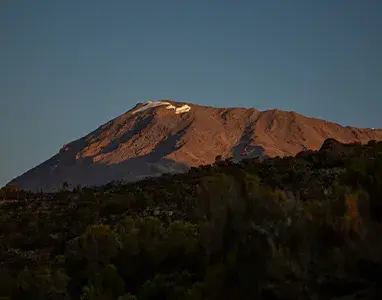
Mount Kilimanjaro has three famous summit markers: Gilman’s Point, Stella Point and Uhuru Peak. All three stand on the rim of Kibo’s summit crater, and reaching any of them requires a demanding ascent through cold, darkness and extreme altitude.
However, they are not the same achievement.
Uhuru Peak, at 5,895 metres (19,341 feet), is Kilimanjaro’s true summit and the highest point in Africa. Stella Point and Gilman’s Point are lower, officially recognised crater-rim summit points. Climbers who reach them may receive a certificate recording the point reached, but they have not reached the mountain’s highest point unless they continue to Uhuru Peak.
The distinction matters when comparing routes, reading summit-success statistics or describing your own climb. Saying “I reached Stella Point” or “I reached Gilman’s Point” is a major accomplishment and an accurate description. Saying “I reached Uhuru Peak” means you stood at the highest point on Kilimanjaro.
| Summit point | Approximate elevation | Position | Usually reached from | What it represents |
|---|---|---|---|---|
| Gilman’s Point | 5,685 m / 18,652 ft | Eastern crater rim | Kibo Hut or School Hut | Recognised crater-rim summit point |
| Stella Point | 5,756 m / 18,885 ft | Southern crater rim | Barafu Camp; also passed after Gilman’s | Recognised crater-rim summit point closer to Uhuru |
| Uhuru Peak | 5,895 m / 19,341 ft | Highest section of Kibo’s crater rim | Reached from Stella or Gilman’s | Kilimanjaro’s true summit and Africa’s highest point |
Elevations for Gilman’s and Stella vary slightly among signs, maps, GPS readings and publications. The figures above are the most commonly used reference elevations. Uhuru Peak is officially promoted at 5,895 metres.
The Short Answer: What Counts as Summiting Kilimanjaro?
The answer depends on what “summit” means in the conversation.
Geographically
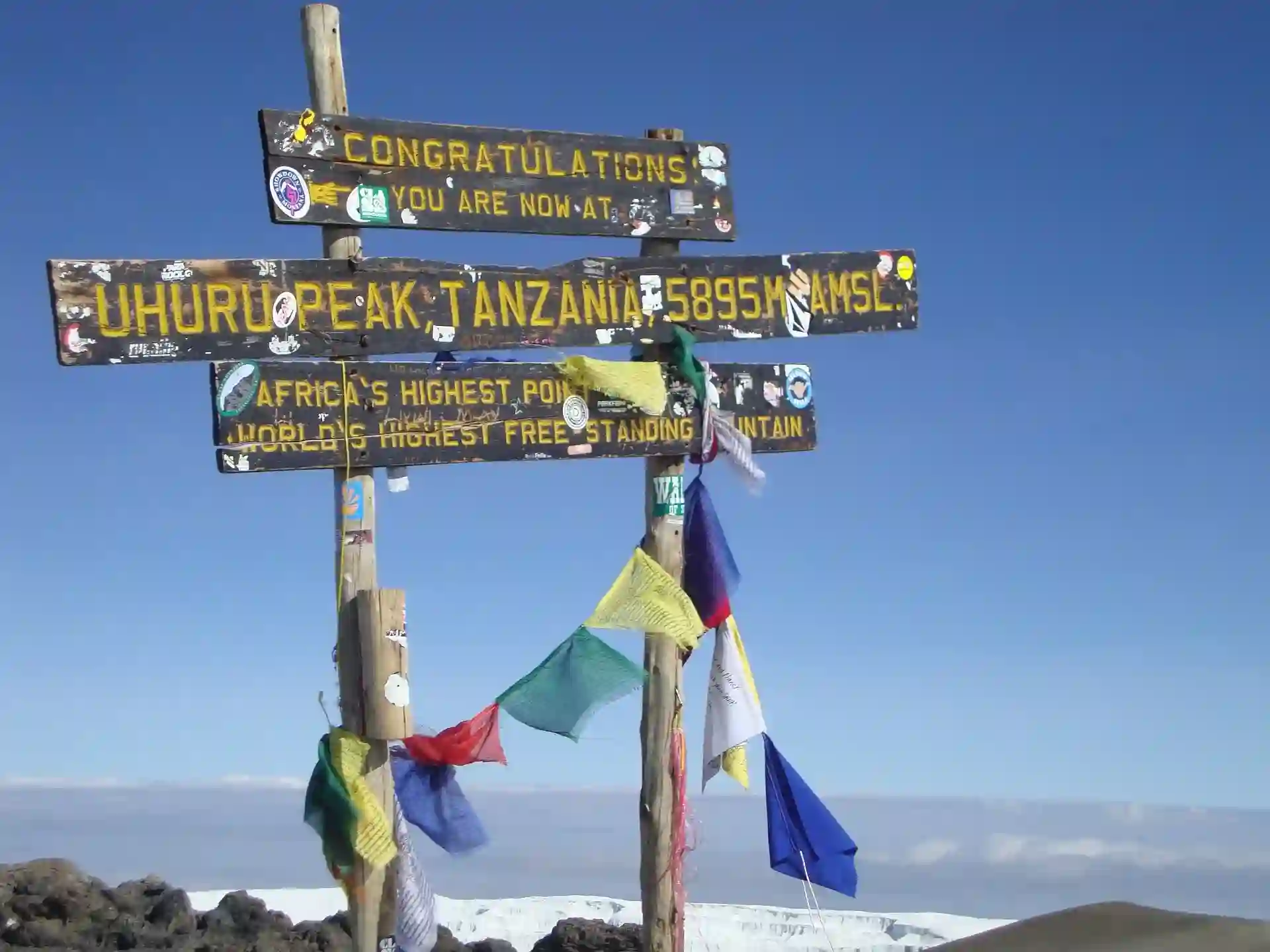
Uhuru Peak is the summit. It is the highest natural point on Mount Kilimanjaro and the point required when someone intends to reach the Roof of Africa.
For Kilimanjaro National Park Recognition
Gilman’s Point and Stella Point are commonly recognised as official crater-rim summit points. A climber who reaches one of them may receive an official certificate naming the point reached, depending on current park procedures.
For Honest Personal or Marketing Claims
The highest point reached should be stated clearly:
- “I reached Gilman’s Point.”
- “I reached Stella Point.”
- “I reached Uhuru Peak.”
All are meaningful achievements. They should not be presented as interchangeable.
For the Seven Summits
A climber completing the Seven Summits must reach Uhuru Peak. Stopping at Gilman’s or Stella does not reach the highest point of the African continent.
These Are Not Kilimanjaro’s Three Volcanic Cones
The three summit markers are sometimes confused with Kilimanjaro’s three volcanic cones.
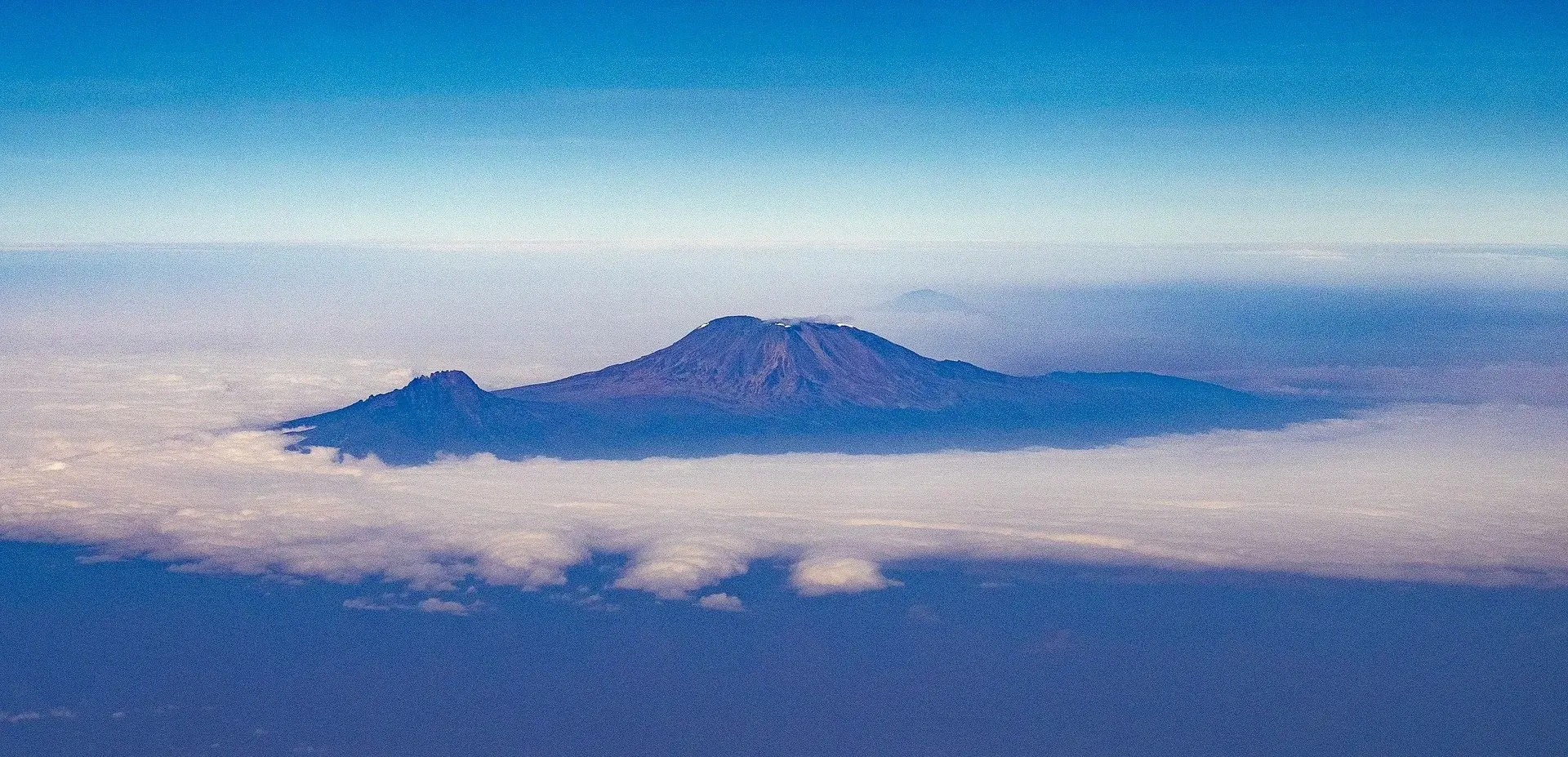
Kilimanjaro is a volcanic massif formed by:
- Kibo: The highest and dormant cone, containing Uhuru Peak
- Mawenzi: The jagged secondary cone, reaching approximately 5,149 metres
- Shira: The older, heavily eroded western cone
Gilman’s Point, Stella Point and Uhuru Peak are all located around Kibo’s crater rim. They are not separate mountains or separate volcanic cones.
Gilman’s Point: The Eastern Crater-Rim Summit
Gilman’s Point sits on the eastern side of the Kibo crater at approximately 5,685 metres. It is normally the first rim point reached by climbers approaching from Kibo Hut or School Hut.
Which Routes Reach Gilman’s Point First?
- Marangu Route
- Rongai Route, on itineraries using Kibo Camp
- Northern Circuit, when summiting from School Hut
- Some northern-route variations
The classic Kibo ascent climbs through loose volcanic scree and passes the Hans Meyer Cave area before reaching the rim. School Hut approaches from a different position on the northeastern side and joins the upper eastern summit line.
What Happens After Gilman’s Point?
Climbers continue around the crater rim towards Stella Point and then Uhuru Peak. Although the steepest continuous climb may be behind them, the remaining journey is not effortless.
The route remains above 5,685 metres, where every step is slow. Wind, cold, snow, fatigue and altitude symptoms can make the rim traverse feel much longer than expected. From Gilman’s Point, reaching Uhuru commonly requires roughly two additional hours, but individual times vary considerably.
Does Gilman’s Point Count?
Gilman’s is a recognised crater-rim summit point and reaching it is a serious achievement. However, it is approximately 210 vertical metres below Uhuru Peak and is not Kilimanjaro’s highest point.
If a guide decides that a climber should stop there because of illness, exhaustion, weather or time, turning around is the correct decision. A certificate cannot make continuing unsafe symptoms acceptable.
Stella Point: The Southern Crater-Rim Summit
Stella Point stands at approximately 5,756 metres on the southern side of Kibo’s crater rim. It is normally the first rim point reached by climbers ascending from Barafu Camp.
Which Routes Reach Stella Point First?
- Machame Route
- Lemosho Route
- Umbwe Route
- Shira Route variations
Climbers from Gilman’s Point also pass through or near Stella on their way to Uhuru, which means Stella is both a destination for southern approaches and a later landmark for eastern approaches.
What Happens After Stella Point?
The path follows the crater rim towards Uhuru Peak. The gradient is generally less severe than the climb from Barafu, but the final section remains demanding because it is completed at extreme altitude.
Uhuru is only approximately 139 vertical metres higher than Stella, yet this final stretch commonly takes another one to two hours. The difference between altitude gain and effort is important: a relatively gentle path can feel extremely hard when oxygen pressure is roughly half its sea-level value.
Does Stella Point Count?
Stella is a recognised crater-rim summit point and climbers who finish there may receive a certificate recording that achievement. It is closer to Uhuru than Gilman’s, but it is still not the mountain’s highest point.
A climber should never feel pressured to continue simply because Uhuru appears close. Confusion, loss of coordination, breathlessness at rest or worsening altitude symptoms require descent, regardless of distance remaining.
Uhuru Peak: Kilimanjaro’s True Summit
Uhuru Peak stands at 5,895 metres on the highest section of Kibo’s crater rim. It is:
- The highest point on Mount Kilimanjaro
- The highest point in Tanzania
- The highest point in Africa
- The destination required to claim the continent’s summit in a Seven Summits project
“Uhuru” means “freedom” in Swahili. The name is associated with Tanganyika’s independence in 1961 and gives the summit deep national significance beyond its geography.
Climbers approaching from Barafu reach Uhuru after Stella Point. Climbers approaching from Kibo or School Hut reach it after Gilman’s Point and Stella Point.
What Reaching Uhuru Does—and Does Not—Mean
Reaching Uhuru confirms that the climber stood at Kilimanjaro’s highest point. It does not mean the expedition is finished.
The climber must still descend safely, often for several hours to a much lower camp. Fatigue, loose ground, cold muscles and reduced concentration make the descent a significant part of summit day. Guides therefore limit time at Uhuru and continue monitoring the group after photographs are taken.
How the Two Main Summit Lines Connect
Kilimanjaro’s standard summit routes can be understood as two principal lines:
Southern Line
Barafu Camp → Stella Point → Uhuru Peak
Used by Machame, Lemosho, Umbwe and Shira itineraries.
Eastern and Northeastern Line
Kibo Hut or School Hut → Gilman’s Point → Stella Point → Uhuru Peak
Used by Marangu, many Rongai itineraries and the Northern Circuit.
This explains why climbers from Gilman’s have a longer crater-rim journey. They must continue through the Stella section before reaching Uhuru.
Direct Comparison: Gilman’s, Stella and Uhuru
| Question | Gilman’s Point | Stella Point | Uhuru Peak |
|---|---|---|---|
| Is it on Kibo’s crater rim? | Yes | Yes | Yes |
| Is it a recognised summit marker? | Yes | Yes | Yes |
| Is it Kilimanjaro’s highest point? | No | No | Yes |
| Approximate height below Uhuru | 210 m | 139 m | 0 m |
| Common first approach | Kibo or School Hut | Barafu Camp | From either rim route |
| Can it be the correct turnaround point? | Yes | Yes | Descent begins here |
| Counts for completing the Seven Summits? | No | No | Yes |
Why the Final Rim Walk Can Be So Difficult
From photographs, the route between the crater-rim markers can appear almost flat. Climbers sometimes assume that reaching Gilman’s or Stella means the hard work is over.
The gradient becomes easier, but several factors remain:
- Extreme altitude: The body cannot fully acclimatise to prolonged life near 5,900 metres.
- Accumulated fatigue: Most climbers have already walked uphill for six or more hours at night.
- Cold and wind: Exposed rim conditions can rapidly reduce comfort and dexterity.
- Low appetite and dehydration: Eating and drinking may be difficult, while water can freeze.
- Possible snow or ice: Footing and pace can change with conditions.
- Mental pressure: Seeing the goal can encourage people to ignore symptoms.
The rim is where disciplined guiding matters most. Motivation is valuable only while the climber remains medically and functionally safe to continue.
Why Some Climbers Stop at Gilman’s or Stella
A climber may turn around because of:
- Worsening headache, nausea or vomiting
- Loss of coordination or confusion
- Breathlessness at rest or chest symptoms
- Severe exhaustion or inability to maintain a safe pace
- Cold injury risk
- Dangerous wind, snow or visibility
- The guide’s turnaround time
- A previous injury becoming worse
Stopping at the rim is not necessarily a lack of determination. At altitude, a responsible turnaround can require more judgment than continuing.
Our guide to sickness and early descent on Kilimanjaro explains how assessment, assisted descent, oxygen and evacuation should be managed. If this article’s URL has not yet been published, the editor should update this internal link before launch.
What Certificate Do You Receive?
Kilimanjaro National Park commonly issues certificates according to the highest recognised point reached:
- Uhuru Peak certificate for reaching 5,895 metres
- Stella Point certificate for reaching the southern crater rim
- Gilman’s Point certificate for reaching the eastern crater rim
Certificates are normally recorded with the climber’s name, date and summit point and arranged after descent at the park gate or through the operator. Certificate design, colour and administrative procedure can change, so the destination printed on the certificate is more important than informal descriptions such as “gold,” “green” or “brown.”
A certificate for Stella or Gilman’s is genuine recognition of reaching the crater rim. It should not be described as proof that the climber reached Uhuru Peak.
How Summit Success Rates Can Become Misleading
An operator can report a high “summit success rate” without making clear which point counts as success.
Before comparing percentages, ask:
- Does “summit” mean Uhuru Peak, or are Stella and Gilman’s included?
- Is the percentage calculated from everyone who started at the gate or only those who began summit night?
- Does the figure cover one route, one itinerary length or all climbs combined?
- What time period and group size does the statistic represent?
- Are medical turnarounds counted transparently?
At Tanzania Inside Safari, Uhuru Peak should be the endpoint used when reporting a full-summit success rate. Reaching Stella or Gilman’s should be recorded separately as a crater-rim achievement. This makes comparisons more honest and helps travellers understand what the number actually promises.
No success percentage should encourage a guide to push an unwell climber upwards. A safe descent is more important than protecting a statistic.
Is Stella Point “Better” Than Gilman’s Point?
Stella is higher and closer to Uhuru, but that does not make every route through Stella better.
Barafu climbers make a large sustained ascent before reaching Stella. Kibo and School Hut climbers reach the lower Gilman’s Point but may follow itineraries with very different acclimatisation profiles. The Northern Circuit, for example, normally provides more mountain days before the summit attempt than a short route ending at Barafu or Kibo.
The final rim point is only one part of route selection. Consider:
- Total mountain days
- Sleeping-altitude progression
- Acclimatisation hikes
- Camp sequence
- Crowding
- Accommodation style
- Summit-night length
- Descent route
Our Barafu Camp vs Kibo Hut vs School Hut comparison explains how the high camps influence the summit approaches. The editor should confirm the final live URL before publication.
How to Improve Your Chance of Reaching Uhuru Peak
Choose a Longer Itinerary
Seven days should be considered a responsible minimum for many climbers, while eight-day Lemosho or a longer Northern Circuit gives the body additional time to adapt.
Walk Pole Pole
“Pole pole” means “slowly, slowly.” A controlled pace protects energy and reduces unnecessary exertion, although it cannot make an aggressive itinerary safe by itself.
Report Symptoms Honestly
Headache, nausea, dizziness, unusual fatigue, chest symptoms or changes in coordination must be reported. Hiding illness until the crater rim can remove the chance for earlier, safer intervention.
Prepare for the Descent
The summit photograph is not the end. Keep energy, warm layers, water and concentration for the long descent to camp.
Accept the Guide’s Decision
A guide may turn a climber around at Gilman’s, Stella or below the rim. The decision is based on safety, not the emotional or financial importance of the summit.
The Most Honest Way to Describe Your Achievement
If you reached Uhuru Peak, say that you reached Kilimanjaro’s highest summit.
If you reached Stella Point, say that you reached Stella Point and Kilimanjaro’s southern crater rim.
If you reached Gilman’s Point, say that you reached Gilman’s Point and Kilimanjaro’s eastern crater rim.
None of these statements diminishes the effort involved. Accuracy respects the mountain, the guides who made the decision and the climber’s real achievement.
FREQUENTLY ASKED QUESTIONS
What is the real summit of Mount Kilimanjaro?
Uhuru Peak at 5,895 metres is the true summit of Kilimanjaro and the highest point in Africa.
Are Stella Point and Gilman’s Point summits?
They are recognised crater-rim summit points, but neither is the mountain’s highest point. Uhuru Peak is the full summit goal.
Which is higher, Stella Point or Gilman’s Point?
Stella Point is approximately 5,756 metres, while Gilman’s Point is approximately 5,685 metres. Stella is about 71 vertical metres higher.
How much higher is Uhuru Peak than Stella Point?
Uhuru Peak is approximately 139 vertical metres higher. The walk commonly takes another one to two hours because it occurs at extreme altitude.
How much higher is Uhuru Peak than Gilman’s Point?
Uhuru is approximately 210 vertical metres higher. Climbers continue around the crater rim through the Stella section before reaching Uhuru.
Which routes reach Stella Point first?
Machame, Lemosho, Umbwe and Shira normally climb from Barafu Camp to Stella Point before continuing to Uhuru.
Which routes reach Gilman’s Point first?
Marangu, many Rongai itineraries and the Northern Circuit normally reach Gilman’s Point before traversing past Stella towards Uhuru.
Do you receive a certificate at Stella Point or Gilman’s Point?
Climbers who reach these recognised crater-rim points commonly receive a certificate naming the point reached. The certificate is not the same as confirmation that they reached Uhuru Peak. Current park procedures should be verified at the time of the climb.
Does Stella Point count for the Seven Summits?
No. A Seven Summits completion requires reaching Uhuru Peak, the highest point in Africa.
Should I continue from the crater rim if I feel sick?
Not without the guide’s approval. Confusion, loss of coordination, breathlessness at rest or worsening altitude symptoms require descent. No certificate or summit goal is more important than safety.
Plan for the True Summit—Without Making It the Only Measure of Success
Our goal is to help every medically fit climber reach Uhuru Peak, but no responsible operator can guarantee it. Altitude response, weather and individual condition remain unpredictable.
At Tanzania Inside Safari, we recommend longer itineraries, use a controlled pole pole pace, conduct regular health assessments and carry emergency oxygen. When continuing is unsafe, we descend—even if the climber is close to a summit marker.
Tell us about your available days, previous altitude experience and preferred accommodation style. Our local Kilimanjaro team will recommend a route that gives you a responsible opportunity to reach Uhuru Peak.