


Mount Kilimanjaro Weather
A practical guide to rain, summit cold, wind, snow, daily weather patterns and route conditions from the foothills to Uhuru Peak.
1. Why Kilimanjaro Weather Is So Variable
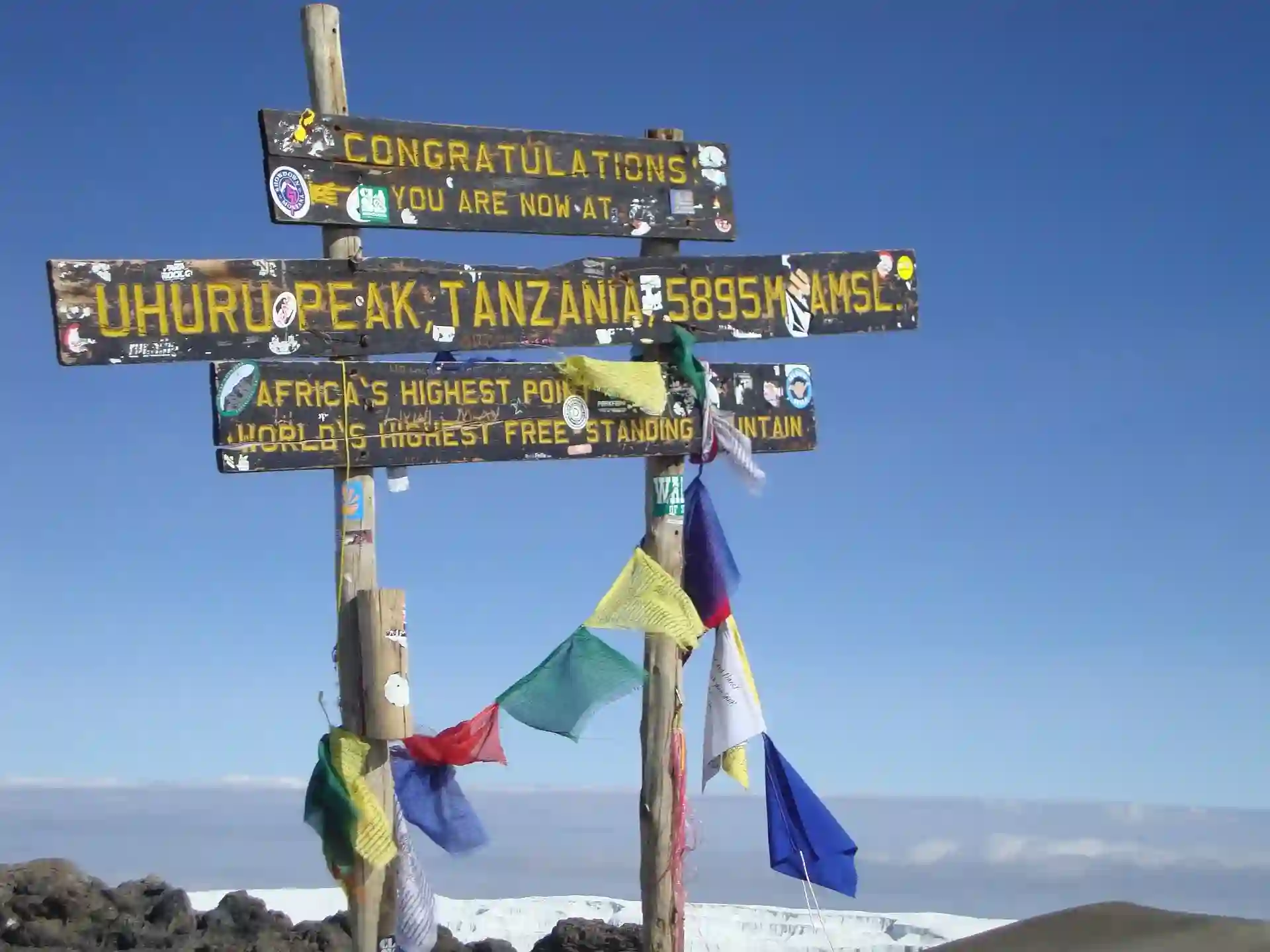
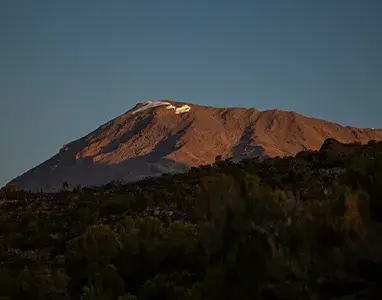
Mount Kilimanjaro rises from warm cultivated foothills to Uhuru Peak at 5,895 metres (19,341 feet). During one climb, you may walk through humid forest rain, strong equatorial sunshine, cold mist, dry alpine wind and sub-zero summit conditions. The change in altitude is so large that the weather at Moshi, the park gate, a high camp and the summit can be completely different at the same time.
Weather is also influenced by slope direction, cloud formation, wind, time of day and short-lived regional systems. Kilimanjaro can produce strong local effects as moist air is forced up its slopes, cools and forms cloud or precipitation. Conditions may change within minutes, especially near exposed ridges and upper camps.
For planning, seasonal patterns are useful. For safety, however, climbers must prepare for rain, wind, sun and freezing temperatures in every month.
2. Kilimanjaro Weather at a Glance
- The main drier periods are generally January to February and June to October.
- The long rains usually fall from March to May; the short rains are most associated with November and may extend into December.
- Seasonal boundaries are not fixed, and dry-season rain or wet-season clear days are both possible.
- Southern and south-eastern slopes usually receive more moisture than the northern side.
- Altitude and time of day usually affect temperature more than the calendar month.
- Clear high-altitude sunshine can feel warm, but shade, cloud or wind can make the temperature fall rapidly.
- Summit attempts normally occur before dawn, when temperatures are near their daily minimum.
- Wind chill can create much greater cold stress than the measured air temperature suggests.
- Fresh snow can fall in any month; it is not the same as the mountain's long-lasting glacial ice.
- A forecast is a planning tool, not a promise. The lead guide must respond to actual conditions on the mountain.
3. Climate, Weather and Forecasts Are Different
Climate describes the long-term pattern: which months are usually wetter, which slopes tend to receive more rain and how temperature changes with altitude. Weather is what happens on a particular day. A forecast is a model-based estimate of that future weather.
This distinction matters because a January climb can encounter rain or fresh snow, while a climber in April may experience several clear mornings. Statements such as “July is dry” describe probability, not certainty.
Mountain forecasts also have limitations. A forecast point may represent a different elevation or slope from your camp; wind and cloud can vary sharply over short distances; and confidence normally declines farther into the future. Forecasts within roughly three to five days are generally more useful for operational decisions than precise-looking predictions many days ahead.
Guides should compare forecasts from reliable sources with observations from the trail, reports from other teams and the condition of clients. An app never replaces local judgement.
4. Kilimanjaro's Five Ecological and Weather Zones
Zone boundaries vary by slope and source, so the elevations below are approximate. The purpose of the zones is to explain the rapid environmental change, not to draw exact lines across the mountain.
| Zone | Approximate elevation | Typical conditions and implications |
|---|---|---|
| Cultivation and lower slopes | 800-1,800 m | Warm conditions around farms, villages and access roads. Heat, sun and showers may be more relevant than cold. |
| Montane rainforest | 1,800-2,800 m | Humid, shaded and often muddy. Rain or dripping vegetation can soak unprotected clothing even when the air is not very cold. |
| Heath and moorland | 2,800-4,000 m | Cooler, more open and increasingly exposed. Strong sunshine, cloud, mist, showers and cold nights can occur in the same day. |
| Alpine desert | 4,000-5,000 m | Dry air, sparse vegetation, strong solar radiation and large day-night contrasts. Wind, dust and freezing nights become important. |
| High alpine or arctic zone | Above 5,000 m | Very cold, exposed and oxygen-poor. Snow, ice, strong wind and rapidly changing visibility are possible; there is little shelter. |
The body's heat balance changes as well as the air temperature. Wet clothing, wind, fatigue, low food intake and slow movement all make a climber colder. Strong sunshine can cause overheating during the day, even where the temperature falls below freezing after sunset.
5. Typical Temperatures by Altitude
There is no single dependable temperature chart for every route, camp and month. The following ranges are practical planning guides, not forecasts or guaranteed limits.
| Location or zone | Illustrative conditions | What to prepare for |
|---|---|---|
| Gate and lower forest | Often about 15-25°C during the day | Light trekking clothes, sun protection and waterproofs kept accessible. |
| Upper forest and moorland | Commonly about 5-18°C by day; much cooler after sunset | Flexible layers, a warm camp layer and protection from damp wind. |
| Camps around 3,900-4,700 m | Sunny periods may rise above freezing; nights commonly fall below 0°C | Insulated jacket, warm hat, gloves, thermal layers and a suitable sleeping bag. |
| Summit ascent and crater rim | Pre-dawn air is often roughly -5 to -15°C and can be colder | Full summit layering, face and hand protection, insulated water and careful guide monitoring. |
Wind can make these temperatures feel substantially colder. The effect becomes more serious when a climber is tired, moving slowly or wearing damp clothing. Use the table to choose equipment with a safety margin, not to pack for the warmest expected number.
As a broad atmospheric rule, temperature often falls with height, but the rate is not constant. Cloud, humidity, wind, sunshine and temperature inversions can all change the result. Subtracting a fixed number for every 1,000 metres is therefore useful only as a rough concept, not as a camp forecast.
6. The Daily Weather Cycle
During relatively settled periods, Kilimanjaro often follows a recognisable daily rhythm.
Morning
The early morning is frequently clearer and calmer. After sunrise, exposed slopes warm quickly and views may be excellent. This is one reason trekking days commonly begin early.
Late Morning and Afternoon
As the lower slopes warm, air moves upslope and cloud often builds around the forest and moorland.
Visibility may decrease and showers, mist or graupel can develop. The pattern is less reliable during the rainy seasons, when cloud and precipitation may persist for longer or arrive at any time.
Evening and Night
After sunset, temperatures fall quickly in the thin, dry air of the upper mountain. Clear nights may produce strong radiational cooling, while wind can intensify cold stress. Summit teams usually leave high camp around midnight, so their coldest hours occur when they are moving slowly and already fatigued.
The daily cycle explains why clothing must remain accessible. A warm morning at the gate says little about the afternoon at Shira or the pre-dawn conditions above Stella Point.
7. Rainfall and the Climbing Seasons
Northern Tanzania commonly experiences two rainfall seasons, but their timing and strength vary from year to year.
January and February: Shorter Dry Period
These months often provide relatively dry trails, good visibility and somewhat warmer daytime conditions.
Rain, cloud and summit snow remain possible. Late December through February is popular, so camps and trails can be busier around holidays and peak travel dates.
March to May: Long Rains
March is often a transition month, with wet conditions becoming more frequent as the month progresses.
April and May are usually the wettest part of the climbing calendar. Expect muddier forest trails, more cloud, prolonged dampness and a greater challenge keeping clothing and sleeping gear dry. The mountain is quieter and can be beautiful, but rain management must be excellent.
June to October: Main Dry Season
June normally marks a drying trend. July, August and September are among the most consistently popular months because rainfall is generally lower and trail conditions are often better. Nights can be particularly cold, and exposed high slopes may be windy. October can remain good, but the probability of showers may increase as the short-rains transition approaches.
November and December: Short Rains and Transition
November is associated with the short rains, which are usually less prolonged than the March-May rains but can be irregular and locally heavy. December is transitional: conditions often improve later in the month, yet showers, storms, cloud and fresh summit snow are still possible. Holiday departures can be busy even when the weather is unsettled.
8. Month-by-Month Planning Guide
| Month | General pattern | Planning perspective |
|---|---|---|
| January | Often drier, with clear periods; occasional rain or snow | Strong weather window, especially after the New Year rush, but pack for full mountain conditions. |
| February | Often relatively dry and warm by Kilimanjaro standards | Another strong window; upper-mountain cold and wind remain serious. |
| March | Transition toward the long rains | Early March may be favourable; uncertainty and rainfall often increase later. |
| April | Usually within the long rains | Wet, cloudy and quieter; best for climbers prepared for persistent moisture. |
| May | Often wet, then gradually drying | Conditions can improve late in the month, but variability remains high. |
| June | Start of the main dry period | Generally improving trails; cold nights become more noticeable. |
| July | Usually dry, cold and popular | Good probability of stable trekking weather; busy routes and freezing summit conditions. |
| August | Usually dry and busy | Strong general window; wind, dust and cold are still possible. |
| September | Often dry with good visibility | One of the most dependable general periods, without any weather guarantee. |
| October | Often dry early, becoming more transitional | Good potential, with increasing shower risk later in some years. |
| November | Short rains | Variable showers and cloud; quieter trails and fresh snow are possible. |
| December | Transition toward a shorter dry period | Conditions may improve, especially later, but festive dates are busy and rain remains possible. |
The “best month” depends on more than rainfall. Crowding, preferred route, tolerance for cold or rain, travel dates and appetite for quieter conditions should all influence the decision.
9. How Weather Differs by Route
Kilimanjaro's southern and south-eastern slopes are generally wetter because they receive more moisture from prevailing airflows, while the northern side lies in a relative rain shadow. This is a tendency, not a waterproof boundary.
| Route | Weather character | Important limitation |
|---|---|---|
| Machame | Begins on the wetter south-western side; forest can be muddy and the Barranco-Barafu section is exposed. | Good dry-season conditions do not remove summit wind, cold or snowfall. |
| Lemosho | Starts on the western side, crosses exposed Shira Plateau and later joins the southern circuit. | Western and southern sections can receive rain, mist and strong wind; the plateau offers little shelter. |
| Umbwe | Steep southern approach through humid forest, then exposed high terrain. | Wet ground increases the difficulty of an already steep opening; weather does not improve its rapid altitude profile. |
| Marangu | South-eastern approach with a wet forest zone; sleeping huts provide shelter at camp. | Huts do not keep a climber dry on the trail or make summit conditions warmer. |
| Rongai | Northern approach is often drier at lower and middle elevations. | Summit conditions remain severe, and the descent commonly uses the wetter Marangu side. |
| Northern Circuit | Spends substantial time on the drier, quieter northern slopes after a western start. | Its length increases the chance of experiencing at least one period of poor weather; northern terrain is exposed to wind. |
Route choice can reduce the likelihood of persistent rain, particularly in wetter months, but it cannot eliminate bad weather. Acclimatization profile, number of days and guide coverage should remain more important than choosing a route only because it is described as “dry.”
10. Wind and Wind Chill
Wind is often underestimated because weather tables display air temperature more prominently. At high camps and on the crater rim, wind removes heat from exposed skin and clothing, increases fatigue, can affect balance and makes breaks uncomfortable. A modest sub-zero temperature with strong wind may be more hazardous than a colder but calm reading.
Wind chill describes the rate of heat loss from exposed skin; it does not mean equipment or water instantly cools to a temperature below the actual air temperature. For climbers, the practical response is to block wind, cover skin, keep insulation dry, minimise long exposed stops and report numbness or loss of dexterity early.
Guides may delay departure, change the pace, shorten breaks, regroup clients, turn around a climber or abandon the summit attempt when wind, cold, visibility and client condition combine to create unacceptable risk.
11. Rain, Wet Clothing and Hypothermia
Hypothermia is not limited to snow or extreme cold. Rain, sweat and wind can cool a tired person rapidly even when the air is above freezing. Forest rain is particularly deceptive: the temperature may feel mild at first, but soaked clothing becomes a serious problem as the group ascends or stops moving.
Every climber should carry a waterproof jacket and trousers in the daypack, not in the porter duffel. Keep insulating layers and electronics in individual waterproof dry bags inside the pack. A rain cover helps, but wind-driven rain can enter around straps and openings, so it should not be the only waterproofing system.
Avoid cotton as a next-to-skin or insulating layer for cold, wet sections because it dries slowly. Change out of wet clothing at camp, eat and drink, and tell the guide if shivering continues, coordination changes or thinking becomes slow or confused.
12. Sun, Ultraviolet Radiation and Dry Air
Equatorial sunshine remains powerful in cool air, and ultraviolet exposure increases with altitude. Snow and light-coloured ground can add reflected radiation. Climbers can burn quickly even when cloud or cold makes the sun feel weak.
Use broad-spectrum, high-protection sunscreen, UV-protective sunglasses, a brimmed hat at lower elevations and lip balm with sun protection. Category-appropriate glacier-style eye protection may be useful when extensive fresh snow is present, but ask the operator what is expected for your route.
The upper mountain's dry air also increases respiratory water loss and can irritate the throat. Drink regularly according to thirst and the guide's plan, but do not force excessive water. Keep a buff available for dust and cold, dry wind.
13. Snow, Ice and Kilimanjaro's Glaciers
Fresh snow can fall near the summit in any season and is more likely when moist systems reach the upper mountain. It may melt or sublimate quickly after the weather clears. Snow depth and hardness can change the pace, obscure the trail and make rocks or scree slippery.
The permanent and semi-permanent glacier remnants are old ice bodies, not simply last night's snow.
Long-term glacier retreat does not mean Kilimanjaro is becoming a warm summit or that climbers can ignore winter equipment. Short-term weather can still produce severe cold, snow and ice.
Standard routes do not normally require technical climbing equipment in ordinary conditions. After unusual snow or ice, however, an operator may recommend traction devices or adjust the plan. Do not bring or use crampons, an ice axe or unfamiliar equipment without route-specific advice and training.
14. Lightning, Cloud and Poor Visibility
Thunderstorms are possible, particularly during wetter periods and during afternoon cloud development.
There is no completely safe place outdoors in a thunderstorm. Follow the guide immediately, move away from exposed high points when directed and do not separate from the group to seek your own shelter.
Cloud and fog can reduce visibility within minutes, hide trail junctions and make a damp breeze feel much colder. Remain with the guide, keep headlamps accessible and avoid walking ahead. A GPS watch or phone is not a substitute for the authorised guide and the team's navigation and communication plan.
15. Weather and Altitude Illness
Weather does not cause Acute Mountain Sickness, High-Altitude Cerebral Edema or High-Altitude Pulmonary Edema. These illnesses result from hypobaric hypoxia after ascent. Cold, dehydration, poor sleep and exhaustion can nevertheless make a climber feel worse, complicate assessment and reduce the margin for responding safely.
Do not explain a new headache, unusual fatigue, reduced performance, confusion or breathlessness at rest as “just the cold” without telling the guide. Fitness and warm equipment do not provide immunity from altitude illness. A climber with worsening symptoms must not be pushed upward because a brief weather window has opened.
16. What to Wear and Carry for Kilimanjaro Weather
In Your Daypack Every Day
- Waterproof hooded shell jacket and waterproof trousers.
- Warm insulating layer, even when leaving camp in sunshine.
- Sun hat, warm hat, buff and sunglasses.
- Light gloves, with warmer gloves available as altitude increases.
- Sunscreen and lip protection.
- Drinking water protected from leakage and, on summit night, freezing.
- High-energy snacks that remain edible in cold conditions.
- Headlamp, spare power or batteries, and essential medication.
- Pack liner or waterproof dry bags; a rain cover as secondary protection.
For High Camps and Summit Night
- Moisture-managing base layers and warm midlayers that work together without restricting movement.
- Insulated down or synthetic jacket and windproof-waterproof outer shell.
- Thermal leggings, trekking trousers and waterproof over-trousers as required by the guide.
- Warm liner gloves plus insulated, wind-resistant outer gloves or mittens.
- Warm hat and face covering that allow comfortable breathing.
- Dry socks and broken-in boots with enough room to avoid restricted circulation.
- Insulated bottles or bottle covers; place bottles upside down so ice forms away from the cap.
- Spare headlamp batteries kept warm near the body; cold reduces battery performance.
Test the entire summit clothing system before travelling. Too many tight layers can compress insulation, restrict movement and reduce circulation in hands and feet.
17. How Guides Use Weather Information
A responsible lead guide considers more than a single forecast icon. Decisions combine precipitation, wind, temperature, visibility, snow or ice, route exposure, timing, client condition, team resources and the ability to descend safely.
The guide may change departure time, require additional layers, keep the group closer together, shorten an acclimatization excursion, slow or stop the ascent, or turn the team around. A forecast that looks acceptable does not overrule dangerous conditions on the trail, and a disappointing forecast does not automatically mean the entire climb will be poor.
Clients should check the weather for packing and expectation management, then follow the guide's operational decisions. The safest question is not “Will it rain?” but “Are we equipped and organised to remain safe if it does?”
18. Our Kilimanjaro Weather-Safety Approach
At Tanzania Inside Safari, weather preparation begins with route and date selection. We explain the seasonal trade-offs, provide a detailed packing list, check essential equipment before departure and recommend rental replacements when necessary.
During the climb, our professional local guides monitor weather, trail conditions and every climber's health.
The team uses a controlled “pole pole” pace, daily health checks, emergency oxygen and a clear descent and evacuation plan. Clothing, water protection and summit readiness are reviewed before the most exposed stages.
We cannot guarantee blue skies, a snow-free trail or a particular summit temperature. We can plan conservatively, communicate honestly and change the programme when weather and client condition make continuing unsafe.
19. Plan Your Kilimanjaro Climb
Tell us your preferred dates, route, group size and previous experience with cold, rain and high altitude. Our Moshi-based team will explain the likely seasonal conditions and recommend an itinerary and equipment plan suited to your climb.
PLAN YOUR KILIMANJARO CLIMB
Operational note: Seasonal descriptions and temperature ranges in this guide are general planning guidance, not a forecast or guaranteed limits. Weather, park procedures and equipment recommendations can change. Check the current forecast close to departure, attend the operator's gear check and follow the lead guide's instructions on the mountain.