• About Us

Acclimatization and Mountain sickness on Kilimanjaro

        Fully Registered African Local Tour Operator   

Follow us    

Acclimatization and Altitude Sickness on Kilimanjaro
ALTITUDE AND ACCLIMATIZATION

Acclimatization and Altitude Sickness on Kilimanjaro

How your body adapts, why route choice matters and how responsible decisions protect every climb.

SAFETY PRINCIPLEDo not ascend to a higher sleeping altitude while symptoms are present. A summit is optional; a safe return is the responsibility.

At 5,895 metres (19,341 feet), Mount Kilimanjaro rises into the extreme-altitude zone. Although reaching the summit requires no technical climbing skills, the rapid journey from the warm foothills to almost 6,000 metres makes altitude the greatest challenge for most climbers.

Good fitness will help you cope with long trekking days, steep trails and summit night, but it does not protect you from altitude sickness. A marathon runner can develop serious symptoms while a moderately fit walker may acclimatize well. The most important factors are your rate of ascent, sleeping-altitude profile, previous response to altitude and individual susceptibility.

This is why choosing an appropriate route and allowing enough time on the mountain are among the most important decisions you will make.

1. Kilimanjaro Acclimatization at a Glance

  • Kilimanjaro’s summit is 5,895 metres above sea level.
  • The percentage of oxygen in the air remains approximately 20.9%, but lower atmospheric pressure means fewer oxygen molecules enter your lungs with each breath.
  • Acute acclimatization takes place mainly during the first three to five days after reaching altitude.
  • Fitness and training do not make anyone immune to altitude sickness.
  • Longer itineraries generally provide better acclimatization than short climbs.
  • Do not ascend to a higher sleeping altitude while experiencing symptoms of altitude sickness.
  • Worsening symptoms, breathlessness at rest, confusion or loss of coordination require immediate action and usually descent.
  • Supplemental oxygen and medication can support treatment, but they should never be used to justify continuing upward with worsening symptoms.

2. What Happens to Your Body at High Altitude?

As altitude increases, atmospheric pressure falls. The air still contains approximately the same percentage of oxygen, but every breath delivers fewer oxygen molecules to the lungs.

At around 3,050 metres, inspired oxygen pressure is only about 69% of its sea-level value. Near Kilimanjaro’s summit, the effective oxygen pressure is approximately half that experienced at sea level.

Your body responds immediately by:

  • Breathing faster and more deeply
  • Increasing your heart rate
  • Changing blood flow to improve oxygen delivery
  • Excreting bicarbonate through the kidneys, which allows breathing to remain elevated
  • Reducing plasma volume, temporarily increasing the concentration of haemoglobin in the blood Producing significant numbers of new red blood cells takes longer and is not the main mechanism responsible for acclimatization during the first few days of a Kilimanjaro climb.

The body’s most important early response is increased ventilation. This gradually improves oxygenation but requires time. According to the CDC Yellow Book’s high-altitude guidance, the critical acute phase of acclimatization generally occurs over the first three to five days.

Humans can acclimatize to prolonged stays at altitudes of approximately 5,200 metres, but Kilimanjaro’s summit is higher than this. Climbers therefore make a relatively brief summit visit before descending to a much lower camp on the same day.

3. Why Altitude Is a Particular Challenge on Kilimanjaro

Kilimanjaro is sometimes described as a “walk-up mountain” because ropes and technical mountaineering skills are not normally required on the standard routes. This description can cause people to underestimate the altitude.

Most climbers begin near Moshi or Arusha at a relatively low elevation and reach almost 6,000 metres within several days. That ascent is considerably faster than the schedules commonly used on longer Himalayan expeditions.

Published Kilimanjaro studies have reported high rates of Acute Mountain Sickness on short itineraries. One observational study of trekkers on a rapid Marangu ascent found that 75% developed AMS, with the researchers identifying rapid ascent as the main explanation. These figures come from particular routes and schedules and should not be treated as the rate for every Kilimanjaro climb. However, they clearly demonstrate why itinerary length matters. Read the Kilimanjaro AMS study on PubMed.

Another Kilimanjaro study reported estimated AMS rates of 75–77% on four- to five-day ascents compared with approximately 53% on a six-day ascent. The same study identified high-altitude illness caused by rapid ascent as the main limitation for climbers. Read the Kilimanjaro altitude-disorders study.

Longer routes do not guarantee successful acclimatization, but they give the body more time to respond and allow guides more opportunities to observe how each climber is adapting.

5. Which Kilimanjaro Routes Are Best for Acclimatization?

The route name alone does not determine safety. The number of days, camp sequence, acclimatization hikes and pace are equally important.

Longer Lemosho Route

The longer Lemosho itinerary is one of our preferred options for first-time high-altitude climbers. Its western approach allows more time before reaching the upper mountain. It also includes useful high-and-low movements, such as trekking towards Lava Tower before descending to sleep at Barranco.

The eight-day itinerary provides a more responsible profile than compressing the same route into fewer days.

Northern Circuit Route

The Northern Circuit spends more time travelling around Kilimanjaro and generally offers one of the longest acclimatization schedules. Its quieter northern section and additional trekking days make it a strong choice for climbers who prioritise acclimatization over completing the mountain quickly.

The final ascent towards the high camp remains demanding, so climbers must continue monitoring symptoms even after several comfortable days.

Seven-Day Machame Route

Machame includes an important “climb high, sleep lower” day when climbers approach Lava Tower and descend to Barranco Camp. The seven-day version is considerably better for acclimatization than a compressed six-day schedule.

The route still contains significant sleeping-altitude gains, particularly during its early stages, so the extra day should not be viewed as optional for climbers seeking a more responsible itinerary.

Seven-Day Rongai Route

Rongai approaches from the drier and quieter northern side of Kilimanjaro. A properly designed seven-day itinerary, including sufficient time around Mawenzi, can provide a reasonable acclimatization schedule.

Short versions of Rongai progress much faster and should not be considered equal to the full seven-day itinerary.

Marangu Route

The six-day Marangu itinerary includes an additional night at Horombo Hut, normally combined with an acclimatization hike. This is much better than attempting the route in five days.

However, Marangu still contains some large sleeping-altitude increases. Its comfortable huts do not make the altitude easier, and the route should not automatically be described as the easiest option.

Umbwe Route

Umbwe gains altitude very rapidly during its opening stages. It is steep, direct and less forgiving for an unacclimatized climber.

We generally reserve Umbwe for experienced or properly pre-acclimatized climbers, specialist expeditions and carefully planned challenges. Strong fitness alone is not adequate preparation for its aggressive altitude profile.

6. What Does “Climb High, Sleep Low” Mean?

“Climb high, sleep low” means reaching a higher elevation during the day and then descending to sleep at a lower camp.

Exposure to the higher point gives the body a controlled altitude stimulus, while sleeping lower places less stress on the body during the night, when oxygen levels in the blood are often at their lowest.

Examples on Kilimanjaro include trekking towards Lava Tower before descending to Barranco Camp or completing an acclimatization hike above camp and returning to the same sleeping elevation.

This technique can support acclimatization, but it does not replace a gradual overall increase in sleeping altitude.

7. Acute Mountain Sickness

Acute Mountain Sickness, commonly called AMS, is the most common form of altitude illness. It usually appears between two and twelve hours after arriving at a new altitude, often during or after the first night.

Typical symptoms include:

  • Headache
  • Nausea or loss of appetite
  • Dizziness or light-headedness
  • Unusual fatigue or weakness
  • Vomiting
  • A noticeable reduction in normal activity or walking performance Headache is a key symptom in the 2018 Lake Louise AMS definition, although medical decisions should consider the climber’s complete condition rather than relying on a numerical score alone.

Symptoms such as headache and nausea can also result from dehydration, exhaustion, migraine, infection or other conditions. On the mountain, new symptoms following an altitude gain must nevertheless be treated seriously until the guide has properly assessed the climber.

What Should Happen When a Climber Has AMS Symptoms?

The first rule is simple:

SAFETY RULE

Do not ascend to a higher sleeping altitude while symptoms are present.

A climber with mild, stable symptoms may rest at the same altitude under close observation. If the symptoms resolve, the guide can decide whether continuing is appropriate.

Descent is required when:

  • Symptoms become worse while resting at the same altitude
  • The climber cannot keep up or care for themselves normally
  • Symptoms fail to improve with appropriate treatment
  • There are signs of HACE or HAPE
  • The guide believes continued exposure is unsafe A descent of even 300 metres can produce significant improvement in AMS.

8. High-Altitude Cerebral Edema

High-Altitude Cerebral Edema, or HACE, is a life-threatening neurological emergency. It is generally considered a severe progression of altitude illness and can advance rapidly.

Warning signs include:

  • Loss of balance or inability to walk in a straight line
  • Confusion or disorientation
  • Irrational or unusual behaviour
  • Extreme drowsiness
  • Inability to care for oneself
  • Severe weakness
  • Reduced consciousness Loss of coordination, known as ataxia, is one of the most important warning signs. A simple heel-to-toe walking test can help reveal it, but any suspected HACE requires immediate action.

The correct response is urgent descent with as little physical exertion by the affected climber as possible. Emergency oxygen and appropriate medication may be given by trained personnel, but treatment must not delay evacuation.

9. High-Altitude Pulmonary Edema

High-Altitude Pulmonary Edema, or HAPE, is a life-threatening accumulation of fluid in the lungs. It can occur with or without obvious AMS symptoms.

Early warning signs include:

  • An unusual reduction in walking performance
  • Breathlessness that is excessive for the level of effort
  • Chest congestion or tightness
  • A persistent cough
  • Extreme fatigue More advanced signs include:
  • Breathlessness while resting
  • Rapid breathing and heartbeat
  • Wet or crackling lung sounds
  • Blue or grey lips
  • Confusion
  • Coughing frothy or blood-stained fluid Coughing is common in Kilimanjaro’s cold, dry air, but a cough combined with decreasing performance, chest symptoms or breathlessness at rest must be treated as a possible emergency.

Suspected HAPE requires urgent descent, emergency oxygen when available and evacuation for medical care. Medication may support treatment but is not a substitute for descent and oxygen.

10. How Our Guides Assess Acclimatization

Altitude illness is diagnosed primarily through recent altitude exposure, reported symptoms, functional condition and clinical observation.

During our climbs, guides conduct regular health checks that may include:

  • Asking about headache, appetite, nausea, dizziness, sleep and fatigue
  • Measuring pulse rate and oxygen saturation
  • Observing walking speed, balance, breathing and behaviour
  • Comparing results with previous readings
  • Listening for unusual respiratory signs when necessary
  • Assessing whether the climber can eat, drink, communicate and walk normally

Understanding Pulse-Oximeter Readings

A pulse oximeter measures peripheral oxygen saturation, known as SpO₂. It is useful for identifying trends and supporting a guide’s assessment, particularly when HAPE is suspected.

However, one number cannot determine whether a person is safe to continue. Readings are affected by altitude, cold fingers, movement, poor circulation, nail coverings, equipment differences and measurement technique.

A climber may have AMS despite an oxygen reading that appears normal for the altitude. Another climber may record a low number without severe symptoms. The reading must always be interpreted alongside symptoms and overall condition.

Our guides do not make summit decisions from pulse-oximeter readings alone.

11. How to Improve Acclimatization on Kilimanjaro

Choose a Longer Itinerary

This is the most effective decision available during the planning stage. For most climbers, we recommend spending at least seven trekking days on Kilimanjaro, with longer Lemosho or Northern Circuit itineraries offering additional time.

Walk “Pole Pole”

“Pole pole” means “slowly, slowly” in Swahili. Walking at a controlled pace reduces unnecessary exertion and helps preserve energy.

Walking slowly does not make a short, aggressive itinerary safe by itself, but it is an important part of a properly designed ascent.

Never Hide Symptoms

Tell your guide about headaches, nausea, dizziness, unusual fatigue, breathing difficulties or changes in your coordination.

Hiding symptoms to protect your summit attempt can turn a manageable situation into an emergency. Reporting symptoms early gives the guide more options.

Stay Normally Hydrated

High altitude, dry air and physical activity increase fluid loss. Drink regularly and monitor your urine, but do not force excessive quantities of water.

Dehydration can cause headaches and worsen how you feel, but drinking extra water has not been shown to prevent AMS. Forced overhydration can also be dangerous.

Eat Regularly

Loss of appetite is common at altitude, but your body still requires energy. Carbohydrate-rich meals and snacks are often easier to tolerate and provide useful fuel for trekking.

Tell your guide or cook if nausea is preventing you from eating.

Avoid Alcohol and Respiratory Depressants

Avoid alcohol during the climb, particularly during the first days at altitude. Opiates and other respiratory-depressant medicines can interfere with breathing and should not be used unless medically directed.

Discuss sleeping medication with a qualified medical professional before travelling rather than experimenting on the mountain.

Keep Warm and Dry

Cold does not directly cause AMS, but being wet, cold and exhausted creates additional stress and can complicate diagnosis. Carry waterproof layers, insulation, gloves and warm headwear in your daypack.

Consider Pre-Acclimatization

Recent exposure to altitude can be helpful. The CDC notes that spending at least two nights above approximately 2,750 metres within the two weeks before a trip can provide some benefit.

Climbing Mount Meru before Kilimanjaro may support pre-acclimatization, provided the schedule allows adequate recovery. Previous altitude exposure does not guarantee immunity, and symptoms must still be monitored.

Short sessions in simulated-altitude facilities should not be assumed to provide the same benefit as prolonged exposure. The Wilderness Medical Society’s 2024 guidance notes that hypoxic-tent exposure generally needs to be sufficiently long and repeated over several weeks to offer meaningful benefit.

12. Should You Take Diamox?

Acetazolamide, commonly known by the brand name Diamox, accelerates part of the body’s acclimatization response by stimulating breathing, particularly during sleep. It can reduce the likelihood and severity of AMS but cannot guarantee successful acclimatization.

It does not replace:

  • A suitable route
  • A gradual ascent
  • Honest symptom reporting
  • A guide’s decision to stop the ascent
  • Descent when medically necessary Possible effects include increased urination, tingling in the fingers or toes and changes in the taste of carbonated drinks.

Whether acetazolamide is suitable for you should be discussed with a doctor or travel-medicine professional before departure. Tell the doctor about your medical history, allergies and other medications. Do not wait until reaching high altitude to try an unfamiliar prescription without medical guidance.

Dexamethasone and medications used for HAPE are specialist treatments and should not be self-prescribed as a way to continue climbing.

13. Is Supplemental Oxygen Used to Reach the Summit?

Routine oxygen-supported summiting is not part of a standard Kilimanjaro climb. Our oxygen cylinders are carried for emergencies and the treatment of a sick climber while descent or evacuation is being arranged.

Feeling temporarily better after receiving oxygen does not prove that a climber has acclimatized.

Oxygen should never be used to mask worsening symptoms and continue towards the summit.

Small recreational oxygen canisters do not contain enough oxygen for reliable treatment of serious altitude illness.

14. Sleep at Altitude

Light or disturbed sleep is common above approximately 2,700 metres. Some climbers experience periodic breathing: several deep breaths followed by a short pause and then breathing resumes.

Periodic breathing can be uncomfortable but does not automatically mean that someone has AMS.

However, breathlessness while resting, a persistent cough, chest congestion, confusion or an inability to lie comfortably should be reported immediately because these can indicate a more serious problem.

15. Who Should Consult a Doctor Before Climbing?

Every climber can benefit from a pre-travel medical consultation. It is particularly important for people with:

  • Heart or lung disease
  • Neurological conditions
  • Severe anaemia or blood disorders
  • Poorly controlled high blood pressure
  • Diabetes
  • Sleep apnoea
  • Previous HACE or HAPE
  • Previous severe AMS
  • Recent surgery or significant injury
  • Regular prescription medication
  • Pregnancy or possible pregnancy A doctor familiar with travel or altitude medicine should assess how altitude could affect your condition and medication.

Your travel insurance should specifically cover trekking up to at least 6,000 metres, altitude-related illness, medical treatment, evacuation and helicopter rescue where available.

16. The Three Essential Rules of Altitude Safety

1Do not ascend to a higher sleeping altitude when experiencing altitude-illness symptoms.
2Descend if symptoms become worse or fail to improve at the same altitude.
3Treat confusion, loss of coordination or breathlessness at rest as an emergency.

No summit is more important than a climber’s health.

17. Our Kilimanjaro Safety Approach

At Tanzania Inside Safari, responsible acclimatization begins before you arrive. We consider your experience, previous response to altitude, available days and personal objectives before recommending a route.

During the climb, our approach includes:

  • Longer itinerary options with better acclimatization profiles
  • A controlled “pole pole” pace
  • Professional local mountain guides
  • Regular symptom and health assessments
  • Pulse-oximeter monitoring interpreted alongside clinical signs
  • Emergency oxygen and mountain first-aid equipment
  • Clear communication between climbers and guides
  • Early intervention when symptoms appear
  • Descent and evacuation when continuing is unsafe We never guarantee that every climber will reach Uhuru Peak. Individual responses to altitude are unpredictable. What we can promise is careful planning, honest advice and decisions that place health above summit statistics.

18. Plan a Better-Acclimatized Kilimanjaro Climb

Choosing your route should involve more than comparing scenery and price. The number of trekking days and the progression between sleeping camps can directly affect your experience and altitude exposure.

Tell us when you plan to travel, whether you are climbing solo, with a partner or with friends, and whether you have previous high-altitude experience. Our local Kilimanjaro team will recommend an itinerary suited to your needs.

PLAN YOUR KILIMANJARO CLIMB

Start a conversation with Tanzania Inside Safari.

WEBSITE DETAILS

SEO title: Kilimanjaro Acclimatization and Altitude Sickness Guide | Meta description: Learn how acclimatization works on Kilimanjaro, how to recognize altitude sickness and how route choice, pacing and safety monitoring reduce your risk.

Medical disclaimer: This article provides general educational information and is not a substitute for individual medical advice, diagnosis or treatment. Consult a qualified medical or travel-health professional before undertaking a high-altitude climb.

Kilimanjaro Frequently Asked Questions

Mount Kilimanjaro is one of the most iconic climbs in the world, drawing trekkers from all over the globe. However, preparing for this adventure involves many questions. We've compiled answers to the most common ones below. If you need more details, feel free to contact us for personalized assistance.

The optimal periods to climb Mount Kilimanjaro are from late December to early March and from mid-June to late October, when the weather is generally favorable. Although rain may occur during other months, it usually falls in the latter part of the day, leaving trekkers with plenty of clear weather for most of their hike. Some rainy days are entirely dry. Tanzania Inside and Safari offers discounted climbs during the rainy season, making it a feasible option despite occasional showers. For more information, you can check out our guide on Kilimanjaro's climbing seasons.
As of 2024, a typical 7-day group climb costs between $2,100 and $2,340. Shorter treks of 5-6 days or discounted trips during the rainy season can range from $1,750 to $1,980. These prices include park fees, which account for about 40% of the total cost. Be cautious of companies offering significantly lower prices, as they may skimp on guide quality and equipment, which could compromise safety. Additionally, such budget operators may mistreat porters, which poses risks to both porters and climbers. For a detailed cost breakdown, check out our blog on Kilimanjaro climbing expenses.
Mount Kilimanjaro National Park is in northern Tanzania, East Africa, just three degrees south of the equator. While many of the iconic photos of Kilimanjaro are taken from Kenya, all trails begin in Tanzania, making it the only country where tourists can hike the mountain. The closest airport is Kilimanjaro International Airport, and most expeditions start from Moshi, the capital of the Kilimanjaro region.
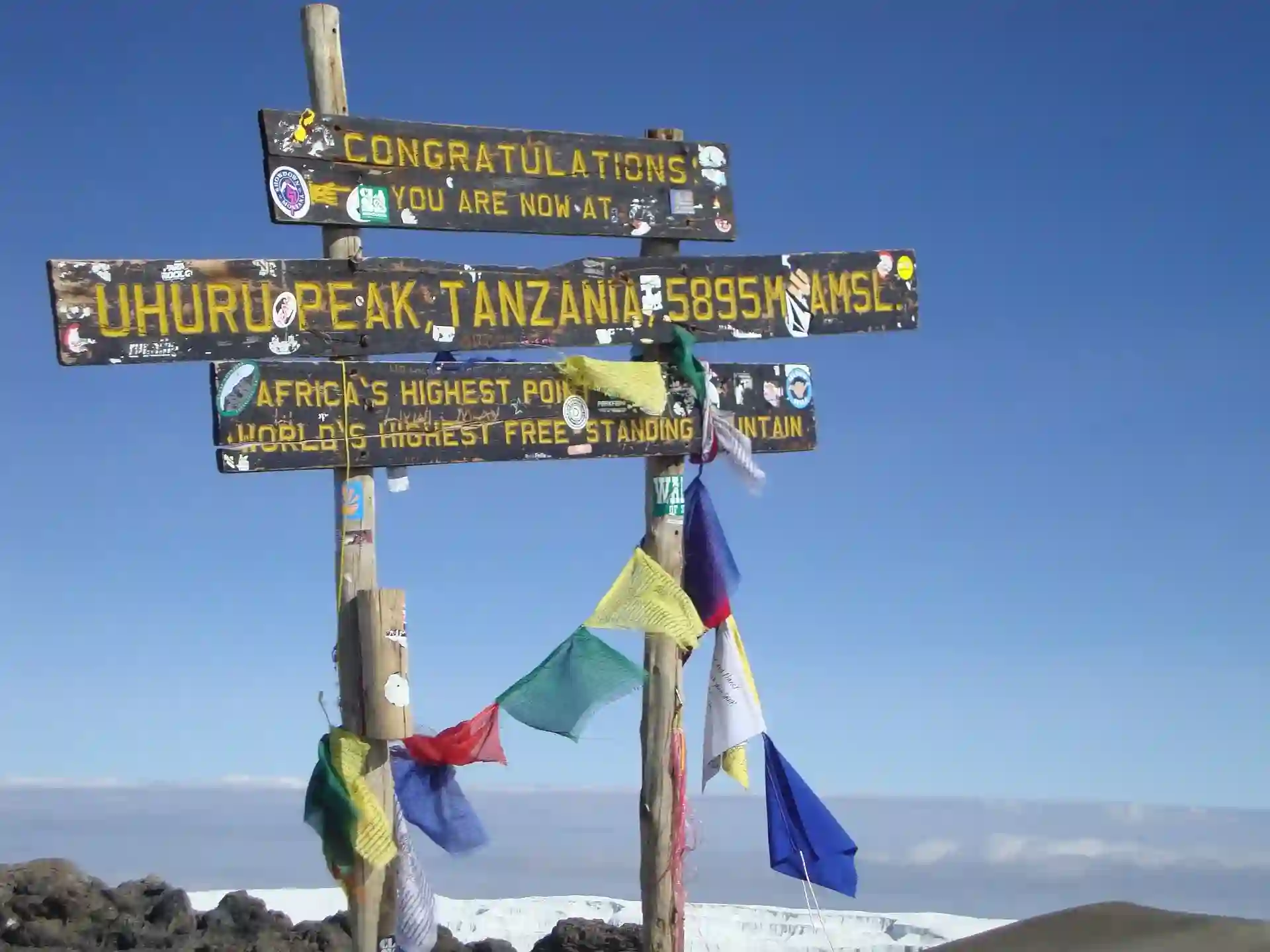
The summit of Mount Kilimanjaro, Uhuru Peak, reaches 5,895 meters (19,341 feet). However, hikers don't start at sea level. Most hotels near Kilimanjaro are located at altitudes between 700 and 1,000 meters, with trailheads typically beginning at elevations of around 1,600 meters and higher. Kilimanjaro’s snow-capped peak makes it one of the few places in East Africa where snow is visible.
Climbing Kilimanjaro is only permitted with a licensed local guide, as per the regulations of Kilimanjaro National Park. Solo hikes are not allowed, and attempting to climb alone can be extremely risky. Guides are essential for managing emergencies and altitude sickness, and they also enrich the experience by providing insights into the mountain's ecosystem, history, and the surrounding communities.
Climbing Kilimanjaro requires paying various park fees, which amount to $157 per day per hiker. These fees cover conservation efforts, camping (or hut fees for the Marangu route), crew member access, and a mandatory rescue service fee. Operators generally include these fees in the overall price of the tour. With Tanzania Inside and Safari, all park-related expenses are managed, ensuring a smooth experience.
While you don't need to be an elite athlete to summit Kilimanjaro, maintaining a good fitness level is key. Being able to comfortably hike 8-10 km (5-6.2 miles) will prepare you for the trek. Running and swimming are excellent exercises to improve cardiovascular endurance. For optimal preparation, train on rugged trails, preferably 10-15 km (6-10 miles) in length, to get used to the uphill terrain of Kilimanjaro.
Tanzania experiences two rainy seasons and two dry seasons. The short rainy season runs from early November to late December, followed by a dry season until mid-March. The long rainy season starts in March and lasts until mid-June. If you're climbing during the rainy season, consider routes like Rongai, Northern Circuit, or Marangu, which receive less rainfall on the northern slopes of Kilimanjaro. Be prepared for chilly nights, especially at higher altitudes, from June to October.
Athletes sometimes make the mistake of hiking too quickly without allowing enough time for acclimatization. This can increase the risk of altitude sickness. It's important to pace yourself and stick to the acclimatization schedule, as reaching the summit safely involves more than physical fitness; it requires careful attention to altitude-related adjustments.
On a Tanzania Inside and Safari trek, climbers are provided with hearty, calorie-dense meals designed for energy on the mountain. A typical breakfast includes porridge, eggs, fruit, sausages, and toast. Lunch and dinner consist of soups, stews, chicken, pasta, and fresh salads. Desserts feature tropical fruits like mangoes, bananas, and pineapples. We can accommodate vegetarian, vegan, and gluten-free diets, and regular tea and biscuit stops are offered. For extra energy, consider bringing snacks like energy bars or dried fruit.
Based on an analysis by Tanzania Inside and Safari from January 1 to September 30, 2023, starting your trek on a Wednesday or Thursday can reduce the number of fellow climbers by half. These days see far fewer climbers than the weekend, and opting for the Rongai route can reduce encounters with other hikers by as much as 16 times compared to the popular Machame route.
Tanzania Inside and Safari recommends Global Rescue for reliable travel insurance. Your policy should cover high-altitude hiking up to 6,000 meters, including medical services and helicopter evacuation if necessary.
To acclimatize properly and increase your chances of reaching the summit, follow these tips:
  • Hike slowly to allow your body to adjust to the reduced oxygen levels.
  • Drink 3-4 liters of water daily to stay hydrated.
  • Participate in short acclimatization hikes to higher elevations during the climb.
  • Consider climbing Mount Meru or other lower-altitude peaks as training.
  • Opt for routes that last at least seven days to give your body more time to adjust.
Routes like Lemosho, Machame, and Rongai are ideal for acclimatization. Longer itineraries of seven days or more are recommended for the best acclimatization results.
On the seven-day Machame route, extra acclimatization days aren't usually necessary. However, adding one or two extra rest days could be beneficial, especially if you’re not in peak physical condition.
Most climbers do not require supplemental oxygen, as the summit's oxygen level is about half of what it is at sea level. However, Tanzania Inside and Safari provides oxygen tanks for safety, included in the tour price.
Tanzania Inside and Safari provides comprehensive medical kits on all climbs, which include treatments for common ailments like nausea, headaches, and altitude sickness, as well as oxygen. If you have any specific prescriptions, be sure to bring them with you.
Kilimanjaro has a low death rate, with 3-5 fatalities per year out of around 50,000 climbers. Most deaths are related to altitude sickness, which is often a result of failing to acclimatize properly. Tragically, porters have a higher mortality rate, often due to inadequate equipment and shelter, particularly with low-cost tour operators.
Uhuru Peak was named to honor Tanzania's independence from Britain in 1961. "Uhuru" means "freedom" in Swahili.
Yes! Tanzania is home to some of the world's most famous safari destinations, including Serengeti and Ngorongoro Crater. You can easily combine a Kilimanjaro climb with a safari adventure. Tanzania Inside and Safari also offers a fleet of vehicles and expert guides to make your safari experience exceptional.
Tanzania Inside and Safari is a Tanzanian-owned, registered tour operator. We are dedicated to responsible tourism and actively engage in environmental conservation and social responsibility efforts, such as planting trees and combating bushfires on Kilimanjaro. For personalized advice on your Kilimanjaro adventure, feel free to reach out to our team!
Guest Reviews · Tanzania Inside and Safari

What Travelers Say About Tanzania Inside and Safari

4.9
Excellent guest rating - 40 reviews
Jivyaant

Jivyaant

Jun 2026 • Couples
Five star rating

The Perfect Tanzania Safari Experience

We had an amazing experience with this company from start to finish and would highly recommend them to anyone visiting Tanzania. Joseph was always quick to respond to our questions, very friendly, and completely transparent with pricing. The rates were fair and competitive, and there were no hidden surprises. All of the accommodations exceeded our expectations—they were comfortable, well-located, and added so much to the overall experience.

Read full review
Sightsee253101

Sightsee253101

Feb 2026 • Couples
Five star rating

Unbelievable 5 day of safari, experience for lifetime. 5 stars 🌟 lol

We had a 5 day safari to Tarangire NP, Serengeti NP and Ngorongoro NP. The lodges were we were staying were wonderful, the meals too. Our driver Hillary was so smart and he took us to the best spots to see all animals that are possible to see, even rhinos. It was a lifetime experience for us, 5 stars 🌟

Read full review
Nathalie

Nathalie

Aug 2025
Five star rating

A wonferful and unforgettable chimpanzees safari in Mahale Mountains

My partner and I had the great opportunity to go on a chimpanzee safari in the Mahale Mountains. We are delighted. It was an extraordinary experience! Everything was extremely well organized and went perfectly. Communication with Joseph was very easy: he always responded quickly to my many questions and did everything to meet our expectations. We had the opportunity to design an itinerary together that matched our wishes.

Read full review
Thoibi N. Rublaitus

Thoibi N. Rublaitus

Jul 2025 • Friends
Five star rating

Well coordinated, great guides, and support staff.

Tanzania Inside and Safari arranged our 8-day climb to Mt. Kilimanjaro on the Rongai Route. The guides were experienced, considerate and compassionate. The chef and waiter were great at make sure our meals were nutritious and wholesome every meal. The tent team and the porters were excellent too: always on time and perfectly set every day. On the summit day, Andrew, the guide, was the reason a team member who was unlikely to make it made it to Uhuru Peak, made it.

Read full review
stayhappyalways h

stayhappyalways h

Sep 2025 • Couples
Five star rating

Best decision ever

It’s was an amazing experience from start to finish. Our guides where welcoming, very experienced and polite. We had a customized trip and Joseph helped us with that. Thank you for making our journey unforgettable.

Read full review
Johanna G

Johanna G

Aug 2026 • Friends
Five star rating

An Unforgettable Journey – Highly Recommended!

Our trip through Tanzania was absolutely amazing and very individually tailored to us. The agency organized everything for us during our stay: accommodations, transfers, domestic flights, activities and, of course, the guides. From the beginning, we felt that our wishes were truly taken into account. What we appreciated most was the individual way the activities were planned. Even in places with many tourists, the team always found a way to create special experiences for us.

Read full review


Let's talk about your

Trip to Africa!

All our custom itineraries are inspired by our travel experts and positive feedback from past travelers. We're sharing them so you can get a taste of the experience. However, we're flexible and can tailor-make an itinerary just for you. Let us know your preferences (parks, accommodation, timing, etc.), and our safari experts will create a personalized proposal. USEFUL ARTICLES PLAN MY TRIP

Let's talk about your

Trip to Africa!

USEFUL ARTICLES


  PLAN MY TRIP