


Barafu Camp vs Kibo Hut vs School Hut: Kilimanjaro Summit Approaches Compared
Compare Barafu Camp, Kibo Hut and School Hut, including elevations, routes, terrain, crater-rim points, facilities and Kilimanjaro summit-night differences.

Barafu, Kibo and School Hut at a Glance
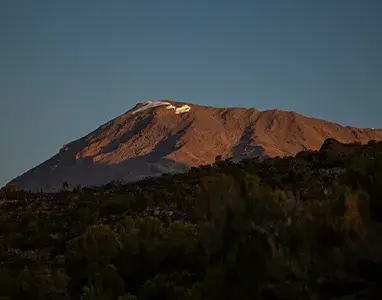
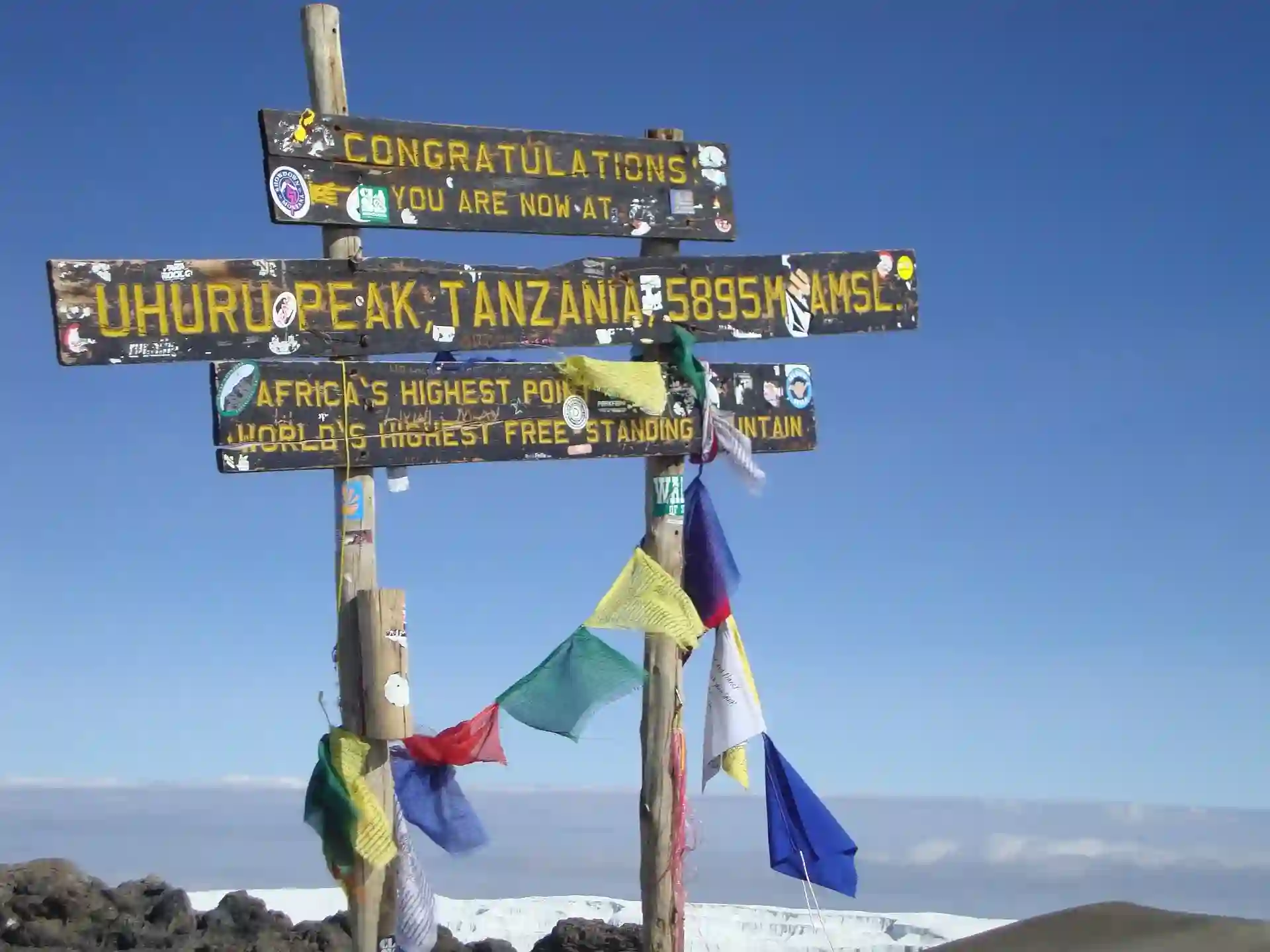
Every standard Kilimanjaro climb aims for the same highest point: Uhuru Peak at 5,895 metres (19,341 feet). However, climbers do not all begin summit night from the same high camp or reach the crater rim at the same place.
Most southern and western itineraries use Barafu Camp and climb to Stella Point. Marangu and many Rongai itineraries use Kibo Hut and climb to Gilman’s Point. The Northern Circuit—and some northern-route variations—uses School Hut, also approaching the rim through Gilman’s Point.
These distinctions affect the character of summit night, the length of the crater-rim traverse, camp atmosphere, accommodation and descent route. Yet they do not make one camp universally “best.” The quality and length of the full itinerary have a much greater influence on acclimatisation than the final camp alone.
| High camp | Approximate elevation | Common routes | First crater-rim point | Accommodation | Typical descent |
|---|---|---|---|---|---|
| Barafu Camp | 4,673 m / 15,331 ft | Machame, Lemosho, Umbwe and Shira | Stella Point, 5,756 m | Tents | Return through Barafu, then descend via Mweka |
| Kibo Hut | 4,720 m / 15,482 ft | Marangu and many Rongai itineraries | Gilman’s Point, 5,685 m | Hut complex; camping may be used by some teams | Return through Kibo, then descend via Horombo and Marangu |
| School Hut | Approximately 4,750 m / 15,580–15,600 ft | Northern Circuit and some northern variations | Gilman’s Point, 5,685 m | Tents; very basic camp | Commonly descend on the southern side through Barafu and Mweka |
Camp elevations vary slightly between maps, GPS readings, operators and the exact position of a tent within a large campsite. The figures above should be treated as practical reference elevations rather than survey-grade measurements.
The Most Important Difference: Stella Point vs Gilman’s Point
Kilimanjaro’s summit crater has several named landmarks. Understanding their order makes the three summit approaches much easier to compare.
- Gilman’s Point: Approximately 5,685 metres on the eastern crater rim
- Stella Point: Approximately 5,756 metres farther around the rim towards Uhuru
- Uhuru Peak: 5,895 metres and the highest point on Kilimanjaro
Climbers ascending from Barafu reach Stella Point first. From there, they continue around the rim to Uhuru Peak, commonly taking about one to two additional hours depending on pace, conditions and altitude response.
Climbers ascending from Kibo Hut or School Hut normally reach Gilman’s Point first. They must then continue along the crater rim, pass Stella Point and proceed to Uhuru Peak. This makes the post-rim section longer than it is from Barafu.
That difference is easy to underestimate. Reaching either rim point is a major achievement, but the air is extremely thin and even a gradual-looking traverse can feel demanding. A climber who reaches Gilman’s Point exhausted still has substantially more work remaining than someone arriving at Stella Point in the same condition.
Are the Three Camps at Very Different Elevations?
No. Their approximate elevations are surprisingly close.
Using common reference figures:
- Barafu Camp: approximately 4,673 metres
- Kibo Hut: approximately 4,720 metres
- School Hut: approximately 4,750 metres
Kibo is only about 47 metres higher than Barafu, while School Hut is approximately 30 metres higher than Kibo and 77 metres higher than Barafu. Those differences are small compared with the total vertical gain to Uhuru Peak.
The remaining approximate altitude gains are:
| Starting point | Gain to first rim point | Gain to Uhuru Peak |
|---|---|---|
| Barafu to Stella Point | 1,083 m | 1,222 m |
| Kibo to Gilman’s Point | 965 m | 1,175 m |
| School Hut to Gilman’s Point | 935 m | 1,145 m |
These figures do not prove that School Hut is easiest or Barafu is hardest. Vertical gain is only one part of summit difficulty. Trail surface, distance, gradient, wind, temperature, crowding, previous acclimatisation and the climber’s condition on the night all matter.
Barafu Camp: The Southern Summit Approach
Barafu Camp is the final high camp for the Machame, Lemosho, Umbwe and Shira approaches. It sits on Kilimanjaro’s exposed southeastern side in a rocky alpine environment.
“Barafu” means “ice” in Swahili, an appropriate name for a camp where wind, cold and rapidly changing conditions can make rest difficult. Climbers normally arrive during the day, eat an early meal, prepare equipment and sleep for only a few hours before waking around 11:00 p.m. for a midnight departure.
Summit Route from Barafu
The standard sequence is:
- Barafu Camp
- Steep ascent over volcanic rock and scree
- Stella Point on the crater rim
- Gradual but high-altitude rim walk to Uhuru Peak
- Descent to Barafu for rest and food
- Continue down to Millennium or Mweka Camp
The main ascent to Stella Point is sustained and physically demanding. Climbers move slowly in zigzags, often in darkness and cold. After reaching Stella Point, the gradient becomes gentler, but the remaining distance to Uhuru can still feel exhausting because it is completed above 5,700 metres.
Advantages of Barafu
- Reaches the crater rim at Stella Point, which is closer to Uhuru than Gilman’s Point
- Used by several longer itineraries with valuable “climb high, sleep lower” days
- Descends efficiently to a substantially lower sleeping camp after the summit
- Offers dramatic views towards Mawenzi and the upper mountain when weather permits
Disadvantages of Barafu
- Often the busiest of the three high-camp areas
- Exposed, rocky and potentially windy
- Tent sites can be spread across uneven terrain
- Water must be carried into the high camp, so resources are carefully managed
- The ascent to Stella Point involves a large and sustained vertical gain
Which Routes Use Barafu?
- Seven-day Machame
- Seven- or eight-day Lemosho
- Umbwe, after joining the southern circuit
- Shira variations
The preceding itinerary matters enormously. An eight-day Lemosho climber and a short Umbwe climber may begin summit night at the same camp, yet arrive with very different acclimatisation profiles.
Kibo Hut: The Classic Eastern Summit Approach
Kibo Hut is the traditional high camp on the Marangu Route and is also used by many Rongai itineraries. It stands near the eastern base of the Kibo cone at approximately 4,720 metres.
For Marangu climbers, Kibo is part of the mountain’s hut system. Facilities are basic and communal rather than hotel-like. Depending on the route, operating plan and park arrangements, some teams in the Kibo area may use tents rather than sleeping inside the hut.
Summit Route from Kibo
The standard sequence is:
- Kibo Hut or Kibo Camp
- Night ascent over loose volcanic scree
- Pass the Hans Meyer Cave area
- Reach Gilman’s Point on the eastern crater rim
- Traverse past Stella Point
- Continue to Uhuru Peak
- Return to Kibo for rest and food
- Descend to Horombo Hut and later Marangu Gate
The climb from Kibo to Gilman’s Point is famous for its long scree slope. Frozen ground can sometimes feel firmer in the coldest hours, while loose material can make each step more tiring under other conditions. The route is straightforward rather than technical, but it is physically and mentally demanding.
Advantages of Kibo Hut
- A well-established and direct approach to Gilman’s Point
- Hut shelter for Marangu climbers
- Clear route sequence through Gilman’s Point, Stella Point and Uhuru Peak
- Fits naturally into Marangu’s hut-based expedition style
- Allows Rongai climbers to ascend from the quieter northern side and descend through Marangu
Disadvantages of Kibo Hut
- Loose scree above the camp can consume energy
- The rim traverse from Gilman’s Point to Uhuru is longer than from Stella Point
- Shared huts and common spaces can feel busy
- Marangu’s sleeping-altitude progression can be aggressive on short itineraries
- Summit day includes a major descent from Uhuru through Kibo to Horombo
Which Routes Use Kibo Hut?
- Six-day Marangu
- Many seven-day Rongai itineraries
Some operators use different northern-route camp sequences, so travellers should confirm whether a published Rongai itinerary finishes at Kibo or School Hut.
School Hut: The Quieter Northern-Circuit Approach
School Hut is strongly associated with the Northern Circuit, although some Rongai or northern variations also use it. It lies at approximately 4,750 metres on the northeastern side of Kibo.
Despite its name, School Hut should not be imagined as comfortable hut accommodation equivalent to a lodge. Climbers normally sleep in tents, facilities are basic and the environment is cold, dry and exposed. Its smaller footprint and lower traffic often make it quieter than Barafu or Kibo.
Summit Route from School Hut
The standard sequence is:
- School Hut
- Traverse and ascend towards the Hans Meyer Cave area
- Join the upper eastern summit line
- Reach Gilman’s Point
- Continue around the rim through Stella Point
- Reach Uhuru Peak
- Descend on the southern side through Barafu
- Continue to Millennium or Mweka Camp
The School Hut line approaches the shared upper route from a different angle than Kibo. Some climbers and guides find its early traverse more flowing than the direct scree climb above Kibo, but it should not be called easy. The upper slope remains steep, the rim traverse is long and the entire summit day takes place at extreme altitude.
Advantages of School Hut
- Usually quieter than Barafu and Kibo
- Reached through the long, acclimatisation-friendly Northern Circuit
- Slightly higher starting elevation than the other two camps
- Avoids the busiest southern-circuit camps before summit night
- Provides an impressive sunrise perspective over Mawenzi when conditions align
Disadvantages of School Hut
- Very basic and exposed
- Requires the longer rim journey from Gilman’s Point past Stella Point to Uhuru
- Water and camp logistics are demanding
- The summit day remains extremely long, especially when descending through Barafu to Mweka
- Fewer itinerary choices use it
Which Routes Use School Hut?
- Northern Circuit
- Some Rongai or northern-approach variations
School Hut’s strongest advantage is not the small elevation difference. It is the longer itinerary normally completed before reaching the camp. Northern Circuit climbers have usually spent more days adapting to altitude than climbers on shorter routes.
Direct Comparison: What Summit Night Actually Feels Like
| Factor | Barafu Camp | Kibo Hut | School Hut |
|---|---|---|---|
| Approach side | Southeast | East | Northeast |
| First rim point | Stella Point | Gilman’s Point | Gilman’s Point |
| Rim section to Uhuru | Shorter | Longer, via Stella | Longer, via Stella |
| Typical terrain before rim | Rock and scree; sustained steep ascent | Direct scree slope with long zigzags | Traverse followed by upper eastern ascent |
| Camp atmosphere | Busy, exposed and active | Communal and often busy | Smaller and generally quieter |
| Sleeping style | Tents | Hut for Marangu; camping possible for some teams | Tents |
| Usual post-summit route | Barafu to Mweka side | Kibo to Horombo/Marangu side | Barafu to Mweka side |
| Main strategic advantage | Reaches rim closer to Uhuru | Classic established eastern line | Usually follows the strongest overall acclimatisation itinerary |
Which Approach Is the Shortest?
Distance estimates vary with mapping method and the exact tent or building location. Broadly, Barafu provides the shorter crater-rim journey after reaching Stella Point, while Kibo and School Hut require climbers to travel from Gilman’s Point past Stella Point before reaching Uhuru.
However, “shortest” does not necessarily mean “easiest.” Barafu’s climb to Stella Point gains more vertical height than the eastern camps gain to Gilman’s Point. Kibo’s scree may feel especially draining. School Hut’s final day includes a long summit and cross-mountain descent.
The practical question is not simply, “Which camp is closest to Uhuru?” It is, “Which complete itinerary helps me arrive at summit night healthy, acclimatised and strong enough to finish?”
Which Route to Gilman’s Point Is Simpler: Kibo or School Hut?
Kibo offers the classic direct ascent to Gilman’s Point. Navigation is uncomplicated, but the loose scree and repeated zigzags can be exhausting.
School Hut begins from a different position and normally traverses towards the shared upper line near the Hans Meyer Cave area. Its early profile may feel smoother to some climbers, and the camp is normally quieter. Nevertheless, it is not universally shorter or easier, and the final approach to Gilman’s remains demanding.
If the comparison includes the days before summit night, School Hut has an important advantage: it is usually reached through the longer Northern Circuit. The climber may therefore be better acclimatised, even though the summit route itself still requires serious effort.
Does a Higher Final Camp Improve Summit Chances?
Not automatically.
Sleeping 30 or 80 metres higher provides no guarantee of success. The body’s response depends far more on the rate of ascent over the preceding days, sleeping-altitude progression, symptoms, rest, hydration, nutrition and individual susceptibility.
The CDC Yellow Book’s high-altitude guidance notes that, once above 3,000 metres, sleeping altitude should ideally increase by no more than approximately 500 metres per night, with an additional acclimatisation night for every 1,000 metres gained. Kilimanjaro’s fixed camps do not allow every route to follow this perfectly, making itinerary length especially important.
This is why an eight- or nine-day Northern Circuit ending at School Hut may provide a better overall altitude profile than a much shorter itinerary, even though all three summit camps sit within a relatively narrow elevation range.
Is One Summit Approach Safer?
No high camp is inherently safe if a climber reaches it with worsening altitude symptoms. Likewise, none of the three approaches removes the effects of cold, darkness, fatigue and low oxygen pressure.
Important safety principles remain the same:
- Do not ascend with worsening altitude-illness symptoms.
- Report headache, nausea, dizziness, unusual fatigue or breathing difficulty honestly.
- Follow the guide’s pace and health decisions.
- Keep water insulated so it does not freeze.
- Carry spare headlamp batteries close to the body.
- Protect fingers, toes and face from cold and wind.
- Descend when the guide determines that continuing is unsafe.
Our Kilimanjaro acclimatisation and altitude-sickness guide explains AMS, HACE, HAPE and the role of daily health monitoring in more detail.
Which Camp Is Best for Different Climbers?
Choose a Barafu-Based Route If…
- You want the shorter rim section from Stella Point to Uhuru.
- You prefer Machame’s variety or Lemosho’s scenic western approach.
- You are comfortable camping on a busy, exposed high ridge.
- You want to descend through Mweka after the summit.
For most first-time climbers using Barafu, we favour the seven-day Machame or eight-day Lemosho itinerary rather than a compressed ascent.
Choose Kibo Hut If…
- You prefer Marangu’s hut-based accommodation.
- You want the classic eastern approach through Gilman’s Point.
- You are choosing a seven-day Rongai itinerary and its quieter northern ascent.
- You accept the longer rim traverse and the descent through Horombo.
For Marangu, the six-day version with an acclimatisation day at Horombo is substantially more responsible than the five-day schedule.
Choose School Hut If…
- Your priority is a longer, quieter and more gradual Northern Circuit itinerary.
- You value acclimatisation more than completing the mountain quickly.
- You are comfortable with basic tented facilities at a remote high camp.
- You understand that the route reaches Gilman’s Point before the longer rim traverse to Uhuru.
School Hut is not “better” because it is marginally higher. It is attractive because of the expedition that normally leads to it.
Our Recommendation
For most climbers, the final camp should not be chosen in isolation.
If you want a scenic route with a comparatively shorter crater-rim finish, consider eight-day Lemosho through Barafu. If you prefer huts, choose six-day Marangu through Kibo and use the extra Horombo acclimatisation day. If you want the strongest combination of a quiet trail and extended altitude adaptation, choose the Northern Circuit through School Hut. Seven-day Rongai through Kibo is a valuable alternative for climbers wanting a quieter northern ascent without the full duration of the Northern Circuit.
At Tanzania Inside Safari, we compare the entire sleeping-altitude profile—not only the height of the last camp. We also consider your previous altitude experience, available days, accommodation preference, fitness and personal response to cold and long trekking days.
Tell us which routes you are considering and how much time you have. Our local Kilimanjaro team will explain exactly where your itinerary sleeps, which rim point it reaches and how the summit and descent days are organised.
Medical disclaimer: This article provides general educational information and is not a substitute for individual medical advice, diagnosis or treatment. Consult a qualified medical or travel-health professional before undertaking a high-altitude climb.
FREQUENTLY ASKED QUESTIONS
Which is higher: Barafu Camp, Kibo Hut or School Hut?
School Hut is generally listed as the highest at approximately 4,750 metres, followed by Kibo Hut at about 4,720 metres and Barafu Camp at about 4,673 metres. Published figures vary slightly, and the differences are small in practical altitude terms.
Which camp is closest to Uhuru Peak?
Barafu normally provides the shorter final rim section because climbers reach Stella Point before continuing to Uhuru. Kibo and School Hut reach Gilman’s Point first and then pass Stella Point on the way to Uhuru.
Is Barafu Camp a hut?
No. Despite sometimes being called Barafu Hut, climbers normally sleep in tents. The camp has basic park structures and toilets, but it is a camping environment.
Do climbers sleep inside School Hut?
Normally, clients sleep in tents. School Hut is best understood as a basic high-altitude campsite rather than comfortable hut accommodation.
Which routes use Kibo Hut?
Marangu and many Rongai itineraries use Kibo. Some northern-route variations may use School Hut instead, so travellers should check the precise day-by-day itinerary.
Do School Hut climbers return to School Hut after the summit?
Northern Circuit itineraries commonly cross the summit and descend on the southern side through Barafu before continuing to Millennium or Mweka Camp. They usually do not return to School Hut.
Is Gilman’s Point the summit of Kilimanjaro?
Gilman’s Point is an official crater-rim summit point, but Uhuru Peak at 5,895 metres is Kilimanjaro’s highest point. Climbers aiming for the true highest point continue from Gilman’s past Stella Point to Uhuru.
Is Stella Point closer to Uhuru Peak than Gilman’s Point?
Yes. Climbers reaching Gilman’s Point continue along the crater rim through Stella Point before arriving at Uhuru Peak. This is why the eastern approaches have a longer post-rim section.
Is School Hut easier than Kibo Hut?
Not necessarily. School Hut may offer a more flowing early line and is normally reached after a longer acclimatisation itinerary, but its summit night remains long, cold and physically demanding. Individual experience varies with conditions and altitude response.