


What Happens If You Become Sick or Need to Descend Early on Kilimanjaro?
Learn how Kilimanjaro guides assess illness, arrange early descent, use emergency oxygen, coordinate evacuation and help climbers obtain medical care.
What Happens at a Glance
Most Kilimanjaro climbers hope to reach Uhuru Peak, but a responsible expedition must also be prepared for the possibility that someone becomes ill, injured or unable to continue.
If that happens, the first priority is not protecting the itinerary. It is preventing a manageable problem from becoming an emergency.
A professional guide will assess the climber, stop further ascent when necessary and decide whether the person can rest at the same altitude or must descend. Mild, stable symptoms may improve with rest and observation. Worsening altitude sickness, confusion, loss of coordination or breathlessness at rest normally requires urgent descent. Emergency oxygen and medication can support treatment, but they do not replace getting the sick climber to a safer elevation.
An early descent is not a failure. It is the correct response when continuing would place the climber—or the team assisting them—at unacceptable risk.
- Tell the guide immediately. Do not hide symptoms to protect a summit attempt.
- The ascent pauses. The guide assesses symptoms, function and recent altitude exposure.
- A decision is made. The climber may rest at the same altitude, descend with assistance or require urgent evacuation.
- The team is reorganised. An assistant guide or appropriate crew member accompanies the climber; nobody descends alone.
- The base team and park authorities are contacted when required. Ground rescue, transport and medical arrangements are coordinated.
- The climber reaches a lower camp, park gate, clinic or hospital. The destination depends on the problem’s severity and response to descent.
- Insurance and onward arrangements are handled. Medical, hotel, transport and trip-interruption costs depend on the policy and circumstances.
The First Rule: Report Symptoms Early
Tell your guide as soon as you develop:
- Headache
- Nausea or vomiting
- Dizziness or unusual weakness
- Loss of appetite
- Difficulty keeping up with your normal pace
- Shortness of breath that feels excessive
- Persistent cough or chest tightness
- Diarrhoea or inability to keep fluids down
- Severe pain, injury or reduced mobility
- Confusion, unusual behaviour or poor coordination
Climbers sometimes hide symptoms because they have invested money, training and emotion in the summit. This is dangerous. Early reporting gives the guide more options: rest, reassessment, treatment of a simple problem or a controlled descent while the climber can still walk.
Waiting can turn an assisted walk into a stretcher evacuation. It can also place guides and porters at greater risk because an emergency descent in darkness or severe weather is harder for the entire team.
How a Guide Assesses a Sick Climber
Altitude illness is not diagnosed from one oxygen-saturation number. The guide considers the full situation, including recent altitude gain, reported symptoms, behaviour and physical function.
An assessment may include:
- Asking when symptoms began and whether they are improving or worsening
- Checking headache, nausea, appetite, vomiting, sleep and fatigue
- Measuring pulse rate and oxygen saturation
- Observing breathing at rest and during gentle movement
- Checking whether the climber can walk steadily and communicate normally
- Performing a simple heel-to-toe balance test when neurological illness is suspected
- Comparing the findings with previous health checks
- Considering dehydration, exhaustion, infection, gastrointestinal illness, hypothermia, injury or another medical condition
A pulse oximeter provides useful supporting information, especially when readings are compared over time. Cold fingers, movement, poor circulation, nail coverings and equipment limitations can affect the result. A person can have Acute Mountain Sickness with an oxygen reading that appears acceptable for the altitude.
At Tanzania Inside Safari, summit decisions are based on symptoms, functional condition and clinical observation—not a single device reading.
What Happens with Mild Altitude-Sickness Symptoms?
Acute Mountain Sickness, or AMS, commonly causes headache together with nausea, dizziness, unusual fatigue or reduced appetite after an altitude gain.
If symptoms are mild and stable, the guide may:
- Stop further ascent
- Keep the climber at the same sleeping altitude
- Encourage rest, normal hydration and food if tolerated
- Provide appropriate treatment within the guide’s training and protocol
- Repeat health and functional assessments
- Prepare for descent if symptoms do not resolve
The climber must not continue to a higher sleeping altitude while symptoms remain. If the symptoms fully resolve, the guide can decide whether continuing is appropriate. The decision depends on the person’s condition, location, remaining itinerary and available safety margin.
According to the CDC Yellow Book’s high-altitude guidance, AMS often improves rapidly after descending approximately 300 metres or more. If symptoms worsen despite rest and treatment at the same altitude, descent becomes mandatory.
When Is Immediate Descent Required?
Urgent descent is normally required when a climber develops:
- Worsening AMS despite rest or treatment
- Inability to walk or care for themselves normally
- Confusion, disorientation or irrational behaviour
- Loss of balance or inability to walk heel-to-toe
- Extreme drowsiness or reduced consciousness
- Breathlessness while resting
- A persistent cough with chest congestion or falling performance
- Blue or grey lips
- Frothy or blood-stained sputum
- A serious injury or another condition that cannot be safely managed on the mountain
Confusion and loss of coordination can indicate High-Altitude Cerebral Edema, or HACE. Breathlessness at rest, severe exercise intolerance and chest symptoms can indicate High-Altitude Pulmonary Edema, or HAPE. Both are life-threatening emergencies.
The Wilderness Medical Society’s altitude guidance identifies descent as the essential treatment when severe altitude illness is suspected. Oxygen, appropriate medication and a portable hyperbaric chamber may support care when available, but they must not delay evacuation.
What Happens During an Emergency Descent?
The precise plan depends on the climber’s condition, current camp, time of day, weather, trail and available staff.
1. The Guide Stops the Ascent
The summit attempt or movement to a higher camp ends for the affected climber. If symptoms are serious, the team begins descending as soon as it can do so safely.
2. Emergency Treatment Begins
The guide may administer emergency oxygen and other treatment according to training, established protocol and the climber’s condition. Oxygen is used to support a sick person during assessment and descent—not to mask symptoms so that the person can continue towards the summit.
3. The Climber Is Accompanied
Nobody should descend alone. An assistant guide and, where needed, additional crew members accompany the climber. The person’s daypack may be carried by the team to reduce exertion.
For suspected HAPE or HACE, physical effort should be kept as low as possible. If the climber cannot walk safely, the team may use a stretcher or request additional rescue assistance.
4. The Operations Team Is Informed
When communication permits, the mountain guide contacts the company’s ground team and park personnel. They coordinate the safest exit, transport at the gate, insurance communication and an appropriate clinic or hospital if medical evaluation is required.
Mobile coverage is not reliable in every location. Guides therefore use the communication method available to them and may need to move to a point with better connectivity while keeping the patient supervised.
5. The Route Is Chosen for Safety
An evacuation does not always retrace the original ascent route. The guide and rescue personnel select the safest practical descent corridor based on the climber’s position and condition.
Southern and western routes commonly descend towards Mweka. Marangu and many Rongai itineraries use the Marangu corridor. A climber on the remote northern side may require more time to reach established evacuation infrastructure. Actual decisions are made on the mountain and can change with conditions.
Will the Rest of the Group Continue?
Often, but not always.
On a properly staffed expedition, an assistant guide may escort the sick climber down while the lead guide continues with the remaining group. This is possible only when enough qualified guides and crew remain to supervise both parties safely.
The outcome depends on:
- Group size and guide-to-climber ratio
- Number and qualifications of assistant guides
- Severity of the emergency
- Location and time of day
- Weather and trail conditions
- Whether additional climbers are also unwell
- Whether the affected person is a child or requires a companion
In a small private group, a partner or family member may choose to descend with the sick climber. In a serious emergency, more staff may be needed for the evacuation, and the whole group’s itinerary may change.
The mountain team will not continue merely to preserve a schedule if doing so leaves either party inadequately supported.
What If You Become Sick on Summit Night?
Summit night is when cold, fatigue and altitude place the greatest combined stress on the body. A climber may begin well and then develop symptoms above the high camp.
If the guide decides that continuing is unsafe:
- The climber turns around.
- An assistant guide escorts them towards the high camp.
- Oxygen or other emergency support is used when indicated.
- The climber is reassessed after losing altitude.
- Descent continues to a lower camp or evacuation is arranged if symptoms remain serious.
Turning around close to Stella Point, Gilman’s Point or Uhuru Peak can be emotionally difficult. Distance to the summit does not change the medical decision. Severe altitude illness can progress quickly, and the correct direction is down.
Ground Evacuation on Kilimanjaro
Ground descent is the primary and most dependable evacuation method on Kilimanjaro.
Whenever possible, the climber walks slowly with assistance because walking allows a controlled and immediate loss of altitude. If walking is unsafe or impossible, a rescue stretcher may be used.
Kilimanjaro is known for one-wheeled mountain stretchers on some established descent routes. They can move a patient faster than carrying by hand, but the journey is rough and availability is not identical across the mountain. Remote northern sections may require the expedition team to use its own evacuation equipment or assist the climber until park rescue resources can be reached.
A stretcher should not be presented as a comfortable ride or a guaranteed service at every camp. Its purpose is emergency movement over difficult terrain.
Lower on the mountain, a rescue vehicle or ambulance may be able to meet the party at an accessible point. From there, the climber can be transferred to a park gate, hotel, clinic or hospital.
Is Helicopter Rescue Guaranteed?
No. Helicopter evacuation should never be the foundation of a Kilimanjaro safety plan.
An aircraft may be requested when the medical situation, location and operating conditions justify it, but a flight depends on factors outside the climber’s or operator’s control:
- Weather, cloud and visibility
- Wind and high-altitude performance limits
- Daylight and safe operating conditions
- Aircraft and crew availability
- The patient’s location and access to a usable landing area
- Medical urgency and the pilot’s operational decision
- Insurance approval or payment arrangements
A patient may still need to descend by foot or stretcher to a safer pickup point. Helicopters are not taxis for ordinary fatigue, voluntary withdrawal or avoiding the walk to the gate.
Even when an air evacuation is possible, ground descent may begin immediately because waiting at altitude can be more dangerous than moving down.
What Happens After Reaching the Gate?
The next step depends on why the climber descended and how they responded.
If Symptoms Resolve with Descent
The climber may be transferred to the hotel for rest and continued observation. A medical assessment may still be recommended, particularly after significant altitude symptoms, persistent vomiting, injury or loss of consciousness.
If Medical Care Is Needed
The operations team arranges transport to an appropriate clinic or hospital. Medical staff—not the guide—then determine investigations, treatment and whether admission or further transfer is required.
Keep passports, insurance details, emergency contacts, medication lists and relevant medical information accessible. Hospitals or evacuation providers may require proof of coverage, insurer authorisation or payment guarantees.
If the Group Is Still on the Mountain
The company keeps communication between the descended climber, ground team and mountain team where possible. Hotel nights, transport changes or a companion’s arrangements may need to be organised separately.
Can You Rejoin the Climb After Descending?
Usually not.
Descent for altitude illness is a treatment, not a temporary detour. Reascending too quickly can cause symptoms to return or worsen. Park permits, guide deployment, camp schedules and transport logistics also make rejoining difficult.
A person who descended for a minor non-altitude issue might theoretically rejoin only if medically well and if the operator and park can arrange it safely and legally. It should never be promised in advance.
Anyone who developed HACE, HAPE or significant AMS should not attempt to rejoin the same expedition. Medical recovery takes priority.
What If the Problem Is Not Altitude Sickness?
Not every illness at altitude is AMS. Similar symptoms can result from:
- Dehydration
- Migraine
- Viral or bacterial infection
- Gastrointestinal illness
- Low blood sugar or inadequate food intake
- Exhaustion
- Hypothermia
- Medication side effects
- An injury or pre-existing condition
The guide considers these possibilities, but limited mountain facilities mean some diagnoses cannot be confirmed in camp. When the cause is uncertain and the climber is deteriorating, the safer response is often descent and medical evaluation.
Diarrhoea or vomiting deserves particular attention because fluid loss and inability to eat can weaken a climber rapidly. A respiratory infection can also be difficult to distinguish from early HAPE without careful assessment. Never self-diagnose a serious symptom simply because another explanation seems possible.
Will You Receive a Refund If You Descend Early?
An early descent does not normally create an automatic refund.
Many expedition costs have already been committed or used, including park fees, permits, crew wages, food, accommodation, equipment and transport. The exact financial treatment depends on the booking conditions and the reason for withdrawal.
Travel insurance may reimburse some medically necessary trip-curtailment costs when supported by the required documentation. Coverage varies significantly. Climbers should read the cancellation and interruption sections before travelling rather than assuming every unused day will be refunded.
Additional expenses may include:
- Medical treatment and medication
- Ambulance or private transport
- Helicopter evacuation
- Extra hotel nights
- Flight changes
- A companion’s accommodation or transport
- Medical repatriation
Ask both the operator and insurer which costs are included, which are payable directly and which require a later claim.
The Park Rescue Fee Is Not Travel Insurance
Kilimanjaro park charges generally include a rescue-related fee, but this should not be confused with comprehensive insurance.
A park rescue fee does not necessarily pay for every possible expense after an incident. Helicopter services, private ambulance transport, hospital care, extended accommodation, international medical evacuation and repatriation may fall outside it.
Your policy should explicitly cover:
- Trekking to at least 6,000 metres
- Altitude-related illness
- Search and rescue
- Ground and helicopter evacuation where medically necessary
- Emergency medical treatment and hospitalisation
- Ambulance transfers
- Trip interruption or curtailment
- Repatriation to your home country when medically required
- Relevant pre-existing conditions, if applicable
Some rescue memberships provide field rescue or evacuation assistance but are not medical or travel insurance. Confirm whether you need both products and obtain the answer in writing.
Carry the policy number, emergency telephone number and coverage certificate offline. Give a copy to your travel companion and provide the relevant details during the pre-climb briefing.
How Tanzania Inside Safari Prepares for Illness and Early Descent
Our safety approach is designed to identify problems early and respond before they become more serious. It includes:
- Professional guides licensed for mountain operations
- Wilderness First Responder or Wilderness First Aid-trained guides
- Regular symptom and health assessments
- Pulse-oximeter monitoring interpreted alongside clinical signs
- Emergency oxygen cylinders
- Mountain first-aid equipment
- Lead and assistant guides appropriate to group size
- Communication between the mountain and ground operations teams
- Coordination with park rescue personnel when required
- Transport and medical-care arrangements after evacuation
- A clear policy that health takes priority over summit statistics
Emergency oxygen is not used to help an unacclimatised climber continue upwards. It is carried to support treatment and evacuation.
No operator can guarantee that illness will not occur, that every evacuation will be fast or that a helicopter will be available. What a responsible operator can do is recommend a better-paced itinerary, monitor climbers carefully, carry appropriate emergency equipment and act decisively when continuing is unsafe.
How to Reduce the Chance of an Early Descent
You cannot eliminate every medical risk, but you can improve your safety margin:
- Choose at least a seven-day trek, with longer routes offering more acclimatisation time.
- Disclose relevant medical conditions and medications before the climb.
- Consult a doctor familiar with high-altitude travel.
- Train for consecutive trekking days rather than speed alone.
- Walk pole pole and avoid competing with other climbers.
- Eat regularly and drink normally without forced overhydration.
- Keep rainwear, insulation and gloves in your daypack.
- Avoid alcohol and respiratory-depressant medication unless medically directed.
- Report symptoms immediately.
- Accept the guide’s instruction to stop or descend.
Our Kilimanjaro acclimatisation and altitude-sickness guide explains the prevention, warning signs and treatment principles in greater depth.
FREQUENTLY ASKED QUESTIONS
What happens first if I feel sick on Kilimanjaro?
Tell your guide immediately. The guide will pause your ascent, ask about symptoms, assess your functional condition and may check pulse and oxygen saturation. You may rest at the same altitude under observation or begin descending, depending on the findings.
Can I continue climbing with a headache?
A headache after gaining altitude must be reported and assessed. You should not move to a higher sleeping altitude while altitude-illness symptoms are present. Continuing is considered only after symptoms resolve and the guide decides it is safe.
How far must I descend for altitude sickness?
Even a descent of approximately 300 metres can improve AMS, but the required descent depends on symptom severity and response. Suspected HAPE or HACE may require a much greater loss of altitude and urgent medical care.
Will oxygen allow me to continue to the summit?
No. Emergency oxygen can temporarily improve a sick climber’s condition, but it does not prove acclimatisation and should not be used to mask symptoms for continued ascent.
Will someone accompany me down?
Yes. A climber should not descend alone. An assistant guide and additional crew when needed will accompany and monitor the person.
Can the rest of my group continue climbing?
Sometimes. The group may continue if enough qualified guides remain to supervise both parties safely. A serious emergency, small group or limited staffing may require the full itinerary to change.
Is helicopter rescue always available on Kilimanjaro?
No. Helicopter operations depend on medical need, weather, visibility, wind, daylight, landing access, aircraft availability and financial authorisation. Ground descent remains the primary evacuation method.
Does the Kilimanjaro rescue fee cover hospital treatment?
Do not assume it does. Park rescue arrangements are not a substitute for travel medical and evacuation insurance. Confirm coverage for rescue, helicopter evacuation, hospitalisation and repatriation with your insurer.
Can I rejoin the climb after descending?
Usually not. Reascent can be medically unsafe, and guide, permit and camp logistics make rejoining difficult. It should never be expected after descent for significant altitude illness.
Will I get my money back if I descend early?
Not automatically. Many expedition costs have already been incurred. A travel-insurance policy may cover medically necessary curtailment under its terms, so retain guide reports, medical records and receipts.
Descending Is Sometimes the Successful Decision
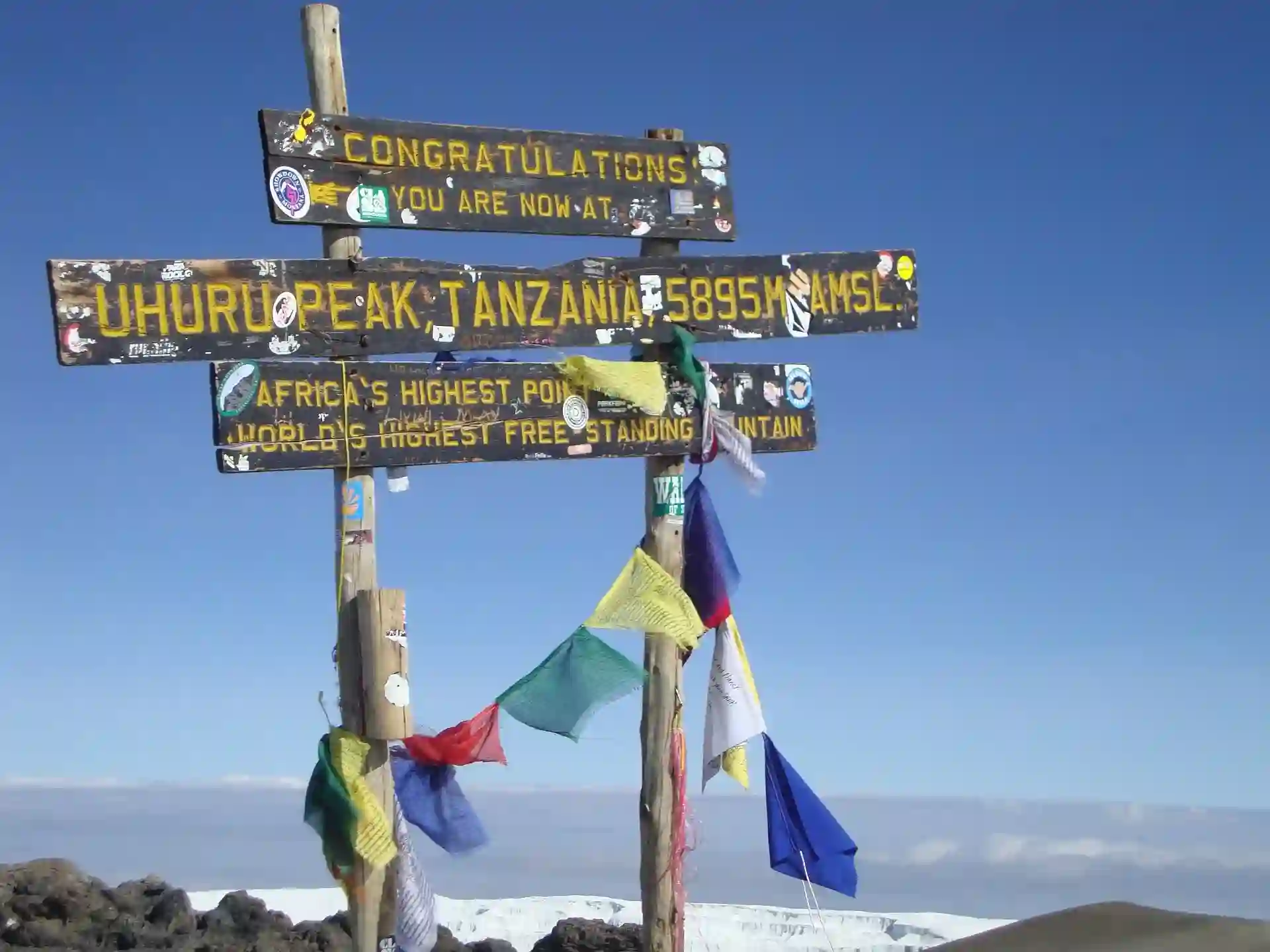
Uhuru Peak is an important goal, but it is not more important than returning home safely.
A climber who reports symptoms honestly and descends when instructed has not failed. They have made the disciplined decision that experienced mountain professionals respect. Kilimanjaro will remain, and a future attempt can be planned with the benefit of what was learned.
Before booking, ask how the operator manages health checks, group separation, emergency oxygen, ground evacuation, communication, insurance documentation and post-evacuation care. Clear answers are as important as photographs and summit claims.
Tell us about your previous altitude experience, health considerations and preferred route. Our local mountain team will recommend an itinerary and explain the safety plan before you arrive.