


How Kilimanjaro Guides Decide When a Climber Must Turn Back
Learn how Kilimanjaro guides assess altitude symptoms, oxygen readings, pace, balance and weather—and when they decide a climber must descend.
The Turnaround Decision at a Glance
Turning a climber around is one of the most serious decisions a Kilimanjaro guide makes. It can happen days before the summit, during the midnight ascent or within sight of Stella Point, Gilman’s Point or Uhuru Peak.
The decision is never based on how much the climber paid, how determined they feel or how close the summit appears. It is based on a practical question:
Can this person continue upwards and still descend safely?
A responsible guide considers symptoms, walking ability, balance, breathing, behaviour, hydration, pace, oxygen-saturation trends, weather, terrain and the time required to return to safety. No single reading answers that question. The guide builds a complete picture and watches how it changes.
Sometimes the correct response is to stop ascending and rest at the same altitude. Sometimes the climber must descend with a guide. When there are signs of High-Altitude Cerebral Edema, High-Altitude Pulmonary Edema or another serious emergency, descent and evacuation become urgent.
The most important fact to understand before climbing is simple: a guide who turns you around is not taking away your summit. The guide is protecting your ability to return safely.
| What the guide finds | Typical response |
|---|---|
| Mild, stable symptoms with normal function | Stop further ascent, rest at the same altitude, treat appropriately and reassess |
| Symptoms that improve completely at the same altitude | The guide may allow the climber to continue after reassessment |
| Symptoms that persist or worsen despite rest or treatment | Descend; do not continue to a higher sleeping altitude |
| Confusion, loss of coordination or reduced consciousness | Suspect HACE; begin urgent descent, oxygen and evacuation procedures |
| Breathlessness at rest, marked performance decline or serious chest symptoms | Suspect HAPE or another emergency; urgent descent, oxygen and evacuation |
| Severe exhaustion, repeated vomiting or inability to walk safely | Assisted descent and further medical assessment |
| Dangerous weather, unsafe pace or insufficient descent margin | Turn around even if the climber has no obvious altitude illness |
This table is a general guide, not a remote diagnosis. On the mountain, the lead guide must respond to the individual climber, the environment and the resources available.
“Turn Back” Does Not Always Mean the Same Thing
Climbers often imagine a guide making one dramatic yes-or-no decision on summit night. In reality, guides intervene at several levels.
Stop Ascending and Reassess
A climber with a mild headache, slight nausea or unusual fatigue may be told to remain at the current altitude. The guide can encourage rest, food and normal hydration, provide appropriate first-aid support and repeat the assessment.
The climber must not move to a higher sleeping altitude while symptoms of altitude illness remain. If the symptoms resolve and the climber is functioning normally, the guide may decide that continuing is reasonable.
Descend Under Guide Escort
If symptoms worsen, do not resolve or begin to affect normal function, the climber should descend. An assistant guide will normally accompany the climber when staffing and conditions permit, while the rest of the group may continue under another guide.
Descending a few hundred metres can make a meaningful difference in Acute Mountain Sickness. The route, time, weather and the climber’s mobility determine how the descent is organised.
Begin an Emergency Evacuation
Confusion, loss of coordination, reduced consciousness or breathlessness at rest are not ordinary summit-night discomforts. They can indicate life-threatening altitude illness and require urgent action.
Emergency oxygen, appropriate medication and evacuation equipment may support the response, but they do not replace descent. If the climber cannot walk safely, the team may use a stretcher or mountain rescue trolley where terrain permits and coordinate further evacuation and medical care.
How Guides Build the Complete Picture
There is no universal machine, score or percentage that declares a climber safe. Good decisions combine several kinds of evidence.
The Climber’s Reported Symptoms
The guide asks direct questions about:
- Headache
- Nausea or vomiting
- Appetite
- Dizziness or light-headedness
- Unusual fatigue or weakness
- Sleep quality
- Cough, chest tightness or congestion
- Breathlessness
- Vision or coordination changes
- Urination, diarrhoea and ability to drink
- Medication taken and whether it helped
Honest answers matter. Climbers sometimes minimise symptoms because they fear losing their summit attempt. This removes information the guide needs and can allow a manageable problem to become an emergency.
A headache alone does not automatically prove Acute Mountain Sickness. Dehydration, migraine, exhaustion, infection and other conditions can produce similar symptoms. However, a new headache after an altitude gain must be taken seriously and assessed with the rest of the climber’s condition.
Functional Ability
How a climber functions is often more useful than how determined they sound.
The guide observes whether the climber can:
- Walk steadily without repeated stumbling
- Maintain a safe pace
- Follow instructions
- Communicate clearly
- Eat and drink
- Dress and manage personal equipment
- Remain awake and engaged
- Recover appropriately during a rest stop
- Continue without being physically pulled or constantly supported
A climber may insist that they feel “fine” while walking unusually slowly, dropping equipment, giving delayed answers or needing help with basic tasks. These changes can reveal deterioration before the climber accepts that something is wrong.
Balance, Coordination and Behaviour
Loss of coordination—known medically as ataxia—is one of the most important warning signs for High-Altitude Cerebral Edema, or HACE.
A guide may ask a climber to walk heel-to-toe along a straight line or perform another simple coordination check. The guide also watches for:
- Staggering or an unusually wide walking stance
- Repeated falls
- Confusion about location, time or instructions
- Irrational, aggressive or uncharacteristic behaviour
- Extreme drowsiness
- Inability to care for oneself
- Reduced responsiveness
Cold, exhaustion, medication, low blood sugar and neurological problems can also alter behaviour or coordination. The guide does not need to prove the exact diagnosis before acting. At high altitude, new confusion or ataxia is an emergency until shown otherwise.
Breathing and Exercise Performance
Everyone breathes harder at altitude, particularly while walking uphill. The guide is looking for breathing that is disproportionate to the effort or has changed significantly from the climber’s earlier pattern.
Concerning signs include:
- A sudden and unusual reduction in walking performance
- Breathlessness during very light activity
- Breathlessness while resting
- Persistent cough combined with chest congestion or declining performance
- Rapid breathing that does not settle appropriately during rest
- Wet or crackling lung sounds when assessed by trained personnel
- Blue or grey lips
- Frothy or blood-stained sputum
These may indicate High-Altitude Pulmonary Edema, or HAPE, although pneumonia, asthma, heart problems and other illnesses can produce overlapping symptoms. Suspected HAPE requires urgent descent, emergency oxygen when available and minimal exertion by the affected climber.
Kilimanjaro’s cold, dry air can cause an irritating cough without HAPE. The important distinction is the entire pattern: breathing, chest symptoms, performance, oxygen trend and whether the climber is getting worse.
Pulse and Oxygen-Saturation Trends
A pulse oximeter estimates peripheral oxygen saturation, or SpO₂, and heart rate. It gives the guide useful supporting information, especially when readings are taken consistently and compared over time.
However, there is no single SpO₂ number that automatically decides whether every Kilimanjaro climber must turn back.
Readings can be affected by:
- Cold fingers
- Movement or shivering
- Poor circulation
- Nail coverings
- Incorrect sensor placement
- Device quality and calibration
- Recent exertion
Oxygen saturation also falls naturally with altitude. One climber may have Acute Mountain Sickness despite a value that appears acceptable for the elevation. Another may record a low number while remaining alert and functional, although the reading still requires careful confirmation and assessment.
Guides therefore look at the trend and context:
- Has the value changed sharply from the climber’s previous readings?
- Is it unusually low compared with others at the same altitude?
- Does it improve after warming the hand and resting?
- Does the climber also have breathing difficulty, confusion or declining performance?
A pulse oximeter supports judgment. It does not replace clinical observation or make the summit decision by itself.
Change Over Time
A single health check is only a snapshot. The direction of change is critical.
A guide compares the climber’s condition with:
- The previous camp
- The morning assessment
- Earlier rest stops
- The beginning of summit night
- The response to rest, food, fluids or treatment
A mild symptom that is steadily resolving may be manageable at the same altitude. A symptom that is intensifying, combining with new symptoms or reducing normal function points towards descent.
This is one reason regular health checks and day-to-day familiarity with each climber matter. A guide who has watched someone walk, eat and communicate for several days can often recognise a meaningful change.
The Medical Signs That Usually End an Ascent
The following signs require immediate assessment and will normally end the upward journey:
Suspected HACE
- Loss of balance or coordination
- Confusion or disorientation
- Markedly unusual behaviour
- Extreme drowsiness
- Inability to walk safely or care for oneself
- Reduced consciousness
HACE can progress rapidly. The response is urgent descent with as little exertion by the climber as possible, supported by emergency oxygen and appropriate treatment from trained personnel when available.
Suspected HAPE
- Breathlessness at rest
- Severe or rapidly worsening exercise intolerance
- Chest congestion or tightness with respiratory decline
- Persistent cough with serious breathing symptoms
- Wet lung sounds
- Blue or grey lips
- Frothy or blood-stained sputum
HAPE can occur with or without a typical AMS headache. Descent is urgent and usually mandatory in a remote mountain setting.
Worsening Acute Mountain Sickness
A climber with mild, stable AMS may remain at the same altitude under observation. If symptoms worsen despite rest or appropriate treatment, descent is required.
Warning patterns include:
- A headache becoming more severe
- Increasing nausea or repeated vomiting
- Growing dizziness or weakness
- Inability to eat or drink
- Marked decline in walking performance
- Symptoms failing to improve at the same altitude
Other Serious Problems
Not every turnaround is caused by altitude illness. Guides may stop an ascent because of:
- Serious injury or inability to bear weight
- Hypothermia or significant cold injury
- Chest pain or suspected cardiac illness
- Severe dehydration
- Persistent vomiting or diarrhoea
- An allergic reaction
- Fever, infection or another acute illness
- A pre-existing condition becoming unstable
The guide’s job is not to force every problem into an altitude diagnosis. It is to recognise when continuing upwards creates an unacceptable risk.
What About a Mild Headache?
A mild headache does not always mean an immediate descent. The guide considers when it began, whether there are other symptoms, how the climber is functioning and whether the headache improves at the same altitude.
The safe rule is:
Do not ascend to a higher sleeping altitude while altitude-illness symptoms are present.
If the headache resolves and the climber returns to normal function, continuing may be possible after reassessment. If it persists, worsens or is joined by nausea, dizziness, unusual fatigue or poor performance, the threshold for descent becomes lower.
Why Medication or Oxygen Does Not “Clear” a Climber to Continue
Pain relief, anti-nausea medication, acetazolamide, dexamethasone or supplemental oxygen may improve symptoms. Improvement does not automatically prove that the underlying risk has ended.
Emergency oxygen can temporarily improve oxygenation and help stabilise a sick climber while descent is organised. It must not be used to mask deterioration and continue towards Uhuru Peak.
The same principle applies to medication. Drugs can support prevention or treatment when appropriately prescribed and administered, but they do not overrule confusion, ataxia, breathlessness at rest or a guide’s decision that continued ascent is unsafe.
Small recreational oxygen cans contain too little oxygen for dependable treatment of serious altitude illness.
Non-Medical Reasons a Guide May Turn You Around
A climber can feel medically well and still be told to descend. Summit safety includes the return journey, not only the remaining distance to Uhuru Peak.
Unsafe Pace
Summit night has a practical time limit. A climber moving too slowly may reach the top but be unable to descend safely before severe fatigue, changing weather or loss of team support becomes a greater risk.
The guide considers the climber’s current speed, remaining ascent, expected descent time and capacity to keep moving after the summit.
Weather and Visibility
Strong wind, heavy snow, lightning, severe cold or poor visibility can make the route unsafe. Conditions can change quickly on the exposed upper mountain.
Equipment Failure
Missing insulation, soaked clothing, failed headlamps or inadequate gloves and footwear can create cold-injury and navigation risks. Guides may solve a small equipment problem within the team, but serious inadequacy can require a turnaround.
Terrain and Group Safety
Ice, loose scree, congestion and the availability of guides influence what is safe. If one emergency uses a large part of the guide team, the lead guide may change or stop the wider group’s plan.
Predetermined Turnaround Times
Professional teams establish decision points based on the route, season, group and conditions. There is no responsible universal clock that applies to every Kilimanjaro expedition. The lead guide must preserve sufficient time, energy and daylight margin for descent.
Why “I Am Almost There” Is Not a Medical Argument
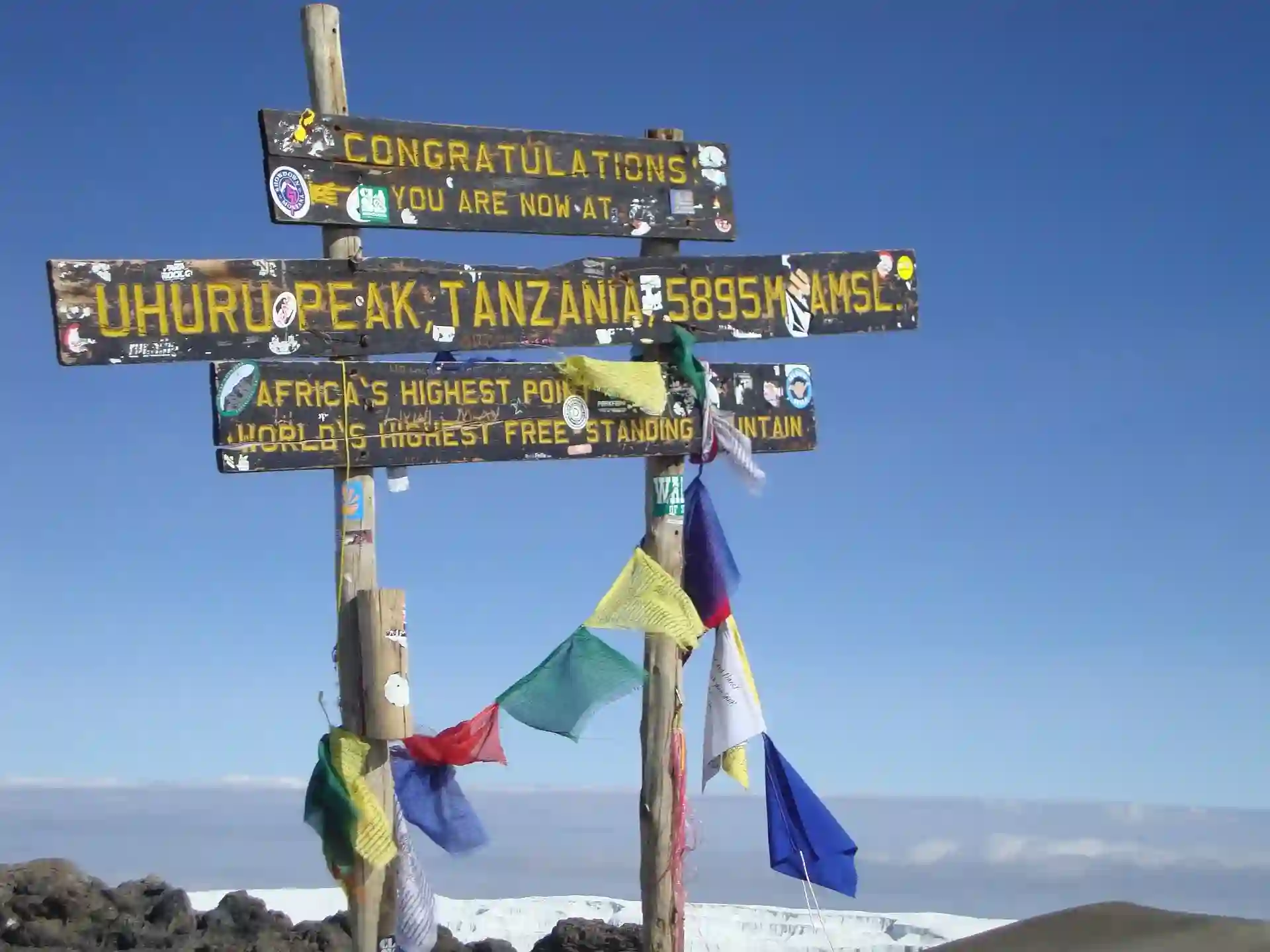
Near the crater rim, the summit can appear deceptively close. From Stella Point or Gilman’s Point, reaching Uhuru still requires a high-altitude traverse, and the climber must then descend for hours.
Distance remaining does not make confusion, ataxia or respiratory distress less dangerous. In fact, continuing higher may reduce the margin for rescue.
The same applies to common emotional arguments:
- “I trained for a year.”
- “I paid too much to stop now.”
- “My family expects me to summit.”
- “I can push for another hour.”
- “My oxygen number looks better.”
- “I only need a photograph.”
These feelings are understandable, but none changes the physiology or the descent still required.
Our guide to Stella Point, Gilman’s Point and Uhuru Peak explains what each point represents. The editor should confirm that the related article is live before publication.
Can a Climber Refuse to Turn Back?
A reputable operator explains before departure that the lead guide has final authority over operational safety decisions on the mountain. Climbers should agree to follow that direction as a condition of joining the expedition.
When a guide orders descent, debating at extreme altitude wastes time and can place the climber, guide and group at greater risk. A guide cannot make altitude harmless through persuasion, and other team members should not pressure an unwell climber to continue.
If a climber is confused or neurologically impaired, their judgment may itself be affected. The team must act in the climber’s best interests and begin descent.
What Happens to the Rest of the Group?
The response depends on group size, guide-to-climber ratio, location and severity of the situation.
Possible arrangements include:
- An assistant guide escorts one climber down while the main group continues
- Part of the group descends with the sick climber
- The entire group stops or descends
- Additional rescue support is requested
- The summit schedule is delayed or changed when the itinerary allows
The group can continue only if the descending climber has suitable support and enough qualified guides remain with those ascending. A responsible staffing plan anticipates that participants may need to separate.
No climber should be sent down alone.
What Happens After the Decision to Descend?
The guide will choose the safest available response for the condition and location. This may include:
- Stopping further ascent and protecting the climber from cold.
- Repeating vital signs and assessing balance, breathing and mental status.
- Giving emergency oxygen or appropriate first aid when indicated.
- Assigning a guide to accompany the climber.
- Descending by foot when the climber can walk safely.
- Using a stretcher or rescue trolley where the route and condition require it.
- Communicating with the base team, park authorities, rescue services or medical providers.
- Arranging road transfer or further medical care after reaching an accessible point.
Helicopter evacuation may be possible in some circumstances, but it is never guaranteed. Weather, visibility, landing conditions, aircraft availability and the climber’s location all affect access. A safe plan must always include ground descent.
Our detailed article on becoming sick or descending early on Kilimanjaro explains the evacuation process, insurance considerations and what happens to the itinerary. The editor should verify the final live URL before publishing this link.
How Climbers Can Help Guides Make Better Decisions
Report Symptoms Early
Do not wait until a headache becomes severe or a cough becomes breathlessness at rest. Early reporting gives the guide more options.
Do Not Alter or Hide Readings
Warm your hand, remain still and allow the guide to take the pulse-oximeter reading correctly. Do not treat the highest number displayed as the only “real” value.
Disclose Medication
Tell the guide what you have taken, the dose and when you took it. Medication can change symptoms and affect interpretation.
Follow the Pace
Walking pole pole—slowly, slowly—reduces unnecessary exertion. Racing ahead can exhaust a climber and make later assessment harder.
Eat, Drink and Keep Warm
Normal hydration, regular food and adequate layers help the body function and reduce other problems that can resemble or compound altitude illness.
Accept the Decision
The safest time to agree on guide authority is before the climb. If a turnaround becomes necessary, cooperation allows the team to descend sooner.
How Better Planning Reduces Turnarounds
No itinerary guarantees acclimatisation, but some choices improve the margin for safety.
Choose Enough Mountain Days
Longer itineraries generally provide more time for the body to adapt and more opportunities for guides to observe each climber. For most first-time high-altitude trekkers, seven to eight days on the mountain is more responsible than a compressed five- or six-day ascent.
Select the Route by Profile, Not Name Alone
Sleeping-altitude progression, acclimatisation hikes and camp sequence matter more than marketing labels such as “easy.” Our Kilimanjaro acclimatisation and altitude-sickness guide explains these differences in detail.
Prepare Honestly
Fitness cannot prevent altitude illness, but it improves your ability to manage long trekking days and descend safely. Train for sustained uphill and downhill walking, disclose relevant medical history and obtain suitable travel insurance.
Leave Time Around the Expedition
A rushed flight schedule creates unnecessary pressure. Arrival, equipment briefing and post-climb recovery days give the team room to solve problems without treating every change as a crisis.
Tanzania Inside Safari’s Safety Approach
At Tanzania Inside Safari, the summit is an objective—not a promise that overrides health.
Our mountain approach includes:
- Route recommendations based on available days and previous altitude experience
- A controlled pole pole pace
- Regular symptom and functional assessments
- Pulse and oxygen-saturation monitoring interpreted in context
- Observation of walking speed, balance, breathing and behaviour
- Emergency oxygen and mountain first-aid equipment
- Clear communication between climbers and guides
- Early intervention when symptoms develop
- Assisted descent and evacuation when continuing is unsafe
We do not use one oxygen number as a summit pass or fail. We also do not promise that every climber will reach Uhuru Peak. Individual altitude response and mountain conditions are unpredictable.
What we can promise is honest advice and a decision-making process that protects the climber, the guides and the rest of the team.
A Safe Turnaround Is a Successful Guiding Decision
Reaching Uhuru Peak is meaningful, but returning safely is the responsibility shared by every climber and guide.
When a guide says it is time to descend, they are considering more than the distance to the sign. They are calculating the hours remaining, the climber’s ability to function, the symptoms that may worsen and the resources needed if the situation becomes an emergency.
Turning back can be disappointing. It can also be the decision that allows a climber to recover, return home safely and perhaps try again with a longer itinerary or better preparation.
Tell us your available days, previous altitude experience, medical considerations and climbing goals. Our local Kilimanjaro team will help you choose an itinerary with a responsible acclimatisation profile and explain our mountain safety procedures before departure.
Medical disclaimer: This article provides general educational information and is not a substitute for individual medical advice, diagnosis or treatment. Mountain conditions and individual cases vary. Consult a qualified medical or travel-health professional before undertaking a high-altitude climb and follow your guide’s instructions during the expedition.
FREQUENTLY ASKED QUESTIONS
What makes a Kilimanjaro guide turn a climber around?
Guides consider symptoms, walking ability, balance, behaviour, breathing, pulse and oxygen trends, response to rest, pace, weather and the safety margin required for descent. The decision is based on the complete picture rather than one number.
What oxygen saturation is too low to continue Kilimanjaro?
There is no single universal SpO₂ cutoff that decides every case. Readings change with altitude and can be distorted by cold, movement and poor circulation. Guides interpret confirmed trends alongside symptoms, breathing and functional condition.
Can I continue climbing with a headache?
You should report it immediately. A mild headache may have several causes, but you should not ascend to a higher sleeping altitude while altitude-illness symptoms remain. Worsening symptoms or failure to improve at the same altitude requires descent.
Does vomiting mean I must descend?
One episode does not determine every case, but repeated vomiting, inability to drink, worsening weakness or additional altitude symptoms substantially increases concern. The guide will assess function, hydration and the symptom trend and may order descent.
Can oxygen allow me to continue to the summit?
Emergency oxygen is used to stabilise a sick climber while descent or evacuation is arranged. Feeling temporarily better on oxygen does not prove acclimatisation and should not be used to justify continuing upwards with worsening symptoms.
Can Diamox prevent a guide from turning me around?
No. Acetazolamide can support acclimatisation and reduce AMS risk, but it does not guarantee safety or override serious symptoms. Medication never replaces descent when descent is medically necessary.
What symptoms require immediate descent?
Confusion, loss of coordination, reduced consciousness and breathlessness at rest are emergency signs. Worsening AMS despite rest or treatment at the same altitude also requires descent.
Can the rest of my group continue if I descend?
Often, an assistant guide can escort one climber down while the group continues, but only when staffing, conditions and the climber’s condition make this safe. A serious emergency may require more guides or the whole group to descend.
Can I descend alone if I feel capable?
No. A climber leaving the group should be accompanied by a guide. Symptoms can worsen during descent, and the route, weather or darkness may create additional risks.
Can a guide turn me around even if I am not sick?
Yes. Unsafe pace, severe weather, equipment problems, dangerous trail conditions or insufficient time for a safe descent can all justify a turnaround.
What if I disagree with the guide?
The lead guide has the mountain experience and operational responsibility to make the safety decision. Climbers should agree before departure to follow that decision. Continuing against instruction can endanger the climber and the entire team.
Is turning back considered failure?
No. A safe descent is always more important than a summit statistic or photograph. Recognising that continuing is unsafe is responsible mountain judgment.