
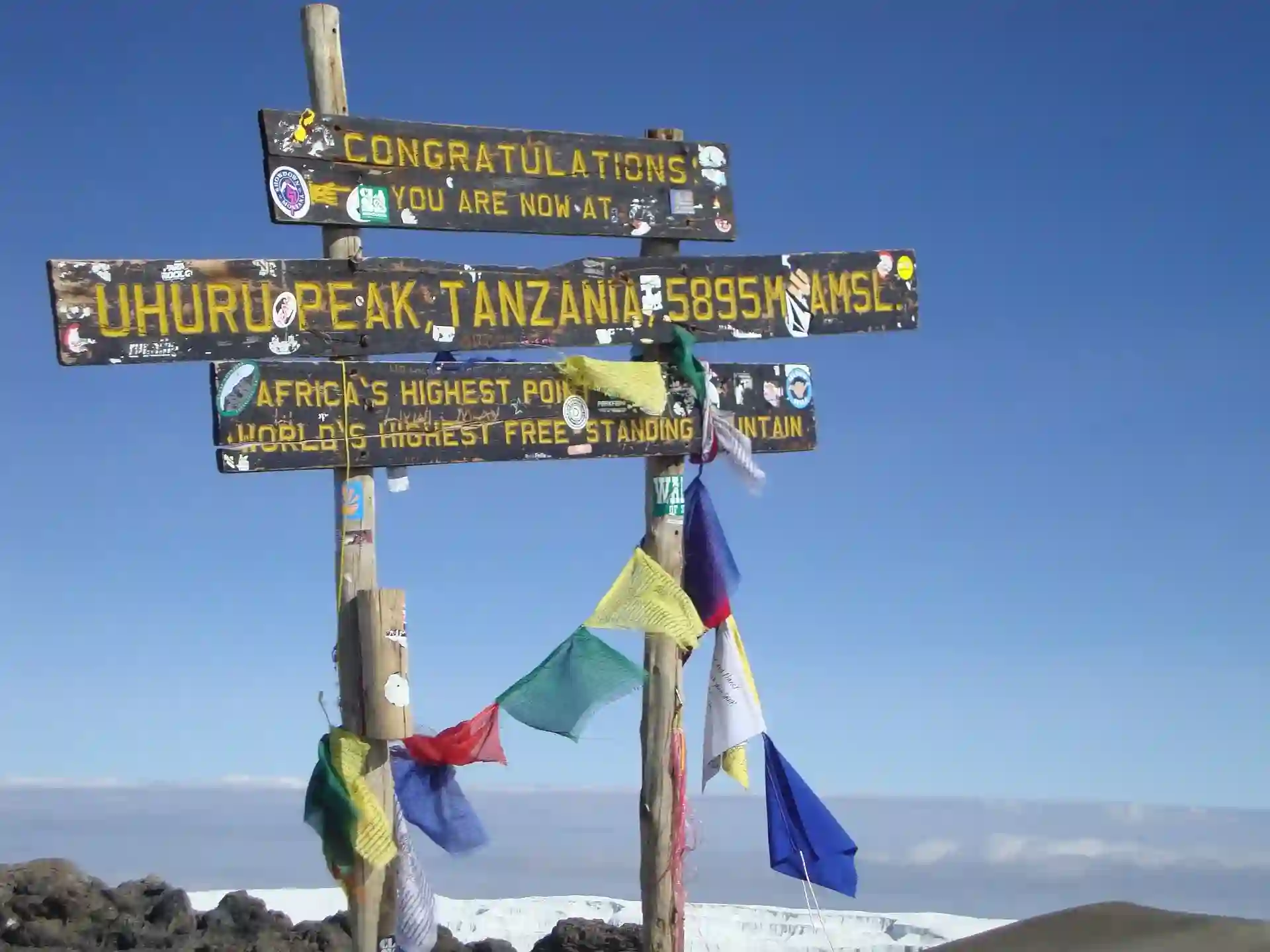


What Happens If You Cannot Reach the Kilimanjaro Summit?
An honest guide to turning around, escorted descent, group arrangements, certificates, costs, insurance and planning a safer future attempt.
The Short Answer
If you cannot reach the summit, the guide will choose the safest practical next step based on your symptoms, walking ability, location, weather, daylight and available support.
- You may turn around voluntarily or be instructed to descend.
- You should be accompanied by a guide; you should never descend alone.
- In a group climb, other members may continue only if enough qualified guide coverage remains.
- Mild, stable symptoms may improve after descent and rest; serious or worsening symptoms require urgent descent and possibly evacuation.
- Oxygen and first-aid treatment can support a sick climber, but they are not used to hide worsening symptoms and continue upwards.
- A second summit attempt is normally not possible within the same itinerary.
- Reaching Stella Point or Gilman's Point may qualify for a park summit certificate; reaching Uhuru Peak is recorded separately as the mountain's highest point.
- A missed summit does not normally create an automatic refund because park fees, crew wages, food, accommodation and logistics have already been supplied or committed. Your confirmed booking terms govern the outcome.
The mountain will still be there. Turning around at the right time is a sign that the expedition's safety system is working.
Why Climbers Turn Around
Not reaching Uhuru Peak does not always mean someone was unfit or poorly prepared. Altitude response varies greatly between individuals, and excellent fitness does not provide immunity from altitude illness.
Altitude Symptoms
Headache, nausea, dizziness, unusual weakness, vomiting or a marked loss of normal walking performance can indicate Acute Mountain Sickness. A climber with symptoms should not continue to a higher sleeping altitude. If symptoms worsen at the same elevation despite appropriate care, descent is mandatory.
Confusion, unusual behaviour, loss of coordination or extreme drowsiness can indicate High-Altitude Cerebral Edema. Breathlessness at rest, severe chest congestion or a major decline in performance can indicate High-Altitude Pulmonary Edema. Both are emergencies requiring rapid action and descent.
The CDC Yellow Book's altitude-illness guidance notes that AMS often improves after descending at least 300 metres. It also states that suspected HACE or HAPE requires urgent descent, with oxygen used when available and the sick climber exerting themselves as little as possible.
Exhaustion or an Unsustainable Pace
Summit night is long. On Tanzania Inside Safari's seven-day Machame itinerary, the planned day may involve approximately six to seven hours of ascent followed by six to nine hours of descent. A climber must retain enough strength, warmth and coordination to come down safely.
Guides therefore consider more than whether you could struggle upwards for another hour. They must judge whether you can still reach the turnaround point and complete the descent safely. Slow progress can become a safety concern when it increases exposure to cold, wind or darkness.
Cold, Weather or Trail Conditions
Strong wind, snow, rain, poor visibility and severe cold can change a summit plan. A guide may also stop an individual if wet clothing, inadequate insulation, painful or numb extremities, suspected cold injury or equipment failure creates unacceptable risk.
Weather decisions are not evidence that the mountain was technically impossible. They reflect the actual group, equipment, timing and conditions on that day.
Injury, Illness or Equipment Problems
A stomach illness, respiratory infection, knee injury, fall, damaged boot, failed headlamp or lost glove can make continuing unsafe. Some problems can be corrected at camp; others require a prompt descent.
Personal Choice
You may decide to stop even without a medical emergency. Fear, discomfort or a clear sense that you have reached your limit are valid reasons to speak with your guide. The guide may offer reassurance, food, warmth or a short rest when appropriate, but you should not be pressured to continue against your wishes.
Who Makes the Turnaround Decision?
The lead guide is responsible for safety decisions on the mountain. They combine your report with direct observation: pace, balance, breathing, behaviour, ability to eat and drink, exposure to cold, the time, weather and distance still to travel.
Pulse rate and oxygen saturation may add useful information, but one SpO2 number cannot decide whether a climber is safe. Cold hands, movement, circulation and device accuracy can affect readings. The Wilderness Medical Society advises that clinical decisions should not be based on small saturation differences alone. Read the WMS 2024 altitude summary.
A climber can always choose to turn around. A climber cannot insist on continuing when the guide believes it is unsafe. This authority protects the individual, the crew and other climbers who could otherwise be placed at risk during a delayed rescue.
A Turnaround Time Is a Safety Tool
There is no single universal clock time that applies to every climb. Guides set or adjust turnaround decisions according to the route, departure time, conditions, pace and safe-descent margin.
The important question is not, "How close am I?" It is, "Can I continue and still descend safely?" Being near Stella Point, Gilman's Point or Uhuru Peak does not cancel symptoms or make the return journey shorter.
What Happens Immediately After You Stop?
The exact sequence depends on urgency, but the following pattern is common.
The guide stops and assesses you. They ask about symptoms, observe breathing and coordination, check warmth and function, and may measure pulse and SpO2.
A clear decision is made. The options may include a brief monitored rest, return to high camp, immediate descent below camp or evacuation.
Immediate needs are managed. The team may add warm layers, protect you from wind, provide food or fluids if safe, adjust your pack and give appropriate first aid.
You begin an escorted descent. A guide or assistant guide stays with you. A sick climber should carry as little as practical and should never be sent down alone.
You are reassessed at camp or lower altitude. Improvement may allow rest and a normal walk to the gate. Persistent or serious symptoms require further descent and medical evaluation.
Ground support is contacted when necessary. The mountain and office teams coordinate the gate, transport, hotel, clinic or evacuation plan according to circumstances.
In a true emergency, the order can be much faster: oxygen and essential treatment are started while descent is organised, and non-essential delays are avoided.
Where Do You Descend To?
The destination is the lowest practical safe point, not automatically the nearest tent or hut.
On the Machame, Lemosho and related southern-circuit approaches, a climber who stops on summit night will often first return towards Barafu or another booked high camp. On Marangu, the immediate high camp is normally Kibo Hut. Rongai and Northern Circuit schedules may use Kibo or School Hut, depending on the itinerary.
Returning to high camp is not necessarily the end of the descent. A climber with worsening AMS, suspected HACE, suspected HAPE, severe cold injury or inability to recover may need to continue hundreds of metres lower, reach an evacuation route or be transferred for medical care.
The team's choice depends on:
- Your symptoms and whether they improve with descent
- Whether you can walk safely
- The route and nearest lower camp or evacuation point
- Weather, visibility and trail conditions
- Available guide and porter support
- The safest transport option from the mountain
Helicopter evacuation is never guaranteed. Weather, visibility, landing access, availability and clinical need all affect whether it is possible. A ground descent must remain part of the plan.
What Happens to the Rest of the Group?
The outcome depends on staffing, group size, location and the seriousness of the incident.
| Situation | What normally happens |
|---|---|
| One climber turns around and guide coverage is sufficient | An assistant guide or other qualified guide escorts that climber down while the remaining team continues under a guide. |
| A private solo climber turns around | The summit attempt ends and the guide accompanies the climber down. |
| A private couple or small party has enough guide cover | The team may split safely, allowing one person to descend and another to continue. |
| Guide coverage is insufficient to split safely | The entire party may need to turn around together. |
| A serious emergency requires several crew members | The guide may redirect staff or end the group's summit attempt to protect the affected climber. |
No ethical operator should protect a summit schedule at the expense of a sick climber. A good staffing plan makes a safe split more feasible, but it can never guarantee that the rest of the group will continue in every situation.
Will You Be Left Alone at Camp?
You should remain under appropriate supervision until the guide is satisfied that you are stable and the next arrangement is clear. A climber with significant altitude symptoms, impaired walking, confusion, breathing difficulty or severe exhaustion must not be left alone.
If you improve after descending and are resting at a staffed camp, the precise arrangement will depend on the route, park procedures and available crew. Ask before booking how the operator handles supervised early descent and group splitting.
Emergency Oxygen, Stretchers and Evacuation
Tanzania Inside Safari provides emergency oxygen and a mountain medical kit on its Kilimanjaro climbs. These are safety resources, not a promise that every illness can be treated on the mountain.
Emergency oxygen may be used to support a sick climber while descent or evacuation is organised. Feeling better on oxygen does not mean you have acclimatised or are cleared to resume the summit attempt.
If a climber cannot walk safely, the team may require additional human support or a park rescue stretcher where the route permits. The safest method depends on terrain, weather and the climber's condition. Evacuation can still be physically demanding and slow, which is why early symptom reporting matters.
Call emergency action immediately for:
- Confusion, disorientation or unusual behaviour
- Loss of balance or inability to walk a straight line
- Breathlessness while resting
- Severe chest congestion or rapidly falling performance
- Collapse, reduced consciousness or inability to care for yourself
- Serious injury, suspected frostbite or uncontrolled bleeding
Do not wait for a preferred oxygen reading, a sunrise photo or another group member before reporting these signs.
Do You Receive a Summit Certificate?
Kilimanjaro has three recognised summit points on the rim and peak of Kibo:
| Point | Elevation | What it means |
|---|---|---|
| Gilman's Point | About 5,685 m | A recognised crater-rim summit point, usually approached from Kibo Hut. |
| Stella Point | About 5,756 m | A recognised crater-rim summit point, usually reached from Barafu-side routes. |
| Uhuru Peak | 5,895 m | The highest point on Kilimanjaro and in Africa. |
Kilimanjaro National Park issues certificates according to the summit point recorded by the mountain team. Leading Kilimanjaro operators consistently describe certificates for climbers who reach Gilman's Point, Stella Point or Uhuru Peak, with Uhuru recorded as the highest achievement. See Ultimate Kilimanjaro's summary of the three summit points.
If you turn around below Gilman's Point or Stella Point, you should not assume that a summit certificate will be issued. Exact wording, colour and administrative practice can change; your guide and park records determine the certificate you receive.
Reaching the crater rim is a major achievement, but it should be described honestly. Stella Point or Gilman's Point is not the same elevation as Uhuru Peak.
Can You Try Again the Next Day?
Normally, no. Standard Kilimanjaro itineraries do not contain a spare summit day. Food, staff movements, park bookings, camp reservations and the descent schedule are organised in advance. More importantly, the reason for turning around may make immediate re-ascent unsafe.
Even if mild symptoms improve after descent, returning to the high camp and attempting another summit within hours would add fatigue and altitude exposure. The WMS advises that further ascent or re-ascent should not occur while altitude symptoms remain.
A future climb is a separate expedition requiring new park arrangements, crew, accommodation, transport and an itinerary designed around what you learned from the first attempt.
Do You Get a Refund?
There is no automatic refund simply because you do not reach the summit. Most of the climb's costs are incurred whether or not you stand at Uhuru Peak:
- Park, camping or hut and rescue-related fees
- Guide, cook and porter wages
- Food, fuel and treated drinking water
- Tents, dining equipment and other expedition logistics
- Transfers, hotel nights and operational support
Kilimanjaro operators commonly state that early descent or partial completion does not create a refund because these services and costs have already been supplied. However, Tanzania Inside Safari's confirmed proposal, invoice and booking conditions - not another operator's policy - govern your trip.
Ask before paying:
- Whether unused hotel, transfer or add-on services can be adjusted
- Who pays for extra porter support, transport, hotel nights or medical care after an early descent
- Whether an evacuation or itinerary change creates additional costs
- What documentation the company can provide for an insurance claim
Do not buy a climb on the assumption that a missed summit is refundable unless that promise appears clearly in your written terms.
What May Travel Insurance Cover?
Travel insurance is designed for specified risks, not disappointment. A suitable policy should cover trekking to at least 6,000 metres, altitude-related illness, emergency treatment, evacuation and helicopter rescue where available.
Depending on the policy, a medically necessary early descent may lead to a claim for eligible treatment, evacuation, extra accommodation or trip interruption. A voluntary decision to stop, ordinary fatigue or failure to reach the summit may not be covered.
Before travel, verify:
- The maximum trekking altitude
- Whether mountaineering exclusions apply to non-technical Kilimanjaro trekking
- Medical and evacuation benefit limits
- Whether helicopter rescue is covered but subject to operational availability
- Requirements for contacting the insurer or assistance company
- Evidence needed from the guide, operator or treating clinician
- Trip-interruption and unused-arrangement exclusions
Keep receipts and request a written incident summary when appropriate. The insurer, not the guide, decides whether a claim meets the policy terms.
What Happens to Your Bags and Travel Plans?
During a routine early descent, the crew coordinates your duffel and non-essential belongings. In an urgent evacuation, medical safety comes first; luggage may follow separately. Keep your passport copy, insurance details, essential medication, phone and one warm layer accessible in your daypack.
When you reach the gate, Tanzania Inside Safari can coordinate onward transport, accommodation and communication with the rest of your party. Changes may be subject to availability and additional cost.
If your climb is followed by a safari, Zanzibar stay or international flight, do not assume the whole trip is lost. The office can review what remains practical after your condition, medical advice and timing are known. Serious altitude illness should be medically assessed even if symptoms improve after descent.
The Emotional Side of Turning Around
People invest money, training and hope in Kilimanjaro. Turning back can therefore feel more painful than the physical descent. It is normal to feel disappointed, embarrassed or worried about explaining the result.
Try to separate the summit from the whole expedition. You still crossed rainforest, moorland and alpine desert; lived with a mountain crew; adapted to unfamiliar altitude; and made a difficult decision under pressure. A responsible turnaround protects the possibility of returning home well and trying again.
Your guide's decision is not a judgement of character. Altitude illness can affect highly trained athletes, and weather can defeat the best-prepared team. The honest story is more valuable than a summit photo obtained by hiding symptoms.
How to Reduce the Chance of an Early Turnaround
No preparation guarantees the summit, but good decisions improve your margin.
Choose Enough Time
Longer itineraries give the body more time to acclimatise and guides more opportunities to observe how you respond. Tanzania Inside Safari recommends considering the eight-day Lemosho, eight-day Northern Circuit, seven-day Machame or seven-day Rongai itineraries, according to your experience and priorities. The six-day Marangu route is more responsible than compressing it into five days.
Train for the Descent as Well as the Ascent
Build aerobic endurance, leg strength and comfort with consecutive hiking days. Include long descents, uneven trails and trekking poles. Summit day is not finished at the sign; you still need to reach a much lower sleeping camp.
Protect Warmth and Equipment
Use tested boots, a warm layered clothing system, waterproof outerwear, insulated gloves, spare glove liners, head protection and reliable headlamps. Keep summit-day water, snacks and electronics insulated from freezing.
Walk Pole Pole and Report Symptoms
Follow the guide's slow pace, eat regularly and drink normally. Do not force excessive water and do not hide headache, nausea, dizziness, declining performance, chest symptoms or changes in coordination.
Arrive With the Right Insurance
Insurance should be confirmed before departure, not researched during an emergency. Carry the policy number and assistance contact offline and share relevant medical information with the operator.
Planning a Future Attempt
If you want to return, first identify why the attempt ended.
| Reason for turning around | What to review before another climb |
|---|---|
| Altitude symptoms | Medical advice where appropriate, a longer itinerary, slower ascent and possible pre-acclimatisation. |
| Exhaustion or slow pace | More hiking-specific endurance, consecutive long days, better fuelling and a realistic route schedule. |
| Cold or equipment failure | Layering, gloves, boots, headlamp, battery management and a full pre-climb gear inspection. |
| Injury | Rehabilitation, downhill strength, footwear and trekking-pole technique. |
| Weather | Season, route choice and acceptance that conditions remain unpredictable. |
| Anxiety or loss of confidence | More mountain experience, a private pace, clear guide communication and smaller progressive goals. |
Do not rush the decision after a serious illness. Anyone with suspected HACE, HAPE, significant breathing problems, neurological symptoms, chest symptoms or a serious injury should obtain appropriate medical assessment before planning another high-altitude trip.
A future climb should not simply repeat the same short itinerary and hope for a different result. Use the first expedition as valuable evidence about route length, pace, equipment, health and the support you need.
Questions to Ask an Operator Before Booking
- Who has authority to stop a climber or order descent?
- How often are health and functional checks performed?
- Is emergency oxygen carried, and is it reserved for treatment and descent?
- How many guides support the group on summit night?
- Can one climber descend with a guide while others continue?
- What happens if the group cannot be split safely?
- How are ground evacuation, park rescue and transport coordinated?
- Which early-descent or evacuation costs are included?
- What written documentation can be provided for insurance?
- How are Gilman's Point, Stella Point and Uhuru Peak recorded for certificates?
Clear answers matter more than a promotional summit-success percentage.
Frequently Asked Questions
Can a Guide Make Me Turn Around?
Yes. You may choose to stop at any time, and the guide may require you to descend when continuing is unsafe. Guide authority is fundamental to a professionally managed climb.
Can I Continue Alone If My Guide Says No?
No. Kilimanjaro climbs require licensed guide supervision, and leaving the team would be unsafe. A summit is never worth separating from the guide or hiding symptoms.
Will My Friends Have to Turn Around Too?
Not necessarily. If there are enough qualified guides and conditions allow, you may descend with one guide while others continue. If the party cannot be split safely or an emergency needs additional help, everyone may have to descend.
What If I Reach Stella Point but Not Uhuru Peak?
Stella Point is a recognised crater-rim summit point and may qualify for a park certificate recorded at that level. It is a substantial achievement, but Uhuru Peak remains Kilimanjaro's highest point at 5,895 metres.
Is Gilman's Point the Summit?
Gilman's Point is a recognised summit point on the crater rim, commonly approached by the Marangu and Rongai sides. Uhuru Peak is higher. Your certificate should reflect the point recorded by the mountain team.
Can Oxygen Help Me Finish?
Emergency oxygen can support treatment while descent or evacuation is arranged. It should not be used to mask worsening symptoms and continue towards the summit.
Does a Low SpO2 Reading Automatically End My Climb?
No single reading makes the decision. Guides consider the trend, symptoms, breathing, coordination, pace and overall function. A climber with serious symptoms may need descent even when one reading appears reassuring.
Will a Helicopter Always Collect Me?
No. Helicopter access depends on weather, visibility, location, availability, insurance arrangements and medical need. The team must be ready to use an appropriate ground evacuation.
Can I Wait at High Camp Until the Group Returns?
Only if the guide decides you are stable, appropriately supervised and safe at that altitude. Altitude illness may require continued descent rather than waiting.
Is Not Reaching Uhuru Peak a Failure?
No. The correct decision is the one that brings you and your team down safely. Kilimanjaro offers no guarantee, and responsible operators should never treat summit statistics as more important than health.
Tanzania Inside Safari's Safety-First Approach
Tanzania Inside Safari is a Tanzanian-owned, registered operator with local mountain support. Our pre-trek briefing covers altitude management, daily schedules, equipment and safety expectations. Our climb packages include professional guides and crew, meals and drinking water, mountain equipment appropriate to the itinerary, emergency oxygen and a medical kit.
During the climb, our guides use symptom questions, observation and health readings as part of a complete assessment. They may slow the pace, stop the ascent, split the team when safe guide coverage permits, arrange an escorted descent or coordinate evacuation.
We do not guarantee that every climber will reach Uhuru Peak. We promise honest advice and decisions that put life and health before a summit photograph.
Plan a Kilimanjaro Climb With a Safe Descent Strategy
Before choosing a route, discuss more than scenery and price. Tell us about your fitness, previous altitude response, medical considerations, preferred group format and available days. We will recommend a responsible itinerary and explain how guide cover, turnaround decisions and early descent are managed.
Practical and medical disclaimer: This article provides general educational information, not individual medical advice or a guarantee of operational outcomes. Mountain decisions depend on the climber, route, weather, park procedures and available resources. Booking terms and the traveller's insurance policy govern costs and claims. Seek qualified medical advice before high-altitude travel and urgent care after serious altitude, breathing, neurological or injury symptoms.