


The Barranco Wall: How Difficult and Dangerous Is It?
An honest guide to the scrambling, exposure, Kissing Rock, weather, preparation and safety of Kilimanjaro's most famous wall.
The Barranco Wall at a Glance
- It rises above Barranco Camp on Kilimanjaro's southern circuit.
- The ascent is roughly 250 metres (about 820 feet), although published estimates vary.
- Most groups spend approximately one to two hours climbing the Wall.
- The full trek from Barranco Camp to Karanga Camp commonly takes about four to five hours.
- It is a steep hike with sections of low-level scrambling, not normally technical rock climbing.
- Standard climbs do not usually require ropes, harnesses or specialist climbing equipment.
- Climbers use their hands for balance and upward movement on several sections.
- The route includes the famous narrow move known as the Kissing Rock.
- Rain, frost, ice, strong wind and congestion can increase the difficulty.
- Falls are possible, so guide instructions and careful movement are essential.
Where Is the Barranco Wall?
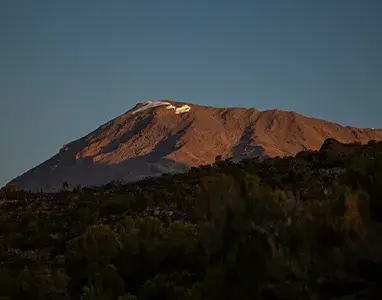
The Wall stands immediately east of Barranco Camp, beneath Kilimanjaro's Southern Ice Field. Barranco Camp is at approximately 3,975 metres (13,040 feet), although camp elevations vary slightly between maps, GPS readings and operator descriptions.
On the normal itinerary, climbers leave Barranco Camp after breakfast, cross a short section of the valley floor and begin the Wall. After reaching the top, the trail continues over a series of ridges and valleys before descending towards Karanga Valley and climbing again to Karanga Camp, at approximately 3,995 metres (13,105 feet).
This explains an apparent contradiction: the day contains a substantial climb up the Wall, but the sleeping elevation at Karanga is only slightly higher than Barranco. Much of the height gained on the Wall is lost again during the undulating traverse.
Which Kilimanjaro Routes Cross the Barranco Wall?
The Barranco Wall is included on routes that approach the summit using the southern circuit, most commonly:
The standard Marangu and Rongai routes approach the high mountain from the east or north and do not cross the Wall. A standard Northern Circuit itinerary travels around the quieter northern slopes and also avoids it.
The exact day depends on the route length. On a seven-day Machame climb it is normally crossed after the night at Barranco Camp. Lemosho climbers usually reach it later in their itinerary because they spend additional days approaching from the west.
How High Is the Barranco Wall?
The figure commonly used is approximately 250 to 260 metres, or roughly 820 to 850 feet, from the valley area to the top of the climbing section. This is a useful indication, not a precise surveyed measurement of one uninterrupted cliff.
The name Wall is visually accurate from camp, but the route is not a straight vertical ascent. It follows weaknesses in the rock through switchbacks, blocks, shelves and short scrambling moves. The gradient and exposure change continuously.
This matters because a photograph taken from below can make the entire face look technical. Close up, climbers discover a defined trail with many ordinary walking sections between the hands-on moves.
How Long Does the Climb Take?
Most trekking groups take approximately one to two hours to reach the top. Tanzania Inside Safari's seven-day Machame itinerary describes the Wall itself as taking about one to one-and-a-half hours, with the complete Barranco-to-Karanga stage normally taking four to five hours.
Times vary because of:
- Group size and walking pace
- Queues at narrow sections
- Weather and surface conditions
- How often the group stops
- Individual confidence and mobility
- The need to allow porters or other teams to pass safely
It is unhelpful to race the Wall or judge yourself against another team. A smooth, deliberate ascent usually feels easier and creates less congestion than repeated bursts of speed followed by long stops.
Is the Barranco Wall Technical Climbing?
No, not on the standard trail in normal conditions. Technical climbing normally involves specialist skills and protective equipment such as ropes, harnesses, anchors and belaying. These are not ordinarily used on the Barranco Wall.
The most accurate description is a steep hike with scrambling. Scrambling sits between walking and rock climbing: you remain on your feet for much of the route but use your hands on rock for balance, stability or upward movement.
You do not need to know climbing knots or have previous mountaineering experience. You should be comfortable stepping onto uneven rocks, raising your feet onto occasional high steps and maintaining balance while using your hands.
How Difficult Is It in Practice?
For a healthy trekker with reasonable fitness, mobility and confidence, the Wall is usually moderate and manageable under guide supervision. The movement is more technical than most other daytime sections on the standard Kilimanjaro routes, but it is short compared with the wider expedition.
| Aspect | What to expect |
|---|---|
| Physical effort | A sustained uphill climb, but much shorter than summit night |
| Technical skill | No specialist climbing skill normally required |
| Use of hands | Necessary on several rock steps and narrow sections |
| Exposure | Feels exposed in places, especially to people afraid of heights |
| Strength | General hiking strength matters more than upper-body power |
| Balance | Important on uneven steps and when turning around rocks |
| Altitude | Climbed at about 4,000 metres, so effort feels harder than at sea level |
| Weather sensitivity | Wet, icy or windy conditions can materially increase difficulty |
| Mental challenge | The appearance from camp is often more intimidating than the climb itself |
Many climbers finish the Wall feeling surprised by how enjoyable it was. Others find it stressful. Both reactions are normal. Difficulty is personal, and reassurance should never become pressure to hide fear, pain or illness.
Is the Barranco Wall Dangerous?
It is not normally considered a highly dangerous or technical section when conditions are suitable and climbers follow experienced guides. However, saying that it is completely safe would be misleading. It is steep mountain terrain, and a slip in the wrong place could cause injury.
The main hazards include:
- Slipping on wet, muddy, frosted or icy rock
- Tripping on uneven steps or loose stones
- Losing balance while stepping around a rock corner
- Dislodging stones onto people below
- Crowding, overtaking or stopping in narrow passages
- Strong wind affecting balance on exposed sections
- Poor coordination caused by fatigue or altitude illness
- Trekking poles, cameras or loose equipment interfering with hand use
Serious incidents are not the normal experience, but the consequences of careless movement can be significant. The correct message is therefore: the Barranco Wall is usually manageable, but it must be climbed attentively and under guide direction.
What Is the Kissing Rock?
The Kissing Rock is the Wall's most famous move. The path narrows beside a protruding rock, and climbers turn their body towards the stone while stepping around it. This brings the face close to the rock - hence the playful name.
It is not a leap across a gap, and most climbers complete it within seconds. The move can look dramatic in photographs because of the angle and the open view behind the climber. Your guide will show you where to place your feet and hands and may stand in a supporting position.
At the Kissing Rock:
- Face the rock rather than leaning away from it.
- Keep your hips close to the stone.
- Use the exact handholds and footholds shown by the guide.
- Move one limb at a time and maintain three points of contact.
- Do not stop for a photograph unless the guide says the position is safe.
- Do not allow a phone, bottle or loose strap to occupy the hand you need for balance.
What Does Three Points of Contact Mean?
Three points of contact means keeping three limbs securely connected to the terrain while moving the fourth. This may be two feet and one hand, or two hands and one foot.
The technique creates stability and prevents hurried, off-balance movements. Before transferring weight, test that the next rock is secure and that your footwear has reliable contact. Avoid pulling hard on a loose-looking stone or using another climber as a handhold.
Your guide's demonstration is more useful than trying to memorise a climbing technique from home. Rock conditions and the flow of people can change, so follow the line chosen on the day.
What Happens on the Morning of the Climb?
The Wall is normally climbed early in the Barranco-to-Karanga day. A typical sequence is:
Wake, breakfast and the normal health review at Barranco Camp.
Pack the daypack so both hands can be freed when needed.
Cross the valley floor towards the base of the Wall.
Join the guide-controlled flow of climbers and porters.
Ascend through zigzags, rock steps and the Kissing Rock section.
Rest at the top, where there are broad views across the southern slopes when the weather is clear.
Continue over ridges and valleys towards Karanga rather than assuming the day's walking is finished.
The final point is important. Reaching the top is a memorable milestone, but Karanga Camp is still several hours away for many groups.
Why Can the Wall Become Congested?
Machame and Lemosho are popular routes, and several itineraries converge at Barranco. Many teams leave camp at similar times. The route also narrows at particular rock steps, creating temporary queues.
Congestion can increase waiting time and make the Wall feel more exposed. It can also create risk when climbers become impatient or try to overtake.
Good mountain etiquette includes:
- Remain with the guide's organised group.
- Allow space between yourself and the person ahead.
- Do not overtake at a narrow or exposed point.
- Step aside only where the guide identifies a stable place.
- Give porters room to move; they may be carrying large loads.
- Avoid dislodging rocks and warn people below if a stone moves.
- Keep photo stops brief and away from the active line.
An early start may reduce some congestion, but no operator can promise an empty Wall.
How Do Weather Conditions Change the Difficulty?
Dry rock with good visibility offers the simplest conditions. Rain can make polished footholds slippery, while overnight cold may create frost or ice. Cloud and mist reduce visual references, and strong wind can unsettle a climber on an open section.
Weather on Kilimanjaro changes quickly. Even in the generally drier climbing seasons, rain, hail, snow or frost remain possible. During wetter periods, the approach can also be muddy.
Guides may slow the group, increase spacing, adjust the departure time or provide more direct support. In exceptional conditions, safety decisions must be based on the mountain as it is, not on an internet description of a normal dry day.
Useful clothing and equipment include:
- Waterproof jacket and trousers accessible in the daypack
- Hiking boots with secure tread and a stable fit
- Close-fitting gloves that protect the hands without removing dexterity
- Warm layers appropriate to the temperature
- A daypack with straps tightened so it does not swing while scrambling
- Sunglasses and sun protection for the exposed traverse after the Wall
Should You Use Trekking Poles on the Wall?
Trekking poles are very useful elsewhere on Kilimanjaro, but they can obstruct movement during the hands-on sections. Poles should be collapsed and secured to the daypack before the climb, following the guide's instructions.
Do not carry both poles in one hand while trying to scramble. They can catch between rocks, affect balance or interfere with people around you. Once the route returns to ordinary trail, your guide can indicate when it is practical to use them again.
Do You Need Gloves?
Gloves are helpful because the rock can be cold, rough or wet. Choose a pair that allows you to grip rock and operate zips. Very bulky insulated mittens may reduce dexterity, while thin gloves alone may not be warm enough on a cold morning.
A practical system is to keep a dexterous glove available for the scrambling and carry a warmer outer option for other cold sections. The exact choice depends on the season, weather and your circulation.
Is Upper-Body Strength Important?
The Wall is climbed mainly with the legs. You may use your arms to steady yourself or assist through a high step, but you are not expected to perform pull-ups or haul your full body weight vertically.
Useful preparation focuses on:
- Step-ups and controlled stair climbing
- Squats, lunges and single-leg strength
- Balance on uneven surfaces
- Core stability
- Hiking on rocky terrain while carrying a daypack
- Safe practice using hands on simple, non-exposed scrambling terrain
Good hip and ankle mobility can be as valuable as strength. If you have restricted movement, tell the operator before booking so route choice and suitability can be discussed honestly.
What If You Are Afraid of Heights?
Many people with a mild fear of heights complete the Wall successfully. The trail stays close to the rock, and the guide can help you focus on the next foothold instead of looking down the slope.
The experience may still be uncomfortable. Photographs can exaggerate the exposure, but there are narrow and open-feeling moments. If you have severe vertigo, panic attacks related to heights or a history of freezing on exposed terrain, disclose this before choosing a route that crosses Barranco.
Helpful strategies include:
- Stay immediately behind the guide if requested.
- Look at the rock and the next safe movement rather than the distant drop.
- Breathe steadily and avoid rushing to escape the feeling.
- Keep both hands free.
- Tell the guide early if anxiety is increasing.
Do not take unfamiliar sedating medication on the mountain. It may impair balance, breathing or judgement and should only be used under appropriate medical advice.
Who May Find the Barranco Wall Unsuitable?
The Wall may be inappropriate, or require a very careful individual assessment, for someone with:
- Severe fear of heights or uncontrolled vertigo
- Significant balance or coordination problems
- Restricted hip, knee, ankle, shoulder or hand function
- An injury that prevents high steps or stable weight transfer
- Visual limitations affecting depth perception
- Severe fatigue or weakness on the morning of the climb
- Symptoms suggesting worsening altitude illness
This does not mean that age alone prevents a climber from crossing. A mobile, experienced older hiker may manage well, while a younger person with poor balance may struggle. The relevant questions are functional ability, confidence, health and conditions on the day.
Altitude and the Barranco Wall
The Wall is crossed at approximately 4,000 metres, where reduced atmospheric pressure makes physical effort feel harder. A climber who is acclimatising normally may simply breathe more heavily and require a steady pace.
Poor coordination, unusual stumbling, confusion, extreme weakness or an inability to follow instructions must not be dismissed as nervousness. These can indicate serious altitude illness or another medical problem. The CDC Yellow Book's guidance on altitude illness advises against further ascent when altitude-illness symptoms are present.
Your guide should assess symptoms and functional condition before committing a sick climber to steep terrain. Descent and medical action take priority over completing the Wall or preserving an itinerary.
Can You Avoid the Barranco Wall?
Yes, by choosing a route that does not use the southern circuit. Standard Marangu, Rongai and Northern Circuit itineraries avoid it.
However, route choice should not be made from one feature alone. Each option has a different acclimatisation profile, scenery, crowd level, accommodation style and summit approach. Avoiding Barranco may introduce other tradeoffs, such as the longer crater-rim traverse from Gilman's Point on routes summiting from Kibo or School Hut.
If the only concern is ordinary nervousness, many climbers are reassured after discussing the Wall with an experienced guide. If the concern involves severe vertigo, mobility or a relevant medical condition, selecting another route may be the more responsible choice.
Common Myths About the Barranco Wall
| Myth | Reality |
|---|---|
| It is a vertical rock climb | The trail zigzags through steep rock steps and ledges |
| You need climbing experience | Most trekkers need no technical training, but must follow their guide |
| Everyone is attached to a rope | Ropes and harnesses are not normally used on the standard route |
| Kissing Rock requires a jump | It is a short sideways step made while facing the rock |
| It is the hardest part of Kilimanjaro | Summit night is generally much longer, colder and more affected by altitude |
| It is completely safe | Slips, falls and falling stones are possible in steep mountain terrain |
| Reaching the top ends the day | The route continues across ridges and valleys to Karanga |
| Strong arms are essential | Legs, balance, mobility and controlled movement matter more |
How Our Guides Manage the Wall
At Tanzania Inside Safari, preparation begins at the pre-climb briefing. We discuss the route, check footwear and daypack setup, and ask climbers to disclose injuries, mobility concerns and fear of heights.
On the mountain, our approach includes:
- A controlled pole pole pace
- Health and symptom checks before the Barranco-to-Karanga stage
- A guide-led line through the safest practical route
- Demonstration of handholds, footholds and body position
- Direct assistance at awkward steps when needed
- Spacing and traffic management at narrow sections
- Monitoring of fatigue, balance, breathing and behaviour
- Emergency oxygen and mountain first-aid equipment within the expedition system
- Authority to slow, stop or change the plan when continuing is unsafe
Guides can support movement, but clients must remain active participants. Follow instructions, keep both hands available and report any problem before it becomes urgent.
Practical Preparation Checklist
Before travelling:
- Train on hills, stairs and uneven trails.
- Practise slow step-ups and controlled descents.
- Improve single-leg balance and lower-body strength.
- Break in hiking boots and confirm reliable tread.
- Tell us about vertigo, injuries or restricted movement.
- Choose a route based on the complete itinerary, not one photograph.
Before leaving Barranco Camp:
- Eat breakfast and report headache, nausea, dizziness or weakness honestly.
- Secure trekking poles to the daypack when instructed.
- Tighten loose pack straps and store the phone or camera.
- Wear gloves with sufficient grip and dexterity.
- Keep waterproof and warm layers accessible.
- Listen to the guide's briefing and remain with the team.
While climbing:
- Maintain three points of contact.
- Test footholds before transferring weight.
- Keep a safe distance from the climber ahead.
- Never overtake in a narrow section.
- Avoid pulling on loose rocks.
- Ask for help early rather than making a rushed move.
Frequently Asked Questions
Do I need ropes or a harness?
Not normally. The standard Barranco Wall trail is a guided scramble, not a technical climbing route. Conditions and emergency circumstances can change decisions, but clients do not usually carry specialist climbing equipment for it.
Is there a sheer drop beside the whole trail?
No. Some positions feel exposed, but much of the trail consists of steps, switchbacks and ledges close to the rock. Camera angles often make the exposure look greater than it feels on the route.
Can guides physically help me?
Guides commonly show exact foot and hand placement and may provide stabilising assistance at awkward steps. They cannot safely carry an able-bodied client up the Wall, and every climber needs sufficient mobility to participate.
Can porters carry my daypack on the Wall?
Your daypack should already be light and properly fitted. Do not assume that another team member can take it; porters have assigned loads and safety responsibilities. Discuss a genuine limitation with the lead guide before the ascent.
Is the Kissing Rock compulsory?
It is part of the normal trail line used by most teams. Your guide manages the exact movement according to conditions and traffic. It is brief and does not involve jumping.
Is the Wall harder in the rainy season?
It can be. Wet rock, mud, poor visibility and cold can increase difficulty. Frost or ice is possible in any season at altitude, so no month guarantees dry conditions.
Will I fall if I look down?
Looking down does not cause a fall, but it can increase anxiety and distract you from foot placement. Focus on the guide, the rock and the next controlled movement.
Should I avoid Machame or Lemosho because of the Wall?
Not automatically. Both routes offer attractive scenery and useful acclimatisation features. Most climbers cross Barranco without difficulty. Choose another route if your mobility, severe vertigo or medical circumstances make the Wall inappropriate.
The Honest Conclusion
The Barranco Wall looks more dangerous than it normally feels, but it should never be treated casually. It is a steep, hands-on scramble at high altitude, with genuine slip and fall hazards that increase in poor weather or congestion.
For most prepared climbers, the experience is manageable and becomes one of the most enjoyable memories of the trek. Good footwear, free hands, controlled movement and trust in your guide matter far more than climbing experience.
Tell us about your fitness, hiking background, fear of heights, injuries and preferred route. Our local Kilimanjaro team will help you decide whether an itinerary crossing the Barranco Wall is appropriate for you.
Practical note: Trail conditions, timing, traffic and guide decisions vary. This article describes the normal guided route and cannot guarantee conditions on a particular climbing day.