


Kilimanjaro Travel Insurance, Rescue and Emergency Evacuation Explained
A practical guide to policy wording, rescue procedures, helicopter limitations, medical care and claims preparation.
Kilimanjaro Insurance at a Glance
- Buy insurance as soon as practical after booking, especially if you want cancellation cover from that date.
- The policy should explicitly cover a guided trek to at least 6,000 metres; Kilimanjaro's summit is 5,895 metres.
- Confirm cover for Acute Mountain Sickness (AMS), High-Altitude Cerebral Edema (HACE) and High-Altitude Pulmonary Edema (HAPE).
- Confirm emergency medical treatment, ground evacuation, medically necessary helicopter evacuation and medical repatriation.
- Check whether search and rescue is a separate benefit from medical evacuation.
- Declare pre-existing physical and mental health conditions, medication and pending investigations accurately.
- Read the exclusions for trekking, mountaineering, altitude, weather, alcohol, travel advisories and unauthorised activities.
- Carry the policy number and 24-hour assistance number, and share them with your operator and emergency contact.
- The Kilimanjaro park rescue fee is not a complete travel-insurance policy.
- Helicopter evacuation depends on the casualty's condition, location, weather, visibility, aircraft availability and operational approval. It cannot be promised.
- Life-saving first aid and descent should not wait for an insurer to answer the telephone.
Why Ordinary Travel Insurance May Not Be Enough
Many standard policies cover holidays, baggage and routine medical emergencies but restrict trekking above a particular altitude. Others cover hiking only on marked paths, exclude anything they classify as mountaineering, or require an adventure-sports extension.
The product name is not proof of cover. A policy called "premium", "worldwide" or "adventure" can still contain an altitude ceiling below Kilimanjaro's summit. The legally important documents are the policy wording, schedule, certificate and any written endorsement.
Ask the insurer to confirm in writing that the exact planned activity is covered: a guided, non-technical trek on Mount Kilimanjaro in Tanzania, reaching 5,895 metres. Use the insurer's terminology and do not assume that hiking, trekking and mountaineering mean the same thing in every policy.
The UK Foreign, Commonwealth & Development Office advises travellers to insure all planned activities, declare existing conditions and check emergency transport, medical treatment and repatriation. It also recommends carrying the policy and emergency-assistance details and sharing them with companions and family. Read the FCDO travel-insurance guidance.
Four Different Parts of Emergency Protection
Climbers often use the words rescue, evacuation and insurance as if they describe one service. They do not.
| Protection | What it normally does | What it does not automatically guarantee |
|---|---|---|
| Operator safety system | Guides assess the climber, provide first aid, organise descent and contact local support | Payment of every hospital, aircraft, hotel or repatriation expense |
| Park rescue arrangements and fee | Supports the park's rescue framework and is a mandatory visitor charge | Comprehensive insurance or a guaranteed helicopter flight |
| Medical-assistance or evacuation service | Coordinates transport or provides an eligible evacuation within its terms | Full medical, cancellation, baggage or repatriation cover unless stated |
| Travel-insurance policy | Pays or reimburses eligible insured losses and may coordinate assistance | Cover outside its altitude, activity, medical and procedural terms |
An air-ambulance or evacuation membership may be useful, but it should normally be treated as additional protection rather than a replacement for comprehensive travel insurance. These services operate under their own geographic limits, eligibility rules and authorisation procedures. Confirm whether a proposed service covers Kilimanjaro, mountain extraction, transfer from a road-accessible point and any onward medical transport. Never assume that an evacuation membership includes hospital treatment, trip cancellation, baggage cover or repatriation.
The Essential Coverage Checklist
Before buying a policy, confirm each of the following in the full wording and, where possible, obtain written confirmation from the insurer.
Destination, Dates and Eligibility
- Tanzania and every transit or extension country are covered.
- Cover runs from the appropriate booking date for cancellation and through your return home.
- The maximum trip length is long enough for your complete itinerary.
- You are eligible based on age, country of residence and departure arrangements.
- The policy remains valid under the current official travel advice for Tanzania.
Activity and Altitude
- Guided trekking on Mount Kilimanjaro is an insured activity.
- The maximum covered altitude is at least 6,000 metres above sea level.
- The policy does not exclude the climb merely because the insurer calls it mountaineering.
- There is no requirement for technical equipment that conflicts with a standard non-technical Kilimanjaro itinerary.
- Any required adventure-sports add-on is shown on the certificate or schedule.
Medical Treatment
- Emergency outpatient and hospital treatment have an adequate financial limit.
- Altitude-related illness is covered and not excluded as an expected consequence of the trip.
- Prescription treatment, diagnostic tests and ambulance transport are addressed.
- Pre-existing conditions, ongoing medication and pending investigations have been declared and accepted where required.
- The insurer explains whether public, private or insurer-selected facilities must be used.
Rescue, Evacuation and Repatriation
- Search and rescue are covered if they are defined separately.
- Ground or stretcher evacuation from the mountain is covered where chargeable.
- Helicopter evacuation is covered when medically necessary and operationally possible.
- Emergency transport from the trailhead or gate to an appropriate medical facility is covered.
- Transfer to a higher level of care is covered if local treatment is insufficient.
- Medical repatriation to your home country is covered when approved as necessary.
- The policy addresses a medical escort, companion travel, accommodation and return of remains where relevant.
Trip and Property Benefits
- Cancellation and curtailment cover matches your non-refundable trip cost.
- Trip interruption, missed departure and travel delay benefits fit your flights and connections.
- Baggage cover is sufficient for trekking equipment, with item limits checked for expensive gear.
- Delayed baggage benefit can help replace or rent essential climbing equipment.
- Passport, money and personal-liability terms meet your needs.
Why the Policy Should Cover at Least 6,000 Metres
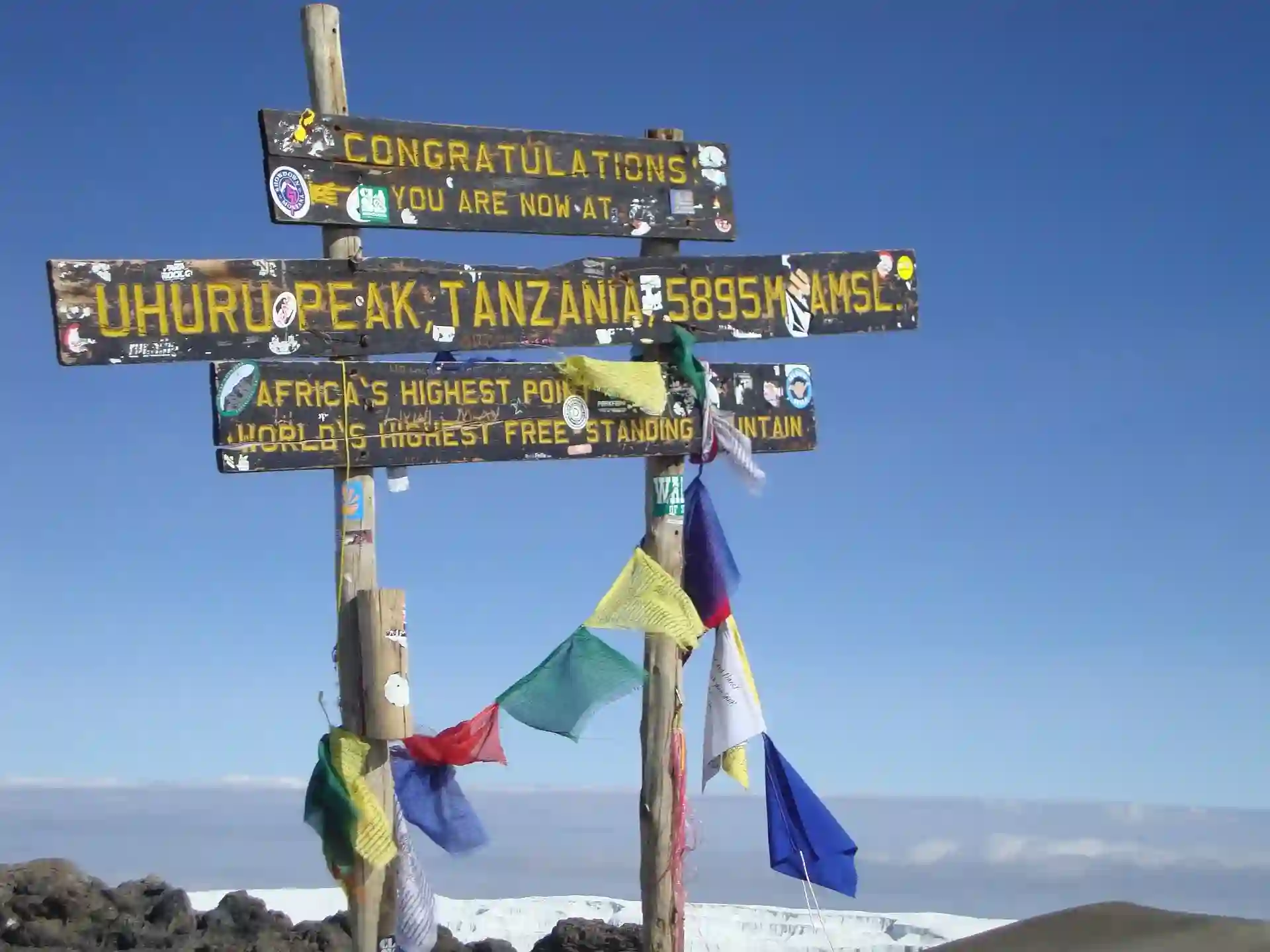
Uhuru Peak stands at 5,895 metres. A policy capped at 5,000 metres or even 5,500 metres leaves the highest and most demanding part of the climb outside its stated range.
Using a 6,000-metre minimum creates a clear margin above the summit and matches the advice already given in Tanzania Inside Safari's complete Kilimanjaro packing list and Kilimanjaro cost guide.
Do not rely on a telephone representative saying that "trekking is included" without discussing altitude. Ask whether the limit refers to the highest point reached, the highest sleeping altitude or another definition. Keep the reply with your policy documents.
Altitude Illness Must Be Covered Explicitly
Altitude is Kilimanjaro's principal medical risk. Fitness does not make a climber immune. AMS can progress, and HACE or HAPE can become life-threatening.
Your policy should not treat altitude illness as an excluded foreseeable event simply because reaching high altitude is the purpose of the trip. Ask specifically about AMS, HACE and HAPE, including emergency oxygen, treatment, evacuation and hospital care.
The medical rule remains independent of insurance: a climber with altitude-illness symptoms should not ascend to a higher sleeping altitude. Worsening AMS, suspected HACE or suspected HAPE requires descent. Wilderness Medical Society guidance identifies descent as the best treatment for HAPE and states that oxygen or a portable hyperbaric chamber must not delay descent when it is required. Read the Wilderness Medical Society altitude summary.
What the Kilimanjaro Park Rescue Fee Means
Kilimanjaro National Park charges a rescue fee as part of the visitor tariff. It is normally included within a properly itemised climb price.
The name can be misleading. Paying a park rescue fee does not automatically insure every expense arising from an emergency. It should not be assumed to cover:
- All guide, porter or specialist rescue costs
- A private helicopter or air ambulance
- Road ambulance or private vehicle transfer
- Hospital consultation, tests, medication or admission
- Extra hotel nights after an early descent
- New flights, missed connections or a companion's costs
- Medical evacuation to another country
- Repatriation to your country of residence
Treat the park charge as one part of the mountain system, not as a substitute for a policy issued in your name. Ask your operator what is included in the climb price and ask the insurer what it will pay or arrange.
How an Emergency Evacuation May Unfold
No two incidents follow an identical sequence. The climber's symptoms, ability to walk, altitude, route, weather, time of day and available communications all influence the response.
1. Recognition and Guide Assessment
A climber or teammate reports a problem, or a guide notices a change in pace, breathing, balance, behaviour or ability to eat and drink. The guide assesses symptoms and function, checks the immediate hazards and may use pulse and oxygen-saturation readings as supporting information.
One pulse-oximeter number is not a pass or fail test. Cold fingers, movement, circulation and device limitations can affect readings. Decisions must consider the whole clinical picture.
2. Immediate Treatment and a Stop to Ascent
The guide may stop the climb, protect the person from cold, provide first aid and administer emergency oxygen when indicated. Oxygen can support a sick climber while descent is organised, but temporary improvement does not prove acclimatisation and does not make continued ascent safe.
The CDC identifies Kilimanjaro as a high-altitude destination and explains that the risks are shaped by altitude, rate of ascent and individual susceptibility. Read the CDC Yellow Book high-altitude guidance.
3. Descent from the Mountain
If the climber is stable and able to walk, a qualified guide may escort them downward. The team's staffing should allow an early descent without leaving the remaining group unsupervised.
If walking is unsafe or impossible, the guide can request additional assistance and use the available mountain-rescue method. Depending on the route and location, this may involve a stretcher or other ground-evacuation equipment. The aim is to reduce altitude and reach a point accessible to vehicle or further medical transport.
4. Transfer to Medical Care
From a road-accessible point or park gate, the climber may be transferred by vehicle or ambulance to a clinic or hospital, usually in the Kilimanjaro region. The appropriate facility depends on the condition and current capability, not simply on which hospital is closest.
Further transfer by road or air may be considered if a higher level of care is required. This is different from extracting a person directly from a mountain camp.
5. Insurer and Assistance Coordination
The operator, patient, companion or family may contact the insurer's 24-hour assistance team. The assistance company may request medical reports, confirm policy benefits, select a facility, issue a payment guarantee or approve further transport.
In an immediately life-threatening situation, essential first aid and descent should begin without waiting for administrative approval. Once communication is possible, follow the insurer's instructions and document the incident carefully.
When Might a Helicopter Be Used?
A helicopter can shorten part of an evacuation in suitable circumstances, but it is one option within a larger plan - not an entitlement, an ambulance permanently waiting at camp or proof that a rescue will be fast.
Whether a flight is possible can depend on:
- Cloud, rain, wind, visibility and rapidly changing mountain weather
- Daylight and the operator's flight rules
- The climber's exact location and the availability of a safe landing or pickup area
- Aircraft performance at high altitude
- The patient's condition and whether flight is medically appropriate
- Aircraft, pilot and rescue-team availability
- Communication, authorisation and payment arrangements
- Park and aviation procedures in force at the time
The aircraft may not be able to reach the casualty's current position. A climber could first need to descend on foot or be moved by stretcher to a lower or safer pickup point. Poor weather can close the helicopter option completely, making a ground evacuation essential.
For that reason, avoid any policy or operator promise that turns "helicopter cover" into "guaranteed helicopter rescue". Insurance can cover an eligible cost; it cannot make an aircraft fly in unsafe conditions.
Ground Evacuation Is Not a Second-Rate Plan
Descent is the key intervention for serious altitude illness because lower elevation increases available oxygen. Walking with support may be fastest for a stable climber. For someone unable to walk safely, trained personnel may organise stretcher movement and a vehicle transfer from the nearest accessible point.
Ground evacuation may also be necessary after darkness, in poor visibility, during strong winds or from terrain that cannot support a helicopter operation. It can be physically demanding and slower, which is why early symptom reporting matters: acting before a climber deteriorates preserves more options.
Never hide symptoms while waiting for a helicopter solution. A timely escorted descent can prevent a manageable illness from becoming a critical rescue.
Common Emergency Scenarios
| Situation | Likely first response | Possible evacuation path |
|---|---|---|
| Mild, stable AMS symptoms | Stop ascent, assess, rest at the same altitude where appropriate | Escorted walking descent if symptoms worsen or do not resolve |
| Worsening AMS or inability to function normally | Treatment, no further ascent and prompt descent | Guide-assisted descent; stretcher support if walking is unsafe |
| Suspected HACE or HAPE | Emergency oxygen when available and urgent descent with minimal exertion | Ground rescue or helicopter if medically appropriate and operationally possible, followed by hospital care |
| Fall, fracture or serious soft-tissue injury | Protect, stabilise, control pain and assess movement risks | Carry or stretcher to access point; helicopter may be considered where conditions permit |
| Severe abdominal, cardiac, respiratory or neurological symptoms | First aid, urgent medical consultation and evacuation | Fastest safe combination of descent, vehicle, ambulance and higher-level transfer |
| Severe weather or darkness | Shelter, stabilise and begin the safest available response | Ground evacuation may be the only immediate option |
These examples are explanatory, not a fixed protocol. The lead guide and medical or rescue professionals must adapt the plan to the actual emergency.
Who Decides Whether You Need Evacuation?
On the mountain, the lead guide directs the immediate safety response and has authority to stop an ascent. Medical professionals, park or rescue personnel, transport providers and the insurer's assistance team may then contribute to treatment and transport decisions.
These decisions are related but different:
- The guide decides what immediate mountain action is necessary.
- A clinician advises on treatment, facility and medical transport needs.
- A rescue or aviation provider decides what operation is safe and possible.
- The insurer decides whether an expense meets the policy terms and authorisation rules.
A climber cannot safely overrule a necessary descent because the summit is close. Equally, holding insurance does not allow a traveller to demand an unsafe flight or choose the most expensive transport when a medically suitable alternative is available.
Authorisation, Direct Payment and Upfront Costs
Some insurers arrange direct payment or issue a guarantee to a hospital or transport provider. Others reimburse the traveller after a claim. In some cases, a provider may require a deposit, card payment or proof of cover before non-immediate services proceed.
Ask before travelling:
- Must evacuation or hospital admission be pre-authorised?
- What should happen if there is no signal or the situation is immediately life-threatening?
- Does the insurer pay providers directly or reimburse the traveller?
- Is a guarantee of payment available around the clock?
- What excess, co-payment or benefit cap applies?
- Must a particular assistance company, hospital or transport provider be used?
Carry a payment card and access to emergency funds even when well insured. This is financial preparedness, not an admission that the claim will be rejected.
Pre-Existing Conditions and Medical Disclosure
Failure to disclose a relevant condition, symptom, medication change, pending test or recent treatment can affect a claim. Answer every medical question accurately and retain the insurer's written acceptance or endorsement.
Seek a travel-health consultation if you have heart or lung disease, a neurological condition, diabetes, sleep apnoea, a blood disorder, previous severe altitude illness, recent surgery, pregnancy or regular prescription medication.
Do not assume that a doctor's approval to trek creates insurance cover. Medical fitness and contractual cover are separate questions. Similarly, an insurer accepting a condition does not mean the climb is medically suitable for you.
Cancellation and Early Descent
Medical and evacuation protection is the priority, but cancellation and curtailment benefits can also be important because Kilimanjaro bookings involve flights, park arrangements, hotels and crew commitments.
Check which reasons are insured and how much of your non-refundable trip cost is protected. A change of mind, fear of altitude, poor summit weather or failure to reach the summit is not normally an insured cancellation event unless the wording specifically says otherwise.
If you descend early, extra transfers, accommodation, meals and flight changes may fall outside the climb package and may or may not be insured. Ask the operator and insurer about these costs before departure. No policy should be expected to pay simply because a climber chose to stop for a non-medical reason.
Questions to Ask the Insurer in Writing
Use this checklist when comparing policies:
Does this policy cover a guided, non-technical trek on Mount Kilimanjaro in Tanzania to 5,895 metres?
Is the altitude limit at least 6,000 metres, and how is that altitude measured?
Are AMS, HACE and HAPE covered for treatment and evacuation?
Are mountain search and rescue covered, or only medical evacuation after rescue?
Are stretcher, ground vehicle, ambulance and medically necessary helicopter costs covered?
Is helicopter cover valid at the maximum altitude of the trek?
Who determines medical necessity and chooses the transport provider?
Is pre-authorisation required, and what is the procedure when delay would endanger life?
Is there a 24-hour assistance number that works from Tanzania?
Will you pay the provider directly or reimburse me later?
What limits, sub-limits, excesses or exclusions apply to rescue, evacuation and repatriation?
Have my declared medical conditions, medication and pending investigations been accepted?
Does current government travel advice affect the policy?
Are cancellation, curtailment and additional accommodation covered after an insured emergency?
What evidence will be required if I make a claim?
If an answer is important, keep it in writing. A sales summary or chat message should be saved with the final policy schedule and wording.
Insurance Red Flags
Be cautious when:
- The policy has no clear altitude limit.
- Trekking is covered but mountaineering is excluded without a definition.
- Helicopter evacuation is advertised but search and rescue are excluded.
- Altitude illness is not addressed.
- Medical evacuation is covered only after admission to a hospital, leaving mountain extraction unclear.
- Adventure cover applies only to day walks or low-altitude routes.
- A high benefit limit is shown but a much lower rescue sub-limit applies.
- The salesperson will not confirm Kilimanjaro in writing.
- A bank-card or annual policy is assumed to cover the climb without checking activity terms.
- A rescue membership is presented as if it includes every medical and travel loss.
- The cover begins after departure, leaving earlier cancellation risk uninsured.
Documents to Prepare Before the Climb
Provide the information requested by your operator before arrival and carry both digital and offline copies.
- Insurer's name and policy number
- Full policy wording, certificate, schedule and adventure-sports endorsement
- 24-hour emergency-assistance telephone number
- Written confirmation of Kilimanjaro and 6,000-metre cover
- Emergency contact at home
- Passport identification page
- Relevant medical summary, allergies and medication list
- Treating doctor's details where appropriate
- Payment card and access to emergency funds
Save documents on your phone for offline use, place a paper copy in a waterproof pouch and give the key details to a travelling companion. Leave another copy with family or a trusted contact at home.
If You Need to Make a Claim
Contact the insurer as soon as reasonably possible and follow its assistance instructions, unless doing so would delay urgent treatment or descent. Keep:
- The incident date, time, location and description
- Guide and operator reports
- Medical notes, diagnosis, prescriptions and discharge documents
- Original invoices, receipts and proof of payment
- Transport and evacuation records
- Emails, messages and call-reference numbers from the assistance company
- Evidence of unused bookings, rebooked flights and additional accommodation
- A police or baggage report where the policy requires one
Do not discard originals until the claim is settled. Ask the insurer how to submit documents and whether translations or medical certificates are required.
Tanzania Inside Safari's Safety and Evacuation Approach
At Tanzania Inside Safari, prevention and early action are central to mountain safety. Our Kilimanjaro operating approach includes:
- Local guide leadership with Wilderness First Responder-trained personnel
- A controlled "pole pole" pace and route planning that supports acclimatisation
- Daily symptom and health reviews
- Pulse-oximeter readings interpreted alongside symptoms, behaviour and function
- Emergency oxygen and group first-aid equipment
- Guide coverage that allows an unwell climber to descend under supervision
- Clear authority for the lead guide to slow, stop or turn around a climber
- Communication and an evacuation plan appropriate to the route
- Coordination with park, medical, transport and insurance contacts when required
We ask climbers to arrange suitable insurance and provide their policy and emergency-assistance details before the trek. Insurance does not change the guide's duty to act. If continuing is unsafe, the priority is treatment and descent - not protecting a summit attempt.
Third-party rescue, transport, aviation and medical services remain subject to conditions, availability, authorisation and their own terms. We cannot guarantee a particular aircraft, response time, hospital, medical outcome or insurance decision.
Read more about our Mount Kilimanjaro guides and safety approach.
Final Pre-Departure Checklist
- [ ] Policy covers Tanzania and the full trip dates
- [ ] Guided Kilimanjaro trekking is named or confirmed
- [ ] Maximum altitude is at least 6,000 metres
- [ ] AMS, HACE and HAPE are covered
- [ ] Emergency medical treatment has an adequate limit
- [ ] Ground evacuation and ambulance transport are covered
- [ ] Search and rescue terms have been checked
- [ ] Medically necessary helicopter evacuation is covered
- [ ] Medical repatriation is covered
- [ ] Pre-existing conditions and medication are declared
- [ ] Cancellation and curtailment limits match the booking risk
- [ ] Excesses, sub-limits and exclusions are understood
- [ ] Pre-authorisation procedure is understood
- [ ] Policy number and 24-hour assistance number are saved offline
- [ ] Operator, companion and home contact have the essential details
- [ ] Paper and digital policy copies are packed
- [ ] Payment card and emergency funds are accessible
Plan a Well-Protected Kilimanjaro Climb
Insurance cannot remove the risks of altitude, weather or injury. It can, however, prevent an emergency from becoming a major financial crisis and give the operator, medical team and family a clearer route to assistance.
Send us your intended route, climbing dates, country of residence and any questions your insurer has about the itinerary. We can explain the climb and our mountain procedures, while your insurer must confirm the cover and policy terms.
Practical and medical disclaimer: This article provides general information, not medical, legal or insurance advice. Policy terms, park procedures, rescue providers, medical facilities and aviation availability can change. Coverage depends entirely on the policy issued to you and the facts of any claim. Obtain written confirmation from your insurer, consult a qualified travel-health professional and follow your lead guide's instructions during the climb.