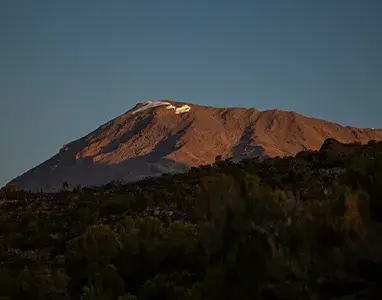



Kilimanjaro Summit Night: What to Expect
A practical guide to the schedule, route approaches, cold, altitude, equipment and long descent from Africa’s highest peak.

Kilimanjaro Summit Night at a Glance
- Most climbers wake between approximately 10:00 p.m. and 11:00 p.m.
- The summit attempt usually begins between 11:00 p.m. and midnight.
- You may climb for six to eight hours before reaching Uhuru Peak.
- The complete ascent and descent can take approximately 12-17 hours.
- Temperatures may fall below -10°C, with wind making conditions feel considerably colder.
- Water, snacks and electronic batteries can freeze if they are not protected.
- You will normally reach either Stella Point or Gilman's Point before continuing to Uhuru Peak.
- Altitude, rather than technical climbing, is the main difficulty.
- Reaching the summit is only halfway through the day - you still have a long descent ahead.
- Your guide can stop your ascent if continuing becomes unsafe.
Times are approximate. Weather, trail conditions, route, group pace and the condition of individual climbers can all affect the schedule.
Why Does the Summit Attempt Begin at Night?
There are several practical reasons for beginning the ascent before midnight.
Starting at night gives climbers enough time to reach the summit and descend to a lower, safer sleeping altitude during daylight. It also creates the possibility of reaching the crater rim around sunrise, although the exact timing cannot be guaranteed.
Early-morning conditions can sometimes be clearer and more stable than conditions later in the day. Frozen ground may also be firmer than loose or wet terrain warmed by the sun. However, Kilimanjaro's weather is unpredictable, and strong winds, snow, fog or cloud can occur at any time.
The final departure time is determined by your guides after considering:
- Your route and high camp
- The group's walking pace
- Weather and trail conditions
- The health of each climber
- The number of guides and assistant guides available
- The expected time required for the descent
The objective is not simply to arrive for sunrise. It is to complete the entire summit day safely.
Kilimanjaro's Main Summit Approaches
The route you choose determines your high camp, the side of the mountain you climb and the point where you first reach the crater rim.
| Routes | High camp | First crater-rim point | General summit progression |
|---|---|---|---|
| Machame, Lemosho and Umbwe | Barafu Camp, approximately 4,670 metres | Stella Point, 5,756 metres | Barafu - Stella Point - Uhuru Peak - Barafu - Mweka |
| Marangu and Rongai | Kibo Hut/Camp, approximately 4,700 metres | Gilman's Point, 5,685 metres | Kibo - Gilman's Point - Uhuru Peak - Kibo - Horombo |
| Northern Circuit | School Hut, approximately 4,750-4,800 metres | Gilman's Point, 5,685 metres | School Hut - Gilman's Point - Stella Point - Uhuru Peak - Barafu - Mweka |
Summit from Barafu Camp
Climbers following the Machame Route, Lemosho Route or Umbwe Route normally begin from Barafu Camp.
The trail climbs steeply through the night towards Stella Point. The surface includes rock, volcanic dust and loose scree. From Stella Point, the route follows the crater rim to Uhuru Peak.
Although the remaining distance from Stella Point may appear short, it can take another one to two hours because you are walking above 5,700 metres.
After visiting Uhuru Peak, climbers return towards Stella Point and descend to Barafu Camp. Following food and a short rest, the descent continues to Mweka Camp.
Summit from Kibo Camp
Climbers on the Marangu Route and Rongai Route normally make their summit attempt from Kibo Hut or Kibo Camp.
The night ascent crosses steep, loose volcanic terrain towards Gilman's Point on the crater rim. From Gilman's Point, climbers continue around the rim towards Stella Point and then Uhuru Peak.
The distance from Gilman's Point to Uhuru Peak is demanding because it remains entirely at extreme altitude. After the summit, climbers return to Kibo before descending towards Horombo Hut.
Summit from School Hut
The Northern Circuit Route generally approaches the summit from School Hut.
The ascent joins the eastern crater-rim approach and reaches Gilman's Point before continuing towards Stella Point and Uhuru Peak. The descent normally follows the southern side of the mountain through Barafu and onwards to Mweka Camp.
No summit approach should automatically be described as easy. Each involves cold, darkness, substantial altitude gain and a long descent.
What Happens at High Camp Before Summit Night?
The summit-night routine begins as soon as you arrive at your final high camp.
Your guides will encourage you to eat, drink, organise your equipment and rest. Do not expect a normal night's sleep. At this altitude, sleep may be light or interrupted, and some climbers only manage to rest quietly.
A typical high-camp schedule includes:
Arriving and registering at camp
Changing into dry clothing
Eating and drinking
Completing a health assessment
Attending the summit briefing
Preparing clothing, water, snacks and equipment
Resting for several hours
Waking for a light meal and final equipment check
Beginning the ascent around 11:00 p.m. or midnight
Your guide may adjust this schedule according to conditions.
Your Summit-Night Health Check
Before departure, your guide will assess whether you are well enough to continue.
The assessment may include:
- Asking about headache, nausea, dizziness and appetite
- Checking whether you have been eating and drinking
- Observing your breathing, balance and behaviour
- Measuring your pulse and oxygen saturation
- Comparing your condition with previous days
- Evaluating your walking performance
- Checking for signs of exhaustion, dehydration or cold injury
A pulse oximeter provides useful supporting information, but one oxygen-saturation reading cannot determine whether someone is safe to climb. Cold fingers, movement, poor circulation and measurement technique can affect the result.
Symptoms and overall condition are more important than chasing a particular number.
A Typical Summit-Night Timeline
Every climb is different, but the following provides a general picture:
| Approximate time | What normally happens |
|---|---|
| Afternoon | Arrive at high camp, eat, drink and organise equipment |
| Early evening | Health assessment, summit briefing and early dinner |
| Approximately 6:00-10:00 p.m. | Rest or sleep |
| Approximately 10:00-11:00 p.m. | Wake, dress and have a light meal |
| Approximately 11:00 p.m.-midnight | Begin the summit attempt |
| Approximately 4:00-7:00 a.m. | Reach Stella Point or Gilman's Point |
| Approximately 6:00-9:00 a.m. | Reach Uhuru Peak, depending on pace and conditions |
| Morning | Descend to Barafu, Kibo or another high camp |
| Late morning or afternoon | Eat, rest briefly and continue to a lower camp |
| Afternoon or evening | Arrive at Mweka or Horombo Camp |
This timeline is illustrative, not a promise. Some climbers reach the crater rim before sunrise, while others arrive later.
What Does the Night Ascent Feel Like?
The summit climb is deliberately slow. You will normally walk in a close line behind your guide, taking small, controlled steps.
For several hours, your world may consist mainly of:
- The beam of your headlamp
- The boots of the climber ahead
- The sound of breathing and trekking poles
- Repeated switchbacks across dark volcanic slopes
- Short stops for water, food and clothing adjustments
- Your guide reminding everyone to continue "pole pole"
Progress can feel frustratingly slow. This pace is intentional. Walking too quickly wastes energy, increases heat and moisture inside your clothing and can make it harder to maintain steady breathing.
The darkness can make judging distance difficult. Lights above you may appear close but remain several hours away. Avoid using other groups as a measure of your own progress.
Reaching Stella Point or Gilman's Point
Reaching the crater rim is an important achievement, but it is not the same as reaching Uhuru Peak.
At Stella Point or Gilman's Point, your guide will evaluate:
- Your altitude symptoms
- Your coordination and mental state
- Your remaining energy
- The weather and wind
- Your body temperature
- The time required to reach Uhuru and return safely
Some climbers feel encouraged when daylight arrives. Others find the crater-rim traverse surprisingly difficult because the trail remains close to 6,000 metres.
Do not assume that reaching the rim means you must continue. Your guide may decide that descending is the safest course.
How Cold Is Kilimanjaro Summit Night?
Pre-dawn temperatures in the summit zone commonly fall to approximately -5°C to -15°C. Conditions can be colder, particularly when strong winds are present.
Wind chill increases heat loss and can make exposed skin vulnerable to frostbite. Snow, ice, fog and blowing volcanic dust are also possible throughout the year.
You may feel warm while climbing and become cold very quickly during a break. Your clothing must therefore allow you to regulate temperature without exposing yourself unnecessarily.
For a detailed seasonal explanation, see our Mount Kilimanjaro weather guide.
What Should You Wear?
A flexible layering system is more effective than relying on one very heavy garment.
A typical summit-night clothing system includes:
- Moisture-wicking thermal base layers
- A fleece or insulating mid-layer
- A warm down or synthetic insulated jacket
- Waterproof and windproof outer jacket
- Thermal leggings
- Trekking trousers
- Waterproof outer trousers
- Warm hat or balaclava
- Neck gaiter or face covering
- Thin liner gloves
- Insulated outer gloves or mittens
- Warm trekking socks
- Waterproof, broken-in trekking boots
- Gaiters when conditions require them
Avoid cotton because it absorbs moisture, dries slowly and loses insulating performance when wet.
Do not wait until you are extremely cold before adding insulation. At the same time, avoid excessive sweating during the early ascent. Your guide can help you adjust layers before conditions become uncomfortable.
See our complete Kilimanjaro packing list for detailed equipment recommendations.
What Should Be in Your Daypack?
Porters carry your main duffel, but it will not be accessible during the ascent. Everything you need between high camp and the summit must be in your daypack.
Essential summit-night items include:
- Waterproof and windproof layers
- Insulated jacket
- Spare gloves
- Warm hat and face covering
- Headlamp
- Spare headlamp batteries
- Insulated water bottles
- High-energy snacks
- Sunglasses
- Sunscreen and lip balm
- Personal medication
- Trekking poles
- Camera or phone
- Waterproof pack liner or dry bags
- A small quantity of toilet paper and waste bags
Cold drains batteries quickly. Keep spare batteries, your phone and other small electronics close to your body whenever possible.
Our guide to what to carry in your Kilimanjaro daypack explains how to organise these items.
Food Before and During the Summit Attempt
At high altitude, appetite often decreases even though your body needs energy.
Dinner at high camp should be familiar, carbohydrate-rich and relatively easy to digest. Suitable foods may include rice, pasta, potatoes, bread, soup or porridge.
Before departure, you will normally be offered a light meal or snack. Do not force an unusually large portion, but try to consume some energy before beginning.
Carry snacks that you already know you can tolerate, such as:
- Soft energy bars
- Dried fruit
- Dates or raisins
- Sweets or gummy chews
- Biscuits
- Nut-butter portions
- Trail mix
- Pretzels or crackers
- Energy gels that you tested during training
Bars and chocolate can become extremely hard when frozen. Keep the snack you intend to eat next inside a jacket pocket.
You can find more practical nutrition advice in our guide to what to eat on Kilimanjaro.
Drinking Water Without Letting It Freeze
Hydration reservoirs and exposed drinking tubes can freeze during summit night. Carry at least one insulated wide-mouth bottle as a backup.
Your guide may recommend:
- Filling bottles with warm water
- Using insulated bottle covers
- Carrying bottles upside down so ice forms away from the opening
- Wrapping bottles in spare clothing
- Blowing water back out of a hydration tube after drinking
- Keeping bottles inside rather than outside your pack
Drink small amounts regularly, but do not force excessive quantities. Overhydration does not prevent altitude sickness and can itself be dangerous.
Breaks and Toilet Arrangements
Summit-night breaks are generally short. Long stops allow the body to cool rapidly and can make restarting difficult.
During a break:
- Put on additional insulation before becoming cold
- Drink and eat something
- Check your fingers and toes
- Adjust gloves, footwear or layers
- Tell your guide about symptoms
- Keep your headlamp on and remain with the group
Toilets are basic and limited above high camp. You may need to use designated mountain toilets or follow your guide's instructions for responsible toileting away from the trail.
Carry toilet paper, hand sanitiser and a small waste bag in an accessible part of your pack.
Altitude Symptoms During Summit Night
Some discomfort is expected during a high-altitude summit attempt. However, symptoms must never be hidden or dismissed.
| What you experience | What you should do |
|---|---|
| Cold, tiredness or breathlessness while walking | Tell your guide and follow pacing, clothing and rest instructions |
| Headache, nausea, dizziness, vomiting or unusual weakness | Report it immediately for assessment |
| A sudden decline in walking performance | Stop and inform your guide |
| Confusion, unusual behaviour or inability to walk steadily | Treat as an emergency requiring urgent descent |
| Breathlessness while resting, chest congestion or a worsening wet cough | Treat as a possible emergency requiring descent and medical care |
| Numb, pale or painful fingers, toes or exposed skin | Report immediately because of possible cold injury |
According to the CDC's high-altitude guidance, climbers with altitude-illness symptoms should not continue to a higher sleeping altitude, and worsening symptoms require descent.
Confusion, loss of coordination and breathlessness at rest are emergency warning signs.
Can Your Guide Turn You Around?
Yes. The lead guide is responsible for the safety of the expedition and may stop your ascent even if you want to continue.
Reasons can include:
- Worsening altitude symptoms
- Confusion or loss of coordination
- Excessive breathlessness
- Severe exhaustion
- Inability to eat or drink
- Dangerous cold exposure
- Suspected frostbite
- Severe weather
- Inadequate progress for a safe descent
- Equipment failure
- Any condition that makes continuing unsafe
When guide coverage allows, the team may divide so one climber can descend with an assistant guide while others continue. This depends on the number of guides, group size and circumstances.
Read more about the responsibilities of Mount Kilimanjaro guides.
How Emergency Oxygen Is Used
Emergency oxygen may be used to support a sick climber while descent or evacuation is arranged.
Receiving oxygen does not mean that someone has acclimatized or is safe to continue climbing. It must never be used to hide worsening symptoms so a climber can continue towards the summit.
Small recreational oxygen cans do not contain enough oxygen to provide reliable treatment for serious altitude illness.
At Tanzania Inside Safari, oxygen is safety equipment - not a routine summit aid.
Arriving at Uhuru Peak
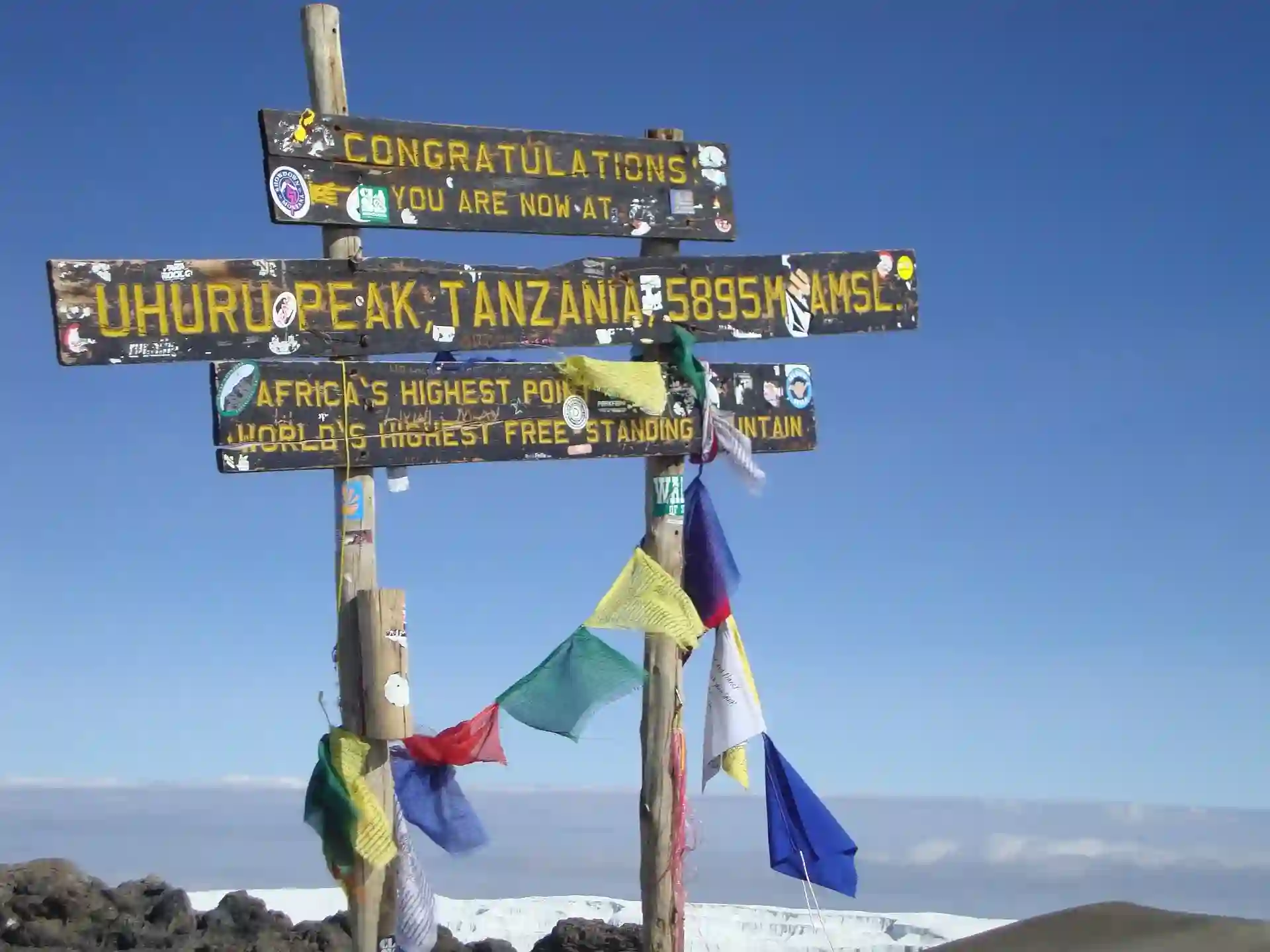
Uhuru Peak stands at 5,895 metres above sea level. When conditions allow, climbers normally have time for photographs and a brief opportunity to appreciate the summit.
The stop is usually short because:
- The altitude places considerable stress on the body
- Climbers cool rapidly when standing still
- Weather can deteriorate
- Other groups may be waiting
- A long descent remains
Put on sunglasses and sunscreen when daylight arrives. Ultraviolet exposure is intense at altitude and can be amplified by snow.
Your guide may shorten or cancel the summit stop if conditions are unsafe.
The Descent Is Part of the Challenge
Many climbers concentrate so completely on reaching Uhuru Peak that they underestimate the descent.
By this stage, you may be tired, hungry, dehydrated and less coordinated. Loose scree places additional pressure on the knees and ankles, while soft snow or ice can alter the trail.
Trekking poles are particularly valuable during the descent.
Depending on your route, you will return to Barafu, Kibo or another high camp for food and a short rest. You then continue several more hours to a lower camp.
Do not remove essential layers, stop drinking or mentally switch off just because you have reached the summit. The expedition is not complete until everyone has descended safely.
What If You Do Not Reach Uhuru Peak?
Turning around is not failure. It is a responsible decision when your health, pace, weather or equipment makes continuing unsafe.
Reaching Stella Point or Gilman's Point is already a substantial achievement. More importantly, recognising when to descend protects your ability to recover and return home safely.
Altitude affects people differently. Fitness, determination and previous trekking experience cannot guarantee a summit.
No summit photograph is worth ignoring dangerous symptoms.
Mental Strategies for Summit Night
Summit night becomes more manageable when you divide it into small, immediate tasks.
Try to:
- Follow the pace set by your guide
- Concentrate on steady breathing
- Focus on the next few steps rather than the summit
- Eat and drink during scheduled breaks
- Keep your hands, feet and face protected
- Communicate symptoms honestly
- Avoid comparing yourself with faster climbers
- Accept that progress will feel slow
- Save emotional and physical energy for the descent
Determination is useful, but it must be balanced with honest self-assessment and respect for your guide's decisions.
Frequently Asked Questions
How long does Kilimanjaro summit night take?
The ascent to Uhuru Peak commonly takes approximately six to eight hours. The complete journey from high camp to the summit, back to high camp and onwards to a lower camp can take approximately 12-17 hours.
Actual times vary significantly.
Is the summit climb technically difficult?
Standard Kilimanjaro routes do not normally require technical mountaineering or rope skills. Nevertheless, steep loose ground, snow, ice, darkness, cold and extreme altitude make the summit attempt physically serious.
Will I sleep before summit night?
You will normally have several hours allocated for rest, but many climbers sleep lightly or not at all. Resting quietly still helps even if you cannot sleep.
How cold can summit night become?
Temperatures in the summit zone commonly fall to approximately -5°C to -15°C before dawn and may become colder. Wind chill can make conditions feel substantially more severe.
Do I need a headlamp during a full moon?
Yes. Moonlight can disappear behind cloud, terrain or other climbers, and you will still need a headlamp for preparing equipment and navigating camp. Carry spare batteries.
Are there toilets on the summit route?
Facilities are limited and basic. Your guide will explain where toilets are available and what to do between facilities.
Can I use my phone on the summit?
You can carry a phone for photographs, but cold temperatures can drain its battery rapidly. Keep it protected close to your body. Mobile coverage is unreliable and should never be treated as an emergency communication system.
Can I continue if I develop a headache?
Tell your guide immediately. A headache can result from several causes, but after gaining altitude it must be assessed alongside nausea, dizziness, fatigue, appetite, coordination and walking performance.
Do not self-diagnose or hide symptoms to protect your summit attempt.
Our Kilimanjaro Summit-Night Approach
At Tanzania Inside Safari, summit-night preparation begins before the final high camp. We select itineraries that provide appropriate acclimatization time and monitor every climber throughout the ascent.
Our approach includes:
- Professional local mountain guides
- Wilderness First Responder-trained guide leadership
- Controlled "pole pole" pacing
- Daily symptom and health assessments
- Pulse-oximeter readings interpreted alongside clinical signs
- Summit briefings and equipment checks
- Emergency oxygen and mountain first-aid equipment
- Sufficient guide coverage for the group
- Early intervention when symptoms appear
- Descent whenever continuing becomes unsafe
We cannot guarantee that every climber will reach Uhuru Peak. Altitude, health and mountain conditions are unpredictable.
What we can promise is careful preparation, honest advice and decisions that place your safety above summit statistics.
Prepare for Your Kilimanjaro Summit Night
A successful summit night begins with the right route, sufficient acclimatization time, suitable equipment and a professional mountain team.
Tell us when you plan to climb, your preferred route, previous altitude experience and whether you are travelling alone or with a group. Our Kilimanjaro team will help you choose an itinerary and prepare for the mountain's most demanding day.