
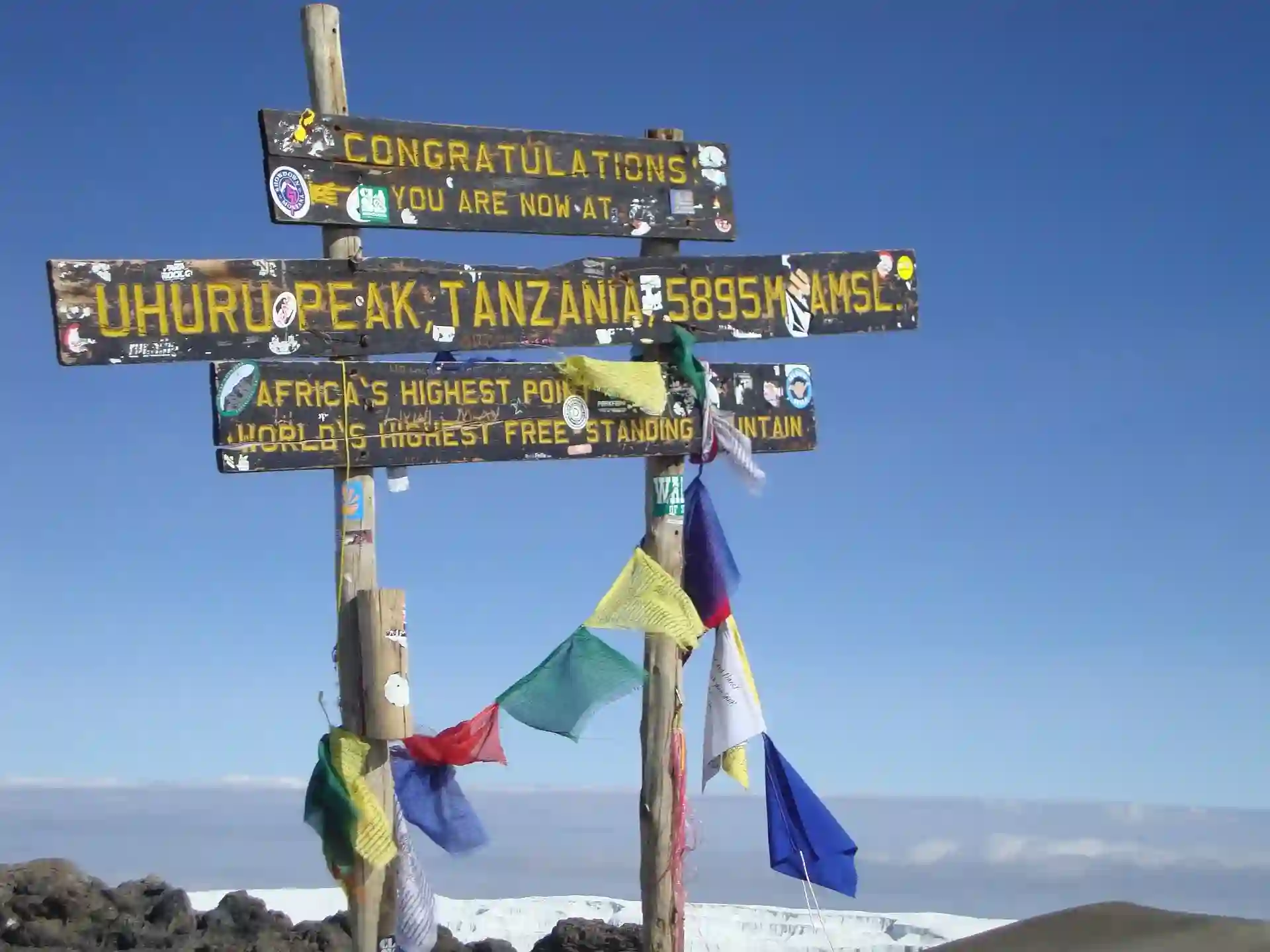


Kilimanjaro Camps and Huts: Where You Sleep on Every Route
A route-by-route guide to sleeping elevations, tents, Marangu dormitories, high camps and the facilities climbers should expect.
Kilimanjaro Accommodation at a Glance
- Marangu is the standard hut route. Climbers sleep in shared dormitories at Mandara, Horombo and Kibo.
- The other established routes use tents. This includes Lemosho, Machame, Northern Circuit, Rongai, Umbwe and Shira.
- Tanzania Inside Safari includes mountain camping equipment on its camping itineraries, including sleeping tents, mattresses, chairs and tables.
- A private portable toilet is included on our camping treks. Public park toilets may still be encountered at camps and along busy sections of trail.
- There are no normal hotel showers on the mountain. Warm water for basic washing may be provided when conditions and water availability allow.
- Do not expect mains electricity or reliable charging. Bring sufficient power banks and keep batteries warm.
- Camp elevations are approximate. Park signs, maps, GPS devices and operator itineraries sometimes differ by several metres.
- The camp sequence matters for acclimatisation. A longer itinerary generally creates a more gradual sleeping-altitude profile than a compressed climb.
- High camp is mainly a preparation and rest stop. Most climbers eat, organise equipment and sleep only briefly before the midnight summit departure.
- Your confirmed itinerary controls. Camps can change because of route design, weather, park instructions, group condition or operational needs.
Camping Routes Versus the Marangu Huts
Published route guidance from Tanzania Inside Safari identifies Marangu as the only normal route that avoids camping; its huts are basic and dormitory-style. Leading Kilimanjaro outfitters describe the same core distinction: standard nights on the other routes are spent in tents, while Marangu uses shared huts. Compare Tanzania Inside Safari's route overview.
| Accommodation type | Routes | What the climber should expect |
|---|---|---|
| Camping | Lemosho, Machame, Northern Circuit, Rongai, Umbwe and Shira | Sleeping tents at designated camps, a crew dining area, basic park facilities and a private portable toilet on Tanzania Inside Safari camping treks |
| Huts | Marangu | Shared dormitory bunks at Mandara, Horombo and Kibo, communal facilities, limited privacy and no hotel-style services |
| Specialist arrangements | Crater Camp or non-standard variations | Separate planning, permits, equipment and safety assessment; never assume these are included in a normal route price |
The words camp and hut are often used inconsistently. For example, Barafu is commonly called Barafu Camp, while Kibo may appear as Kibo Hut or Kibo Camp. School Hut is usually the summit-base area for Northern Circuit groups, but camping itineraries normally use tents there. Always read the accommodation line in the itinerary rather than interpreting the place name.
What a Camping Camp Normally Contains
By the time the trekking group reaches camp, porters will usually have gone ahead to establish the site. Weather, trail conditions and the group's pace can sometimes affect the order of arrival, but a normal camping setup includes:
- Sleeping tents for the climbers
- Sleeping mattresses supplied as part of the mountain equipment
- A dining or mess tent with tables and chairs
- A kitchen area used by the mountain cook and crew
- Crew tents and operational storage
- A private portable toilet and privacy tent on Tanzania Inside Safari camping treks
- Access to the park's shared campsite facilities where available
The campsite itself is a shared public space inside Kilimanjaro National Park. A private climb means that your trekking group and support team are private; it does not mean that the park reserves an entire campsite for you.
Confirm whether your sleeping tent is shared or single before booking. A single tent may need to be requested and may carry an extra charge. You should also confirm whether a sleeping bag is included, available to rent or must be brought from home. A tent and mattress do not replace a properly rated cold-weather sleeping bag.
Route and High-Camp Comparison
| Route | Normal accommodation | Typical summit-base site | Usual descent night |
|---|---|---|---|
| Lemosho | Tents | Barafu Camp, about 4,600-4,670 m | Mweka Camp, sometimes Millennium by schedule |
| Machame | Tents | Barafu Camp, about 4,670 m | Mweka Camp |
| Northern Circuit | Tents | School Hut/Camp, about 4,750 m | Mweka or Millennium Camp |
| Rongai | Tents on the published camping itinerary | Kibo Camp/Hut area, about 4,720 m | Horombo Camp/Huts area |
| Marangu | Shared huts | Kibo Hut, about 4,700 m | Horombo Hut |
| Umbwe | Tents | Barafu Camp, about 4,670 m | Mweka Camp |
| Shira | Tents | Usually Barafu Camp | Mweka Camp |
These are representative sequences, not a promise that every departure will use identical sites. The following route-by-route sections are based primarily on Tanzania Inside Safari's published itineraries and use approximate elevations.
Lemosho Route: Western Approach and Tent Camps
Lemosho is a camping route. Tanzania Inside Safari's published longer itinerary approaches from the west, crosses the Shira Plateau, sleeps at Moir and later joins the southern circuit before reaching Barafu.
| Night | Sleeping place | Approximate elevation and character |
|---|---|---|
| 1 | Forest Camp | 2,895 m / 9,498 ft; sheltered forest setting that can be damp or muddy |
| 2 | Shira 1 Camp | 3,505 m / 11,500 ft; open plateau with greater wind exposure |
| 3 | Moir Camp | 4,140-4,160 m / about 13,600 ft; quieter, colder high-altitude camp below Lent Hills |
| 4 | Barranco Camp | 3,976 m / 13,044 ft; dramatic position below Barranco Wall |
| 5 | Karanga Camp | 3,995 m / 13,106 ft; exposed southern-circuit camp and useful staging point |
| 6 | Barafu Camp | 4,600-4,670 m / about 15,100-15,330 ft; rocky, cold summit base |
| 7 | Mweka Camp | About 3,100-3,200 m / 10,100-10,500 ft; warmer descent camp, often reached after a very long day Some Lemosho itineraries use Shira 2 instead of Moir, add a separate Shira night or alter the approach to Barranco. This does not mean one published sequence is necessarily incorrect. Lemosho has several legitimate itinerary designs; compare the exact sleeping camps and number of mountain nights before comparing prices. See Tanzania Inside Safari's Lemosho itinerary. |
Machame Route: The Southern Camping Circuit
Machame is a fully catered camping route. The seven-day version normally includes a night at Karanga; compressed six-day versions commonly pass through Karanga without sleeping there.
| Night | Sleeping place | Approximate elevation and character |
|---|---|---|
| 1 | Machame Camp, sometimes labelled Machame Hut | 2,850 m / 9,350 ft; forest-edge campsite - the word "Hut" does not promise hut accommodation |
| 2 | Shira 2 or Shira Plateau camp | About 3,810 m / 12,500 ft; open, cooler and often windy |
| 3 | Barranco Camp | 3,976 m / 13,044 ft; reached after the Lava Tower acclimatisation day on many itineraries |
| 4 | Karanga Camp | 3,995 m / 13,106 ft; included as an overnight stop on the recommended seven-day schedule |
| 5 | Barafu Camp | About 4,670 m / 15,330 ft; summit-base camp with rocky ground and strong exposure |
| 6 | Mweka Camp | About 3,100-3,200 m / 10,100-10,500 ft; descent camp after the summit |
Lava Tower, at roughly 4,600 metres, is normally a daytime acclimatisation and lunch point on this schedule, not the night's accommodation. This is an important difference when reading a route map: not every named place visited during the day is a sleeping camp. See Tanzania Inside Safari's Machame itinerary.
Northern Circuit: Remote Northern Camps
The Northern Circuit begins on the western side and then traverses the quieter northern slopes. It is a camping route throughout Tanzania Inside Safari's published sequence. The name School Hut refers to the summit-base location; climbers on a camping itinerary should expect to sleep in tents rather than assume an indoor dormitory.
| Night | Sleeping place | Approximate elevation and character |
|---|---|---|
| 1 | Forest Camp | 2,895 m / 9,498 ft; forest camp on the western approach |
| 2 | Shira 1 Camp | 3,505 m / 11,500 ft; broad plateau setting |
| 3 | Moir Camp | About 4,140 m / 13,580 ft; remote-feeling camp below Lent Hills |
| 4 | Pofu or Buffalo Camp | About 4,020 m / 13,200 ft; northern traverse with fewer passing groups |
| 5 | Third Cave Camp | About 3,870 m / 12,700 ft; lower sleeping point after the traverse |
| 6 | School Hut/Camp | About 4,750 m / 15,600 ft; cold and exposed eastern summit base |
| 7 | Mweka or Millennium Camp | Roughly 3,070-3,660 m / 10,100-12,000 ft; descent choice depends on timing and itinerary |
Pofu means buffalo in Swahili, so Pofu Camp and Buffalo Camp may refer to the same location. Northern Circuit schedules vary more than many travellers realise: some add a night, use different northern camps or descend to a different southern camp. See Tanzania Inside Safari's Northern Circuit itinerary.
Rongai Route: Northern Camps and a Marangu-Side Descent
Rongai approaches from the north and is described by Tanzania Inside Safari as a fully catered camping route. It later joins the eastern side near Kibo and descends using the Marangu trail.
| Night | Sleeping place | Approximate elevation and character |
|---|---|---|
| 1 | Simba Camp | 2,671 m / 8,761 ft; relatively gentle first-night elevation |
| 2 | Second Cave Camp | 3,450 m / 11,319 ft; drier northern landscape |
| 3 | Kikilewa or Kikelewa Camp | 3,630 m / 11,909 ft; quieter camp with the spelling varying between maps |
| 4 | Mawenzi Tarn Camp | 4,315 m / 14,156 ft; striking basin below Mawenzi, cold after sunset |
| 5 | Kibo Camp/Hut area | 4,720 m / 15,482 ft; high summit base on the saddle |
| 6 | Horombo Camp/Huts area | 3,720 m / 12,202 ft; descent night after the summit attempt Because Kibo and Horombo are also Marangu hut locations, travellers sometimes assume a Rongai booking automatically includes bunks. Do not rely on the place name. On a published camping itinerary, expect tent accommodation unless your confirmation explicitly states otherwise. See Tanzania Inside Safari's Rongai itinerary. |
Marangu Route: Mandara, Horombo and Kibo Huts
Marangu is the one standard route on which climbers normally sleep in permanent huts instead of tents. The accommodation is practical rather than luxurious: shared dormitories, bunks and communal spaces, with little privacy and the possibility of noise from other groups.
| Night | Hut | Approximate elevation and character |
|---|---|---|
| 1 | Mandara Hut | About 2,700 m / 8,858 ft; forest-zone hut complex and first dormitory night |
| 2 | Horombo Hut | About 3,720 m / 12,205 ft; larger, busier complex on open moorland |
| 3 | Horombo Hut again | Same sleeping elevation on the six-day itinerary; the acclimatisation hike may go higher during the day |
| 4 | Kibo Hut | About 4,700 m / 15,430 ft; very basic, cold summit-base dormitory |
| 5 | Horombo Hut | About 3,720 m / 12,205 ft; descent night following the summit attempt |
The additional Horombo night is valuable because the climber sleeps at the same elevation while completing an acclimatisation walk during the day. Do not confuse the hike's high point with the overnight altitude.
What the Marangu Huts Are - and Are Not
- They provide a roof and a bunk or sleeping platform, but you still need a warm sleeping bag.
- Dormitories and communal areas are shared with other climbers.
- They do not provide private en-suite bedrooms, hotel linen, heating or room service.
- Toilets and water arrangements are communal and become more basic higher on the mountain.
- Showers, reliable electricity, Wi-Fi and device charging should not be expected.
- Earplugs, a headtorch and an organised overnight bag are especially useful.
Huts can feel reassuring in rain, but they do not make Marangu an easy route and do not reduce the effect of altitude. The route's sleeping-altitude progression and number of days remain more important than the presence of a roof. See Tanzania Inside Safari's Marangu itinerary.
Umbwe Route: Steep Approach, Tent Camps
Umbwe is a direct, steep camping route that joins the southern circuit at Barranco. Its early sleeping-altitude gain is aggressive, so it is generally better suited to experienced or already acclimatised trekkers than to first-time altitude travellers.
| Night | Sleeping place | Approximate elevation and character |
|---|---|---|
| 1 | Umbwe Cave Camp | 2,899 m / 9,514 ft; forested site after a steep first day |
| 2 | Barranco Camp | 3,975 m / 13,044 ft; a large sleeping-altitude increase from the first night |
| 3 | Karanga Camp | 3,994 m / 13,106 ft; southern-circuit staging camp |
| 4 | Barafu Camp | 4,672 m / 15,331 ft; exposed summit base |
| 5 | Mweka Camp | 3,067 m / 10,065 ft; descent camp after the summit |
All these nights are normally in tents. See Tanzania Inside Safari's Umbwe itinerary.
Shira Route: A High-Starting Camping Variation
Shira is closely related to Lemosho but normally reaches the Shira Plateau by vehicle and begins trekking at a higher elevation. It is a camping route. Depending on the chosen itinerary, sleeping sites may include Shira 1 or Shira 2, Moir, Barranco, Karanga, Barafu and Mweka.
The exact sequence is important because a high trailhead gives the body less time to adjust before the first night. Travellers should request the day-by-day sleeping elevations rather than treating Shira and Lemosho as interchangeable names.
Barafu, Kibo and School Hut: Kilimanjaro's Summit Bases
Kilimanjaro does not have one universal base camp. The summit departure point depends on the route:
- Barafu Camp serves Machame, Lemosho, Umbwe, Shira and related southern approaches.
- Kibo Hut or Camp serves Marangu and most Rongai schedules.
- School Hut or Camp serves many Northern Circuit schedules.
These high camps are exposed, cold and operationally busy. The ground may be rocky, wind can be strong and water is limited because it often has to be carried to the highest sites. Most climbers arrive, eat, undergo a guide health assessment, organise clothing and equipment, and rest for only a few hours before starting the summit attempt around midnight.
Do not plan to recharge equipment, shower or reorganise an untidy duffel at high camp. Your headtorch, summit layers, water, snacks, medicines and batteries should already be prepared before arrival.
Mweka, Millennium and Horombo: The Descent Night
After reaching the crater rim or Uhuru Peak, climbers descend a substantial distance on the same day. Southern routes usually sleep at Mweka Camp, although Millennium Camp may be used on some schedules. Rongai and Marangu normally descend to Horombo on the eastern side.
The descent camp is lower and often warmer, but the day is long and legs are tired. Keep rainwear and trekking poles accessible. Reaching the descent camp is part of summit day; the climb is not finished when the summit photograph is taken.
Water, Washing and Showers at Camp
Water is collected from approved available sources or carried where necessary, then treated or boiled by the crew according to the operator's system. Natural supply becomes more limited at high camps, and freezing temperatures can complicate storage.
Warm water for a basic wash may be provided when operational conditions allow, but this is not a shower. Use it efficiently for hands, face and essential hygiene. Showers are not a normal inclusion on Kilimanjaro and should never be assumed from the words fully catered or full-service camp.
Carry alcohol-based hand sanitiser, biodegradable soap in a small quantity, toilet paper in a waterproof bag, personal hygiene items and sealable waste bags. Menstrual products must be packed out; do not place wipes, sanitary products or rubbish in park toilets or the portable toilet.
Toilets at Camps
Tanzania Inside Safari includes a private portable toilet on its camping treks. It is placed inside a privacy tent at camp and managed by the crew. This gives the group a cleaner and more private option than relying only on busy shared facilities.
Public park toilets also exist at many established camps, but their condition varies with location, traffic, weather and maintenance. A private portable toilet does not follow each individual along every section of trail. During the trekking day, your guide will explain the appropriate procedure when no formal toilet is nearby.
Marangu uses the sanitation facilities associated with the hut complexes. Because the accommodation and park facilities differ from a mobile camping setup, clients should confirm the exact toilet arrangements for their departure rather than assuming that a portable unit will be positioned inside the hut area.
Electricity, Charging and Connectivity
Assume there is no mains electricity, reliable charging or Wi-Fi at mountain camps and huts. Any solar system or signal encountered should be treated as a bonus, not part of your plan.
Bring enough power-bank capacity for the complete climb, place your phone in flight mode and keep batteries close to your body or inside the sleeping bag during cold nights. Headtorch batteries are safety equipment, so carry a separate spare set rather than using your final phone power bank to recharge everything.
Mobile signal is intermittent and depends on route, camp, network, weather and device. Tell family in advance that silence from the mountain is normal.
Temperature, Wind, Noise and Sleep Quality
Temperatures fall as you climb, and a tent or hut does not create heat. Wind, altitude, unfamiliar surroundings and early departures can all disturb sleep. Light sleep at altitude is common and does not necessarily mean something is wrong, but new headache, nausea, unusual fatigue, confusion, loss of coordination or breathlessness at rest must be reported immediately.
For better rest:
- Use a properly rated sleeping bag and an optional clean liner.
- Change into dry base layers and dry socks before entering the sleeping bag.
- Keep tomorrow's clothing inside the tent or hut rather than buried in the duffel.
- Put boots, headtorch, water and toilet kit where you can reach them in the dark.
- Ventilate the tent enough to reduce condensation; do not seal every opening.
- Use earplugs if you are sensitive to snoring, wind, porters arriving or early departures.
- Keep electronics and water filters away from freezing temperatures.
- Tell the guide if cold, illness or equipment failure prevents you from resting.
Why Sleeping Elevation Matters More Than Camp Comfort
A comfortable tent or a solid hut cannot make a rapid altitude gain safe. Once above about 3,000 metres, the rate at which sleeping altitude rises becomes an important part of risk management. Kilimanjaro's fixed camps do not allow every itinerary to follow general high-altitude guidance perfectly, which is why the total number of trekking days and the route design matter.
The CDC explains that fitness does not protect a traveller from altitude illness and that acute acclimatisation takes time. Never hide symptoms simply because you want to reach the next camp. A climber with altitude-illness symptoms should not move to a higher sleeping elevation, and worsening symptoms may require descent. Read the CDC Yellow Book guidance on altitude illness.
How to Compare Camp Arrangements Before Booking
Ask every operator for answers in writing:
Which camp will we sleep at on each night, and what is its approximate elevation?
Is every night in a tent, a hut or a combination?
How many climbers normally share each sleeping tent or dormitory space?
Is the sleeping bag included, rentable or the climber's responsibility?
What mattress is supplied?
Is a dining tent with chairs and tables included?
Is a private portable toilet included in the quoted price?
What washing water is normally provided, and are showers excluded?
How is drinking water collected and treated?
What is the planned summit-base camp and descent camp?
Can the campsite change, and who makes that decision?
What equipment and support are available if severe weather damages a tent?
This comparison is more useful than judging a climb by phrases such as premium camp, VIP service or luxury trekking. Ask what each phrase means in physical, verifiable terms.
Frequently Asked Questions
Do You Sleep at Uhuru Peak?
No. Standard climbers visit Uhuru Peak at 5,895 metres and descend the same day. Sleeping at the summit is not part of a normal itinerary.
Is Barafu the Base Camp for Every Route?
No. Barafu is the main summit base for southern approaches. Marangu and Rongai generally use the Kibo area, while Northern Circuit groups commonly use School Hut/Camp.
Are Kilimanjaro Camps Reserved for One Operator?
No. The park's established camps are shared. Your own sleeping and dining tents belong to your expedition setup, but other trekking groups use the same general site.
Are There Beds Inside Camping Tents?
Camping itineraries normally provide mattresses rather than conventional beds. The exact thickness and tent configuration depend on the operator and package.
Does a Private Climb Include a Private Tent?
Not automatically. Private climb usually means no unrelated clients join your trekking group. Tent occupancy is a separate booking detail.
Can I Charge My Phone at Camp?
Do not depend on it. Carry enough power banks for the whole mountain itinerary.
Is Crater Camp Part of a Normal Kilimanjaro Route?
No. Crater Camp, near 5,730 metres, is a specialist high-altitude extension requiring explicit planning, appropriate acclimatisation, additional support and the necessary park arrangements. It should never be inferred from a standard Lemosho, Machame or Northern Circuit booking.
What Tanzania Inside Safari Includes at Camp
On our camping routes, the mountain support arrangement includes sleeping tents, mattresses, tables, chairs, meals, drinking water preparation and a private portable toilet. Our crew establishes and manages the camp while guides monitor each climber's condition and prepare the group for the following day.
Marangu is different because climbers use the park's shared huts and communal facilities. In every case, we explain the confirmed sleeping sequence, equipment inclusions and personal gear requirements during the pre-climb briefing.
Choose the Route by Its Complete Experience
The place where you sleep affects privacy, noise, weather protection and comfort, but accommodation should not be separated from acclimatisation. A short hut itinerary is not automatically safer or easier than a longer camping itinerary. Compare the number of trekking days, nightly elevation gains, summit-base camp, guide support and emergency procedures alongside the tent or hut arrangement.
Tell us your preferred travel dates, group size, previous camping experience and whether you want a single tent or shared accommodation. Tanzania Inside Safari will explain the route's exact camp sequence and help you choose an itinerary that matches your expectations.