


How Cold Does Kilimanjaro Get? Temperatures and Clothing by Altitude
See Kilimanjaro temperatures by altitude, from rainforest warmth to summit-night cold, with a practical clothing and layering guide for every zone.
Kilimanjaro Temperatures and Clothing at a Glance
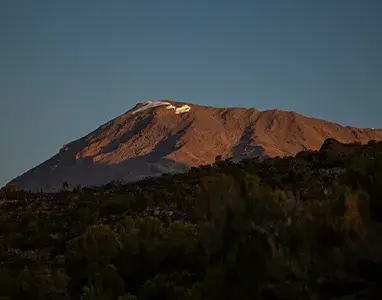
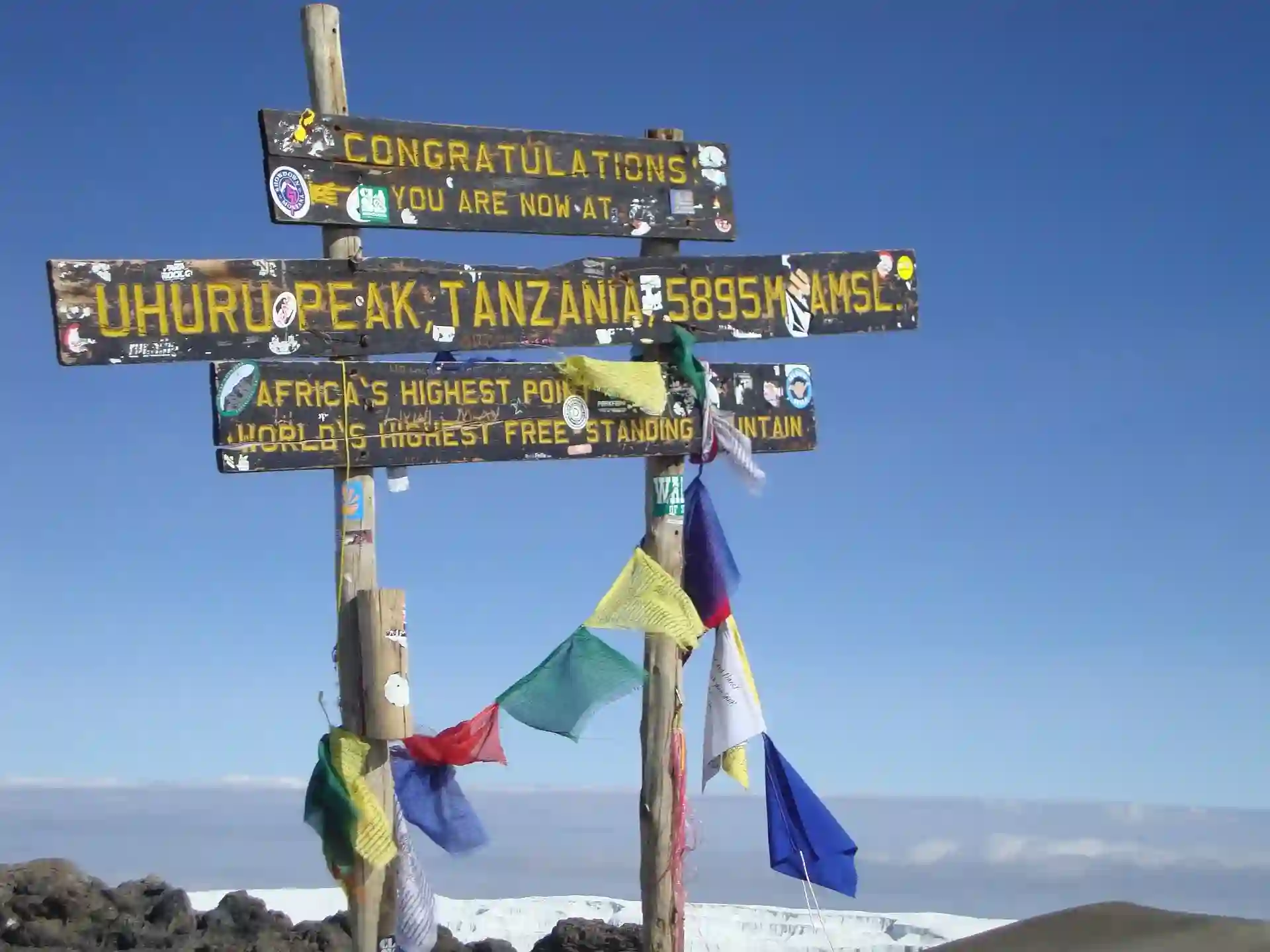
Mount Kilimanjaro begins in a warm tropical region and rises to 5,895 metres (19,341 feet), where climbers may encounter snow, ice, strong wind and severe sub-zero temperatures.
At the base, daytime temperatures are commonly around 21–27°C (70–80°F). On the summit ridge before sunrise, the air temperature may fall to approximately −7°C to −29°C (20°F to −20°F). Wind can make exposed skin lose heat much faster, while rain and sweat can leave a climber feeling cold at temperatures well above freezing.
This wide range is why there is no single correct answer to “How cold is Kilimanjaro?” The answer depends on:
- Altitude
- Time of day
- Wind speed
- Cloud cover and sunshine
- Rain, sleet or snow
- Season and recent weather systems
- Which side of the mountain you are climbing
- Whether you are moving, resting or sleeping
- Whether your clothing is dry
- Your individual cold tolerance
The correct preparation is not one enormous coat. It is a flexible layering system that can be adjusted as conditions change.
| Altitude zone | Approximate elevation | Practical temperature range | Typical conditions | Clothing priority |
|---|---|---|---|---|
| Cultivated foothills and trailheads | 800–1,800 m | About 21–27°C / 70–80°F by day; cooler mornings and evenings | Warm, sunny or humid; possible rain | Light wicking clothing, sun protection and accessible rainwear |
| Rainforest | 1,800–2,800 m | Roughly 12–25°C / 54–77°F; cooler when wet or at night | Humid, shaded, muddy and frequently wet | Wicking top, trekking trousers, waterproof shell and gaiters |
| Heath and moorland | 2,800–4,000 m | Roughly 5–20°C / 41–68°F; near or below freezing on cold nights | Strong sun, cloud, wind and rapid changes | Base layer, fleece, shell, warm hat and light gloves available |
| Alpine desert | 4,000–5,000 m | Sunlit days may reach about 5–15°C / 41–59°F; nights commonly fall below freezing and can approach −10°C / 14°F | Dry air, intense UV, exposed wind and large day-night swings | Thermal layer, fleece, insulation, windproof shell, gloves and face protection |
| Arctic summit zone | 5,000–5,895 m | Often below freezing; exposed summit nights may reach approximately −7 to −29°C / 20 to −20°F | Dark, windy, snowy or icy, followed by strong sunrise radiation | Complete summit system covering torso, legs, head, hands, face and feet |
These are broad planning ranges, not a forecast or a guarantee. Conditions overlap between zones and can fall outside the stated bands. The current mountain forecast and your guide’s instructions take priority.
Why Kilimanjaro Becomes Colder With Altitude
Air pressure decreases as elevation rises. Expanding air cools, so temperatures generally fall with height through the lower atmosphere.
A commonly used environmental rule of thumb is a decrease of about 6.5°C per 1,000 metres of elevation gain, but Kilimanjaro does not follow a perfectly even formula. Cloud, wind, humidity, sunlight, slope direction and passing weather systems change the actual temperature.
From a warm trailhead near 1,800 metres to Uhuru Peak at 5,895 metres, climbers gain more than four vertical kilometres. Even a rough altitude relationship therefore predicts a dramatic temperature change.
The mountain’s great height also creates distinct ecological zones. In a single expedition, you move from humid forest through heath and high desert into an arctic summit environment.
Why the Same Temperature Can Feel Completely Different
Air temperature is only part of the experience.
Wind Chill
Wind removes the thin layer of warm air around the body and increases heat loss from exposed skin. The stronger the wind, the colder conditions feel.
As an illustration, an air temperature of −10°C (14°F) combined with wind around 30 km/h (19 mph) produces a wind-chill value close to −20°C (−4°F). Wind chill describes heat loss from people and animals; it does not mean equipment becomes colder than the actual air temperature.
The upper slopes are exposed, and a still, clear morning can feel very different from the same air temperature in strong wind.
Direct Sun
Kilimanjaro lies close to the equator. At high altitude, thin air, limited shade and reflective snow can make direct sunshine feel surprisingly warm—even while the measured air temperature remains low.
Climbers may remove a layer while walking in the sun and need it again within minutes when a cloud passes or the group stops.
Rain, Sweat and Wet Clothing
Wet clothing conducts heat away from the body and loses insulation. Hypothermia can develop in cool conditions above freezing when someone is soaked by rain or sweat and then becomes chilled.
This is why waterproofing matters from the rainforest onwards. A climber who allows their base layer to become drenched with sweat during the day may become extremely cold after stopping at camp.
Movement Versus Rest
Walking uphill generates heat. Resting, waiting at a checkpoint or standing for summit photographs does not.
Add insulation before you become cold during longer stops. Do not wait until your hands are numb or you are shivering heavily.
Zone 1: Cultivated Foothills and Trailheads
Approximate elevation: 800–1,800 metres
Typical daytime planning range: about 21–27°C (70–80°F), with cooler mornings, rain and seasonal variation
The journey normally begins around Moshi or at a park gate above the surrounding plains. Conditions may feel warm and humid, particularly while registration is completed and the team prepares equipment.
What to Wear
- Moisture-wicking short-sleeve or light long-sleeve trekking shirt
- Lightweight quick-drying hiking trousers
- Broken-in waterproof hiking boots
- Hiking socks
- Sun hat or cap
- Sunglasses
- Sunscreen and lip balm with SPF
What to Keep Accessible
- Waterproof jacket
- Waterproof overtrousers
- Light fleece
- Pack cover and internal waterproof liner
Avoid starting in heavy clothing simply because the destination is cold. Overheating early makes clothing wet with sweat and can leave you chilled later.
Zone 2: Rainforest
Approximate elevation: 1,800–2,800 metres
Practical planning range: roughly 12–25°C (54–77°F), but rain, shade and evening conditions can make it feel colder
The rainforest is usually the wettest part of the climb. Temperatures are not normally severe, but humidity, mud and rain create their own clothing challenge.
What to Wear
- Moisture-wicking trekking shirt
- Quick-drying hiking trousers
- Waterproof boots
- Hiking socks
- Gaiters in muddy conditions
What to Add When Rain Begins
- Fully waterproof hooded jacket
- Waterproof overtrousers
- Pack rain cover, backed up by an internal liner
A light poncho may give additional coverage, but it should not replace a reliable waterproof jacket and trousers in wind.
Common Rainforest Mistake
Climbers sometimes keep walking in light rain without putting on shells because the air feels warm. By the time they reach camp, their clothes and insulation may be wet. Protect dry clothing early and regulate heat by opening ventilation zips or slowing the pace.
Zone 3: Heath and Moorland
Approximate elevation: 2,800–4,000 metres
Practical planning range: roughly 5–20°C (41–68°F), with cold evenings and possible temperatures near or below freezing
The forest opens into heath and moorland. Sunshine can be strong during the day, while cloud, wind and evening cooling become more noticeable.
Typical camps in or near this band include Shira, Moir, Machame, Horombo and sections around Mawenzi Tarn, depending on the route.
Daytime Clothing
- Wicking base or trekking shirt
- Hiking trousers
- Light fleece or breathable mid-layer as needed
- Sun hat and sunglasses
- Waterproof shell accessible in the daypack
Morning, Evening and Camp Clothing
- Thermal or dry base layer
- Fleece
- Insulated jacket
- Warm beanie
- Light gloves
- Dry camp socks
Do not judge the night by the warmth of the afternoon. Temperatures fall quickly when the sun disappears, particularly at exposed camps.
Zone 4: Alpine Desert
Approximate elevation: 4,000–5,000 metres
Practical planning range: sunlit daytime temperatures may reach roughly 5–15°C (41–59°F); nights commonly fall below 0°C (32°F) and may approach −10°C (14°F) or lower
The alpine desert has little vegetation and limited shelter. Air is dry, ultraviolet exposure is strong and the difference between sun and shade can be dramatic.
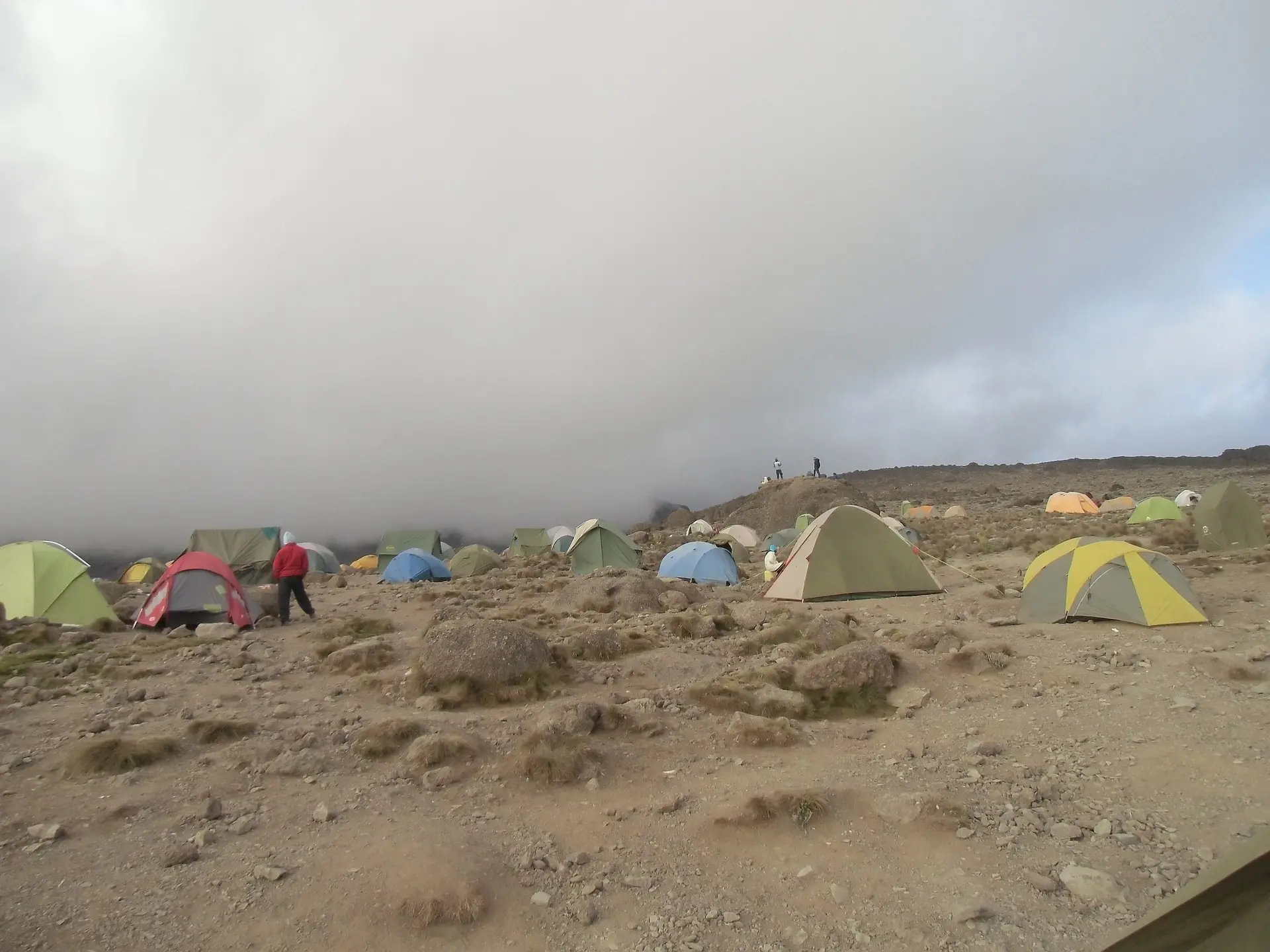
This zone includes areas around Lava Tower, Karanga, Kibo Hut, School Hut and Barafu Camp. High camps are especially cold after sunset and before dawn.
Clothing While Walking
- Thermal or wicking base layer
- Fleece or breathable mid-layer
- Trekking trousers over thermal bottoms when needed
- Windproof or waterproof shell
- Beanie and gloves accessible
- Sunglasses and strong sun protection
Clothing During Stops
- Add the insulated jacket promptly
- Close the shell against wind
- Cover head and hands
- Avoid sitting directly on cold ground
Clothing at High Camp
- Change out of damp trekking layers
- Put on a dry thermal set
- Add fleece and insulation
- Wear dry socks and warm camp footwear if conditions allow
- Keep the summit set sealed and dry
High camp is not the place to discover that a jacket is too tight over the other layers. Test the complete system before leaving home and again during the gear check in Moshi.
Zone 5: Arctic Summit Zone
Approximate elevation: 5,000–5,895 metres
Typical exposure: below freezing, with summit-night air temperatures potentially around −7°C to −29°C (20°F to −20°F)
The arctic zone contains bare rock, scree, ice, snow and glaciers. Most climbers enter it during the coldest part of the night, when they are tired and moving slowly.
Conditions are often coldest shortly before sunrise. Wind exposure on the crater rim can make Stella Point, Gilman’s Point and the traverse to Uhuru feel substantially colder than a sheltered part of the ascent.
Complete Summit-Night Upper-Body System
- Dry thermal base-layer top
- Long-sleeve technical layer if part of your tested system
- Fleece or breathable insulated mid-layer
- Warm down or synthetic insulated jacket
- Waterproof and windproof shell with hood
Complete Summit-Night Lower-Body System
- Dry thermal base-layer bottoms
- Hiking or softshell trousers
- Insulated trekking trousers if recommended for your cold tolerance and conditions
- Waterproof and windproof overtrousers
Head, Face and Neck
- Warm beanie covering the ears
- Neck gaiter or buff
- Balaclava or face covering
- Insulated jacket hood
- Waterproof-shell hood when wind or precipitation requires it
Hands
- Lightweight liner gloves
- Insulated windproof outer gloves or mittens
- Spare dry gloves if possible
Mittens are often warmer than gloves because the fingers share heat, although gloves provide greater dexterity. Your system must still allow you to use poles, adjust zips and eat without exposing bare hands for long.
Feet
- Broken-in waterproof hiking boots
- One tested warm sock system
- Gaiters
- Dry spare socks in the daypack
Do not wear multiple thick socks if they make the boot tight. Compression reduces circulation and can make feet colder. Test summit socks with the actual boots before travelling.
Eyes and Skin
- Full-UV wraparound sunglasses
- Ski goggles as an optional backup for strong wind or blowing snow
- Sunscreen on exposed skin
- Lip balm with SPF
Sunrise does not end the need for cold protection. It may make conditions feel warmer rapidly, but the wind and air can remain below freezing.
What Summit Night Feels Like Over Time
Summit night is a sequence of changing conditions rather than one fixed temperature.
Late Afternoon at High Camp
The sun may feel warm enough for relatively light clothing while you prepare, eat and rest. Once the sun drops, the temperature falls quickly.
Before Departure
Climbers normally dress in most or all of the summit system before leaving the tent. It is easier to remove or vent a layer than to search for insulation after becoming severely chilled.
First Hours of the Ascent
Uphill movement generates heat. Guides may ask climbers to open zips or remove one middle layer to reduce sweating. The insulating jacket should remain easy to reach.
Coldest Pre-Dawn Hours
Fatigue increases, the pace slows and air temperature is often at its lowest. Fingers, toes, face and hydration equipment require close attention.
Crater Rim and Sunrise
The first sunlight can provide psychological and physical relief, but the rim may be exposed to wind. Climbers should not remove layers too quickly.
Descent
Conditions warm as elevation falls and the sun rises. Remove layers gradually to prevent heavy sweating, but keep shells available for wind, snow or rain.
How Cold Are Kilimanjaro’s High Camps?
There is no guaranteed camp temperature, but thermal demand generally increases with elevation.
| Camp or area | Approximate altitude | What to expect |
|---|---|---|
| Mti Mkubwa | About 2,785 m | Damp forest air; mild to cool night depending on rain |
| Machame Camp | About 3,000 m | Cool evening; fleece and insulated jacket useful at camp |
| Shira camps | About 3,500–3,900 m | Strong day-night contrast; near-freezing conditions possible |
| Moir Hut area | About 4,200 m | Exposed, dry and cold after sunset |
| Barranco Camp | About 3,950 m | Cold night, with wind and moisture varying by weather |
| Karanga Camp | About 4,035 m | Exposed high-altitude cold; dry summit clothing must remain protected |
| Mawenzi Tarn area | About 4,330 m | Cold, potentially windy and shaded by surrounding terrain |
| Barafu Camp | About 4,670 m | Sub-zero night likely; exposed southern summit base |
| Kibo Hut | About 4,720 m | Dry, cold and exposed eastern summit base |
| School Hut | About 4,800 m | High, remote and cold; complete summit system prepared before departure |
Camp elevations vary slightly among maps and established tent areas. Use these figures for orientation, not precise weather prediction.
The Four-Part Clothing System
Climbers often hear about a three-layer system, but Kilimanjaro preparation is easier to understand as four functions.
1. Moisture Management
The base layer moves sweat away from the skin. Use merino wool, synthetic fabric or a blend. Avoid cotton because it holds moisture and dries slowly.
2. Active Insulation
A fleece or breathable mid-layer retains warmth while allowing some moisture to escape during movement.
3. Static Insulation
A warmer down or synthetic jacket protects you at camp, during rests and on summit night. Down provides excellent warmth for its weight but must remain dry. Synthetic insulation performs better when damp.
4. Weather Protection
A waterproof, windproof shell prevents rain, snow and wind from penetrating the insulating layers. Waterproof overtrousers protect the legs.
Each layer must fit over the layer beneath it without restricting movement or compressing insulation.
How to Adjust Layers Without Becoming Wet
The goal is to remain comfortably warm, not hot.
- Start slightly cool rather than overdressed.
- Open front, pocket and underarm ventilation before removing a layer.
- Slow the pace if sweating heavily.
- Remove a middle layer during sustained uphill effort when appropriate.
- Add insulation before long rest stops.
- Put on waterproofs before clothing becomes soaked.
- Change into dry clothing at camp.
- Keep one thermal set protected for sleeping or summit night.
Your porter-carried duffel is usually unavailable during the walking day. Rainwear, insulation, hat and gloves therefore belong in your daypack.
Sleeping in Sub-Zero Camps
A cold night affects recovery even when the following day is not summit day.
For most climbers, a four-season sleeping bag with a manufacturer’s comfort rating around −10°C (14°F) is appropriate. Cold sleepers or colder expected conditions may prefer a comfort rating closer to −15°C (5°F).
Check the comfort rating rather than relying on a lower-limit or extreme survival number.
How to Sleep Warmer
- Change into a completely dry thermal layer.
- Use clean, dry sleeping socks.
- Wear a beanie if needed.
- Keep the sleeping bag dry inside a waterproof compression sack.
- Use the provided mattress to insulate yourself from the ground.
- Eat the evening meal even when appetite is reduced.
- Empty your bladder before settling down.
- Keep tomorrow’s clothing inside the tent and protected from condensation.
- Use a tested sleeping-bag liner if desired.
Do not breathe deeply into the sleeping bag for long periods; moisture from breath can dampen insulation.
Does the Climbing Month Change the Temperature?
Season affects rain, cloud, wind and the likelihood of snow, but altitude and time of day remain the main drivers of temperature.
January and February
Often relatively warm and dry, but high camps and the summit remain sub-zero at night. Snow can still occur.
March to May
The long-rain period can make lower slopes wetter and increase snow higher on the mountain. Wet clothing may create more discomfort than the air temperature alone suggests.
June to August
Usually dry but often among the colder months, particularly at night. Strong summit clothing remains essential.
September and October
Often dry with favourable trekking conditions, although exposed high camps and summit night are still cold.
November
Short rains can bring cloud, wet trails and fresh high-altitude snow.
December
Conditions transition towards the January–February period, but weather varies and holiday climbs can encounter rain, wind, snow or severe cold.
No month makes a summit insulation system optional.
Does Snow Mean It Is Colder?
Fresh snow confirms that conditions allowed frozen precipitation, but the amount of snow on the route does not directly tell you the current air temperature.
Snow may remain after a previous weather system, and strong sunshine can warm the surface while the surrounding air stays cold. Conversely, a clear, snow-free night can be extremely cold because heat escapes rapidly under an open sky.
Climbers should follow current route guidance rather than judging temperature from summit photographs.
Cold and Altitude Illness Are Different Problems
Cold does not directly cause Acute Mountain Sickness, but it can add stress, reduce sleep, suppress appetite and complicate assessment.
Some signs can overlap:
- Fatigue
- Slow movement
- Headache
- Poor coordination
- Confusion
- Reduced ability to care for oneself
Tell the guide what you are experiencing. Do not assume that confusion or stumbling is “only the cold” or “only altitude.” Both can require urgent action.
Our Kilimanjaro acclimatisation and altitude-sickness guide explains the warning signs of AMS, HACE and HAPE.
Warning Signs of Hypothermia and Cold Injury
Report cold-related problems immediately.
Warning signs of hypothermia include:
- Persistent or intense shivering
- Exhaustion
- Fumbling hands or unusual clumsiness
- Slurred speech
- Confusion or memory problems
- Drowsiness
Possible frostbite signs include numbness and skin that becomes pale, greyish, firm or waxy. Do not rub or directly expose suspected frostbite to intense heat. Protect the area and follow the guide’s emergency instructions.
Cold injury can become more serious when a climber hides symptoms to protect a summit attempt.
Essential Cold-Weather Equipment
Clothing
- Two thermal base-layer tops
- One or two thermal base-layer bottoms
- One or two fleece or breathable mid-layers
- Warm down or synthetic jacket with hood
- Fully waterproof hooded shell jacket
- Waterproof overtrousers
- Quick-drying hiking trousers
- Optional insulated trekking trousers for cold-sensitive climbers
- Dedicated dry sleeping clothes
Head and Hands
- Sun hat
- Warm beanie
- Neck gaiter
- Balaclava or face covering
- Liner gloves
- Insulated windproof gloves or mittens
- Full-UV sunglasses
- Optional ski goggles
Feet
- Broken-in waterproof hiking boots
- Moisture-wicking hiking socks
- Warm summit socks
- Dry sleeping socks
- Gaiters
- Blister-care supplies
Sleeping and Storage
- Four-season sleeping bag with suitable comfort rating
- Sleeping-bag liner if preferred
- Waterproof compression sack
- Dry bag for summit clothing
- Internal duffel and daypack liners
See our complete Kilimanjaro packing list and Kilimanjaro gear-rental guide for item quantities, rental decisions and inspection advice. The editor should confirm that the gear-rental article is live before publishing its internal link.
Common Clothing Mistakes
Wearing Cotton
Cotton absorbs sweat, dries slowly and becomes cold when wet. Use technical synthetic or merino layers.
Wearing Every Layer Too Early
This causes heavy sweating. Regulate clothing throughout the day instead of dressing for the summit at the trailhead.
Choosing One Heavy Jacket Instead of Layers
One jacket cannot adapt to tropical forest, sunny desert and sub-zero wind. Multiple compatible layers provide control.
Leaving Warm Clothing in the Porter Duffel
The duffel travels separately. Carry rainwear, insulation, gloves and hat in the daypack.
Compressing Feet With Too Many Socks
Tight boots restrict circulation. Use a tested sock system with enough toe space.
Allowing the Summit Set to Become Wet
Keep thermal layers, gloves and critical insulation sealed in dry bags until needed.
Trusting the Forecast Too Literally
Mountain forecasts are useful but cannot describe every slope, camp or gust. Pack for conditions worse than the central forecast.
Removing Layers Too Quickly After Sunrise
Sunlight can feel warm while the crater rim remains windy and below freezing. Adjust gradually.
How Cold-Sensitive Climbers Should Prepare
Cold tolerance varies. People with circulation problems, previous cold injury or medical conditions affected by cold should consult a healthcare professional before the climb.
Cold-sensitive climbers should consider:
- A sleeping bag with a warmer comfort rating
- High-quality insulated mittens
- A warmer hooded insulated jacket
- Insulated trekking trousers
- Chemical hand or toe warmers only if tested and approved for use
- An insulated bottle for summit night
- Spare dry gloves and socks
- Extra care to avoid sweating
Do not solve cold sensitivity by creating a tight, over-layered system. Clothing and boots must still allow circulation and movement.
Tanzania Inside Safari’s Weather and Clothing Approach
At Tanzania Inside Safari, clothing preparation starts before arrival. We provide a detailed packing list and ask climbers to bring or reserve suitable personal equipment.
During the pre-climb briefing, our team reviews:
- Current weather expectations
- Route and camp elevations
- Base, mid, insulation and shell layers
- Summit jacket and trousers
- Boots and sock fit
- Head, face and hand protection
- Sleeping-bag comfort rating
- Daypack access to rainwear and insulation
- Waterproof storage
- Rental-equipment condition and fit
On the mountain, guides help climbers adjust layers, monitor cold-related symptoms and change the plan when conditions make continuing unsafe.
Prepare for the Range, Not One Number
Kilimanjaro may feel tropical on the first day and arctic on summit night. You may walk in warm sunshine, rain, fog, wind, sleet and snow during the same expedition.
The answer is not to carry the heaviest possible clothing. It is to bring a tested system that manages moisture, retains warmth, blocks wind and rain and remains accessible when the temperature changes.
Tell us your route, climbing month, previous cold-weather experience and whether you normally feel hot or cold. Our local Kilimanjaro team will help you review the correct clothing and sleeping system before departure.
Weather and medical disclaimer: The temperature ranges in this article are broad planning estimates, not forecasts. Mountain weather can change rapidly and fall outside typical ranges. Cold injury and altitude illness require prompt guide assessment. Consult a qualified medical professional about relevant health conditions and follow your guide’s instructions on the mountain.
FREQUENTLY ASKED QUESTIONS
What is the coldest temperature on Kilimanjaro?
Exposed summit-night air temperatures can fall to approximately −7°C to −29°C (20°F to −20°F). Wind chill can make the conditions feel colder to exposed skin. Actual conditions vary by night and weather system.
How cold is Uhuru Peak at sunrise?
Uhuru Peak is normally below freezing around sunrise, but there is no fixed temperature. Air temperature, wind, cloud and recent snowfall determine how cold it feels.
How cold is Barafu Camp?
Barafu is approximately 4,670 metres and is commonly below freezing overnight. It is exposed to wind, and temperatures vary significantly. Climbers should prepare the full summit system before departure.
How cold are Kibo Hut and School Hut?
Kibo Hut and School Hut sit around 4,720–4,800 metres. Both can experience sub-zero nights, dry air and strong wind. Their temperatures are comparable to other high camps, although local exposure differs.
Is July colder than January on Kilimanjaro?
June to August can be colder at night, but the difference between altitudes and between day and night is more important than the calendar alone. Severe summit cold is possible in every month.
Do I need a down jacket for Kilimanjaro?
A warm hooded down or synthetic insulated jacket is essential for most climbers. It must work with the fleece and waterproof shell and remain dry.
How many layers should I wear on summit night?
There is no universal number. Most climbers use a dry thermal base, one or more tested middle layers, a warm insulated jacket and a windproof waterproof shell. Fit and function matter more than counting garments.
Should I wear two pairs of socks on summit night?
Only if that tested combination fits without making the boots tight. Restricting circulation can make feet colder. One well-fitted warm sock system is often better than multiple compressed layers.
What sleeping-bag rating do I need?
For most climbers, choose a four-season bag with a comfort rating around −10°C (14°F). Cold sleepers may prefer closer to −15°C (5°F). Check the comfort rating rather than the extreme rating.
Does Kilimanjaro always have snow?
The summit zone contains glaciers and may have snow or ice, but trail coverage changes with recent weather. Fresh snowfall can occur in any month and is often associated with wetter periods.
Can I wear ski clothing on Kilimanjaro?
Some ski garments can work if they are breathable, waterproof, flexible and compatible with the complete system. Heavy one-piece or poorly ventilated ski clothing may be difficult to regulate while trekking.
Can rain make me hypothermic even above freezing?
Yes. Wet clothing and wind can cool the body rapidly, and hypothermia can occur in cool temperatures above freezing. Keep insulation dry and put on waterproof layers before becoming soaked.
What should I do if my hands or feet become numb?
Tell your guide immediately. Adjust wet or tight equipment, add protection and follow the guide’s instructions. Persistent numbness or pale, firm or waxy skin can indicate cold injury.