


Ethical Kilimanjaro Climbing: Porter Welfare, Fair Treatment and Local Impact
Learn what ethical Kilimanjaro climbing means, how responsible operators protect mountain crews and what to ask about wages, loads, tips and local impact.
Ethical Kilimanjaro Climbing at a Glance
Reaching the summit of Kilimanjaro may feel like an individual achievement, but no standard climb is an individual effort. Behind each climber is a skilled mountain crew carrying group equipment, preparing meals, establishing camp, finding water, monitoring safety and keeping the expedition moving through rapidly changing conditions.
Guides, assistant guides, cooks, camp staff and porters make Kilimanjaro climbing possible. Ethical climbing begins by recognising them as mountain professionals whose pay, food, shelter, equipment, health and dignity matter just as much as the experience of the paying guest.
Responsibility also extends beyond the crew. Kilimanjaro National Park is a protected World Heritage Site, and climbing tourism affects surrounding communities, local businesses, water, wildlife habitat and waste systems. A genuinely ethical climb should therefore consider three connected questions:
- Are the people working on the expedition treated fairly?
- Does the trip create meaningful value within Tanzania?
- Is the mountain being protected for those who live beside it and those who come after us?
The answers cannot be found in a slogan or a photograph. They are found in the operator’s everyday systems: how staff are paid, how loads are weighed, what the crew eats, where porters sleep, what happens when somebody becomes ill, how tips are distributed and how honestly the company answers difficult questions.
- Ethical treatment applies to the entire mountain crew, not only the lead guide.
- Crew wages should meet applicable Tanzanian requirements and be paid on time.
- Tips complement wages; they must not be used to excuse inadequate pay.
- Tipping procedures and the expected crew size should be explained before the climb.
- A porter’s company load should not exceed 20 kilograms, excluding personal equipment, under published KPAP/KRTO good-practice guidance.
- Crew members need adequate meals, safe drinking water, weatherproof shelter, sleeping space and appropriate mountain clothing.
- A sick or injured crew member must receive care and assistance to descend; summit plans must never take priority over health.
- A very cheap climb can conceal costs transferred to workers through low pay, insufficient food, poor equipment or overloaded porters.
- A government tourism licence and park compliance are essential, but they do not by themselves prove high welfare standards.
- KPAP participation provides independent monitoring, but operators that are not participants should still be willing to describe their welfare systems clearly and truthfully.
- Responsible local impact includes local employment, Tanzanian suppliers, training, tax and licence compliance, respectful community relationships and environmental care.
- Climbers influence conditions through the operator they choose, the luggage they bring, the demands they make and the way they tip.
Who Supports a Kilimanjaro Climb?
The size and composition of a Kilimanjaro crew depend on the route, group size, itinerary, camping system and services included. A camping expedition normally involves several different roles.
Lead Guide
The lead guide directs the climb, controls the pace, assesses changing conditions and makes safety decisions. The guide is also responsible for communication between the climbers and the crew.
Assistant Guides
Assistant guides help monitor individual climbers, manage different walking speeds and provide support during summit night or a descent. An appropriate guide-to-climber ratio matters because one guide cannot safely accompany a sick climber down while simultaneously supervising a large group continuing upward.
Cook and Food Team
The cook plans and prepares meals in a demanding environment with limited facilities. Food porters or camp assistants may help carry supplies, collect water and serve meals. Their work affects both nutrition and hygiene throughout the climb.
Porters and Specialist Crew
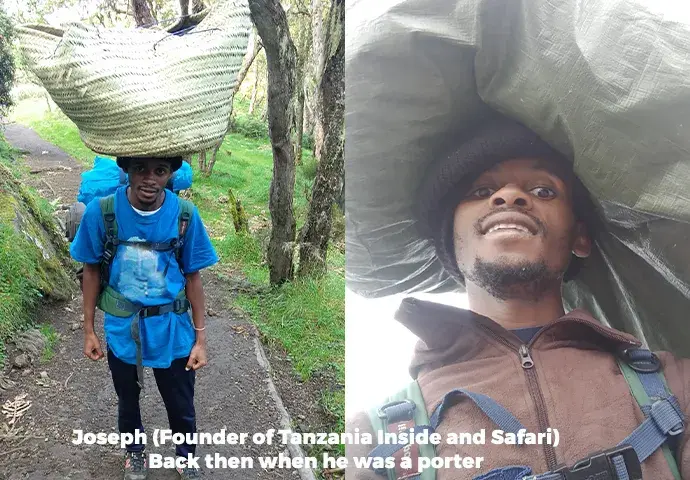
Porters carry tents, food, cooking equipment, tables, chairs, safety equipment and other group supplies between camps. Some may have additional responsibilities as tent crew, summit porters, toilet attendants, waiters or medical support staff.
These are skilled and physically demanding jobs. Referring to everyone simply as “the porters” can hide the responsibilities carried by individual team members. A responsible operator should know who worked on each expedition, what role each person performed and how each person will be paid.
Why Porter Welfare Is Central to an Ethical Climb
Kilimanjaro creates important employment in northern Tanzania, but the work is seasonal and competition for places can be intense. This can leave mountain workers vulnerable to accepting poor conditions because declining one climb may mean losing income and future work.
Porters may travel ahead of climbers, carry significant loads over rough ground and reach camp early enough to establish tents and organise equipment. They face the same rain, cold, altitude, fatigue and illness as visitors, often while performing more physical work.
The fact that somebody accepts a job does not prove the conditions are fair. Ethical employment requires the operator—not the porter—to establish and enforce proper systems for pay, loads, food, accommodation, equipment, health and complaint reporting.
It also requires climbers to look beyond surface impressions. A cheerful welcome, summit song or smooth camp service tells you that a crew is professional. It does not tell you how much the team was paid, whether everybody ate adequately or where every crew member slept.
Fair Wages and On-Time Payment
A responsible operator should pay at least the minimum amount required under current Tanzanian law and any applicable Kilimanjaro stakeholder agreement. Because wage rules and industry agreements can change, a fixed figure copied from an old blog post may be misleading. Ask the operator which current standard it follows and when salaries are paid.
The Kilimanjaro Responsible Trekking Organization’s porter-treatment guidance states that salaries should be paid within two days after descent in accordance with KINAPA regulations. Timely payment matters. Crew members should not have to make repeated office visits or wait indefinitely for money they have already earned.
Fairness also means that the wage is not reduced by unexplained deductions, recruitment fees, compulsory equipment rental or demands for a share of tips. Workers should understand the rate for their role before departing and have a reliable way to raise a payment problem.
Tips Are Not a Substitute for Wages
Tipping is an established part of Kilimanjaro climbing and can make an important contribution to crew income. However, the possibility of a generous tip should never be used to justify an inadequate base wage.
The operator is responsible for wages. The climber is responsible for deciding and giving a tip through the explained procedure. Keeping those responsibilities separate prevents the full employment cost from being shifted onto guests and protects crew members when a group tips less than expected.
Transparent Kilimanjaro Tipping
Tipping causes anxiety when travellers are given different suggested amounts, discover an unexpected crew size at the end or do not know whether the intended recipients received the money.
A transparent system should tell you before the climb:
- The likely number of guides, assistant guides, cooks and porters
- The suggested tipping method and whether figures are per climber, per group or per crew member
- Whether specialist roles receive a different allocation
- Which currencies are practical and how damaged or older notes are handled
- When and where tips will be distributed
- How the final crew list will be confirmed
- What to do if you want to recognise exceptional service
Crew size may change slightly after equipment and food are weighed, so the final number should be confirmed during the pre-climb briefing or before departure.
KPAP/KRTO recommends a procedure in which the amount intended for each person is clear to the full crew. Its guidance also warns about kirunje, the practice of adding people who did not work on the climb to the tipping ceremony. Knowing the names, roles and final number of crew members protects both climbers and genuine workers.
Tips can be given in individual envelopes or through another documented method that makes the allocation visible. If a guide is asked to distribute one group amount, announce or record how it should be divided. Private gifts may still be given, but they should not create confusion about the main group tip.
Porter Loads and Why Your Duffel Weight Matters
Load limits are not a minor logistical rule. Overloading increases exhaustion, injury risk and pressure on workers who may fear losing their place if they object.
KPAP/KRTO’s published good-practice standard limits each porter to 20 kilograms of company equipment, excluding the porter’s personal kit. Park weighing procedures help control loads, but responsible management begins before the vehicle reaches the gate.
An operator should:
- Give climbers a clear personal-duffel allowance
- Weigh guest bags during the gear check
- Calculate food, fuel and group equipment realistically
- Use enough porters for the actual expedition load
- Reassess loads as food is consumed and routes merge or divide
- Avoid informally transferring excess weight after official weighing
- Ensure porters still have capacity for their own clothing and sleeping equipment
Climbers have a direct part to play. Pack within the stated limit and do not hide heavy items in your daypack before weighing only to add them to the porter bag later. If you bring excess equipment, accept that an additional porter may be required and should be properly paid, fed and equipped.
Unless a special arrangement has been made, carry your own daypack. If illness or injury makes that unsafe, speak with the guide so support can be organised properly rather than privately handing your bag to a crew member without clarity about workload or compensation.
Adequate Food and Safe Water for the Crew
Mountain workers need enough energy to carry loads and establish camp, yet crew meals are largely invisible to guests. An attractive dining tent for climbers is not evidence that everyone else ate properly.
KPAP/KRTO good-practice guidance calls for three adequately portioned meals per day, with the company covering food costs. Ethical provision should also reflect the length of the itinerary, the physical workload and delays caused by weather or emergencies.
A responsible food system includes:
- Sufficient quantities for every crew member
- A realistic mix of carbohydrates, protein and fats
- Safe food storage and preparation
- Fuel for crew cooking as well as guest meals
- Clean drinking water or a reliable treatment system
- Contingency supplies for delays
- No expectation that staff must buy their own meals during a contracted climb
Climbers do not need to inspect every cooking pot, but operators should be able to explain who plans crew food, how quantities are calculated and how shortages are reported.
Shelter, Sleeping Conditions and Equipment
Cold, rain and wind affect the crew as much as the clients. Porters need waterproof shelter, ground protection, adequate sleeping space and suitable personal equipment for the altitude reached.
KPAP/KRTO specifically states that regular porters should not sleep in the mess tent. A dining tent is a workplace and shared guest space; it is not a proper substitute for planned crew accommodation.
Suitable equipment may include:
- Weather-resistant outer layers
- Insulating clothing
- Gloves and warm headwear
- Appropriate footwear
- A sleeping bag suitable for mountain conditions
- A sleeping mat
- Safe, weatherproof tents with enough space
- Headlamps or torches where duties require them
Equipment checks should happen before departure. Discovering at a high camp that a worker lacks adequate footwear or insulation is already a failure of planning.
Some organisations operate gear-lending or donation programmes for mountain workers. These can be valuable, but donated equipment must never become an excuse for an operator to avoid its own responsibility. If you want to donate gear, ask what is genuinely needed and use an organised programme rather than giving unsuitable or worn-out items randomly.
Health, Altitude and the Right to Descend
Mountain crew members can develop Acute Mountain Sickness, injury, respiratory problems, hypothermia and other illnesses. Experience at altitude does not make anyone immune.
An ethical operator must create a culture in which a porter can report symptoms without being mocked, penalised or threatened with the loss of future work. A worker who is unwell should be assessed, relieved of their load and helped to descend when necessary. Medical treatment should be arranged rather than leaving the person alone to find help.
This requires enough staff and a contingency plan. If every team member is essential merely to keep the camp functioning, there may be no safe capacity to escort a sick worker down.
The same principle used for clients must apply to the crew: no summit or schedule is more important than a person’s health. Emergency oxygen and first-aid resources should be available according to the operator’s safety plan, but they should support—not delay—a necessary descent.
Dignity, Respect and a Safe Workplace
Fair treatment is more than wages and equipment. Every crew member deserves professional respect.
For climbers, that means:
- Learn and use people’s names where possible.
- Speak respectfully, even when tired or disappointed.
- Do not order staff around; communicate requests through the guide or appropriate crew lead.
- Ask permission before taking close photographs or recording personal stories.
- Do not post a crew member’s image or difficult circumstances online as a fundraising story without informed consent.
- Never pressure somebody to carry more, move at an unsafe speed or work while ill.
- Do not offer alcohol during the climb or encourage behaviour that compromises safety.
- Address concerns privately and calmly with the lead guide or operator.
For operators, dignity includes clear roles, freedom from bullying or harassment, fair access to work, a method for raising grievances and consequences when supervisors abuse their authority.
Women working on the mountain should receive equal opportunity, appropriate privacy and protection from harassment. “Equal treatment” should not mean ignoring practical safety and accommodation needs. A professional workplace anticipates them.
Why an Extremely Cheap Kilimanjaro Climb Can Be a Warning Sign
Kilimanjaro has unavoidable costs: park fees, transport, food, fuel, equipment, guides, porters, cooks, accommodation, administration, taxes and safety resources. A low price is not automatically unethical, and a high price is not automatically responsible. However, a price far below comparable itineraries deserves careful questioning.
When a quote cannot cover the real cost of the expedition, the missing money may be recovered through:
- Lower crew wages
- Delayed or withheld payments
- Reduced food portions
- Too few porters and excessive loads
- Poor tents or inadequate clothing
- Hidden charges to the client
- Pressure for unusually large tips
- Shorter itineraries with aggressive ascent profiles
- Unlicensed or poorly insured operations
Ask for a written list of inclusions and exclusions. A responsible operator should be able to explain its price without revealing confidential employee details. “All operators are the same” and “the crew earn everything from tips” are not satisfactory answers.
Government Licensing, Park Rules and Independent Monitoring
These checks serve different purposes and should not be confused.
Tourism Licensing and Park Compliance
A legitimate operator should comply with Tanzanian tourism-business requirements and Kilimanjaro National Park procedures. Licensing demonstrates legal registration and authorisation; park procedures regulate access and operations on the mountain.
These are essential foundations, but a licence alone does not tell you what each crew member ate, where they slept or whether every tip reached its intended recipient.
KPAP and the Partner for Responsible Travel Programme
The Kilimanjaro Porters Assistance Project, commonly called KPAP, is an initiative associated with the Kilimanjaro Responsible Trekking Organization and the International Mountain Explorers Connection. Its voluntary Partner for Responsible Travel Programme monitors participating companies through porter questionnaires and interviews, review of salary and tipping systems, and investigative porter reporting.
Participation is not the same as a government licence. It is an additional, voluntary form of welfare monitoring. Climbers who specifically want independently monitored participation should consult the programme’s current partner information directly rather than relying on an old badge, copied logo or unverified website claim.
Tanzania Inside Safari does not claim KPAP Partner status. We nevertheless believe the published welfare principles—appropriate pay, timely payment, manageable loads, adequate meals, suitable shelter and equipment, transparent tips and medical help—provide useful questions for every operator, including us. Ethical marketing requires being exact about the standards a company follows and equally exact about certifications or partnerships it does not hold.
What Does Positive Local Impact Look Like?
Booking a Tanzanian company can keep more decision-making, employment and business activity close to the mountain. Local ownership alone, however, is not a complete ethical guarantee. The quality of the impact depends on where money goes and how people are treated.
Meaningful local impact can include:
- Employing Tanzanian guides, cooks, porters, drivers and planners
- Purchasing food, transport, equipment services and accommodation locally where practical
- Creating pathways from porter work to specialist, cook, assistant-guide, guide and management roles
- Investing in training and safety skills
- Paying licences, park fees and applicable taxes
- Offering repeat work through transparent recruitment rather than favouritism or informal payments
- Treating suppliers fairly and paying them on agreed terms
- Designing itineraries that use locally owned services without compromising safety or quality
- Sharing accurate information about Tanzanian culture and communities
The strongest local impact is usually built into normal business operations. A small donation does not cancel poor employment practices, and a photograph of a community project does not prove that local workers on the climb were treated well.
Community Visits and Donations
Community activities should be designed with the people involved, not staged around visitor expectations. Ask whether participation is voluntary, who receives the fee and whether photography is welcome.
Avoid treating homes, schools or villages as displays of poverty. Never photograph children without appropriate permission, and do not make spontaneous promises that local partners must later manage.
If you want to donate money or equipment, ask for a current list of priorities. Useful support is requested, suitable, transparent and delivered through a trusted structure. Unrequested items can create disposal problems, undermine local sellers or produce conflict over distribution.
Protecting Kilimanjaro’s Natural Environment
Kilimanjaro National Park is not only a trekking venue. It is a protected landscape and a UNESCO World Heritage Site. UNESCO describes the property as a 75,575-hectare protected area containing the world’s largest free-standing volcanic mass, five main vegetation zones and important wildlife habitat. UNESCO also identifies tourism pressure, fire, pollution, invasive species and climate change among the issues requiring careful management.
Responsible climbing therefore includes:
- Carrying out rubbish rather than hiding or burning it
- Reducing single-use packaging before the climb
- Using refillable drinking bottles and water-treatment systems
- Following established trails and campsite instructions
- Using toilet systems and sanitation procedures correctly
- Avoiding soaps or waste near streams and water-collection points
- Never feeding or approaching wildlife for photographs
- Respecting restrictions on fires and vegetation collection
- Leaving rocks, plants and cultural objects where they are
- Reporting damaged waste facilities or serious litter to the operator
Waste management also has a human dimension. Porters should not be expected to handle leaking toilet bags, sharp objects or unsafe waste without suitable containers, gloves and procedures. Environmental responsibility that transfers unreasonable risk to a worker is incomplete.
Questions to Ask Before Booking an Ethical Kilimanjaro Climb
A responsible company should welcome specific questions. Ask in writing so you can compare answers.
Employment and Pay
- Which current wage standard do you follow for guides, cooks and porters?
- When and how are crew wages paid after the climb?
- Are workers charged recruitment, placement or compulsory equipment fees?
- How are crew members selected, and is repeat work allocated fairly?
Loads and Staffing
- What is the maximum company load carried by each porter?
- What personal-duffel limit will you enforce for me?
- How do you calculate the number of porters for each group?
- When will I receive the final crew size and role breakdown?
Food, Shelter and Equipment
- How many meals per day does the crew receive?
- Where do regular porters sleep on camping routes?
- Who checks crew footwear, clothing, sleeping bags and tents?
- What happens if a crew member arrives without adequate equipment?
Health and Safety
- What happens if a porter becomes ill or injured?
- Who can escort a sick worker down without leaving the group understaffed?
- Who pays for necessary initial medical care or transport?
- What first-aid equipment, emergency oxygen and communication systems are carried?
Tips and Transparency
- What tipping guideline do you provide, and what is it based on?
- How will tips be distributed and documented?
- Can I see the final crew list before the tipping ceremony?
- Are tips separate from contracted wages?
Verification and Local Impact
- Is the company currently licensed to operate, and can it provide the relevant details?
- Is the company independently monitored by KPAP or another programme? If so, can I verify its current status directly?
- Which parts of my trip are delivered by the company and which are subcontracted?
- How does the climb support local employment, suppliers, training and environmental care?
The quality of the response matters as much as the answer. Clear explanations, written policies and an invitation to verify are good signs. Defensiveness, vague assurances and pressure to pay quickly are not.
Red Flags to Take Seriously
Be cautious when an operator:
- Refuses to discuss crew wages or payment timing
- Says porters are paid entirely through tips
- Cannot explain its load limit or your duffel allowance
- Provides no crew-size estimate before departure
- Changes the tipping request dramatically at the end
- Uses a welfare logo that cannot be verified on the organisation’s current website
- Claims that experienced porters do not suffer altitude illness
- Expects regular porters to sleep in the dining tent
- Cannot describe what happens when a worker becomes sick
- Offers a price that appears impossible without explaining why
- Discourages you from speaking respectfully with the crew
- Treats donations as proof that employment conditions are fair
- Promises “zero environmental impact” instead of explaining real waste practices
One unclear answer may be a communication problem. A pattern of avoidance is a reason to choose another company.
What Climbers Can Do During the Expedition
Your influence continues after booking.
Keep Your Luggage Within the Limit
Attend the gear check, remove unnecessary items and accept the operator’s duffel allowance. Extra comfort for one person can become extra physical strain for somebody else.
Treat Every Role as Professional
The person carrying a tent or preparing water is not less important than the person leading summit night. Learn names, say thank you and do not reserve respect only for staff members who speak the most English or spend the most time with guests.
Raise Concerns Early
If you see an apparently overloaded porter, inadequate shelter, a sick crew member working or a serious food shortage, speak privately with the lead guide. Ask for an explanation and, if the concern is not resolved, document the facts and contact the operator after the climb.
Avoid public confrontation with an individual worker. They may have little power over the system and could experience retaliation.
Follow the Agreed Tipping Process
Confirm the crew list and record the allocation. A tip is most useful when it reaches the intended people without deductions, confusion or competition.
Leave the Mountain Clean
Keep small waste in your daypack, control loose tissues and wrappers, and use the sanitation system provided. Do not assume that dropping something beside a tent is acceptable because a crew member will collect it.
What to Do After the Climb
Ethical responsibility does not end at the park gate.
- Ask the operator to resolve any wage, tipping or welfare concern promptly.
- Give specific feedback rather than making claims you cannot verify.
- In reviews, acknowledge the wider crew instead of mentioning only the summit guide.
- Share the operator’s positive systems as well as the scenery.
- If you witnessed a serious problem, preserve dates, route, crew information and photographs obtained appropriately.
- Direct any gear donation through an organised, requested channel.
- Recommend responsible practices to future climbers, even when they increase the trip price.
Our Approach at Tanzania Inside Safari
Tanzania Inside Safari is a locally owned family company based in Moshi and Arusha. Our website describes travel with us as an opportunity to support local communities and help sustain the landscapes that are our home. For us, that promise must begin with the people delivering the journey.
Our approach to Kilimanjaro includes:
- Professional local guides and a structured mountain crew
- Crew planning based on group size, route and actual equipment needs
- Pre-climb briefing and gear checks, including guest luggage limits
- Attention to load management rather than treating porters as unlimited carrying capacity
- Meals, shelter and appropriate working arrangements for the mountain team
- Clear communication about expected crew size and tipping
- Health and safety planning for climbers and crew
- Emergency oxygen and mountain first-aid resources
- Respectful relationships with local staff and suppliers
- Practical steps to reduce waste and protect the national park
We do not claim KPAP Partner status. We do believe that climbers should ask us the same detailed welfare questions they ask any other company. Responsibility is stronger when it is open to scrutiny.
Before your climb, we explain the itinerary, equipment, crew structure and tipping process. If you want more detail about our current wage policy, load procedures, crew accommodation or environmental practices, ask us directly. Ethical travel should be discussed before payment—not added as a marketing label afterwards.
Frequently Asked Questions
How much weight can a Kilimanjaro porter carry?
KPAP/KRTO good-practice guidance limits a porter’s company load to 20 kilograms, excluding personal kit. Your operator should also give you a lower personal-duffel allowance because porters carry tents, food and shared equipment in addition to guest bags.
Are Kilimanjaro porters paid, or do they work for tips?
Porters should receive a contracted wage that meets applicable Tanzanian requirements. Tips are customary and important, but they complement wages rather than replace them.
How do I know whether my tip reaches the crew?
Ask for the final crew list and follow a transparent distribution procedure. Individual envelopes or a clearly recorded allocation announced to the crew can reduce confusion. Never assume that handing an unexplained lump sum to one person guarantees fair distribution.
Is KPAP membership required for a Kilimanjaro operator?
No. The Partner for Responsible Travel Programme is voluntary and separate from government licensing. Its independent monitoring can help travellers identify participating companies, but non-participation does not remove an operator’s responsibility to meet legal and ethical standards. Any claim of current partnership should be verified directly.
Does choosing a local operator automatically make a climb ethical?
No. Local ownership can keep employment and decision-making within Tanzania, but you should still ask about wages, loads, food, shelter, safety, tips and environmental practices.
Why do Kilimanjaro climbs need so many porters?
Camping routes require tents, food, cooking equipment, fuel, safety supplies and sanitation equipment to move between camps. An adequate crew prevents these loads from being concentrated on too few people. Crew size depends on the group, route, itinerary and services included.
Should I give old clothing directly to a porter?
Ask first. Suitable, clean mountain equipment can be useful, but organised lending or donation programmes are usually better able to identify needs and distribute items fairly. Donations do not replace the operator’s duty to ensure workers are properly equipped.
What if I see a porter who appears sick or overloaded?
Tell the lead guide privately and promptly. Ask what action will be taken. If the concern is not resolved, record accurate details and contact the operator after descent. In an immediate medical emergency, insist that health takes priority over the itinerary.
Is the cheapest Kilimanjaro operator always unethical?
Not necessarily, but every climb has substantial fixed costs. A price far below comparable offers should lead to questions about wages, food, crew numbers, equipment, licensing, safety and hidden charges.
Can an expensive operator still treat porters badly?
Yes. Price alone is not proof of welfare. Ask for specific procedures and independent verification where available.
How does a Kilimanjaro climb benefit local communities?
It can support Tanzanian guides, porters, cooks, drivers, planners, accommodation providers, farmers, equipment services and other suppliers. The benefit is greater when work is fairly paid, purchases are made locally, taxes and fees are paid, and staff have access to training and progression.
What is the most important thing a climber can do?
Choose carefully before booking. Once an operator has received your money, your ability to influence its employment system is limited. Ask detailed questions, verify claims and accept that a responsibly operated climb has a real cost.
Choose a Climb That Respects the Mountain and Its People
The summit photograph may be the image you take home, but the real story of your climb includes every person who helped you reach it. Ethical Kilimanjaro climbing means ensuring that achievement is not built on hidden hardship.
Ask how the crew is paid. Ask where people sleep. Ask what they eat, what they carry and what happens if they become ill. Ask how tips are distributed, how the park is protected and how your payment circulates within Tanzania.
Responsible operators should be ready for those questions.
Tell us your preferred route, group size, travel dates and priorities. Our local team will explain how the expedition is organised and help you plan a Kilimanjaro climb that respects both the people and the place.