


Climbing Kilimanjaro Solo: Costs, Crew Support and What to Expect
An honest guide to private solo climbs, crew roles, pricing, route choice, safety, camp life and the difference between being alone and being unsupported.
Solo Kilimanjaro at a Glance
- Self-guided climbs are not permitted; a licensed local guide is required.
- A private solo climb has one paying climber and a dedicated mountain team.
- A solo traveller can alternatively join a scheduled group and share the crew and fixed costs.
- Private solo climbs cost more per person because transport, staff, equipment and operational systems are not divided among several clients.
- On a Tanzania Inside Safari camping climb, the solo client has a private sleeping tent and the package includes a portable private toilet.
- Trails, registration areas and campsites remain shared with other expeditions.
- Marangu is different: climbers sleep in shared huts and use communal camp facilities.
- A typical private solo camping team may involve roughly five to seven crew members, but this is not a fixed entitlement. The final number depends on the route, duration, equipment, services and permitted loads.
- A dedicated guide provides close observation, but no operator can guarantee acclimatization or a summit.
- Longer itineraries generally give the body more time to adjust to altitude.
Can You Climb Kilimanjaro Completely Alone?
No. Standard summit routes in Kilimanjaro National Park must be climbed with a licensed guide and through an authorised local operation. The requirement applies whether you travel by yourself, with a partner or in a large group.
This is not just a navigation rule. Guides register the expedition, manage the itinerary and pace, monitor symptoms, coordinate the crew and make decisions when weather, injury or altitude illness changes the plan.
A genuine private solo climb therefore means:
- One paying climber
- A dedicated guide and support crew
- A private booking and agreed itinerary
- No unrelated clients added to your trekking party
It does not mean:
- Walking without a guide
- Having a private trail or campsite
- Being free to ignore the itinerary or park rules
- Continuing upward when your guide considers it unsafe
Three Ways to Book as a Solo Traveller
| Format | Who you trek with | Flexibility | Per-person cost | Best suited to |
|---|---|---|---|---|
| Private solo climb | You and your dedicated crew | Highest, within safety and park limits | Usually highest | Travellers prioritising privacy, personal attention and chosen dates |
| Scheduled group departure | Other clients booked on the same route and date | Fixed route, dates and shared pace | Usually lowest | Sociable travellers who want to share fixed costs |
| Private small group | Friends, relatives or a partner plus a dedicated crew | High | Usually lower than private solo | Travellers who want privacy while dividing fixed expenses |
A “solo traveller” is not necessarily a “private climber”. If you buy one space on a scheduled departure, you are travelling alone before and after the mountain but trekking as part of a group.
How Much Does a Solo Kilimanjaro Climb Cost?
Kilimanjaro climb pricing isn't one-size-fits-all. Your total investment varies depending on key factors like your chosen route, total trekking days, seasonal timing, accommodation standards, mountain equipment, and government fees.
Please note that solo expeditions carry a slightly higher cost per person, as fixed operational expenses, such as dedicated guide and support crew logistics, private transfers, and camp setups, are covered entirely by a single climber rather than shared across a group. For a detailed breakdown of budget factors, fees, and what to expect, we invite you to read our full article on understanding Kilimanjaro costs.
Why One Client Pays More per Person
Some costs follow each individual climber. Others exist almost regardless of whether the expedition has one client or four.
| Cost type | Examples | What happens on a private solo climb |
|---|---|---|
| Per-climber charges | Park entry, conservation, camping or hut charges, taxes and rescue levy | Charged for the individual client |
| Expedition staff | Guide, cook and porters, plus their food and mountain costs | A functional team is still required for one client |
| Transport and logistics | Airport or hotel transfers, gate vehicle, dispatch and administration | Little or no sharing with other clients |
| Camp systems | Sleeping tent, dining setup, cooking equipment and portable toilet | Must still be carried and operated |
| Safety systems | First-aid equipment, emergency oxygen, communications and evacuation planning | Cannot responsibly be removed to make the trip cheaper |
What Should Be Included in a Good Quote?
Ask the operator to identify every inclusion in writing. For Tanzania Inside Safari, the confirmed itinerary and proposal are the final authority, but a camping package would normally address:
- Kilimanjaro park, conservation, camping and rescue charges
- Government taxes stated in the proposal
- Licensed mountain guide and required support team
- Crew wages, food and mountain arrangements
- Transport between the agreed hotel and park gates
- Sleeping tent and mattress
- Dining or mess tent, table and chairs
- Mountain meals and treated or boiled drinking water
- Portable private toilet on camping routes
- Emergency oxygen and mountain first-aid equipment
- Pre-climb briefing and equipment check
- Accommodation and airport transfers only where specifically stated
“All-inclusive” is not precise enough. Ask whether taxes, airport transfers, hotel nights, sleeping bag rental, a private tent, dietary requests and card or bank fees are included.
Costs Commonly Excluded
Budget separately for items that are often outside the climbing price:
- International and domestic flights
- Tanzania visa costs
- High-altitude travel insurance
- Crew gratuities
- Personal clothing and equipment
- Rental sleeping bag, trekking poles or other gear unless listed
- Vaccinations, medical appointments and prescription medicines
- Extra hotel nights, meals and drinks away from the mountain
- Additional porter charges for excess luggage or added services
- Safari, Zanzibar or other post-climb travel
- Medical treatment and evacuation costs not paid by your insurer
Your Private Solo Crew
A private solo climb can look surprisingly large at the gate. That is because the team is moving a temporary mountain camp, not simply accompanying a day hiker.
Lead Guide
The guide is your principal mountain contact. They control the pace, explain the route, conduct health assessments, coordinate the crew and decide whether continuing is safe. On the trail, this is the person with whom a solo climber usually spends the most time.
Assistant Guide
An assistant guide may be assigned when the route, staffing plan, summit strategy or safety requirements make it appropriate. The exact guide ratio is confirmed for the expedition rather than assumed from a generic internet formula.
Cook
The cook prepares meals in basic, changing conditions at altitude. Good food is operationally important: appetite can fall as elevation increases, yet the climber still needs energy and fluid.
Porters
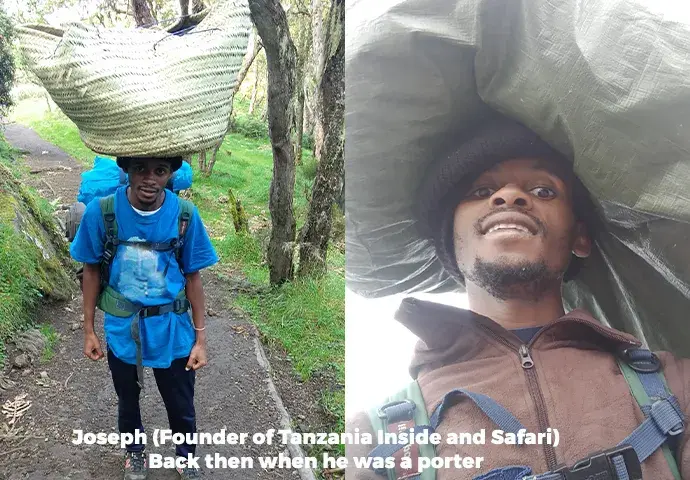
Porters carry tents, food, cooking equipment, tables, chairs, safety supplies, toilet equipment and the accepted portion of the client’s duffel. They also establish and break camp each day. A waiter or camp assistant role may be assigned within the team depending on the expedition setup.
How Many People Will Support One Climber?
A private solo camping expedition often involves several crew members and may commonly be in the region of five to seven people. That is only an orientation, not a guaranteed number. A longer route, heavier safety or comfort equipment, dietary logistics and camp services can require more carrying capacity.
The final roster should be based on legal load limits and the actual equipment plan. Ask for the expected roles before departure, then confirm the team at the briefing or gate. A very small crew is not automatically efficient if it depends on overloaded porters.
How Much Luggage Can the Crew Carry for You?
Plan for a soft 70–90 litre duffel with a maximum client allowance of 15 kg, unless your written proposal states otherwise. This is not your total expedition load; porters must also carry company tents, food and shared equipment.
You carry your own 25–35 litre daypack, commonly about 5–7 kg when loaded, containing:
- Water
- Waterproof jacket and trousers
- Warm layer
- Sun protection
- Snacks
- Gloves and warm hat
- Personal medication
- Camera or phone
- Other essentials needed before camp
Weigh the duffel before leaving home. Excess weight can require an additional porter and should be arranged and priced before the trek, not negotiated at the gate.
What Is Camp Life Like When You Are the Only Client?
On Machame, Lemosho, Rongai, Northern Circuit and Umbwe, you sleep in a tent. Tanzania Inside Safari provides a private sleeping tent for a private solo climber, along with a mattress. The expedition also has a dining or mess space and a portable private toilet.
The campsite itself is public. Other companies may pitch nearby, porters move between facilities and registration areas can be busy. “Private” describes your booked party and its services, not ownership of part of the national park.
At camp, your crew will normally:
- Pitch and secure the tents
- Prepare drinking water and meals
- Brief you on the next stage
- Carry out an evening health assessment
- Help organise summit clothing and water before summit night
The atmosphere is quieter than on a client group climb, but it is rarely silent or isolated. You will see other trekkers at camps and on converging routes.
What About Marangu Huts?
Marangu is the exception to the camping model. A private booking gives you your own guide and itinerary arrangements, but accommodation is in mountain huts with shared sleeping and dining facilities. Toilets are communal. You should not expect a private room or exclusive common areas simply because you booked alone.
For someone who dislikes tents but enjoys meeting other trekkers in the evening, Marangu can be attractive. For someone seeking true personal space at night, a camping route with a private tent is usually a better fit.
A Typical Day on a Private Solo Climb
Morning
The crew provides warm water for washing, followed by breakfast. You pack your daypack and place the rest of your gear in the duffel. The porters dismantle camp and move ahead after you begin walking.
On the Trail
You normally walk with your guide at a controlled “pole pole” pace. Private does not mean fast. The guide chooses a pace that protects energy and supports acclimatization. You can usually stop for photographs, adjust layers or take a short rest without negotiating with a client group.
Arrival at Camp
Your tents may already be established. You check in, change into dry layers, eat and rest. Depending on the itinerary, the guide may lead a short acclimatization walk before dinner.
Evening
Dinner is followed by the next-day briefing and a health check. The guide asks about headache, nausea, appetite, dizziness, sleep and fatigue, and may measure pulse and oxygen saturation. The numbers are interpreted alongside your behaviour, walking performance and reported symptoms.
The Advantages of a Private Solo Climb
Dates Built Around Your Journey
Private trips can normally be planned around your preferred arrival and departure dates, subject to permits, logistics and crew availability. This is valuable when flights, work or a safari make fixed group dates impractical.
Personal Attention
Your guide is observing one client rather than balancing several personalities and walking speeds. Questions can be answered in depth and health trends are easier to follow closely.
A More Natural Pace
You do not need to chase a faster client or wait for a much slower one. This can reduce social pressure, but pace is still governed by altitude safety rather than ambition.
Privacy and Quiet
There is no compulsory small talk with strangers in your tent or at every meal. A solo private climb can create valuable time for reflection, photography or a personal challenge.
A Tailored Briefing and Plan
Dietary requirements, photography priorities, previous altitude experience and equipment concerns can be handled around one person. Route changes remain subject to permits, logistics, weather and safety.
The Trade-Offs
Higher Per-Person Cost
This is the clearest disadvantage. The fixed expedition costs are concentrated in one booking.
Less Peer Motivation
On difficult days, a group can provide energy, humour and encouragement. A private solo climber relies more heavily on personal discipline and the relationship with the guide.
Quiet Can Feel Lonely
Some travellers enjoy peaceful meals; others discover that they miss conversation. Be honest about how you respond to several days without peers.
One Client Means One Expedition Outcome
If you must descend, the private climb ends. In a larger group, other clients may continue with another guide while the affected climber descends. On a private solo trip, the team reorganises around your safe descent or evacuation.
The Mountain Is Still Shared
Popular camps and summit trails can be busy, especially in peak periods. Paying privately cannot create exclusive access.
Is a Private Solo Climb Safer?
It can provide more individual observation and simpler decision-making, but “private” is not a medical guarantee. Altitude response remains unpredictable, and fitness does not make anyone immune to Acute Mountain Sickness.
Tanzania Inside Safari’s approach includes:
- A controlled pace
- Regular symptom and functional assessments
- Pulse and oxygen-saturation trends interpreted with clinical signs
- Emergency oxygen and mountain first-aid equipment
- Early intervention when symptoms appear
- Descent or evacuation when continuing is unsafe
Never hide headache, nausea, dizziness, unusual fatigue, breathing difficulty or loss of coordination. A private itinerary does not give you permission to ascend with worsening symptoms. The guide’s decision to stop or descend is part of the service you are paying for.
Emergency oxygen is carried to support treatment while descent or evacuation is arranged. It is not a tool for masking symptoms and continuing to the summit.
Choosing a Route for a Solo Climb
The best route is the one whose duration, sleeping-altitude profile and character suit you. Do not choose solely by the cheapest quote.
| Route and sensible duration | Solo character | Accommodation | Main consideration |
|---|---|---|---|
| Lemosho, 8 days | Scenic western approach; varied and increasingly sociable after routes merge | Tents | Strong all-round option with useful acclimatization profile |
| Northern Circuit, 9 days | Long, quiet northern traverse with substantial private time | Tents | More days and logistics raise the cost |
| Machame, 7 days | Popular and social even on a private booking | Tents | Includes Lava Tower and Barranco Wall; camps can be busy |
| Rongai, 7 days | Quieter northern approach | Tents | Good for travellers valuing solitude and a different landscape |
| Marangu, 6 days | More communal at huts | Shared huts | Private guiding does not provide private accommodation |
| Umbwe | Steep and rapidly ascending | Tents | Generally for experienced or properly pre-acclimatized climbers |
For many first-time solo clients, the eight-day Lemosho itinerary offers a strong balance of time, scenery and camp experience. The Northern Circuit suits those prioritising a longer, quieter journey. Seven-day Machame can appeal to a private climber who still wants the atmosphere of a popular trail.
Avoid using a short itinerary simply to reduce the solo premium. Saving one mountain day reduces some cost, but it also accelerates the ascent. The itinerary should protect acclimatization before it protects the budget.
Private Solo or Scheduled Group: Which Is Right for You?
Choose a private solo climb if you:
- Need a specific departure date
- Prefer one-to-one communication with your guide
- Value a private sleeping tent and quieter meals
- Want frequent photography or observation stops
- Are comfortable without peer company
- Accept the higher per-person cost
Consider a scheduled group if you:
- Want the most economical option
- Enjoy meeting travellers from other countries
- Appreciate shared motivation on difficult days
- Can use fixed dates and a predetermined route
- Are comfortable with group pacing and shared social space
Ask whether the group departure is guaranteed, its maximum size, its minimum number of clients and whether a private tent requires a single supplement. Also ask what happens if the minimum group size is not reached.
Solo Female Climbers
Women regularly book Kilimanjaro alone, either privately or into a scheduled group. The most important safeguards are professional operating systems, clear boundaries and verified arrangements rather than vague reassurance.
Before paying, ask:
- Who will be your main guide and how the crew is supervised
- Whether your sleeping tent is private
- How toilet privacy is managed
- Who is available in the office during the expedition
- How concerns or inappropriate behaviour can be reported
- Whether a female guide or other staffing request can be arranged, if this matters to you
Discuss these requests early. Staffing preferences may depend on availability and should be confirmed in writing.
Food, Water, Washing and Toilets
Mountain meals are prepared by the cook and can normally accommodate common dietary needs when disclosed before arrival. Tell the team about allergies, intolerances and strong dislikes during booking, not after the trek begins.
Crew collect water from approved mountain sources and treat or boil it for drinking. Carry the day’s supply in a hydration bladder and/or bottles as advised. In very cold conditions, bottles are more reliable than an exposed drinking tube.
There are no conventional showers on a standard trek. The crew normally provides limited warm washing water at camp. Wet wipes and careful personal hygiene help, but every extra item contributes to porter loads.
On Tanzania Inside Safari camping routes, a portable private toilet is included. It is set up at camp and managed by the crew. Public park toilets may still be used during the day. Marangu relies on communal facilities.
Summit Night When You Are the Only Client
Summit night usually begins around midnight, although the exact timing depends on the route, conditions and guide’s plan. It is cold, dark, slow and physically demanding. The guide remains close, controls breaks and watches how you move and respond.
One-to-one attention can feel reassuring, but it can also make the guide’s safety decisions more immediate. There is no group vote and no need to protect someone else’s summit attempt. If your coordination, breathing or mental state becomes unsafe, the correct plan is descent.
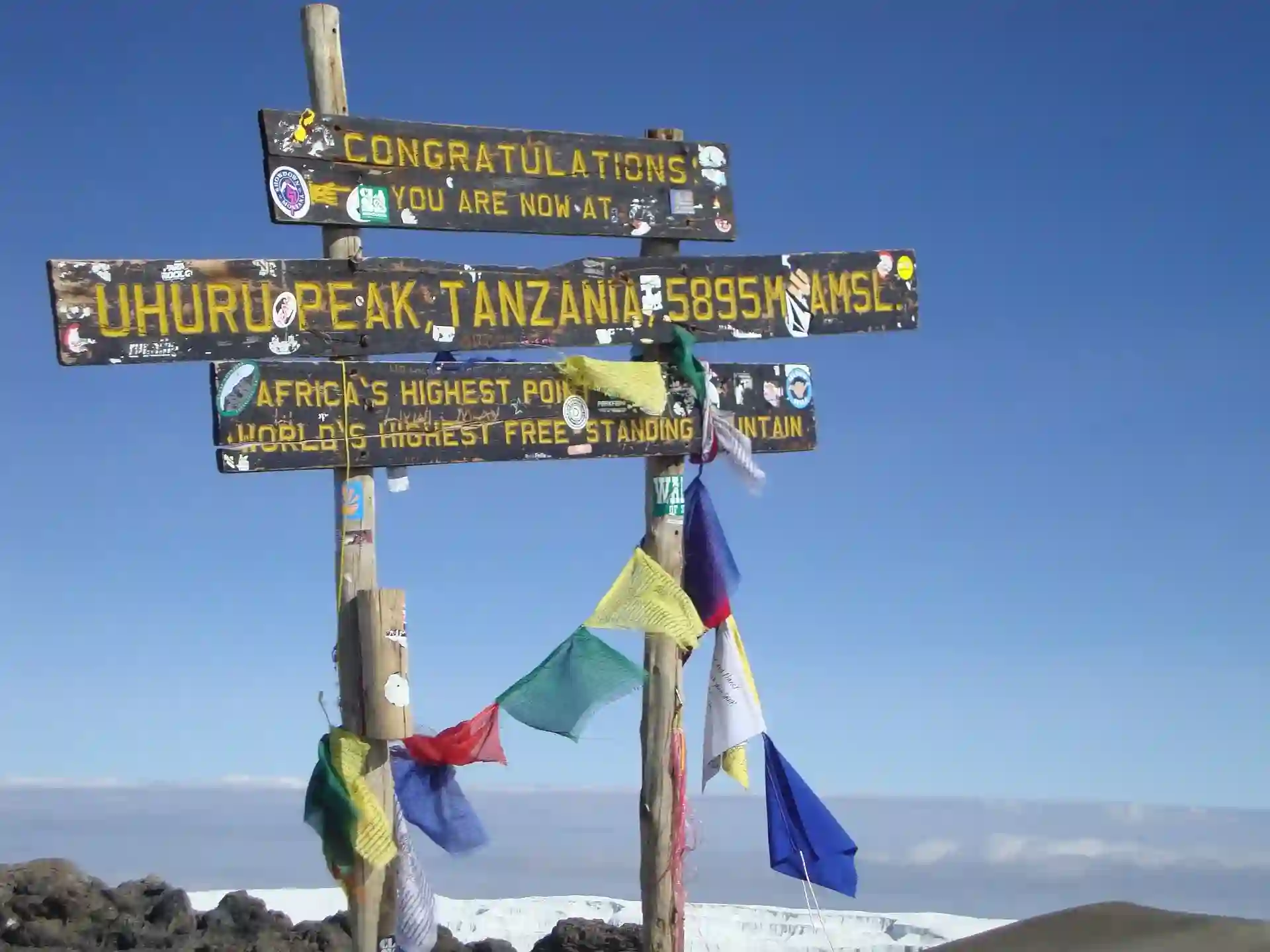
After reaching Uhuru Peak, climbers spend only a short time at 5,895 metres before descending. The day continues for many hours to a much lower camp. Reaching the sign is not the end of the physical work.
Tips and Crew Recognition
Gratuities are normally separate from the package price. A solo climber should not assume that having one client means only one or two people to tip. A complete support team has worked throughout the expedition.
Ask before booking for:
- The expected crew roles
- The company’s current tipping guidance
- Whether the guidance is per client, per group or per crew member
- The recommended currency and distribution process
Tips should be transparent and voluntary. They are recognition for service, not a substitute for wages. Budgeting for them before travel avoids an uncomfortable surprise at the final gate ceremony.
Insurance for a Solo Kilimanjaro Climb
Your policy should explicitly cover trekking to at least 6,000 metres, altitude-related illness, medical treatment and evacuation. Confirm whether helicopter rescue is covered where operationally available, as weather and terrain can prevent a flight.
Read the definitions and exclusions rather than relying on the word “adventure”. Carry policy details and the assistance number, and make sure the operator has the same information.
Insurance does not replace a safe itinerary. It pays for certain consequences; it does not help your body acclimatize.
Questions to Ask Before Paying a Deposit
Is this quote for a private solo climb or one place in a group?
Which days are actually spent trekking on the mountain?
What route and camp sequence will be used?
Which park charges and taxes are included?
Which hotel nights and transfers are included?
Will I have a private sleeping tent?
Is the dining setup private to my expedition?
Is a portable private toilet included?
What crew roles are expected, and when is the roster confirmed?
What is the duffel weight allowance?
Are emergency oxygen, first aid and evacuation planning included?
What gear is supplied, and what must I rent or bring?
What are the tipping guidelines?
What happens if I become ill or descend early?
What are the deposit, balance, cancellation and transfer terms?
Who legally operates the climb and receives the payment?
Compare answers line by line. A lower quote may omit hotel nights, airport transfers, taxes, private facilities, equipment or enough staff to carry the promised setup.
Common Solo-Climb Mistakes
Mistaking “Solo” for Unguided
Kilimanjaro is not an independent backpacking route. Book through a licensed operation.
Choosing the Shortest Itinerary to Offset the Price
The solo premium is a financial issue; acclimatization is a health issue. Do not solve the first by compromising the second.
Comparing Only the Headline Number
Confirm what is included, the exact trekking days and the occupancy assumptions.
Expecting Exclusive Camps
A private party still uses public national-park infrastructure and designated camps.
Packing Over the Duffel Limit
Overweight kit affects real people. Weigh it, remove duplicates and arrange extra capacity in advance.
Hiding Symptoms Because No Group Is Waiting
A private guide has more flexibility to assess you, but only if you report honestly.
Forgetting the Social Question
Seven or more days without fellow clients can feel peaceful or lonely. Know which experience energises you.
Frequently Asked Questions
Will I be completely alone on the trail?
No. You walk with your guide, your crew works ahead and other expeditions use the same trails and camps. Rongai and the Northern Circuit are often quieter; Machame and the shared southern circuit can be busy.
Do I get my own tent?
On a Tanzania Inside Safari private solo camping climb, yes. On Marangu, climbers sleep in shared huts.
Is a portable toilet included?
Yes, on Tanzania Inside Safari camping routes. Marangu uses communal camp facilities.
Can I walk faster because I am private?
You can move at a pace tailored to you, but a responsible guide will still enforce a slow ascent. Private does not make rapid climbing safe.
Can I change routes after starting?
Normally not freely. Permits, camp sequences, food, porter movements and exit logistics are arranged in advance. Safety-driven changes remain the guide’s responsibility.
What happens if I turn around?
Your guide organises descent and coordinates the crew and vehicle. The private expedition normally ends because you are its only client. Your safety takes priority over sunk cost or summit plans.
Is solo climbing better for acclimatization?
It may allow closer monitoring and a more personal pace, but the route duration and sleeping-altitude profile matter more than whether the booking is private. Individual susceptibility remains unpredictable.
Is a private solo climb worth the extra cost?
It can be, if dates, privacy, one-to-one guiding and personal pacing are central to your experience. If your priority is value and companionship, a scheduled group often makes more sense.
Our Approach to Private Solo Climbs
Tanzania Inside Safari is a locally based Tanzanian operator in Moshi and Arusha. We build the expedition around the traveller’s available days, route preference, prior altitude experience and wider Tanzania plans.
For a private solo climb, our focus is not on pretending you are alone. It is on providing the right people and systems around you:
- A professional local guide and suitable support crew
- A realistic itinerary with time for acclimatization
- Private sleeping space on camping routes
- A dining setup, mountain meals and treated water
- A portable private toilet on camping routes
- Regular health and symptom assessments
- Emergency oxygen and mountain first-aid equipment
- Honest decisions when descent is safer than continuing
We do not guarantee that every climber will reach Uhuru Peak. We do promise to plan carefully, communicate openly and place health above a summit statistic.
Plan Your Solo Kilimanjaro Climb
Tell us your preferred dates, route, available trekking days, previous altitude experience and whether you want a fully private expedition or a place on a scheduled group departure. We will prepare a written proposal so you can see the itinerary, accommodation, inclusions and current cost clearly.