


Can Children and Teenagers Climb Kilimanjaro Safely?
A responsible guide to permit rules, readiness, altitude illness, family supervision, training and route choice for young climbers.

Children on Kilimanjaro at a Glance
- The widely published TANAPA minimum age for climbing above approximately 3,100 metres is 10 years; confirm the current permit rule before booking.
- Being old enough for a permit does not prove that a child is ready for the summit.
- Children are considered as susceptible to altitude illness as adults.
- Fitness does not protect a child or teenager from AMS, HACE or HAPE.
- A young climber must be able to describe symptoms honestly and understand that the guide may end the ascent.
- Longer itineraries are strongly preferable to compressed schedules.
- Eight-day Lemosho and longer Northern Circuit itineraries provide valuable acclimatization time.
- Seven-day Rongai avoids the Barranco Wall; the full schedule remains important.
- Short Marangu itineraries and Umbwe should not be chosen simply to reduce school absence or cost.
- A private family climb normally provides better planning control than joining unrelated adults.
- The group needs enough qualified guides for a child and guardian to descend while others continue, if safe and operationally possible.
- A successful family climb is one in which everyone descends safely, whether or not every person reaches Uhuru Peak.
What Is the Minimum Age for Kilimanjaro?
Kilimanjaro's current minimum age is widely reported as 10 years under Tanzania National Parks rules. Children younger than 10 are generally not permitted to climb above approximately 3,100 metres without exceptional authorisation.
Families should confirm the rule that applies at the time of booking because permit procedures can change. Tanzania Inside Safari does not treat an exception as a reason to plan a summit attempt for a younger child.
The official minimum is an administrative threshold, not a medical recommendation. A newly turned 10-year-old and a physically mature 17-year-old differ greatly in size, judgement, endurance and ability to communicate. The operator, guide, parent and child's doctor may reasonably set a more cautious standard than the park minimum.
Permit Eligibility Is Not the Same as Readiness
A parent may see that another young child reached Uhuru Peak and conclude that their own child can do the same. Individual summit stories do not predict another child's response to altitude or the mountain environment.
Readiness requires all of the following:
- The child wants to climb for personal reasons, not only to satisfy an adult.
- They have completed long hikes in varied weather without being carried or pressured.
- They can repeat a substantial walk on the following day.
- They can identify and report headache, nausea, dizziness, weakness and breathing difficulty.
- They understand that symptoms must not be hidden.
- They can follow instructions when cold, tired, disappointed or frightened.
- They can accept a turnaround without seeing it as punishment or failure.
- A qualified clinician has reviewed any medical concerns.
If these conditions are not present, postponing the summit attempt is usually the stronger choice.
Age Bands: A Practical Planning Guide
| Age | Planning perspective | Main concern |
|---|---|---|
| Under 10 | Do not plan a standard summit climb; discuss lower-altitude family activities instead | Park restriction and limited ability to recognise or report altitude illness |
| 10-12 | Permit eligibility does not make this a routine recommendation; requires exceptional maturity, experience and specialist review | Communication, cold tolerance, motivation and very limited evidence at extreme altitude |
| 13-15 | Assess individually with a paediatric clinician, demonstrated hiking experience and a private family plan | Growth, judgement, peer or parental pressure and symptom reporting |
| 16-17 | Many capable teenagers can train and trek well, but they remain minors requiring supervision and consent | Altitude risk, long summit day, decision-making under fatigue and family dynamics |
These are planning categories rather than guarantees or universal medical rules. A younger teenager may be more prepared than an older one, and a fit child can still develop serious altitude illness.
Are Children More Vulnerable to Altitude Sickness?
Current CDC guidance states that children are as susceptible to altitude illness as adults. The problem is not necessarily greater biological susceptibility; it is the difficulty of recognising what a child is experiencing and distinguishing altitude illness from tiredness, anxiety, dehydration, infection or ordinary frustration.
Kilimanjaro's summit is higher than the altitude at which humans can fully acclimatize for a prolonged stay. The body needs time to adjust, and the crucial early acclimatization response takes place mainly over the first three to five days. A young athlete cannot train away this requirement.
Previous altitude experience can provide useful information only when the height and rate of ascent were comparable. Feeling well during a ski holiday or day hike does not predict the response to sleeping above 4,000 metres.
Recognising AMS in a Child or Teenager
Acute Mountain Sickness usually begins several hours after reaching a new altitude, often during or after the first night.
Common symptoms include:
- Headache
- Nausea, vomiting or loss of appetite
- Dizziness or light-headedness
- Unusual fatigue or weakness
- A clear reduction in normal walking performance
- Disturbed sleep combined with other symptoms
A child may not use medical language. They might say their head feels heavy, food looks unpleasant, the trail is moving or they suddenly do not want to walk. They may become quiet, irritable, tearful, unusually dependent or less interested in activities they normally enjoy.
Parents and guides should compare behaviour with the child's normal personality. A sudden change after an altitude gain deserves assessment, not discipline.
Signs of a Serious Emergency
High-Altitude Cerebral Edema (HACE) and High-Altitude Pulmonary Edema (HAPE) can be fatal. Warning signs include:
- Confusion, unusual behaviour or inability to answer simple questions
- Loss of balance or inability to walk heel-to-toe
- Extreme drowsiness or reduced consciousness
- Breathlessness while resting
- A major decline in walking performance
- Chest congestion, persistent cough or rapid breathing
- Blue or grey lips
- Frothy or blood-stained sputum
Suspected HACE or HAPE requires urgent descent with minimal exertion by the sick climber. Emergency oxygen and appropriate medication may support treatment, but they must not delay evacuation.
The Three Family Rules for Altitude Safety
No child or adult ascends to a higher sleeping altitude while experiencing altitude-illness symptoms.
The climber descends if symptoms worsen or do not improve at the same altitude.
Confusion, loss of coordination or breathlessness at rest is an emergency.
Parents must agree before the climb that the guide has final authority over mountain safety. Negotiating, minimising symptoms or asking the child to "try a little longer" can turn a manageable problem into an emergency.
Why Children May Hide Symptoms
A young climber may hide a headache or nausea because:
- They do not want to disappoint a parent.
- The family has spent significant time and money on the trip.
- A sibling or friend appears stronger.
- They want a summit photo or record.
- They fear being left behind.
- They believe discomfort is a test of courage.
Adults create the reporting culture. Praise honesty throughout the trek, including on days when everyone feels well. Ask open questions rather than "You are fine, aren't you?" Make it clear that descent is a normal safety response, not a failure.
Medical Review Before Booking
Arrange a consultation with the child's paediatrician or a clinician familiar with travel and altitude medicine before making non-refundable plans. Explain that the itinerary reaches 5,895 metres and involves remote, strenuous trekking rather than ordinary sightseeing.
Discuss:
- Asthma or other lung disease
- Congenital or acquired heart conditions
- Severe anaemia, sickle cell disease or sickle cell trait
- Diabetes and glucose monitoring during prolonged activity
- Seizure disorders or neurological conditions
- Obstructive sleep apnoea
- Significant allergies or anaphylaxis
- Migraine, fainting or unexplained exercise intolerance
- Previous severe AMS, HACE or HAPE
- Recent surgery, fracture, infection or hospital treatment
- Neurodevelopmental, sensory or communication needs
- All prescription medicines and supplements
A clinic letter should not be treated as a summit guarantee. It helps identify avoidable risk and create a medication or emergency plan.
Acetazolamide and Other Medication
Acetazolamide, commonly known as Diamox, can accelerate acclimatization and reduce the likelihood or severity of AMS. Its use in a child or teenager must be discussed with an appropriate clinician. Paediatric dosing is weight-based and should never be improvised by dividing an adult prescription.
Medication does not replace a longer route, slow ascent, symptom reporting or descent. Do not use dexamethasone or another specialist medicine as a private strategy for pushing a child towards the summit.
Parents should provide the operator with a clear medication list, allergy information and instructions for any emergency medicine. Essential items belong in the daypack, not the porter-carried duffel.
Which Routes Are Most Suitable for Families?
The best route gives the body time to adapt and matches the young climber's terrain experience, comfort and maturity.
| Route | Family advantage | Important limitation |
|---|---|---|
| 8-day Lemosho | Gradual western approach, varied scenery and useful high-and-low movements | Camping and the Barranco Wall; joins busier southern trails later |
| Longer Northern Circuit | More acclimatization time, quieter camps and no Barranco Wall | Long total distance and more nights in tents |
| 7-day Rongai | Quieter northern approach, generally gentler gradients and no Barranco Wall | Fewer classic climb-high-sleep-low movements; summit via Gilman's Point |
| 7-day Machame | Scenic with Lava Tower acclimatization and varied terrain | Busy camps and the Barranco Wall; requires confidence on a guided scramble |
| 6-day Marangu | Shared huts can simplify sleeping arrangements | Shorter altitude profile, shared facilities and repeated trail on descent |
| Umbwe | Dramatic and direct | Rapid early altitude gain and steep terrain; not a responsible routine family choice |
We generally favour longer Lemosho or Northern Circuit options for prepared families. Seven-day Rongai may suit a child who should avoid the Barranco Wall. The exact choice depends on age, hiking experience, medical advice and the family's available time.
Why Shorter Does Not Mean Safer
Families sometimes select a five- or six-day climb to reduce cost or school absence. This saves calendar days by moving through altitude faster, not by making the mountain easier.
Once above 3,000 metres, general Wilderness Medical Society guidance recommends limiting increases in sleeping altitude to approximately 500 metres per night and adding a rest or acclimatization day for every 1,000 metres of sleeping gain. Kilimanjaro's established camps do not allow every itinerary to follow this perfectly, which makes the overall number of days even more important.
An additional day cannot guarantee acclimatization, but it provides a better margin than a compressed schedule.
Lemosho and the Barranco Wall
Lemosho's eight-day itinerary offers useful acclimatization time and varied scenery. It includes a day towards Lava Tower followed by descent to Barranco, a practical example of climbing high and sleeping lower.
The Barranco Wall is a guided scramble, not normally a technical climb. Children use their hands for balance and move through several exposed-looking positions. It may be inappropriate for a child with poor balance, limited mobility, severe fear of heights or difficulty following instructions under stress.
Parents should discuss the wall honestly and practise easy scrambling before travel. A guide can assist, but cannot remove all exposure or physical effort.
Northern Circuit for More Time
The Northern Circuit spends more days travelling around Kilimanjaro and avoids the Barranco Wall. Its quieter camps can reduce social pressure and allow a family to establish its own rhythm.
The trade-off is a longer total distance and more nights sleeping in tents. A child who dislikes camping or struggles to recover after consecutive walks may not benefit simply because the route is longer. Training should test both walking durability and camp tolerance.
Rongai for Families Avoiding the Wall
The seven-day Rongai route approaches from the quieter north and avoids the Barranco Wall. Its slopes are often gentler, and the scenery around Mawenzi can be memorable for young trekkers.
Rongai has fewer climb-high-sleep-low opportunities than Lemosho or Machame, making the full seven-day schedule important. The summit ascent towards Gilman's Point remains a serious physical and altitude challenge.
Is Marangu Better Because It Has Huts?
Marangu is the standard hut route. A solid structure may appeal to families who prefer not to sleep in tents, but accommodation is dormitory-style with shared facilities. Privacy, quiet and warmth are not guaranteed.
The six-day itinerary with an additional night at Horombo is preferable to five days, yet the sleeping-altitude progression remains relatively fast. Huts do not change the oxygen level or make summit night easy.
Why a Private Family Climb Is Usually Better
A private climb allows the itinerary to be built around your family rather than unrelated adult travellers. It provides more control over dates, route, tent arrangements, pace and briefings.
It also supports a clear supervision plan:
- Which adult remains with the child at all times?
- Which guide accompanies them if they descend?
- Can the remaining climbers continue with qualified guides?
- What happens if the parent is sick but the teenager feels well?
- What happens if two family members need different decisions?
Private does not mean exclusive campsites or freedom from park rules. The guide's safety authority still applies.
Parent, Guardian and Guide Responsibilities
The parent or legal guardian retains responsibility for consent and the child's welfare, while the lead guide controls operational safety on the mountain. These roles must support each other.
Before departure, agree that:
- The child will never trek alone or leave camp unaccompanied.
- Health information will be shared honestly.
- The guide may slow, stop or end the ascent.
- A parent or agreed guardian will descend with a minor.
- Summit separation will be avoided unless the staffing and family plan allow it safely.
- The child's dignity and privacy will be respected during health checks.
- No adult will pressure the child to continue for a record, photograph or family goal.
Emotional and Mental Readiness
Summit night can be intimidating. A child wakes after limited rest, dresses in freezing conditions and walks for hours in darkness while breathing becomes harder. Motivation based only on a parent's dream may disappear quickly.
A ready young climber should understand the complete experience, not just the summit photograph. Include them in route selection, equipment testing and discussions about toilets, cold, nausea, sleep and turning around.
Useful questions include:
- Why do you want to climb?
- What will you do if the guide says you must descend?
- Can you tell an adult immediately when you have a headache or feel sick?
- How do you react when tired, cold or disappointed?
- Are you comfortable sleeping in a tent and using basic toilets?
There is no correct brave answer. Honest hesitation can prevent a poor decision.
Training for Children and Teenagers
Training should be progressive, age-appropriate and enjoyable. A child should not be pushed through an adult endurance programme or trained to exhaustion.
A practical programme may include:
- Regular family walks and hikes
- Gradually longer days on varied terrain
- Hills, stairs and controlled descents
- Age-appropriate leg and core strength
- Balance and easy scrambling practice
- Back-to-back walking days
- Daypack practice with a light, well-fitted load
- Wet-weather and cold-layer testing
The most useful test is not speed. It is whether the child can walk steadily, communicate and recover well enough to trek again the next day.
Pain, repeated exhaustion, unusual breathlessness, faintness or a change in walking pattern requires assessment rather than tougher motivation.
How Heavy Should a Child's Daypack Be?
There is no single correct weight for every age and body size. The child's pack should be light enough to preserve balance and normal walking. They will still need immediate access to water, rain gear, insulation, snacks, sun protection and personal medicine.
Parents should not assume they can carry every family member's day equipment. Agree with the operator how essential items will be distributed without overloading one adult.
The porter-carried client duffel allowance is normally limited to 15 kilograms per climber under Tanzania Inside Safari's operating plan. Confirm how family luggage is allocated and keep valuables and medication in daypacks.
Equipment Must Fit the Child Now
Do not buy oversized boots or clothing for future growth. Poorly fitting equipment can cause blisters, cold gaps, restricted movement and falls.
Prioritise:
- Broken-in waterproof boots with secure heel hold
- Hiking socks that do not wrinkle
- Base, mid and insulated layers in the correct size
- Waterproof jacket and trousers
- Warm hat and sun hat
- Liner gloves plus warm, waterproof outer gloves
- A properly fitted daypack
- Child-sized trekking poles where appropriate
- Sunglasses and high-protection sunscreen
- A warm four-season sleeping bag
- A headlamp that is easy to operate with gloves
- Reusable water bottles, including an insulated summit bottle
Rental quantities and children's sizes can be limited. Reserve early and bring personal-fit items whenever possible.
Cold, Sun and Weather Risks
Kilimanjaro moves from warm forest to exposed alpine desert and freezing summit conditions. Children may become cold quickly and may not notice numb fingers or toes until the problem is advanced.
Guides and parents should check layers, gloves, socks and hydration rather than relying on the child to manage everything independently. Wet clothing should be changed or dried whenever possible.
Ultraviolet exposure increases with altitude. Sunglasses, a brimmed hat, sunscreen and lip protection are essential even when the air feels cold.
Severe rain, wind, snow or lightning may require the guide, operator or park authorities to alter, delay or cancel part of the climb. A school-holiday schedule cannot override conditions.
Food, Hydration and Hygiene
Young climbers need familiar, energy-rich foods and regular fluids. Tell the company about allergies, medical diets, strong dislikes and eating difficulties well before arrival.
Loss of appetite can be an altitude symptom. It should be discussed with the guide rather than dismissed as fussiness. Vomiting creates additional concerns about fluid balance and medication.
Drink regularly according to thirst, conditions and guide advice; do not force excessive water in an attempt to prevent AMS. Water collected from mountain sources is treated or boiled by the crew, and climbers use reusable containers rather than disposable plastic bottles.
On Tanzania Inside Safari camping routes, a private portable toilet and toilet tent are included for our group. This improves privacy for families, although campsites remain shared. Marangu uses communal hut toilets. Normal showers are not available; washing water is provided when conditions and water supply permit.
Sleeping at Altitude
Light, interrupted sleep and periodic breathing are common above approximately 2,700 metres. A child may wake frightened by unfamiliar breathing, wind against the tent or a need to urinate.
Explain these possibilities in advance and keep a headlamp, warm layer and footwear within reach. A minor should not leave the tent area alone at night.
Poor sleep by itself is not a diagnosis of AMS. However, sleep disturbance combined with headache, nausea, unusual weakness, chest symptoms or behaviour change requires assessment.
What Summit Night Is Like for a Young Climber
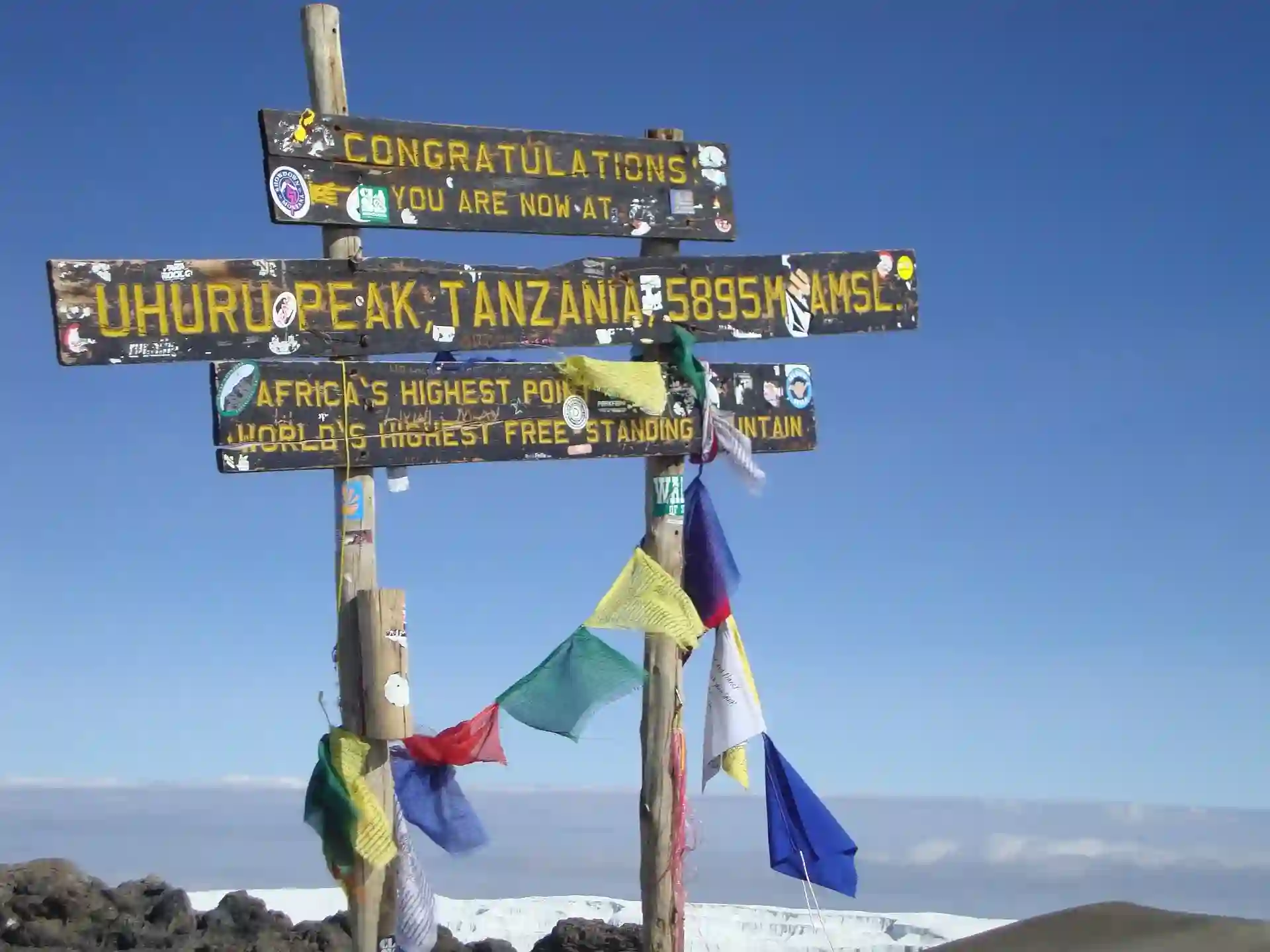
The summit attempt normally begins around midnight after a short rest. The group climbs slowly by headlamp in cold, darkness and thin air. Reaching Stella Point or Gilman's Point can take many hours, followed by a possible traverse to Uhuru Peak and then a long descent.
For a child or teenager, the day may involve:
- Limited sleep before departure
- Six to eight hours or more of ascent
- Freezing temperatures and wind
- Reduced appetite and difficult breathing
- Loose scree on the descent
- A total movement time exceeding twelve hours
Parents should never promise that the family will continue from the crater rim to Uhuru Peak. Health, weather, pace and turnaround time determine the decision.
The Family Descent Plan
A family climb needs a descent plan before anyone becomes ill. Ask the operator:
- How many guides will accompany the group?
- Who descends with a minor?
- Can another guardian remain with siblings?
- Which descent route and transport are available?
- How will the family communicate after separation?
- Which hotel and emergency contacts will be used?
- What costs may require insurance or payment?
A porter should not be expected to carry a tired child towards the summit. If a young climber cannot continue safely under their own normal walking ability, the correct direction is down. Assisted evacuation is for emergencies, not completion of the ascent.
Travel Insurance for a Minor
The policy should name every child and adult and explicitly cover:
- Tanzania and the full trip dates
- Guided trekking to at least 6,000 metres
- Altitude-related illness, including AMS, HACE and HAPE
- Medical treatment and hospital care
- Ground rescue and evacuation
- Medically necessary helicopter evacuation where available
- Repatriation, including appropriate arrangements for a minor
- Pre-existing conditions where relevant
- Trip cancellation, interruption and delayed baggage
Ask what happens if one parent accompanies a child to hospital while the rest of the family remains in Tanzania. Helicopter evacuation is never guaranteed; weather, daylight, landing conditions and aircraft availability may require ground evacuation.
When a Child Should Not Start or Continue
Postpone the climb when the child has:
- A significant respiratory or gastrointestinal infection
- Fever, dehydration or persistent vomiting
- A recent injury that changes walking or balance
- Poorly controlled asthma, diabetes or another condition
- Unexplained fainting, chest pain or unusual exercise intolerance
- Essential medication or equipment missing
- Strong reluctance that has not been resolved without pressure
On the mountain, stop ascending when symptoms appear after an altitude gain. Descent is required when symptoms worsen, function declines or HACE or HAPE is suspected.
Alternatives to a Child Summit Attempt
A family can experience Kilimanjaro without making Uhuru Peak the only acceptable goal. Options include a lower-altitude day hike, a shorter forest experience permitted by current park rules, or postponing the full climb until the child has more trekking experience.
Families can also build a broader Tanzania journey around wildlife, culture or Zanzibar. Choosing another experience is better than turning a child into the vehicle for an adult record or ambition.
Common Family Mistakes
- Treating the park minimum age as a medical recommendation
- Choosing a short route to reduce school absence
- Assuming a sporty child cannot develop altitude illness
- Comparing siblings or rewarding silence about symptoms
- Joining an adult group without a child-specific staffing plan
- Buying oversized or untested equipment
- Packing medication in checked luggage or the porter duffel
- Allowing a minor to walk around camp alone at night
- Expecting a porter to carry a tired child upward
- Using oxygen to continue towards the summit
- Buying insurance without checking the altitude ceiling and minor provisions
- Making the summit photo the only definition of success
Questions Parents Should Ask the Operator
- What current TANAPA age and permit rules apply?
- Does the operator accept this child's age and experience for the proposed route?
- How many trekking days and acclimatization opportunities are included?
- What is the route's highest sleeping altitude each night?
- How are children assessed during health checks?
- What guide staffing allows a child and guardian to descend?
- Who has final authority to stop the ascent?
- Is emergency oxygen carried for treatment?
- What happens if the child becomes ill while the parent is also unwell?
- Which tents, toilets, meals and water arrangements are included?
- What medical and consent documents are required?
- Which rescue costs must be covered by insurance?
A Family Readiness Checklist
Before booking, the family should be able to say:
- Our child meets the current park rule and the operator's policy.
- The child genuinely wants to participate.
- A paediatric or travel-health professional has reviewed relevant concerns.
- The child has completed long, consecutive hikes and recovered well.
- They can explain altitude symptoms in their own words.
- Everyone accepts the guide's authority and the possibility of descent.
- We chose a longer route rather than the shortest schedule.
- Our equipment fits and has been tested.
- Our insurance names every traveller and covers at least 6,000 metres.
- We have an adult-supervision and split-group plan.
- We will consider the trip successful even if the summit is not reached.
Our Family Kilimanjaro Approach
Tanzania Inside Safari is a locally owned operator. We plan family climbs individually rather than assuming that every child above the official minimum is suitable.
Our approach includes:
- Asking each child's age, hiking background, medical considerations and motivation
- Recommending longer itineraries with better acclimatization profiles
- Offering private climbs for more appropriate family planning
- A controlled pole pole pace
- Regular symptom, function and oxygen-saturation reviews
- Pulse-oximeter readings interpreted alongside behaviour and walking ability
- Trained local mountain guides with authority to stop an unsafe ascent
- Emergency oxygen and mountain first-aid equipment
- A guide and guardian descent plan based on group size and staffing
- Treated drinking water, mountain meals and practical camp support
- Private portable toilets on our camping-route treks
- Responsible porter loads, meals and welfare standards
We never guarantee that a child, teenager or adult will reach Uhuru Peak. What we can promise is honest planning and decisions that place the young climber's welfare above a summit statistic.
Research and Further Reading
This guide reflects Tanzania Inside Safari's operating practices and a review of current paediatric altitude and route guidance. Further reading includes the CDC Yellow Book 2026 high-altitude chapter, the Wilderness Medical Society 2024 clinical practice guideline, the UIAA guidance on children at altitude, route and planning information from the Tanzania Inside Safari website and family-climb guidance published by established Kilimanjaro operators.
Plan a Family Kilimanjaro Climb
Tell us the ages of every young climber, their hiking and altitude experience, your preferred dates and the adults travelling with them. We will discuss permit rules, route suitability, private-climb options and the supervision plan before recommending an itinerary.