


Mount Kilimanjaro Guides
How professional guides lead the climb, manage altitude risk, organise the mountain team and make safe decisions from the gate to the summit and back.

1. Why Your Kilimanjaro Guide Matters
Mount Kilimanjaro is a non-technical trek on its standard routes, but it reaches 5,895 metres (19,341 feet), where cold, exhaustion and severe altitude illness can become life-threatening. A good guide is therefore much more than the person who knows the trail. Your guide is the expedition's safety leader, pace setter, communicator and decision-maker.
Climbers must be accompanied by an authorised local guide. In practice, your tour operator assembles the entire mountain team, appoints the lead guide and assistant guides, arranges park registration and transport, and supplies food, tents and safety equipment. The quality of the operator and the quality of the guiding system are closely connected.
A licence is an essential starting point, not a complete measure of quality. Experience, continuing first-aid and altitude training, judgement, communication, staffing, equipment and the operator's emergency procedures all matter.
2. Kilimanjaro Guiding at a Glance
- The lead guide directs the climb and has primary responsibility for operational and safety decisions.
- Assistant guides help monitor climbers, manage different walking speeds and escort a climber who must descend.
- A guide should assess symptoms and function, not rely on a pulse-oximeter number alone.
- No responsible guide can guarantee a summit. Acclimatization varies from person to person.
- A climber with worsening altitude symptoms must not be pressured to continue upward.
- Confusion, loss of coordination or breathlessness at rest require immediate action and usually urgent descent.
- Emergency oxygen supports treatment; it must not be used to disguise illness so a climber can continue to the summit.
- The team must have enough guide coverage for one climber to descend without leaving the remaining group unsupported.
- Honest communication between climber and guide is one of the most important safety tools on the mountain.
3. Who Does What on a Kilimanjaro Climb?
Kilimanjaro expeditions are team operations. Titles and exact duties can vary with the operator, route and group size, but clients should understand the basic structure.
| Team member | Main responsibilities |
|---|---|
| Lead guide | Leads the expedition; sets the pace; conducts briefings and health reviews; coordinates the crew; evaluates weather, route and client condition; makes turnaround, descent and evacuation decisions. |
| Assistant guide | Walks with a subgroup or individual climber; observes symptoms and performance; supports health checks; assists on summit night; can escort a sick or slower climber while the main group remains supervised. |
| Cook | Plans and prepares safe, nourishing meals; manages kitchen hygiene and food supplies; reports appetite or illness concerns to the guide team. |
| Porters | Carry approved expedition loads, move camp equipment, collect water where permitted and help establish camp. Their welfare, equipment, food and load limits are part of responsible expedition management. |
| Climbers | Report symptoms honestly, follow the agreed pace and safety instructions, carry personal essentials and respect the guide's decision to stop an ascent or begin a descent. |
The guide manages the whole system. Strong crew leadership matters because food, shelter, water, communications and timely camp movement all affect client safety.
4. What a Professional Guide Does Before the Trek
Good guiding begins before the park gate. A well-run operator should obtain relevant information early enough to plan safely and privately.
Reviews Your Experience and Health Information
The guide or operations team should ask about previous high-altitude exposure, your response to altitude, fitness and trekking experience, significant medical conditions, allergies and regular medication. This is not a medical examination, and guides do not replace doctors. It helps the team anticipate support needs and encourages climbers with relevant conditions to seek pre-travel medical advice.
Checks Your Equipment
A pre-climb gear check should identify missing or unsuitable items while there is still time to rent or replace them. Particular attention should go to broken-in boots, waterproof shells, insulating layers, gloves, headwear, headlamp, sleeping bag, water capacity and summit-night clothing.
Explains the Plan
The briefing should cover the route, daily distances and altitude gains, camp routine, meals and water, luggage limits, health checks, expected weather, summit-night procedure, communications, emergency equipment and the authority of the guide to change the plan.
It should also establish one simple rule: symptoms must be reported early and honestly. A guide can respond to information; a hidden headache, nausea or loss of coordination removes that advantage.
5. How Guides Manage Acclimatization
Kilimanjaro rises very quickly from its lower gates to extreme altitude. Fitness helps with the physical work, but it does not make a climber immune to altitude illness. The CDC Yellow Book identifies altitude reached, rate of ascent and individual susceptibility as central risk factors.
Setting a Sustainable Pace
“Pole pole” means “slowly, slowly” in Swahili. A controlled pace limits unnecessary exertion, makes the group easier to observe and preserves energy for later days. Walking slowly cannot make an overly short itinerary safe, but it is a vital part of a responsible ascent.
The guide should resist the temptation to match a fast client's sea-level pace. On Kilimanjaro, arriving at camp first is not the objective; adapting progressively and remaining functional is.
Conducting Regular Health Reviews
Health checks may include questions about headache, nausea, appetite, dizziness, sleep, fatigue and breathing. Guides also observe walking speed, balance, behaviour, ability to eat and drink, and whether the climber can care for themselves normally.
Pulse rate and peripheral oxygen saturation (SpO2) can add useful trend information. However, cold fingers, movement, circulation, nail coverings, device differences and technique can distort readings. A climber can have acute mountain sickness despite a reading that seems acceptable for the altitude. A single number must never replace symptoms, functional condition and clinical judgement.
Applying the Essential Altitude Rules
The CDC's current high-altitude guidance supports three rules that every guide and climber should understand:
- Recognise the early symptoms of altitude illness and acknowledge them.
- Never ascend to a higher sleeping altitude while experiencing altitude-illness symptoms.
- Descend if symptoms worsen despite rest or treatment at the same elevation.
Mild, stable symptoms may sometimes be managed by resting at the same altitude under close observation.
Worsening symptoms, reduced function or signs of serious illness require descent. On the mountain, early conservative action leaves more options than a late emergency.
6. Recognising an Altitude Emergency
A professional guide must distinguish common discomfort from warning signs that cannot wait. The Wilderness Medical Society altitude guidance and CDC guidance emphasise descent and oxygen for serious altitude illness.
Acute Mountain Sickness
Acute Mountain Sickness (AMS) commonly includes headache together with nausea, appetite loss, dizziness, unusual fatigue or vomiting after a recent altitude gain. A climber with symptoms should not move to a higher sleeping altitude. If symptoms worsen or do not improve appropriately, descent is required.
High-Altitude Cerebral Edema
High-Altitude Cerebral Edema (HACE) is a life-threatening neurological emergency. Important signs include confusion, unusual behaviour, extreme drowsiness and ataxia—the loss of balance or inability to walk a straight line. Suspected HACE requires urgent descent with minimal exertion by the affected climber, plus oxygen and appropriate treatment when available. Treatment must not delay evacuation.
High-Altitude Pulmonary Edema
High-Altitude Pulmonary Edema (HAPE) is fluid accumulation in the lungs. Warning signs include an unusual decline in performance, excessive breathlessness on exertion, chest congestion, persistent cough and, later, breathlessness at rest. Suspected HAPE requires urgent descent, oxygen when available and evacuation for medical care.
What Oxygen Can and Cannot Do
Emergency oxygen can improve oxygenation and support a sick climber while descent or evacuation is arranged. Feeling temporarily better on oxygen does not prove that the climber has acclimatized. Small recreational oxygen cans contain too little oxygen for dependable treatment of serious altitude illness.
Oxygen must never become a tool for pushing an unwell climber toward the summit.
7. Guide Coverage: The Question Behind the Ratio
There is no single guide-to-client number that tells the whole story. Required staffing can depend on current park rules, group size, route, operator procedures and the mix of lead and assistant guides. The more useful question is whether the structure still works when plans change.
| Situation | Coverage a responsible team should provide |
|---|---|
| Different walking speeds | A guide or assistant stays with each separated subgroup; no climber is left walking alone. |
| One climber must descend | A qualified guide escorts the climber while sufficient guide leadership remains with everyone continuing or staying at camp. |
| Multiple climbers become unwell | The operator has enough trained personnel and a clear plan to divide supervision, initiate descent and request evacuation. |
| Summit-night group spreads out | Guides maintain contact, control pace and regrouping, monitor cold and fatigue, and prevent isolated climbers. |
| Lead guide becomes ill | A competent assistant guide can assume leadership and apply the emergency plan. |
Before booking, ask the operator for the exact number of lead and assistant guides planned for your group and how that number changes if clients descend early. Adequate guide coverage is a safety feature, not an optional luxury.
8. What Good Guiding Looks Like Each Day
On the Trail
- The guide sets a pace appropriate for altitude rather than rewarding speed.
- Climbers remain within sight or reliable contact of a guide.
- Layers, rain protection, hydration and food are addressed before small problems become major ones.
- Breaks are planned without allowing the group to become chilled.
- The guide notices changes in gait, speech, mood, breathing and performance.
At Camp
- The team confirms that every climber has arrived and is warm, dry and able to eat and drink.
- The guide conducts a symptom-focused health review and interprets any measurements in context.
- The next day's route, weather, clothing and departure time are explained.
- Concerns are discussed privately and clearly; clients are not embarrassed into hiding symptoms.
- The lead guide coordinates the crew and confirms the emergency and communication plan.
When Conditions Change
Weather, trail congestion, illness and fatigue may require a slower pace, a different departure time, a stop at the same altitude or descent. A professional guide explains the reason, makes the decision promptly and resists pressure from clients whose summit ambition conflicts with safety.
9. Summit-Night Leadership
Summit night is the longest, coldest and most demanding part of most Kilimanjaro itineraries. The guiding system should be at its most disciplined.
Before departure, guides should confirm that climbers have the required layers, headlamp, gloves, eye protection, food and insulated water. Hydration systems can freeze, so bottles should be protected and carried in a way that remains usable. The guide should also review the order of the group, communication signals, breaks and turnaround criteria.
During the ascent, guides monitor pace, temperature, coordination, mental status, breathing and the ability to keep eating and drinking. Different speeds may require the group to split under separate guide supervision. A guide may turn a climber around because of symptoms, cold injury risk, exhaustion, weather, insufficient progress or any combination of these factors.
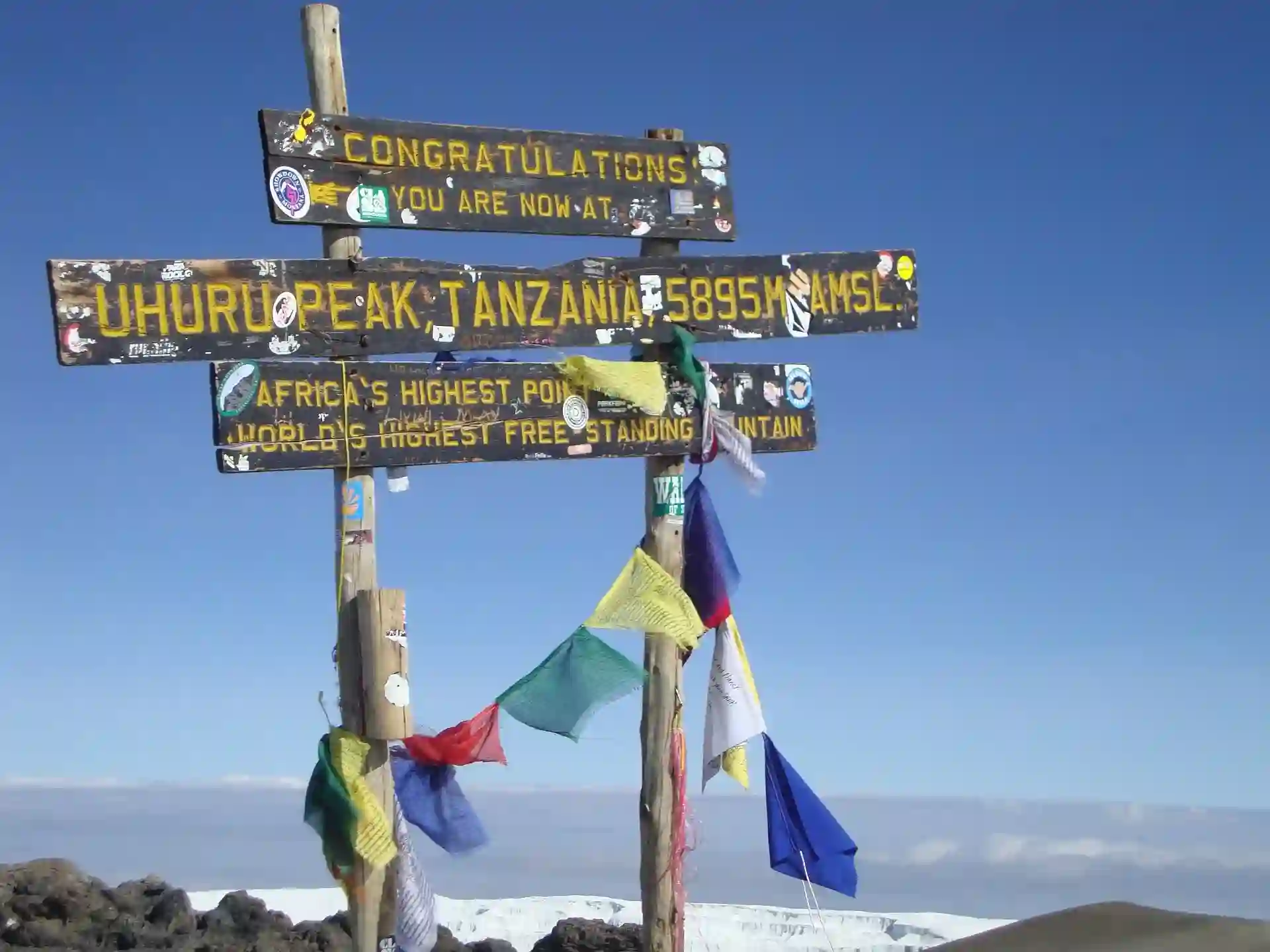
Reaching Stella Point, Gilman's Point or Uhuru Peak is only half the journey. The guide must preserve enough time, warmth, water and support for the descent. A summit photo is never a substitute for a safe return.
10. Communication, Language and Trust
The best guide-client relationship is built on calm, direct communication. Your guide should explain decisions in language you understand, invite questions and create an atmosphere in which reporting symptoms feels normal.
Tanzania Inside Safari's principal working language on Kilimanjaro is English. Guides in German, Spanish, Italian, Chinese, French or Russian may be requested, subject to availability. Confirm language arrangements when booking, especially for private groups, children or travellers who would find medical and safety discussions easier in another language.
Clients also have responsibilities. Stay with the guide, follow the agreed pace, disclose symptoms and medication use, avoid secretly taking unfamiliar medicine, and accept a turnaround decision. Trust is not passive obedience: it is a shared commitment to honest information and conservative safety choices.
11. Questions to Ask Before Booking
| Ask the operator | What a strong answer should explain |
|---|---|
| Who will lead my climb? | The lead guide's authorisation, Kilimanjaro experience, recent first-aid and altitude training, and working language. |
| How many guides will support our group? | Exact lead and assistant-guide numbers, how subgroups are supervised and who escorts an early descent. |
| How are health checks conducted? | Symptom questions and observation, with pulse and SpO2 used as supporting information rather than a pass/fail test. |
| What happens if I develop AMS? | No ascent with symptoms, close monitoring at the same altitude when appropriate, and descent if symptoms worsen or fail to improve. |
| What emergency equipment is carried? | Oxygen delivery equipment, first-aid supplies, communications and a checked evacuation plan appropriate to the route. |
| Is oxygen used for routine summiting? | No. It is emergency treatment and must not be used to mask worsening illness. |
| What is the summit-night plan? | Guide coverage, pacing, group-splitting procedure, cold protection, monitoring, turnaround decisions and descent support. |
| How do you protect the mountain crew? | Fair treatment, appropriate equipment, food, shelter, load management, transparent tips and a process for crew concerns. |
| Can I speak with the guide before departure? | A proper pre-climb briefing and gear check, with time to discuss medical, dietary, language and equipment needs. |
12. Red Flags When Comparing Operators
- A guaranteed summit or pressure to value summit statistics over individual health.
- Vague answers about who the lead guide is or how many assistants will support the group.
- A plan that leaves the main group without qualified supervision when someone descends.
- Routine oxygen-supported summiting or claims that oxygen makes continued ascent safe.
- Dismissing headaches, nausea, declining performance or balance problems as weakness.
- Summit tips, bonuses or guide rewards structured in a way that encourages unsafe upward pressure.
- No pre-climb briefing, equipment check, health discussion or clear emergency plan.
- An aggressive pace presented as proof of strength or efficiency.
- Poor communication about porter loads, crew equipment, food, shelter, wages or tipping.
A very low price can reflect genuine efficiency, but it can also mean fewer assistants, weaker training, inadequate equipment or pressure on crew welfare. Ask what is included and judge the operating system, not the sales language.
13. Respecting Guides and the Mountain Crew
Guides work within a larger team whose labour makes the expedition possible. Respect includes learning names, following camp and park rules, keeping luggage within the stated limit, avoiding litter, treating every crew member professionally and using a transparent tipping process.
Tips are an expression of appreciation, not a replacement for wages and not a payment for reaching the summit. A guide must never feel financially punished for making a necessary descent decision. Ask the operator how tips are collected, announced and distributed so clients and crew understand the process.
14. Our Kilimanjaro Guiding Approach
At Tanzania Inside Safari, local guides lead every Kilimanjaro climb. Our approach combines route planning, a controlled “pole pole” pace, daily symptom and health reviews, Wilderness First Responder-trained guide leadership, emergency oxygen and clear communication.
We plan guide coverage around the group so that different walking speeds and an early descent can be managed without abandoning supervision. Pulse-oximeter readings are interpreted alongside symptoms, behaviour and functional condition. Oxygen is carried for emergencies, not as permission to continue upward with worsening illness.
Before the trek, we review your experience, available days and personal needs, check essential equipment and explain the route and safety plan. On the mountain, the guide has authority to slow, stop or turn around a climber when continuing is unsafe.
No guide can promise that every climber will reach Uhuru Peak. What a responsible guide can promise is attentive leadership, honest advice and decisions that place health above summit statistics.
15. Plan Your Kilimanjaro Climb
Tell us your preferred route, travel dates, group size, previous altitude experience and preferred guiding language. We will recommend an itinerary and support structure suited to your group and explain exactly what is included before you book.